

Free Tambacounda Travel Guide & Mobile App
Explore Tambacounda with free travel guides. Discover regional history, expert tips, proposed trips, and audio guides on web or mobile app.


Tambacounda introduces eastern Senegal through savanna, wildlife, regional markets and access to the landscapes of Niokolo-Koba National Park.
Read more about Tambacounda
When is the best time to visit Tambacounda?
Best: November–January · 30–32°C| Month | High (°C) | Rainfall (mm) |
|---|---|---|
| January (best) | 30 | 0 |
| February | 33 | 0 |
| March | 36 | 1 |
| April | 39 | 4 |
| May | 40 | 10 |
| June | 37 | 23 |
| July | 35 | 66 |
| August | 34 | 122 |
| September | 34 | 87 |
| October | 36 | 31 |
| November (best) | 32 | 6 |
| December (best) | 30 | 1 |
Getting to and around Tambacounda
How to get there
Transportation
Destinations in Tambacounda
Resorts, valleys and scenic spots worth a trip of their own.

Swipe for more destinations
Best attractions in Tambacounda
Tambacounda’s principal attractions are ecological and experiential rather than concentrated in a single historic centre. Niokolo-Koba National Park is the region’s defining destination, offering extensive savanna, woodland and riverine habitats for guided wildlife drives, birdwatching and landscape observation. The park’s western and northern approaches are associated with the Tambacounda side of the protected area, while its scale means that visitors should choose accommodation and entry points carefully. Around Wassadou and the Gambia River, riparian vegetation provides a contrasting setting to the drier woodland farther from the water. Tambacounda city itself is useful for observing regional commerce, transport and everyday urban life, with markets, food stalls and busy road junctions rather than a dense collection of monuments. Rural travel through Missirah, Dialacoto and surrounding districts reveals farming, herding and seasonal changes in the savanna, but facilities are basic and visits should be arranged respectfully. Nature-focused travellers can also plan birdwatching and community-guided outings, always checking current access and conservation rules before travelling.
-
Market
Marché Sandaga
Immerse yourself in the rich culture and vibrant atmosphere of Marché Sandaga, a must-visit market in the heart of Dakar, Senegal.
-
Tourist attraction
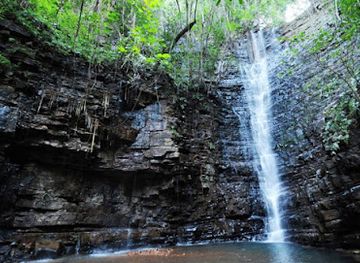
Waterfall of Dindefelo
Discover the breathtaking Waterfall of Dindefelo, a stunning natural gem in Senegal that offers adventure, beauty, and tranquility for all visitors.
-
Tourist attraction
Travelwithziggy
Discover the breathtaking coastal beauty and rich cultural heritage of Mamelles Cité Mbackiyou in Dakar, Senegal, a must-see destination for every traveler.
-
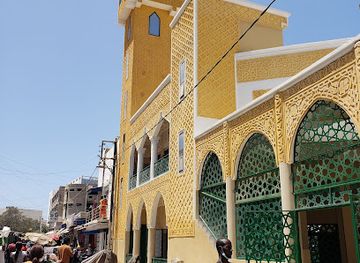
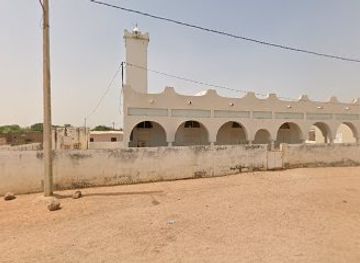
Mosque
Grande Mosquée de Tambacounda
Discover the Grande Mosquée de Tambacounda, a stunning symbol of Islamic architecture and local culture in Senegal.
Best landmarks in Tambacounda
The most recognisable landmarks of Tambacounda are tied to landscape, conservation and movement across the interior. Niokolo-Koba National Park is the region’s principal geographic symbol: its broad protected savanna, wooded plains and wildlife habitats represent one of Senegal’s major conservation landscapes. The Gambia River and its tributary corridors create another important visual landmark, supporting greener vegetation and shaping routes through the park and surrounding countryside. Tambacounda railway facilities and the town’s road junctions recall the region’s historic role on the Dakar–Niger transport corridor, even though contemporary travel is now dominated by roads. The regional capital’s mosques, markets, civic buildings and busy commercial streets are less monumental than the great architectural sights of Senegal’s coast, but they convey Tambacounda’s role as an administrative and trading centre. In the wider countryside, seasonal grasslands, isolated woodland and long red-earth road approaches form a changing natural landmark system whose appearance depends strongly on rainfall.
-
 Hotel
HotelHôtel Le Malahika
Experience comfort and local charm at Hôtel Le Malahika in Tambacounda, your gateway to Senegal's natural wonders.
-
Mosque
Grande Mosquée de Tambacounda
Discover the Grande Mosquée de Tambacounda, a striking example of Islamic architecture and a hub of community spirituality in the heart of Senegal.
-
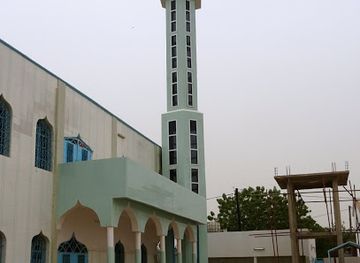
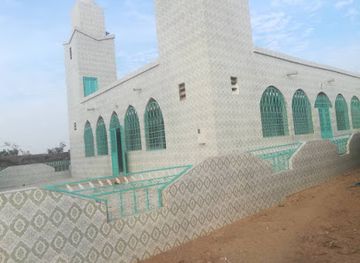
Mosque
Mosquée de Tambacounda-Ouest
Discover the tranquility and architectural beauty of Mosquée de Tambacounda-Ouest, a serene haven in the heart of Senegal's vibrant Tambacounda.
-
Historical landmark
Koutia Couroumba
Discover the rich history and stunning architecture of Koutia Couroumba, a historical landmark in Tambacounda, Senegal, that connects you with local culture.

Explore Tambacounda on the map
Plan your trip on one map. See where the top cities, national parks and sights are, and book hotels and experiences in a few clicks.
Best hotels in Tambacounda
Best restaurants in Tambacounda
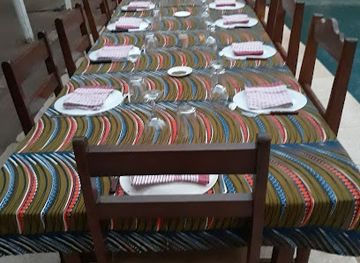
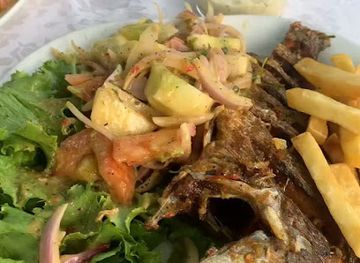
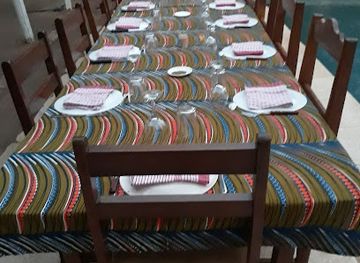
Dining in Tambacounda reflects Senegal’s wider culinary traditions while drawing on the ingredients and movement of the eastern interior. Rice dishes such as ceebu jën and ceebu yapp, chicken or fish preparations, millet, couscous, beans and seasonal vegetables are common reference points, with recipes and accompaniments varying between households and communities. Roadside eateries and small restaurants in Tambacounda offer practical meals, while tea, coffee and sweet drinks are part of the informal rhythm of markets and transport stops. Outside the capital, choices become simpler and may depend on guesthouses, camp kitchens or meals arranged with local hosts, so travellers should not assume late service or a broad menu. Fresh produce, groundnuts and cereals reflect the agricultural economy, while meat and dairy are more closely linked to pastoral livelihoods. Visitors should carry water on long excursions and advise hosts about dietary restrictions well in advance.
-
Restaurant
Saf Dibi Chez Abou Cissé
Savor authentic Senegalese cuisine at Saf Dibi Chez Abou Cissé in Tambacounda – where flavor meets tradition!
-
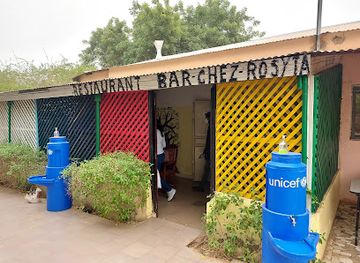
African
Restaurant Bar Chez Rosyta
Experience authentic African cuisine at Restaurant Bar Chez Rosyta in Tambacounda - a culinary journey through Senegalese flavors.
-
Restaurant
Chez Massar
Experience authentic Senegalese cuisine at Chez Massar in Tambacounda, where flavorful dishes and warm hospitality await.
-
Restaurant
Chez Françoise
Discover exquisite dining at Chez Françoise in Tambacounda – where local flavors meet international cuisine.
Best bars in Tambacounda
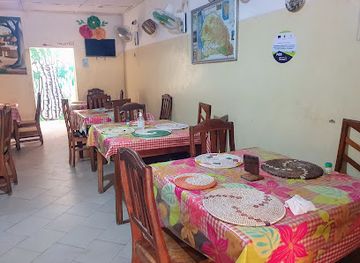
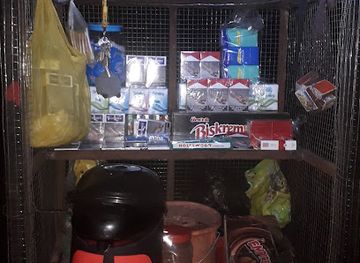
Evening life in Tambacounda is modest and concentrated in the regional capital, where hotel lounges, restaurants, cafés and informal meeting places provide more dependable options than a dedicated club circuit. Traditional Senegalese tea gatherings and conversation are often more characteristic of local evenings than late-night entertainment. A small number of bars may serve beer and spirits, while music and dancing can appear at particular social events, but opening arrangements and venues change and should be checked locally. In rural districts and around Niokolo-Koba, nights are shaped by dining, quiet conversation and the sounds of the surrounding bush rather than nightlife infrastructure. Visitors should dress appropriately, respect local and religious sensibilities, arrange transport back to accommodation and avoid assuming that alcohol is central to the region’s social culture.
-
Restaurant
Saf Dibi Chez Abou Cissé
Discover the authentic taste of Senegal at Saf Dibi Chez Abou Cissé in Tambacounda, where local flavors and friendly service await.
-
African
Restaurant Bar Chez Rosyta
Experience the essence of African culinary traditions at Restaurant Bar Chez Rosyta in Tambacounda, where every meal tells a story.
-
Bar
Le Baobab
Experience the vibrancy of Senegalese culture at Le Baobab, a lively bar in Tambacounda known for its refreshing drinks and welcoming atmosphere.
-
Restaurant
Chez Massar
Experience the vibrant flavors of Senegal at Chez Massar in Tambacounda, where local ingredients meet global culinary traditions.
Best nightclubs in Tambacounda
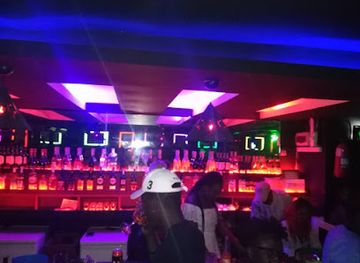
Evening life in Tambacounda is modest and concentrated in the regional capital, where hotel lounges, restaurants, cafés and informal meeting places provide more dependable options than a dedicated club circuit. Traditional Senegalese tea gatherings and conversation are often more characteristic of local evenings than late-night entertainment. A small number of bars may serve beer and spirits, while music and dancing can appear at particular social events, but opening arrangements and venues change and should be checked locally. In rural districts and around Niokolo-Koba, nights are shaped by dining, quiet conversation and the sounds of the surrounding bush rather than nightlife infrastructure. Visitors should dress appropriately, respect local and religious sensibilities, arrange transport back to accommodation and avoid assuming that alcohol is central to the region’s social culture.
-
Disco club
CASTEL NIGHT CLUB
Discover the vibrant atmosphere and electrifying beats at Castel Night Club, the ultimate disco destination in Dakar's nightlife scene.
-
Disco club
King Night Club
Discover the electrifying nightlife at King Night Club in Saly, where beats meet energy and memories are made until dawn.
-
Disco club
Club Gaindé
Discover the electric atmosphere of Club Gaindé, a premier disco club in Dakar, where music, dancing, and culture collide for an unforgettable night out.
-
Night club
Le Nabini Club
Dive into the vibrant nightlife at Le Nabini Club, a premier night club in Dakar offering electrifying music, delicious cocktails, and an unforgettable atmosphere.


Best shops in Tambacounda
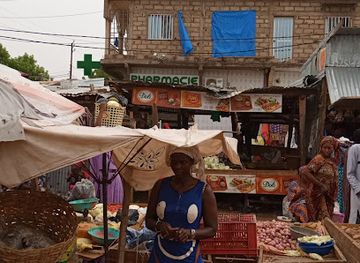
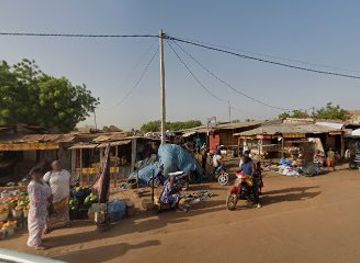
Shopping in Tambacounda is practical, local and strongly connected to the region’s role as an inland trading centre. The capital’s markets and commercial streets are the best places to look for everyday goods, clothing, fabrics, household items, mobile-phone services and provisions for onward travel. Small stalls may offer groundnuts, cereals, dried foods and other agricultural products from the surrounding districts, although availability follows the season. Visitors can also find colourful West African textiles, garments and simple handmade items, but should ask whether an object is locally produced before treating it as a regional craft. Outside Tambacounda, shopping opportunities are limited and usually centred on village stalls or roadside sellers rather than formal craft boutiques. Carry cash in small CFA-franc notes, compare prices politely and avoid buying wildlife products, archaeological material or anything made from protected species. For gifts, sealed local foods, fabric and responsibly sourced small crafts are more appropriate choices than unverified natural specimens.
-
Market
Marché Central
Discover the colorful and lively Marché Central in Tambacounda, a true representation of Senegalese culture and community spirit.
-
Market
Marché koumpentoum
Discover the lively Marché Koumpentoum in Tambacounda, a cultural hub showcasing local crafts, delicious food, and the vibrant spirit of Senegal.
-
Grocery store
Chez Paul (Dépot Boisson)
Discover the vibrant local culture of Tambacounda at Chez Paul, your go-to grocery store for authentic Senegalese flavors and products.
-
Health and beauty shop
Aloé Vera Forever Tambacounda
Explore natural wellness at Aloé Vera Forever in Tambacounda, offering premium aloe vera products for health and beauty enthusiasts.
Get your free copy of our complete guide to Tambacounda, delivered straight to you.
Everything on this page, from attractions and restaurants to essentials and local phrases, in one PDF you can read offline, print or share.
Already have an account? Sign in
Your Tambacounda guide is ready.
We'll send it to · Not you? Sign out

Getting your guide ready…
We are putting together a fresh copy of the Tambacounda guide. This can take up to a minute.
This can take a few moments. If your browser asks, choose Allow so the download can start. You'll find the guide in your Downloads folder.
Nothing happened? Download it again
Sorry, the guide is taking longer than usual. Please try again in a minute, or get it by email instead.
Tambacounda essentials
Currency and Payment
Safety
Emergency Situations
Do's and Don'ts
Local Tips
From Eve
Local phrases worth knowing
You don't need to get them perfect. A few words go a long way, and locals appreciate the effort.
Basics
| English | Local | Say it |
|---|---|---|
| Hello | Naka | [nah-kah] |
| Goodbye | Ba bene | [bah beh-neh] |
| Yes | Waaw | [wah-wah] |
| No | Deed | [deed] |
| Please/You're welcome | S'il vous plaît | [seel voo pleh] |
| Thank you | Jërëjëf | [jeh-reh-jehf] |
| Excuse me/Sorry | N'koy | [n'koh-ee] |
| How are you? | Naka nga def? | [nah-kah nah gah dehf] |
| Fine. And you? | Mangi fi. Naka nga? | [mahn-gee fee. nah-kah nah] |
| Do you speak English? | Ndax bu nga parle Anglais? | [ndahk boo nah parl ahn-glay] |
| I don't understand | Dama taxaw | [dah-mah tah-khaw] |
Eating & Drinking
| English | Local | Say it |
|---|---|---|
| I'd like to see the menu, please | Nanguloo menu bi, s'il vous plaît | [nahng-oo-loh meh-noo bee, seel voo pleh] |
| I don't eat meat | Dama leen meat | [dah-mah leen meet] |
| Cheers! | Namm na! | [nahm nah] |
| I would like to pay, please | Nanguloo jëf, s'il vous plaît | [nahng-oo-loh jehf, seel voo pleh] |
Emergencies
| English | Local | Say it |
|---|---|---|
| Help! | Naka! | [nah-kah] |
| Go away! | Dakk! | [dahk] |
| Call the Police! | Napp polisiin! | [nahp poh-lee-seen] |
| Call a doctor! | Napp doktor! | [nahp dok-tor] |
| I'm lost | Dama gëj | [dah-mah gehj] |
| I'm ill | Dama jëkke | [dah-mah jehk-keh] |
Shopping
| English | Local | Say it |
|---|---|---|
| I'd like to buy... | Nanguloo jënd... | [nahng-oo-loh jend] |
| I'm just looking | Dama jëf | [dah-mah jef] |
| How much is it? | Naka jëm? | [nah-kah jêm] |
| That's too expensive | Sama jëm na xaw | [sah-mah jêm nah khaw] |
| Can you lower the price? | Ndax nga yeneen jëm? | [ndahk nah yah-nayn jêm] |
Time & Numbers
| English | Local | Say it |
|---|---|---|
| What time is it? | Naka sa waxtu? | [nah-kah sah wahk-too] |
| It's one o'clock | Benn sa waxtu | [beh-n sah wahk-too] |
| Half past (10) | Fukk sa (10) | [fook sah (10)] |
| Morning | Suba | [soo-bah] |
| Afternoon | G noon | [gee noon] |
| Evening | Gëj | [gehj] |
| Yesterday | Benn joor | [beh-nn johr] |
| Today | Benn joor | [beh-nn johr] |
| Tomorrow | Benn joor | [beh-nn johr] |
| 1 | Benn | [beh-nn] |
| 2 | Ñaar | [nyah-ahr] |
| 3 | Ñett | [nyett] |
| 4 | Naari | [nah-ree] |
| 5 | Juroom | [hoo-room] |
| 6 | Juroom benn | [hoo-room beh-nn] |
| 7 | Juroom ñaar | [hoo-room nyah-ahr] |
| 8 | Juroom ñett | [hoo-room nyett] |
| 9 | Juroom naari | [hoo-room nah-ree] |
| 10 | Juroom ñeent | [hoo-room nyent] |
Transport & Directions
| English | Local | Say it |
|---|---|---|
| Where's a/the...? | Naka ...? | [nah-kah ...?] |
| What's the address? | Naka adrès bi? | [nah-kah ah-dreh bee] |
| Can you show me (on the map)? | Ndax nga mën na ma (ci plan bi)? | [ndahk nah men nah mah (see plahn bee)] |
| When's the next (bus)? | Naka sa bus bi? | [nah-kah sah boos bee] |
| A ticket (to ....) | Benn jëf (ci ...) | [beh-nn jehf (see ...)] |
History of Tambacounda
Early settlement and the Upper Gambia landscape
The territory of present-day Tambacounda has long been shaped by the Gambia River system, seasonal waterways and routes linking the western Sudan with the Atlantic coast. Archaeological evidence from eastern Senegal indicates extended human occupation, although many sites are less developed for tourism than the better-known prehistoric landscapes elsewhere in the country. Communities adapted to savanna conditions through farming, herding, fishing and trade, creating patterns of settlement that continued to influence the region long before modern administrative borders were drawn.
Mande networks and the western Sudan
For centuries, eastern Senegal formed part of the wider cultural and commercial world of the Mande-speaking peoples and the western Sudan. Political influence shifted between major states and regional authorities, including the Mali and later Songhai spheres, while smaller local polities and trading communities retained considerable importance. Gold, livestock, grain and other goods moved along inland routes, and Islam spread gradually through scholars, merchants and political relationships rather than through a single regional event.
Nineteenth-century rivalries and colonial expansion
During the nineteenth century, Islamic reform movements, local rulers and expanding French power competed for influence across the eastern Senegalese frontier. The area was connected to wider struggles affecting the Futa Toro, upper Gambia and western Sudan, although control was often negotiated unevenly from one locality to another. French conquest brought new administrative boundaries, military posts and taxation, while older trade routes and community affiliations continued to cross the borders later imposed between Senegal, Mali and Gambia.
The Dakar–Niger railway and Tambacounda’s rise
The construction and operation of the Dakar–Niger railway during the colonial period strengthened Tambacounda’s role as an inland transport and administrative centre. The line connected the Senegalese coast with the French Sudan, now largely Mali, and encouraged the growth of services, commerce and migration around railway settlements. Tambacounda’s modern prominence therefore reflects not only its location in the savanna but also its position on a transport corridor linking coastal Senegal with the interior.
Agriculture, livestock and the post-war rural economy
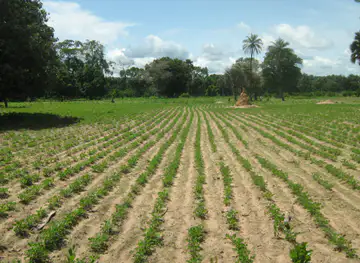
Groundnuts, cotton, millet, maize and livestock have all contributed to the modern economy of the region, with the balance varying according to rainfall, markets and agricultural policy. Commercial farming initiatives and rural development schemes expanded during the twentieth century, while many households continued to combine cultivation, herding, seasonal work and trade. These activities remain visible in the movement of produce through Tambacounda and in the changing appearance of fields and grazing land after the rains.
Creation and expansion of Niokolo-Koba National Park
Protected-area administration began in the Niokolo-Koba landscape during the twentieth century and developed into the national park recognised today. The park was established to conserve large savanna and riverine ecosystems, together with their wildlife, in a region under pressure from settlement, hunting and changing land use. Its protected status helped make eastern Senegal an important destination for nature-focused travel, while also creating continuing challenges involving conservation, local livelihoods, access and the practical management of a very large park.
Contemporary eastern Senegal
Since Senegal’s independence, Tambacounda has remained a major eastern administrative and commercial centre, serving communities spread across a vast territory. Roads have become increasingly important as rail services declined in practical significance, and the region’s economy continues to connect agriculture, livestock, public administration, transport and conservation. Its position between western Senegal, Gambia, Mali and Kédougou gives Tambacounda a distinctly cross-regional character, even as seasonal weather and long distances continue to shape daily life.
Tambacounda in Photos
Browse through our photo collection highlighting the charm and character of the destination.
Neighbouring regions of Tambacounda
The closest regions to Tambacounda, if you have time for more than one.
-

-

-

-
-


Swipe for more regions
Explore more

Explore more of Senegal
Discover Senegal: A West African gem offering rich cultural experiences, vibrant music, stunning natural landscapes, and a warm, welcoming atmosphere.
Explore Senegal