

Free Bugis Travel Guide & Mobile App
Plan your Bugis trip with Evendo. Get free guides to top attractions, restaurants, hotels, and bars. Web access or download the mobile app.


Bugis, Singapore blends Kampong Glam heritage, lively markets, contemporary art, street food and central city sightseeing around historic Arab Street.
Heritage at the City Centre
Bugis occupies a lively stretch of central Singapore where old trading communities, religious landmarks, shopping streets and contemporary cultural spaces meet. Its name recalls the Bugis people of Sulawesi, whose seafaring merchants were active across the Malay Archipelago and whose presence helped shape Singapore’s early waterfront commerce. Today, the district reaches from the Bugis MRT area towards Kampong Glam, Rochor and the Bras Basah arts precinct, making it one of the most convenient areas from which to explore the city.Read more about Bugis
Streets, Markets and Neighbourhoods
Culture in a Compact Setting
When is the best time to visit Bugis?
Best: June–August · 30°C| Month | High (°C) | Rainfall (mm) |
|---|---|---|
| January | 30 | 272 |
| February | 30 | 172 |
| March | 30 | 211 |
| April | 31 | 178 |
| May | 31 | 149 |
| June (best) | 30 | 104 |
| July (best) | 30 | 98 |
| August (best) | 30 | 95 |
| September | 30 | 131 |
| October | 30 | 184 |
| November | 30 | 295 |
| December | 30 | 316 |
Getting to and around Bugis
How to get there
Transportation
Best attractions in Bugis
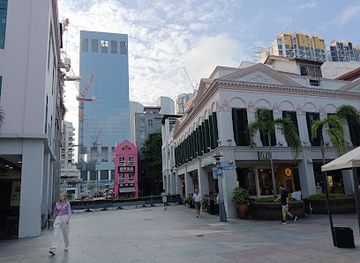
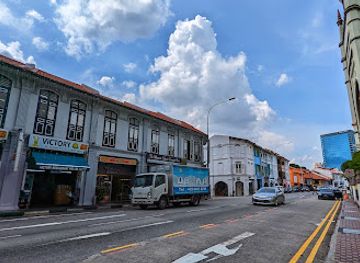
Bugis offers a compact sequence of attractions that can be explored without long journeys. Kampong Glam’s preserved shophouses lead towards Sultan Mosque, while Arab Street and Haji Lane combine heritage façades with textile shops, cafés, design stores and street art. Bugis Street remains a major shopping and people-watching area, and the adjoining malls provide a more contemporary retail experience. The National Library Building, with its public collections and central location, adds a cultural stop near Victoria Street. A short walk towards Bras Basah brings the Singapore Art Museum precinct, the National Museum of Singapore and the historic Raffles Hotel area within reach, although individual institutions may operate under changing arrangements. Visitors interested in architecture can continue towards Little India or the Civic District, linking religious buildings, schools and conserved commercial streets. The appeal lies in the district’s density: markets, museums, food streets, places of worship and modern city spaces appear within a few blocks.
-
Park
Merlion Park
Experience the heart of Singapore at Merlion Park, where iconic heritage meets stunning city views in a tranquil urban oasis.
5 min drive · 1.5 km from city centre
-
Hotel
Marina Bay Sands Singapore
Discover Marina Bay Sands Singapore, a world-class hotel and entertainment destination featuring luxury shopping, dining, and breathtaking views from the SkyPark.
6 min drive · 1.9 km from city centre
-
Garden
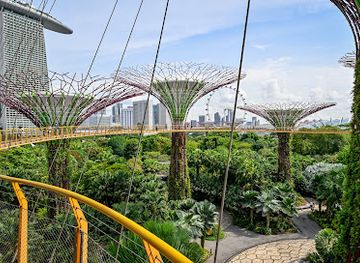
Supertree Grove
Explore the stunning Supertree Grove in Singapore, where nature meets innovation in a breathtaking garden experience.
7 min drive · 2.2 km from city centre
-
Shopping mall
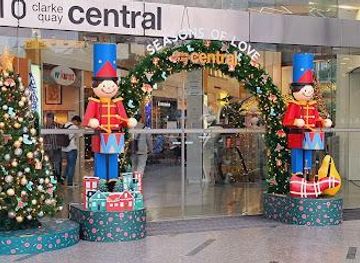
Clarke Quay
Experience the vibrant culture and nightlife at Clarke Quay, Singapore's premier riverside destination for dining, shopping, and entertainment.
5 min drive · 1.5 km from city centre


Best landmarks in Bugis
Sultan Mosque is Bugis’s defining landmark, its large golden domes and broad prayer hall expressing the historic importance of Kampong Glam’s Muslim community. The mosque’s origins reach back to the early nineteenth century, while the present structure reflects later rebuilding and expansion. The surrounding conserved shophouses on Arab Street, Bussorah Street and Haji Lane form an architectural record of trade, residence and religious commerce, with narrow plots, arcaded fronts and upper-floor living spaces. At the district’s western edge, the National Library Building represents modern civic architecture and the continuing role of Bugis as an educational and institutional centre. Nearby Raffles Hotel, founded in the colonial period, belongs to Singapore’s wider civic and commercial heritage rather than to Bugis alone, but helps explain the district’s position beside the historic city centre. Together, these buildings connect maritime exchange, community identity, colonial planning and contemporary urban conservation.
-
Garden
Gardens by the Bay
Explore the stunning beauty of Gardens by the Bay in Singapore, where nature meets innovation amidst iconic Supertrees and spectacular floral displays.
7 min drive · 2.2 km from city centre
-
Shopping mall
Bugis Street
Discover the vibrant Bugis Street, Singapore's bustling shopping mall offering trendy fashion, beauty services, and local culture in an energetic atmosphere.
2 min walk · 0.1 km from city centre
-
Shopping mall
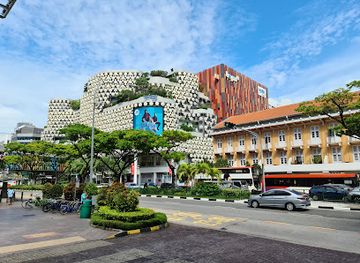
Bugis Junction
Explore Bugis Junction, a vibrant shopping mall in Singapore's Bras Basah area, offering diverse retail, dining, and entertainment experiences.
1 min walk · 0.1 km from city centre
-
Mosque
Sultan Mosque
Discover the architectural splendor and cultural significance of the Sultan Mosque, a cornerstone of Singapore's Islamic heritage in the vibrant Kampong Glam district.
5 min walk · 0.4 km from city centre
Explore Bugis on the map
Plan your Bugis trip on one map. See where the top attractions, landmarks, restaurants, bars and hotels are, find what's near where you're staying, and book hotels and experiences in a few clicks.
Best hotels in Bugis
Best restaurants in Bugis
Bugis and neighbouring Kampong Glam offer a varied dining scene shaped by Malay, Indonesian, Arab, Indian Muslim and wider Singaporean traditions. Around North Bridge Road and the mosque quarter, visitors encounter nasi padang, biryani, murtabak, satay, mee goreng and other dishes associated with the region’s Muslim communities, alongside Middle Eastern cafés, Malay sweets and traditional drinks. Arab Street remains known for restaurants and shops connected with textiles, perfumes and food, while Haji Lane and nearby shophouse streets have a more contemporary café and casual-dining character. The district’s malls add Singaporean chain eateries and international cuisines, and hawker centres elsewhere in the central area provide a broader everyday food experience. Menus and businesses change over time, but the enduring character of Bugis dining comes from the meeting of maritime Southeast Asian, South Asian and Middle Eastern influences rather than from a single local speciality.
-
Hawker center
Tekka Centre
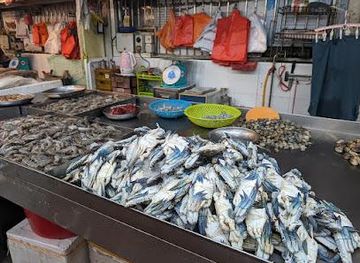
Dive into Little India's sensory feast at Tekka Centre, where century-old hawker stalls serve spice-laden curries, fresh market bounty, and multicultural bites amid buzzing energy just steps from the MRT.
12 min walk · 0.9 km from city centre
-
Western
Josh's Grill - Bugis Junction
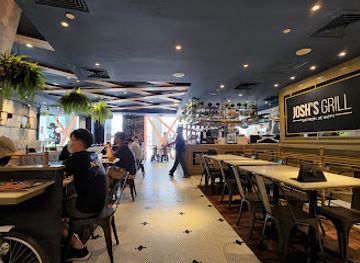
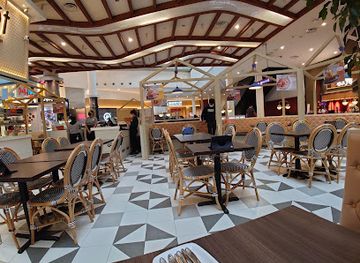
Discover Josh's Grill at Bugis Junction - A culinary haven serving exquisite Western dishes in a vibrant setting.
2 min walk · 0.2 km from city centre
-
French
Poulet - Bugis+
Savor authentic French cuisine at Poulet - Bugis+, where every dish tells a story of culinary excellence in Singapore's vibrant dining scene.
3 min walk · 0.2 km from city centre
-
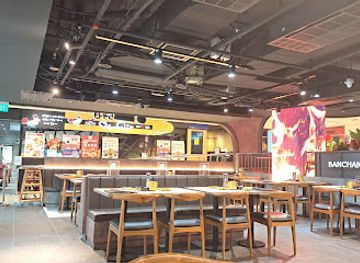
Korean BBQ
Bulgogi Syo @ Bugis Junction
Indulge in authentic Korean BBQ at Bulgogi Syo in Bugis Junction - where every grill brings flavorful delights to your table.
2 min walk · 0.2 km from city centre
Best bars in Bugis
Evenings in Bugis are varied rather than dominated by large nightclubs. Kampong Glam’s Haji Lane, Bali Lane and surrounding shophouse streets become social areas for small bars, cafés, casual music venues and late dining, while Arab Street has a more relaxed atmosphere around its restaurants and traditional businesses. Nearby Bugis Junction and the Bras Basah area offer cinemas, theatres and cultural programming, with the wider city-centre nightlife districts accessible by MRT or taxi. Some venues draw on live music, creative design and intimate interiors rather than high-volume club culture. The district is also well suited to an evening heritage walk, when Sultan Mosque and the conserved streets are illuminated and the heat is less intense. Singapore’s licensing rules and venue schedules vary, so visitors should check current arrangements rather than assume every bar or performance space operates late.
-
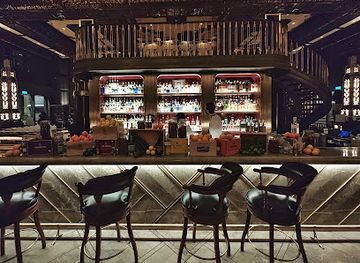
Cocktail bar
ATLAS
Discover the opulence of ATLAS in Singapore, where exquisite cocktails and a luxurious atmosphere create an unforgettable experience.
2 min walk · 0.2 km from city centre
-
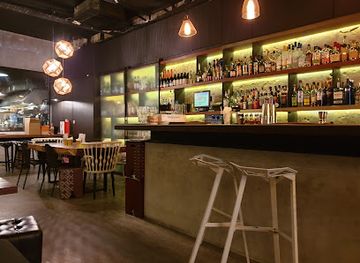
Cocktail bar
Tess Bar & Kitchen, Singapore
Explore the vibrant mixology and culinary delights at Tess Bar & Kitchen, Singapore's premier cocktail bar with a unique menu and lively atmosphere.
6 min walk · 0.5 km from city centre
-
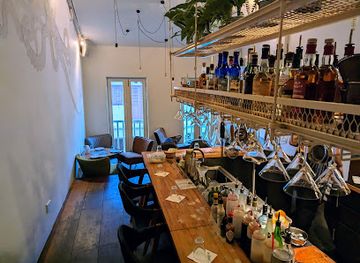
Bar
Bar Stories
Discover Bar Stories: Singapore's premier cocktail bar offering bespoke drinks and a cozy atmosphere in the heart of Kampong Glam.
4 min walk · 0.3 km from city centre
-
Restaurant
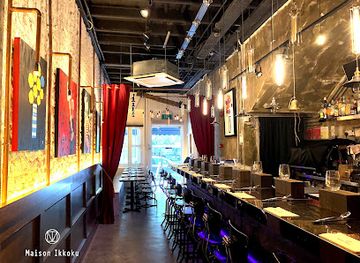
Maison Ikkoku
Discover a unique blend of Japanese and modern French cuisine at Maison Ikkoku, a vibrant restaurant and art gallery in Singapore's Kampong Glam.
6 min walk · 0.4 km from city centre
Best nightclubs in Bugis
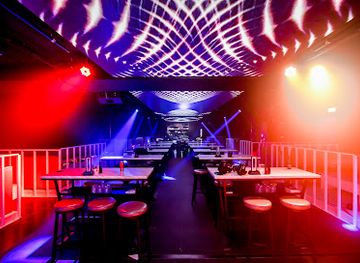
Evenings in Bugis are varied rather than dominated by large nightclubs. Kampong Glam’s Haji Lane, Bali Lane and surrounding shophouse streets become social areas for small bars, cafés, casual music venues and late dining, while Arab Street has a more relaxed atmosphere around its restaurants and traditional businesses. Nearby Bugis Junction and the Bras Basah area offer cinemas, theatres and cultural programming, with the wider city-centre nightlife districts accessible by MRT or taxi. Some venues draw on live music, creative design and intimate interiors rather than high-volume club culture. The district is also well suited to an evening heritage walk, when Sultan Mosque and the conserved streets are illuminated and the heat is less intense. Singapore’s licensing rules and venue schedules vary, so visitors should check current arrangements rather than assume every bar or performance space operates late.
-
Night club
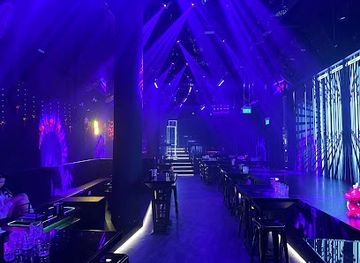
XclusiV
Discover XclusiV, Singapore's vibrant nightlife destination, where unforgettable parties and electrifying atmosphere await every night.
11 min walk · 0.9 km from city centre
-
Disco club
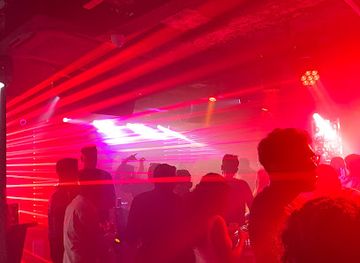
ALPHA NIGHTLIFE
Immerse yourself in the vibrant energy of Alpha Nightlife, Singapore's premier disco club offering unforgettable music and dance experiences.
2 min walk · 0.2 km from city centre
-
Disco club
Club RICH 富二代
Experience electrifying nightlife at Club RICH 富二代 in Singapore’s vibrant Bras Basah district, where music and dance come alive.
4 min walk · 0.3 km from city centre
-
Night club
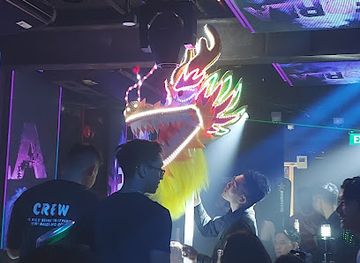
Asiatic Club
Experience the vibrant nightlife at Asiatic Club, a top destination for dance and entertainment in Singapore's Bras Basah district.
4 min walk · 0.3 km from city centre
Best shops in Bugis
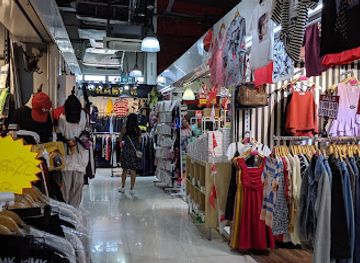
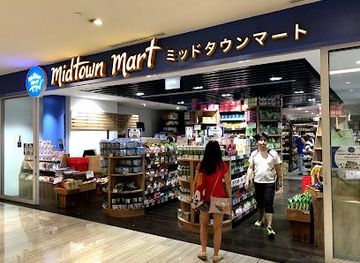
Shopping in Bugis ranges from informal market-style retail to modern malls and specialist heritage businesses. Bugis Street is associated with affordable clothing, accessories, souvenirs and small goods, while Bugis Junction and Bugis+ provide air-conditioned shopping with fashion, entertainment and everyday services. In Kampong Glam, Arab Street and nearby lanes retain shops selling textiles, Malay and Indonesian fabrics, carpets, perfumes, baskets and decorative items, reflecting the quarter’s long commercial relationship with Muslim communities and regional trade. Haji Lane is known for smaller independent boutiques and design-led retailers occupying conserved shophouses, although individual businesses change frequently. Visitors seeking edible souvenirs can look for Singaporean snacks and packaged regional products, while those interested in craft should compare materials, provenance and quality rather than treating every decorative item as locally made. The district’s retail character comes from the contrast between traditional specialist shops and highly modern central-city malls.
-
Shopping mall
Bugis Street
Explore Bugis Street, Singapore's iconic shopping destination offering unique fashion, souvenirs, and delightful street food in a vibrant atmosphere.
2 min walk · 0.1 km from city centre
-
Shopping mall
City Square Mall
Explore City Square Mall: A vibrant shopping haven in Singapore with diverse stores, dining delights, and family-friendly entertainment.
16 min walk · 1.3 km from city centre
-
Shopping mall
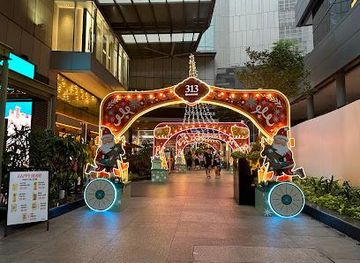
313@somerset
Explore 313@somerset, the ultimate shopping mall in Singapore, offering diverse retail, dining, and entertainment experiences in a vibrant setting.
6 min drive · 2.0 km from city centre
-
Shopping mall
Marina Square
Experience the best of shopping, dining, and entertainment at Marina Square, a premier shopping mall in the heart of Singapore.
13 min walk · 1.0 km from city centre

Get your free copy of our complete guide to Bugis, delivered straight to you.
Everything on this page, from attractions and restaurants to essentials and local phrases, in one PDF you can read offline, print or share.
Already have an account? Sign in
Your Bugis guide is ready.
We'll send it to · Not you? Sign out

Getting your guide ready…
We are putting together a fresh copy of the Bugis guide. This can take up to a minute.
This can take a few moments. If your browser asks, choose Allow so the download can start. You'll find the guide in your Downloads folder.
Nothing happened? Download it again
Sorry, the guide is taking longer than usual. Please try again in a minute, or get it by email instead.
Bugis essentials
Currency and Payment
Safety
Emergency Situations
Do's and Don'ts
Local Tips
From Eve
Local phrases worth knowing
You don't need to get them perfect. A few words go a long way, and locals appreciate the effort.
Basics
| English | Local | Say it |
|---|---|---|
| Hello | Apa khabar | [ah-pah kha-bar] |
| Goodbye | Selamat tinggal | [suh-lah-maht ting-gahl] |
| Yes | Ya | [yah] |
| No | Tidak | [tee-dahk] |
| Please/You're welcome | Silakan | [see-lah-kahn] |
| Thank you | Terima kasih | [te-ree-mah kah-see] |
| Excuse me/Sorry | Maaf | [mah-ahf] |
| How are you? | Apa khabar? | [ah-pah kha-bar?] |
| Fine. And you? | Baik. Dan kamu? | [bah-eek. dahn kah-moo?] |
| Do you speak English? | Bisa berbahasa Inggris? | [bee-sah buhr-bah-hah-sah eeng-grees?] |
| I don't understand | Saya tidak faham | [sah-yah tee-dahk fah-hahm] |
Eating & Drinking
| English | Local | Say it |
|---|---|---|
| I'd like to see the menu, please | Boleh saya lihat menu, silakan | [boh-leh sah-yah lee-haht meh-noo, see-lah-kahn] |
| I don't eat meat | Saya tidak makan daging | [sah-yah tee-dahk mah-kahn dah-eeng] |
| Cheers! | Salam! | [sah-lahm!] |
| I would like to pay, please | Saya ingin membayar, silakan | [sah-yah een-geen memb-bah-yahr, see-lah-kahn] |
Emergencies
| English | Local | Say it |
|---|---|---|
| Help! | Tolong! | [toh-lohng!] |
| Go away! | Pergi! | [pehr-gee!] |
| Call the Police! | Panggil polis! | [pahng-geel poh-lees!] |
| Call a doctor! | Panggil doktor! | [pahng-geel dohk-tohr!] |
| I'm lost | Saya tersesat | [sah-yah tuhr-suh-saht] |
| I'm ill | Saya sakit | [sah-yah sah-keet] |
Shopping
| English | Local | Say it |
|---|---|---|
| I'd like to buy... | Saya ingin membeli... | [sah-yah een-geen mem-beh-lee...] |
| I'm just looking | Saya hanya melihat | [sah-yah hahn-yah meh-lee-haht] |
| How much is it? | Berapa harganya? | [beh-rah-pah hahr-gahn-yah?] |
| That's too expensive | Itu terlalu mahal | [ee-too tuhr-lah-loo mah-hahl] |
| Can you lower the price? | Boleh kurangkan harganya? | [boh-leh koor-ahn-gahn hahr-gahn-yah?] |
Time & Numbers
| English | Local | Say it |
|---|---|---|
| What time is it? | Pukul berapa sekarang? | [poo-kool beh-rah-pah suh-kah-rahng?] |
| It's one o'clock | Pukul satu | [poo-kool sah-too] |
| Half past (10) | Setengah (sepuluh) | [suh-tuhng-ah (suh-poo-loo)] |
| Morning | Pagi | [pah-gee] |
| Afternoon | Petang | [puh-tahng] |
| Evening | Malam | [mah-lahm] |
| Yesterday | Semalam | [suh-mah-lahm] |
| Today | Hari ini | [hah-ree ee-nee] |
| Tomorrow | Esok | [eh-sohk] |
| 1 | Satu | [sah-too] |
| 2 | Dua | [doo-ah] |
| 3 | Tiga | [tee-gah] |
| 4 | Empat | [em-paht] |
| 5 | Lima | [lee-mah] |
| 6 | Enam | [eh-nahm] |
| 7 | Tujuh | [too-joo] |
| 8 | Lapan | [lah-pahn] |
| 9 | Sembilan | [suhm-bee-lahn] |
| 10 | Sepuluh | [suh-poo-loo] |
Transport & Directions
| English | Local | Say it |
|---|---|---|
| Where's a/the...? | Di mana...? | [dee mah-nah...?] |
| What's the address? | Apa alamatnya? | [ah-pah ah-lah-maht-nyah?] |
| Can you show me (on the map)? | Boleh tunjukkan saya (di peta)? | [boh-leh toon-jook-ahn sah-yah (dee peh-tah)?] |
| When's the next (bus)? | Bila bas seterusnya? | [bee-lah bahs suh-ter-oos-nyah?] |
| A ticket (to ....) | Satu tiket (ke ....) | [sah-too tee-keht (keh ....)] |
History of Bugis
Bugis Traders and Singapore’s Early Port
The name Bugis refers to the Bugis people of South Sulawesi, whose maritime trading networks connected ports across the Malay Archipelago. Bugis sailors and merchants were active in the waters around Singapore before and after the establishment of the British trading settlement in 1819. Their presence formed part of a wider commercial world involving Malay, Arab, Indian, Chinese and European communities. The district now called Bugis developed inland from Singapore’s early harbour areas, but its identity remains linked to the movement of people, goods and languages through the port. The name survives as a reminder that Singapore’s urban history was shaped by regional exchange as much as by colonial administration.
The Rise of Kampong Glam
Kampong Glam, immediately beside Bugis, became an important Malay and Muslim centre in the nineteenth century. The area was associated with Sultan Hussein Shah and his family after the 1819 agreement that established the British settlement, and Sultan Mosque became its most prominent religious institution. The present mosque was built in the early nineteenth century and later rebuilt and enlarged, with its distinctive golden domes and prayer hall giving the quarter a powerful architectural presence. Arab, Malay and Indian Muslim traders established businesses around the mosque, selling textiles, perfumes, food and religious goods. The surviving street pattern and shophouses reflect this layered commercial and religious history.
Colonial Planning and Diverse Communities
During the nineteenth and early twentieth centuries, the area around Bugis, Rochor and Bras Basah developed through a mixture of residences, schools, places of worship, shops and entertainment venues. Colonial planning increasingly organised Singapore into administrative and ethnic quarters, although daily commercial life remained more fluid than those categories suggest. The nearby civic district gained institutions such as schools, libraries and government buildings, while Kampong Glam retained its importance as a Muslim trading neighbourhood. Road improvements and public transport connected these districts more closely with the harbour and expanding commercial centre. Many surviving shophouses date from this period of urban growth and reveal how business, residence and community life were combined in compact buildings.
Post-War Change and Urban Redevelopment
After the Second World War, Singapore faced housing shortages, overcrowding and demands for better sanitation and infrastructure. National redevelopment programmes transformed central districts, replacing some older buildings with public housing, offices, hotels and shopping complexes while conserving selected historic areas. Bugis Street became widely known for its night market and its transgender performers, who were part of the street’s social history before redevelopment altered the area in the 1980s. Conservation efforts later protected significant portions of Kampong Glam and its shophouse streets, allowing religious institutions, traditional businesses and newer creative enterprises to continue alongside modern development.
Bugis as a Contemporary Cultural District
In the late twentieth and early twenty-first centuries, Bugis became increasingly integrated into Singapore’s central transport, retail and cultural network. Bugis MRT station opened in 1989 as part of the East West line, and later connections strengthened the district’s links with other parts of the city. The surrounding area now combines shopping centres, the National Library, design and arts institutions, conserved shophouses and hospitality businesses. Kampong Glam’s streets have gained renewed attention for heritage conservation, independent retail and creative activity, while Bugis Junction and Bugis+ express the district’s modern commercial identity. Together, these strands make Bugis a place where port history, community heritage and contemporary urban life remain visible in the same walk.
Bugis in Photos
Browse through our photo collection highlighting the charm and character of the destination.
Cities near Bugis
The closest cities to Bugis, if you have time for more than one stop.
-

-

-

-

-


Swipe for more cities
Explore more

Explore more of Singapore
Explore Singapore: A vibrant city-state where modernity meets tradition, offering world-class cuisine, stunning gardens, and unique cultural experiences.
Explore Singapore