

Free Izola Travel Guide & Mobile App
Plan your Izola trip with Evendo. Get free guides to top attractions, restaurants, hotels, and bars. Web access or download the mobile app.


Izola, Slovenia blends Venetian lanes, Adriatic seafood, Roman heritage and coastal cycling with a relaxed Istrian atmosphere for rewarding seaside escapes.
A Peninsula Shaped by the Sea
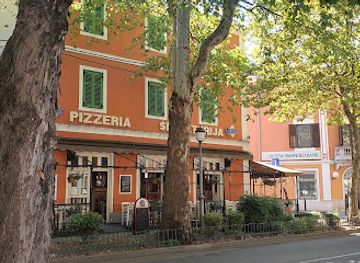
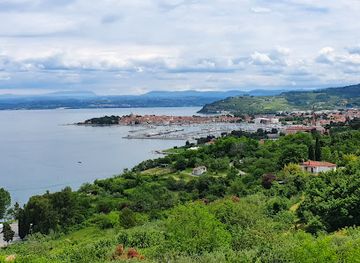
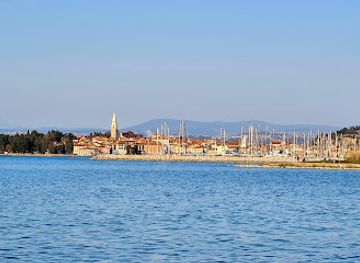
Izola occupies a small peninsula on Slovenia’s short Adriatic coastline, where a former island settlement has grown into a compact harbour town. Its name derives from the Italian isola, meaning island, and the maritime character remains evident in the fishing harbour, working waterfront and boats gathered around the marina. The old town is a walkable maze of narrow lanes, small squares and weathered façades, with cafés and local businesses tucked into its historic fabric.Read more about Izola
Venetian Streets and Istrian Character
Coastal Walks and Roman Traces
When is the best time to visit Izola?
Best: May, September–October · 21–27°C| Month | High (°C) | Rainfall (mm) |
|---|---|---|
| January | 10 | 80 |
| February | 11 | 70 |
| March | 16 | 80 |
| April | 19 | 90 |
| May (best) | 24 | 100 |
| June | 29 | 110 |
| July | 32 | 120 |
| August | 32 | 120 |
| September (best) | 27 | 110 |
| October (best) | 21 | 100 |
| November | 15 | 90 |
| December | 11 | 80 |
Getting to and around Izola
How to get there
Transportation
Best attractions in Izola
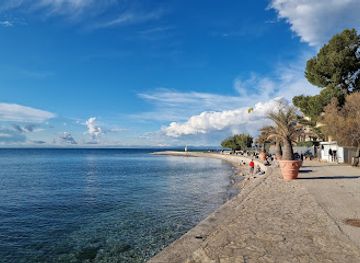
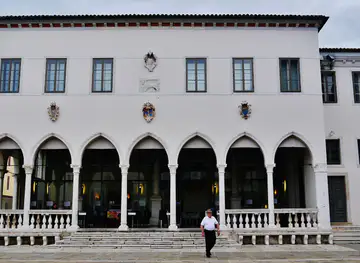
Izola’s compact old town is the natural starting point for sightseeing, with narrow lanes opening onto Manzioli Square, the harbour and small waterfront terraces. The Church of St Maurus and its bell tower provide a historic focus, while the Besenghi degli Ughi Palace and Manzioli Palace reveal the town’s Venetian-era architectural character. Along the shore, the promenade leads to Svetilnik beach and its lighthouse, a relaxed setting for swimming, sunsets and views across the Adriatic. East of the centre, Simonov zaliv combines a beach with archaeological remains associated with the Roman settlement of Haliaetum. The marina and former industrial waterfront offer a more contemporary view of Izola’s relationship with the sea. Cyclists and walkers can also follow sections of the Parenzana, the former narrow-gauge railway route linking the Slovenian coast with the wider Istrian landscape.
-
National reserve
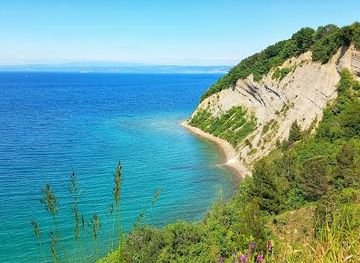
Mesečev Zaliv
Experience the beauty and tranquility of Mesečev Zaliv, Slovenia's stunning national reserve, where nature and adventure await.
12 min drive · 3.9 km from city centre
-
National reserve
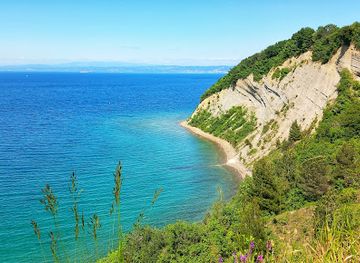
Mesečev Zaliv
Discover the breathtaking tranquility of Mesečev Zaliv, Slovenia's national reserve, and immerse yourself in nature's diverse beauty and serenity.
12 min drive · 3.9 km from city centre
-
Tourist attraction
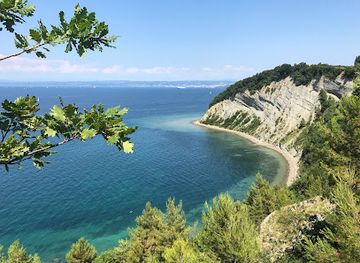
Strunjan cross
Explore the scenic Strunjan Cross in Slovenia, a picturesque spot offering breathtaking views, serene nature trails, and a glimpse into local culture.
12 min drive · 4.1 km from city centre
-
Tourist attraction
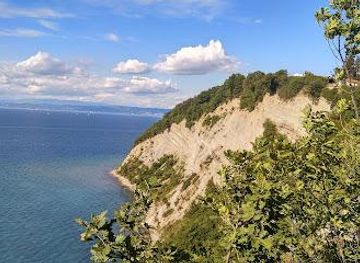
Nature Reserve Strunjan
Explore the stunning landscapes and rich biodiversity of Nature Reserve Strunjan, a coastal gem in Slovenia perfect for nature lovers and outdoor enthusiasts.
11 min drive · 3.5 km from city centre
Best landmarks in Izola
The Church of St Maurus, dedicated to Izola’s patron saint, stands above the old town with a bell tower that remains one of the peninsula’s most recognisable visual markers. Manzioli Palace, associated with the fifteenth-century Venetian period, is among the town’s most important historic buildings and reflects the influence of prominent civic families. Nearby, the Besenghi degli Ughi Palace adds an elegant later layer to the architectural landscape of the centre. The former island’s narrow streets and small squares are themselves a significant urban landmark, preserving the dense structure of a maritime settlement. At Simonov zaliv, archaeological remains connected with Roman Haliaetum extend Izola’s historical story beyond the medieval core, while the harbour and lighthouse represent the continuing importance of the sea to the town’s identity.
-
Public beach
Svetilnik Beach Izola
Discover the serene beauty of Svetilnik Beach in Izola, a perfect blend of relaxation, adventure, and stunning coastal views.
8 min drive · 2.8 km from city centre
-
Italian
Gostilnica Gušt
Experience authentic Italian cuisine in Izola at Gostilnica Gušt, where fresh seafood and delicious pizzas come together in a charming atmosphere.
7 min drive · 2.2 km from city centre
-
Marina
Porting, gradbeništvo, trgovina in turizem, d.o.o
Experience the charm of Izola's marina, where stunning coastal views meet vibrant local culture and unforgettable adventures await.
5 min drive · 1.8 km from city centre
-
Outdoor bath
Beach San Simon
Experience the serene beauty of Beach San Simon in Izola, Slovenia, where sun-soaked relaxation meets stunning coastal views.
5 min drive · 1.7 km from city centre
Explore Izola on the map
Plan your Izola trip on one map. See where the top attractions, landmarks, restaurants, bars and hotels are, find what's near where you're staying, and book hotels and experiences in a few clicks.
Best hotels in Izola
Best restaurants in Izola
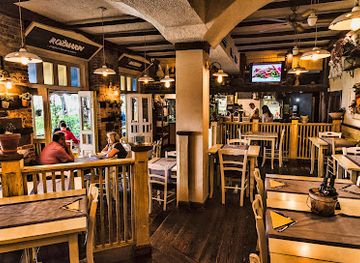
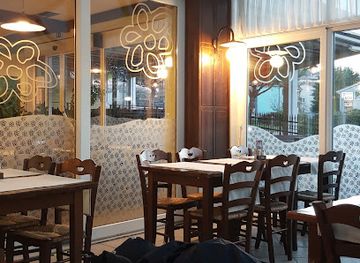
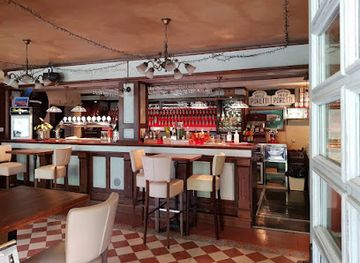
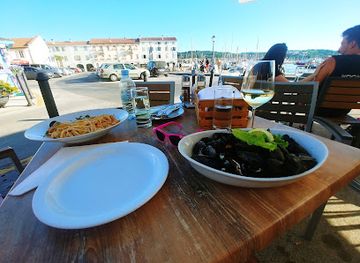
Izola’s food culture is rooted in Slovenian Istria and the Adriatic, with fish, squid, shellfish and other seafood appearing alongside locally grown vegetables, herbs, olive oil and seasonal produce. Menus often reflect the area’s Italian and Mediterranean connections without losing their Slovenian character. The fishing harbour and streets around the old town contain the greatest concentration of seafood restaurants, while cafés and casual eateries provide simpler options during the day. Look for Istrian specialities such as fuži pasta, jota where available, fresh fish and desserts or pastries influenced by the region’s Italianate traditions. Local wines from coastal Slovenia, including Malvasia and Refosco, are natural partners for many dishes. Markets and food shops offer a useful way to discover olive oil, fruit, vegetables and other products from the surrounding countryside.
-
Italian
Gostilnica Gušt
Experience authentic Italian cuisine blended with local flavors at Gostilnica Gušt in beautiful Izola.
7 min drive · 2.2 km from city centre
-
Restaurant
Primavera
Discover authentic Mediterranean flavors at Primavera, Izola's beloved pizzeria known for its fresh ingredients and vibrant atmosphere.
18 min walk · 1.5 km from city centre
-
Pizza
Casa della Pizza
Experience authentic Italian pizza at Casa della Pizza in Izola – where fresh ingredients meet traditional recipes by the Adriatic coast.
6 min drive · 2.0 km from city centre
-
Restaurant
Okrepčevalnica Morski val, Aleksandra Đerđaj, s.p.
Discover authentic Slovenian flavors at Okrepčevalnica Morski Val in Izola - where fresh seafood meets warm hospitality.
8 min drive · 2.5 km from city centre
Best bars in Izola
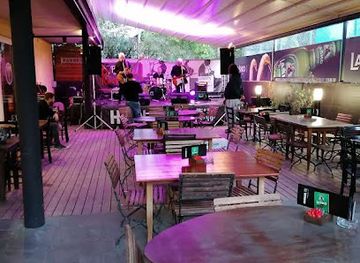
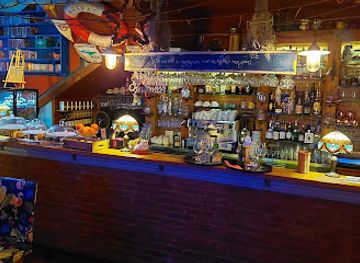
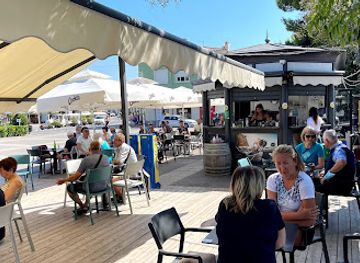
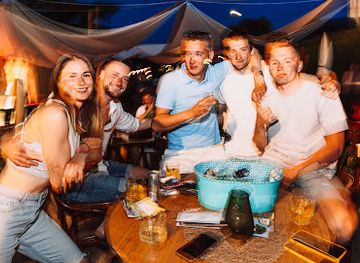
Izola’s evening life is sociable and coastal rather than dominated by large nightclubs. The old harbour, Manzioli Square and nearby waterfront streets fill with café tables and relaxed bars, particularly during the warmer months, while wine bars provide an opportunity to sample Malvasia and other wines from Slovenian Istria. The town’s cultural calendar can add open-air performances, concerts and film events; Kino Otok, an established international film festival based in Izola, brings screenings and discussion to the town when it takes place. The Arrigoni cultural centre and other local venues may host performances and community events. For a livelier club scene, visitors generally look towards larger coastal centres, while Izola itself suits unhurried drinks, seasonal festivals and evenings by the sea.
-
Bar
Hangar
Experience the vibrant nightlife of Izola at Hangar, where live music meets a diverse cocktail menu in a lively atmosphere.
5 min drive · 1.8 km from city centre
-
Bar
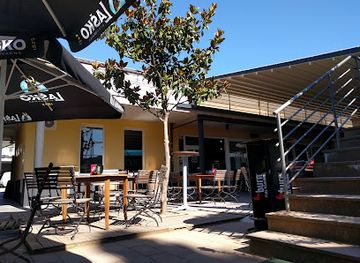
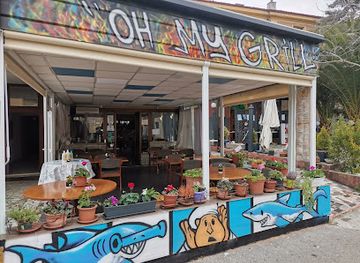
Steak and fish House Oh my Gril
Discover the exquisite flavors of Izola at Oh My Grill, where succulent steaks and fresh fish create an unforgettable dining experience.
7 min drive · 2.3 km from city centre
-
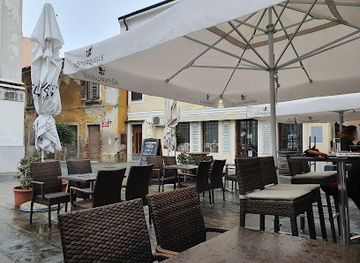
Wine bar
Manzioli Wine Bar
Experience the rich flavors of Slovenian wines at Manzioli Wine Bar in Izola, where every sip tells a story of the Adriatic coast.
7 min drive · 2.5 km from city centre
-
Restaurant
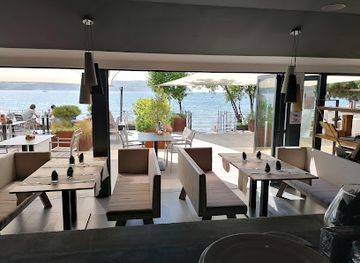
Restavracija in Lounge bar Svetilnik
Experience the best of Izola with fresh local cuisine and a cozy lounge atmosphere at Restavracija in Lounge bar Svetilnik.
8 min drive · 2.7 km from city centre
Best nightclubs in Izola
Izola’s evening life is sociable and coastal rather than dominated by large nightclubs. The old harbour, Manzioli Square and nearby waterfront streets fill with café tables and relaxed bars, particularly during the warmer months, while wine bars provide an opportunity to sample Malvasia and other wines from Slovenian Istria. The town’s cultural calendar can add open-air performances, concerts and film events; Kino Otok, an established international film festival based in Izola, brings screenings and discussion to the town when it takes place. The Arrigoni cultural centre and other local venues may host performances and community events. For a livelier club scene, visitors generally look towards larger coastal centres, while Izola itself suits unhurried drinks, seasonal festivals and evenings by the sea.
-
Bar
Hangar
Discover the energetic vibe of Hangar, Izola's premier bar and live music venue, where unforgettable nights and local culture come alive.
5 min drive · 1.8 km from city centre
-
Bar
Mai piu bar
Experience the vibrant atmosphere at Mai Più Bar in Izola, where locals and tourists gather for delightful drinks and delicious bites.
8 min drive · 2.6 km from city centre
-
Bar
Lonka Bar
Discover the perfect coastal retreat at Lonka Bar in Izola, where refreshing drinks and a vibrant atmosphere await every visitor.
7 min drive · 2.3 km from city centre
-
Night club
Canava House
Discover the vibrant nightlife of Izola at Canava House, a dynamic night club and beach club offering music, dancing, and unforgettable experiences.
10 min drive · 3.4 km from city centre
Best shops in Izola
Shopping in Izola is concentrated around the old town, Ljubljanska ulica, the market area and the streets leading towards the harbour. Independent shops and small galleries offer clothing, gifts, craft items and practical beach goods, while market stalls and food shops are more useful for discovering the region’s edible traditions. Visitors will commonly encounter Slovenian Istrian olive oil, local wine, seasonal produce, honey and other small-scale agricultural products, although provenance and production methods vary between vendors. The historic centre is better suited to browsing than to large-scale retail, and its compact streets give shopping a distinctly local setting. For a wider choice of supermarkets and everyday goods, newer districts and the outskirts provide more practical retail facilities than the pedestrian lanes of the peninsula.
-
Store
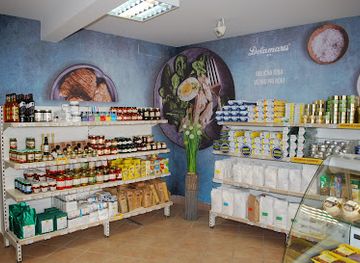
Prodajalna Delamaris Izola
Explore the flavors of the Adriatic at Delamaris Izola, where quality seafood meets local tradition in a delightful shopping experience.
7 min drive · 2.4 km from city centre
-
Store
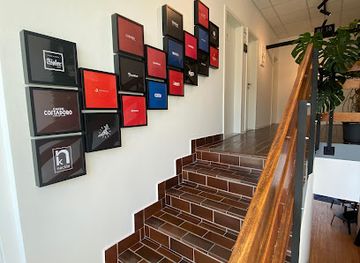
coffeetime.si
Discover the rich flavors of artisanal coffee at Coffeetime in Izola, where every sip tells a story and every visit feels like home.
9 min drive · 3.1 km from city centre
-
Antique store
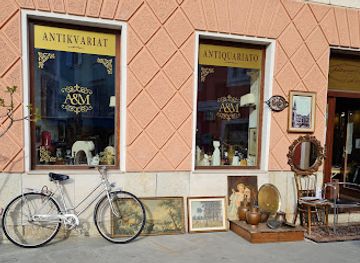
Antiques & More
Explore unique vintage treasures at Antiques & More, Izola's premier antique store, offering a curated selection of history-rich collectibles and artifacts.
7 min drive · 2.5 km from city centre
-
Clothing store
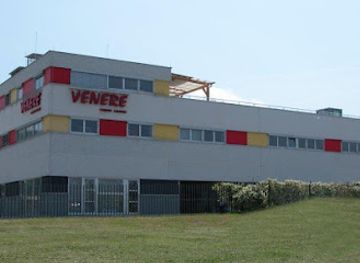
Venere, proizvodnja in prodaja tekstilnih izdelkov, d.o.o.
Discover the essence of Slovenian craftsmanship at Venere, a premier clothing store in Izola offering quality textiles and unique fashion.
7 min drive · 2.4 km from city centre
Get your free copy of our complete guide to Izola, delivered straight to you.
Everything on this page, from attractions and restaurants to essentials and local phrases, in one PDF you can read offline, print or share.
Already have an account? Sign in
Your Izola guide is ready.
We'll send it to · Not you? Sign out

Getting your guide ready…
We are putting together a fresh copy of the Izola guide. This can take up to a minute.
This can take a few moments. If your browser asks, choose Allow so the download can start. You'll find the guide in your Downloads folder.
Nothing happened? Download it again
Sorry, the guide is taking longer than usual. Please try again in a minute, or get it by email instead.
Izola essentials
Currency and Payment
Safety
Emergency Situations
Do's and Don'ts
Local Tips
From Eve
Local phrases worth knowing
You don't need to get them perfect. A few words go a long way, and locals appreciate the effort.
Basics
| English | Local | Say it |
|---|---|---|
| Hello | Živjo | [Zhee-vyo] |
| Goodbye | Nasvidenje | [Nahs-vee-dehn-yeh] |
| Yes | Da | [Dah] |
| No | Ne | [Neh] |
| Please/You're welcome | Prosim | [Proh-seem] |
| Thank you | Hvala | [Hvah-lah] |
| Excuse me/Sorry | Oprostite | [O-proh-stee-teh] |
| How are you? | Kako ste? | [Kah-koh steh?] |
| Fine. And you? | V redu. In vi? | [V reh-doo. Een vee?] |
| Do you speak English? | Govorite angleško? | [Goh-voh-ree-teh ahn-gleh-shko?] |
| I don't understand | Ne razumem | [Neh rah-zoo-mehm] |
Eating & Drinking
| English | Local | Say it |
|---|---|---|
| I'd like to see the menu, please | Želel bi videti jedilnik, prosim | [Zheh-lel bee vee-deh-tee yeh-deel-neek, proh-seem] |
| I don't eat meat | Ne jem mesa | [Neh yehm meh-sah] |
| Cheers! | Na zdravje! | [Nah zdrah-vyeh!] |
| I would like to pay, please | Želel bi plačati, prosim | [Zheh-lel bee plah-cha-tee, proh-seem] |
Emergencies
| English | Local | Say it |
|---|---|---|
| Help! | Pomoč! | [Poh-mo-ch!] |
| Go away! | Pojdi stran! | [Poy-dee strahn!] |
| Call the Police! | Pokliči policijo! | [Poh-klee-chee poh-lee-tsee-yoh!] |
| Call a doctor! | Pokliči zdravnika! | [Poh-klee-chee zdrahv-nee-kah!] |
| I'm lost | Izgubil sem se | [Eez-goo-beel sehm seh] |
| I'm ill | Bolj sem | [Bol-yeh sehm] |
Shopping
| English | Local | Say it |
|---|---|---|
| I'd like to buy... | Želim kupiti... | [Zheh-leem koo-pee-tee] |
| I'm just looking | Samo gledam | [Sah-moh gleh-dahm] |
| How much is it? | Koliko stane? | [Koh-lee-koh stah-neh?] |
| That's too expensive | To je predrago | [Toh yeh preh-drah-goh] |
| Can you lower the price? | Lahko znižate ceno? | [Lah-koh znee-zah-teh cheh-no?] |
Time & Numbers
| English | Local | Say it |
|---|---|---|
| What time is it? | Koliko je ura? | [Koh-lee-koh yeh oo-rah?] |
| It's one o'clock | Je ena ura | [Yeh eh-nah oo-rah] |
| Half past (10) | Pol desetih | [Pohl deh-seh-teeh] |
| Morning | Jutro | [Yoo-troh] |
| Afternoon | Popoldne | [Poh-pohl-dneh] |
| Evening | Večer | [Veh-chehr] |
| Yesterday | Včeraj | [Vcheh-rahy] |
| Today | Danes | [Dah-nehs] |
| Tomorrow | Jutri | [Yoo-tree] |
| 1 | Ena | [Eh-nah] |
| 2 | Dva | [Dvah] |
| 3 | Tri | [Tree] |
| 4 | Štiri | [Shtee-ree] |
| 5 | Pet | [Peh-t] |
| 6 | Šest | [Shest] |
| 7 | Sedem | [Seh-dehm] |
| 8 | Osem | [Oh-sehm] |
| 9 | Devet | [Deh-veht] |
| 10 | Deset | [Deh-seht] |
Transport & Directions
| English | Local | Say it |
|---|---|---|
| Where's a/the...? | Kje je... | [Kyeh yeh...] |
| What's the address? | Kakšen je naslov? | [Kahk-shen yeh nahs-lohv?] |
| Can you show me (on the map)? | Mi lahko pokažete (na zemljevidu)? | [Mee lah-koh poh-kah-zheh-teh (nah zehm-lyeh-vee-doo)?] |
| When's the next (bus)? | Kdaj je naslednji (avtobus)? | [Kdyai yeh nah-slehd-nyee (ow-toh-boos)?] |
| A ticket (to ....) | Vstopnica (do ...) | [Vstohp-nee-tsah (doh ...)] |
History of Izola
Roman Haliaetum and the Ancient Coast
The area around present-day Izola was connected with the Roman settlement and harbour of Haliaetum at Simonov zaliv. Archaeological remains indicate a coastal complex involved in maritime activity, trade and the movement of goods along the northern Adriatic. The Roman presence forms an important foundation for understanding the wider Istrian coast, where ports linked local agricultural production with larger imperial networks. Surviving archaeological features at Simonov zaliv, including traces associated with a Roman maritime settlement and residential complex, provide physical evidence of this earlier phase. Izola’s later urban centre developed on a different part of the peninsula, but the ancient site remains a reminder that the town’s relationship with the sea predates its medieval and Venetian identity by many centuries.
Medieval Island Settlement
Izola emerged as a medieval settlement on an island close to the Istrian shore, a geography reflected in its name. Its position offered access to the sea while placing it within the network of fortified and trading communities that developed along the northern Adriatic. Medieval life was shaped by fishing, small-scale commerce, agriculture and the religious institutions that organised the settlement. As the shoreline changed and connections with the mainland improved, the island character became less pronounced, yet the compact historic core retained the dense pattern of lanes and plots associated with a maritime town. The old centre visible today is therefore the product of gradual urban growth rather than a single act of foundation.
Venetian Rule and Maritime Trade
From the late Middle Ages until the end of the eighteenth century, Izola belonged to the Republic of Venice, whose influence shaped administration, commerce and architecture across the Istrian coast. The town participated in a maritime economy based on fishing, salt, agriculture and regional trade, while its inhabitants lived within the cultural orbit of Venetian Istria. Palaces such as Manzioli Palace and the Besenghi degli Ughi Palace reflect the status of civic families during this period and its aftermath, even though individual buildings have been altered over time. Venetian rule also left a lasting linguistic and architectural imprint, helping explain why Izola’s historic streets combine Slovene Istrian traditions with distinctly Mediterranean and Italianate features.
Habsburg Administration and Modernisation
After the fall of the Venetian Republic in 1797, Izola passed through the administrative changes that affected much of Istria before becoming part of the Habsburg Monarchy. The nineteenth century brought new forms of governance, commercial development and transport links, while the town continued to depend heavily on the sea and surrounding agriculture. Canning and fish-processing activity later became important to Izola’s industrial identity, complementing fishing and wine production. The period also strengthened connections with the broader port economy of the northern Adriatic. Urban growth gradually extended beyond the historic peninsula, creating the mixture of old lanes, industrial traces, residential districts and waterfront facilities that characterises the modern town.
Twentieth-Century Border Changes
The twentieth century brought profound political changes to Izola. After the First World War, the town became part of Italy, and the Italian character of public life remained significant during the interwar period. Following the Second World War, the coastal area was affected by the creation and later reorganisation of the Free Territory of Trieste; Izola became part of Yugoslavia in 1954. These border changes influenced migration, language, institutions and economic life across the coast. The town’s population and cultural identity were consequently shaped by both Slovene and Italian traditions. Fishing, food processing and port-related work remained important, while tourism grew as the Adriatic coast developed new recreational uses.
Slovenian Coastal Town Today
Izola became part of the independent Republic of Slovenia in 1991. In the decades since, the town has balanced its maritime and industrial inheritance with tourism, cultural programming and the conservation of its historic centre. The former fishing town now welcomes visitors to a waterfront shaped by promenades, beaches, a marina and public spaces, while the old centre retains religious, civic and residential buildings from earlier centuries. The Parenzana cycling route has added a contemporary way to experience the coast and its former transport corridors. Izola’s present identity is therefore neither solely historic nor solely resort-based: it is a small Slovenian town where Istrian cultural layers, working-sea traditions and leisure life remain closely connected.
Travel experiences inspired by this city
-
 8 Day Trip
Friends, Karst, and Canyons: 8 Days at Slovenia’s Škocjan Caves
Eco-minded 8-day friends’ adventure to Slovenia’s UNESCO-listed Škocjan Caves, with karst hikes, river canyons, local cuisine, and a comfy base in Divača.
8 Day Trip
Friends, Karst, and Canyons: 8 Days at Slovenia’s Škocjan Caves
Eco-minded 8-day friends’ adventure to Slovenia’s UNESCO-listed Škocjan Caves, with karst hikes, river canyons, local cuisine, and a comfy base in Divača.
 20 Jul 2026
By Esther Mwangi -
 11 Day Trip
Trieste with the Family: Coffeehouses, Castles, and Adriatic Breezes
An 11-day family escape to Trieste, Italy, mixing Habsburg elegance, seaside strolls, Carso hikes, and vibrant coffeehouse culture with fresh Adriatic seafood.
11 Day Trip
Trieste with the Family: Coffeehouses, Castles, and Adriatic Breezes
An 11-day family escape to Trieste, Italy, mixing Habsburg elegance, seaside strolls, Carso hikes, and vibrant coffeehouse culture with fresh Adriatic seafood.
 18 Jul 2026
By Andrea Colombo -
 11 Day Trip
Sežana with Family: 11 Days between the Karst and the Coast
Family-friendly Sežana, Slovenia: discover the Karst, Škocjan Caves, Lipica horses, and easy Trieste day trips by train for a sustainable summer escape.
11 Day Trip
Sežana with Family: 11 Days between the Karst and the Coast
Family-friendly Sežana, Slovenia: discover the Karst, Škocjan Caves, Lipica horses, and easy Trieste day trips by train for a sustainable summer escape.
 15 Jul 2026
By Abena Mensah -
 11 Day Trip
Exploring the Majestic Škocjan Caves with Friends
Discover the awe-inspiring Škocjan Caves in Slovenia with friends, exploring breathtaking karst formations and the rich local culture.
11 Day Trip
Exploring the Majestic Škocjan Caves with Friends
Discover the awe-inspiring Škocjan Caves in Slovenia with friends, exploring breathtaking karst formations and the rich local culture.
 5 May 2026
By Jelena Popović -
 6 Day Trip
Solo Adventure to the Majestic Škocjan Caves
Discover the awe-inspiring Škocjan Caves on a solo journey, exploring Slovenia's natural wonders and capturing breathtaking memories.
6 Day Trip
Solo Adventure to the Majestic Škocjan Caves
Discover the awe-inspiring Škocjan Caves on a solo journey, exploring Slovenia's natural wonders and capturing breathtaking memories.
 15 Nov 2025
By Marko Novak -
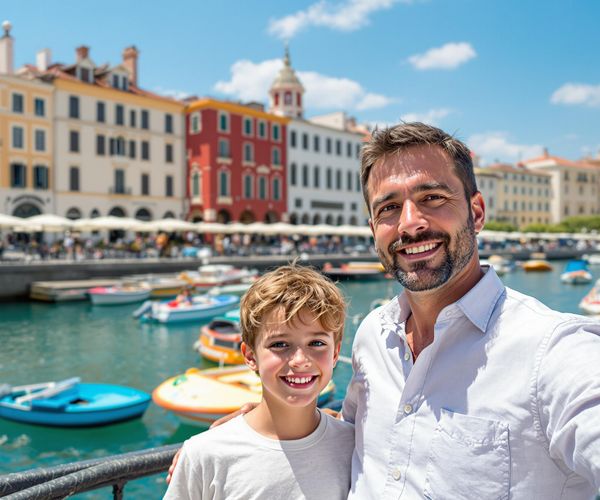 8 Day Trip
Family Adventure in Trieste: Exploring History and Culture
Discover Trieste's rich history and culture with your family, from scenic train rides to exploring architectural marvels and savoring local cuisine.
8 Day Trip
Family Adventure in Trieste: Exploring History and Culture
Discover Trieste's rich history and culture with your family, from scenic train rides to exploring architectural marvels and savoring local cuisine.
 5 Jun 2025
By Michael Garcia
Swipe for more travel diaries
Izola in Photos
Browse through our photo collection highlighting the charm and character of the destination.
Cities near Izola
The closest cities to Izola, if you have time for more than one stop.
-

-

-
-

-


Swipe for more cities
Explore more

Explore more of Slovenia
Discover Slovenia's stunning landscapes, rich cultural heritage, and delightful cuisine. A hidden gem in Europe, perfect for outdoor adventures, history, and culinary exploration.
Explore Slovenia