

Free Lata Travel Guide & Mobile App
Plan your Lata trip with Evendo. Get free guides to top attractions, restaurants, hotels, and bars. Web access or download the mobile app.


Lata, Solomon Islands, is a remote Santa Cruz gateway to Nendö’s cultures, Pacific history, island scenery and intimate local experiences far from busy resorts.
Island Setting and Character
Lata is the administrative centre of Temotu Province in the Solomon Islands, situated on Nendö, the largest island in the remote Santa Cruz group. This is a small Pacific settlement rather than a conventional resort town: daily life is shaped by coastal travel, village networks, subsistence gardens, fishing and the practical demands of living far from the country's main urban centre. The surrounding landscape combines tropical vegetation, low coastal plains and a deeply maritime outlook, with the wider province extending across scattered islands and atolls.Read more about Lata
Culture and Regional Connections
History in the Santa Cruz Region
When is the best time to visit Lata?
Best: January, June–July · 29–30°C| Month | High (°C) | Rainfall (mm) |
|---|---|---|
| January (best) | 30 | 304 |
| February | 30 | 306 |
| March | 30 | 308 |
| April | 30 | 310 |
| May | 30 | 312 |
| June (best) | 29 | 313 |
| July (best) | 29 | 315 |
| August | 29 | 317 |
| September | 30 | 319 |
| October | 30 | 322 |
| November | 30 | 324 |
| December | 30 | 326 |
Getting to and around Lata
How to get there
Transportation
Best attractions in Lata
Lata's attractions are modest but closely connected with the life of Nendö and the wider Santa Cruz region. The local market is a useful place to observe the arrival of garden produce, fish and household goods, while the waterfront and Lata wharf reveal the settlement's dependence on coastal transport. Temotu Provincial Government buildings provide context for the town's role as the administrative centre of a widely scattered island province, although they are working offices rather than conventional visitor sights. Around Lata, visitors can arrange locally guided walks, village visits and coastal excursions that introduce Nendö's landscapes, gardens, canoe traditions and customary life. The island's significance also lies in its position within the wider Santa Cruz cultural area, associated with ancient Pacific voyaging and Lapita-era settlement. Longer journeys to places such as the Reef Islands, Tikopia or Vanikoro are regional expeditions requiring separate transport and local arrangements, not nearby day attractions.
-
 Garden
Cocotinou's Point
Discover the tranquility of Cocotinou's Point, a serene garden oasis in Lata, where nature's beauty surrounds you.
11 min drive · 3.5 km from city centre
-
Tourist attraction
Aplau
Explore Aplau in Nemboe, a captivating tourist attraction offering a unique blend of culture and stunning natural beauty.
31 min drive · 11 km from city centre
Best landmarks in Lata
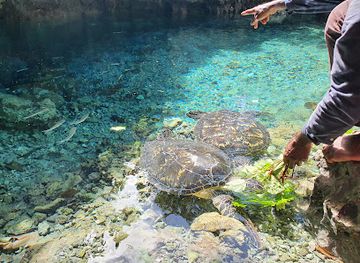
Lata's most significant landmarks are civic and maritime rather than grand monumental structures. The Temotu Provincial Government offices represent the settlement's administrative importance and the post-independence organisation of one of the Solomon Islands' most geographically dispersed provinces. Lata wharf is an equally telling site: it connects the town with coastal supply routes and the island communities whose movement depends on the sea. The surrounding Nendö landscape, including customary villages, gardens and shoreline, forms a living cultural landmark shaped by generations of Pacific island stewardship. Lata is also linked to the wider historical identity of the Santa Cruz Islands, named by the Spanish expedition of Álvaro de Mendaña de Neira in 1595 and inhabited long before European contact. These places are working parts of local life, so respectful access and permission matter more than formal interpretation or visitor facilities.
-
Hospital
Lata hospital
Explore the vital role of Lata Hospital in the Solomon Islands, a key healthcare facility amidst breathtaking natural beauty and vibrant local culture.
4 min walk · 0.3 km from city centre
Explore Lata on the map
Plan your Lata trip on one map. See where the top attractions, landmarks, restaurants, bars and hotels are, find what's near where you're staying, and book hotels and experiences in a few clicks.
Best hotels in Lata
Best nightclubs in Lata
Lata does not have the concentrated bar and nightclub scene found in Honiara, and evening life is generally quiet, community-based and shaped by the limited infrastructure of a remote provincial centre. Social occasions may take place through churches, family gatherings, community events or informal meetings, while accommodation providers may offer simple refreshments rather than a full late-night service. The waterfront and roads should be treated cautiously after dark, particularly where lighting and transport are limited. Visitors should follow local guidance on alcohol, dress and appropriate behaviour, and should not expect regular live-music venues, cocktail bars or organised club nights. Evening cultural activities, when arranged through local hosts, are more likely to offer insight into community life than commercial entertainment.
-
Hospital
Lata hospital
Discover Lata Hospital, an essential healthcare hub for travelers and locals alike in the Solomon Islands, ensuring peace of mind during your adventures.
4 min walk · 0.3 km from city centre
Best shops in Lata
Shopping in Lata is centred on the local market, small general stores and informal trading rather than dedicated souvenir streets or modern retail complexes. The market may offer seasonal fruit, vegetables, fish and prepared food, giving visitors a direct view of Nendö's household economy and links with surrounding villages. Small purchases of locally made woven goods, shell work or other crafts may sometimes be possible, but availability varies and items should be bought respectfully from their makers or sellers. Imported essentials are also important because Temotu depends on irregular supply connections by air and sea. Visitors should not expect a large selection of branded goods, specialist shops or reliable card payment. Cash in Solomon Islands dollars, patience and a willingness to ask locally are more useful than a fixed shopping itinerary.
-
Bakery
Pecel Lele Lamongan
Savor the authentic taste of Indonesian cuisine at Pecel Lele Lamongan, famous for its crispy fried catfish and flavorful side dishes.
2 min walk · 0.1 km from city centre
-
Shopping mall
Sana Store
Explore Sana Store in Nendo, a vibrant shopping mall offering unique local crafts and international goods for every taste.
17 min walk · 1.4 km from city centre
-
General store
PZTR investment
Explore PZTR Investment in Lata for a unique shopping experience filled with local products and cultural treasures of the Solomon Islands.
9 min walk · 0.8 km from city centre
-
Sign shop
DTGraphics
Explore DTGraphics, the premier sign shop in Lata, showcasing local artistry and personalized signage solutions for every traveler.
8 min walk · 0.6 km from city centre
Get your free copy of our complete guide to Lata, delivered straight to you.
Everything on this page, from attractions and restaurants to essentials and local phrases, in one PDF you can read offline, print or share.
Already have an account? Sign in
Your Lata guide is ready.
We'll send it to · Not you? Sign out

Getting your guide ready…
We are putting together a fresh copy of the Lata guide. This can take up to a minute.
This can take a few moments. If your browser asks, choose Allow so the download can start. You'll find the guide in your Downloads folder.
Nothing happened? Download it again
Sorry, the guide is taking longer than usual. Please try again in a minute, or get it by email instead.
Lata essentials
Currency and Payment
Safety
Emergency Situations
Do's and Don'ts
Local Tips
From Eve
Local phrases worth knowing
You don't need to get them perfect. A few words go a long way, and locals appreciate the effort.
Basics
| English | Local | Say it |
|---|---|---|
| Hello | Alu | [ah-loo] |
| Goodbye | Nabalu | [nah-bah-loo] |
| Yes | Ea | [eh-ah] |
| No | Ale | [ah-leh] |
| Please/You're welcome | Tangio | [tahn-gee-oh] |
| Thank you | Karakarawa | [kah-rah-kah-rah-wah] |
| Excuse me/Sorry | Tangio | [tahn-gee-oh] |
| How are you? | Oli wanem? | [oh-lee wah-nem] |
| Fine. And you? | Iu man | [yoo mahn] |
| Do you speak English? | Oli save toktok long Inglish? | [oh-lee sah-veh tohk-tohk lawng Ing-gleesh] |
| I don't understand | Mi no save | [mee no sah-veh] |
Eating & Drinking
| English | Local | Say it |
|---|---|---|
| I'd like to see the menu, please | Mi laekim lukim menu, plis | [mee lie-kim look-eem men-oo, plees] |
| I don't eat meat | Mi no kaikim mit | [mee no kah-ee-kim meet] |
| Cheers! | Mataku | [mah-tah-koo] |
| I would like to pay, please | Mi laekim peim, plis | [mee lie-kim pay-eem, plees] |
Emergencies
| English | Local | Say it |
|---|---|---|
| Help! | Helpem! | [help-em] |
| Go away! | Garem | [gah-rem] |
| Call the Police! | Kolem Polis! | [koh-lehm poh-lees] |
| Call a doctor! | Kolem dokta! | [koh-lehm dohk-tah] |
| I'm lost | Mi lusim | [mee loo-seem] |
| I'm ill | Mi sik | [mee seek] |
Shopping
| English | Local | Say it |
|---|---|---|
| I'd like to buy... | Mi laekim baem... | [mee lie-kim bah-eem...] |
| I'm just looking | Mi jes lukim | [mee jess look-eem] |
| How much is it? | Hao moa? | [hah-oh moh-ah] |
| That's too expensive | Hem tu espensiv | [hehm too eh-spehn-seev] |
| Can you lower the price? | Oli save kisim prais lola? | [oh-lee sah-veh kee-seem price loh-lah] |
Time & Numbers
| English | Local | Say it |
|---|---|---|
| What time is it? | Wanem taim? | [wah-nem tah-eem] |
| It's one o'clock | Iu olok wan olok | [yoo oh-lohk wah-n oh-lohk] |
| Half past (10) | Haf pas long ten | [hahf pahs lawng tehn] |
| Morning | Moning | [moh-ning] |
| Afternoon | Apinun | [ah-pee-noon] |
| Evening | Ivinin | [ee-vee-neen] |
| Yesterday | Nambae | [nahm-bah-eh] |
| Today | Tude | [too-deh] |
| Tomorrow | Tomoro | [toh-moh-roh] |
| 1 | Wan | [wah-n] |
| 2 | Tu | [too] |
| 3 | Tri | [tree] |
| 4 | Fo | [foh] |
| 5 | Faiv | [fah-eev] |
| 6 | Siks | [siks] |
| 7 | Seven | [seh-vehn] |
| 8 | Eit | [ayt] |
| 9 | Nain | [nayn] |
| 10 | Ten | [tehn] |
Transport & Directions
| English | Local | Say it |
|---|---|---|
| Where's a/the...? | Wea hem...? | [weh-ah hehm] |
| What's the address? | Wanem adris? | [wah-nem ah-drees] |
| Can you show me (on the map)? | Oli save soim mi (long map)? | [oh-lee sah-veh soh-eem mee lawng mahp] |
| When's the next (bus)? | Wanem taim bae hem kam? | [wah-nem tah-eem bah-eh hehm kahm] |
| A ticket (to ....) | Wan tiket (long ....) | [wah-n tee-keh (lawng ....)] |
History of Lata
Lapita Settlement in the Santa Cruz Islands
The Santa Cruz Islands form part of the wider region reached by Lapita seafarers during the settlement of the western Pacific, roughly three millennia ago. Archaeological evidence from the Solomon Islands records communities skilled in open-water navigation, pottery production, horticulture and exchange across island chains. Although the surviving town of Lata is a modern administrative settlement, its setting on Nendö belongs to a much older cultural landscape in which coastal villages, gardens and marine resources have long been closely connected. The movement of people, technologies and traditions through the archipelago established the deep ocean-going relationships that still characterise Temotu's scattered islands.
Mendaña and the European Encounter
Spanish navigator Álvaro de Mendaña de Neira reached the Santa Cruz Islands in 1595 during an expedition searching for the fabled southern continent and new lands for Spain. The encounter was marked by serious tensions, illness and conflict, and the expedition's attempt to establish a settlement at Graciosa Bay was abandoned soon afterwards. European maps retained the name Santa Cruz for the island group, while local societies continued to develop according to their own political, linguistic and customary systems. This early contact was episodic rather than the beginning of continuous European settlement, and it did not turn the islands into a major colonial port.
Missionary and Colonial Change
From the nineteenth century, missionaries, traders and colonial officials became more regular influences across the Solomon Islands. Christian missions established new institutions and reshaped religious life, while commerce and labour recruitment connected remote communities with wider colonial economies. Britain declared a protectorate over the Solomon Islands in 1893, bringing the islands into a formal administrative framework, although government presence remained limited in distant Temotu. Local communities retained customary authority, languages and land relationships, and the region's remoteness meant that colonial change unfolded unevenly rather than replacing older social structures outright.
War and the Changing Pacific
The Second World War transformed the strategic importance of the Solomon Islands, especially around Guadalcanal and the central island chain, where major Allied and Japanese operations took place. Temotu lay away from the best-known battlefields, but the war altered travel, communications and the movement of people throughout the archipelago. Its aftermath accelerated the development of government services and transport links, while the wider Pacific experienced decolonisation and political change. The islands' wartime history is therefore part of a broader regional story, even though Lata is not itself a principal battlefield destination.
Temotu's Provincial Centre
The modern settlement of Lata developed significance as the administrative centre of Temotu Province, one of the Solomon Islands' provinces established within the country's post-colonial system. Solomon Islands gained independence from Britain in 1978, and Lata subsequently became the principal government and service hub for an immense but thinly connected eastern province. Its role is practical: provincial offices, transport links, markets and essential services connect Nendö with communities dispersed across the Santa Cruz Islands. Contemporary Lata reflects this administrative function while remaining rooted in the customary, village-based life of Nendö and the surrounding ocean region.
Lata in Photos
Browse through our photo collection highlighting the charm and character of the destination.
Cities near Lata
The closest cities to Lata, if you have time for more than one stop.
-

-
-

-

-


Swipe for more cities
Explore more
Explore more of Solomon Islands
Discover the Solomon Islands: An unspoiled tropical paradise with pristine beaches, vibrant coral reefs, rich history, and unique cultural experiences.
Explore Solomon Islands