

Free Western Province Travel Guide & Mobile App
Explore Western Province with free travel guides. Discover regional history, expert tips, proposed trips, and audio guides on web or mobile app.


Explore Solomon Islands' Western Province for Marovo Lagoon, reef diving, wartime history, forested islands and community-led island journeys.
When is the best time to visit Western Province?
Best: May–July · 31°C| Month | High (°C) | Rainfall (mm) |
|---|---|---|
| January | 31 | 350 |
| February | 31 | 300 |
| March | 31 | 300 |
| April | 31 | 250 |
| May (best) | 31 | 200 |
| June (best) | 31 | 150 |
| July (best) | 31 | 150 |
| August | 31 | 200 |
| September | 31 | 250 |
| October | 31 | 300 |
| November | 31 | 350 |
| December | 31 | 400 |
Getting to and around Western Province
How to get there
Transportation
Top city travel guides in Western Province
The cities of Western Province, and the easiest places to base yourself.

Swipe for more cities
Destinations in Western Province
Resorts, valleys and scenic spots worth a trip of their own.
-

-

-

-


Swipe for more destinations
Best attractions in Western Province
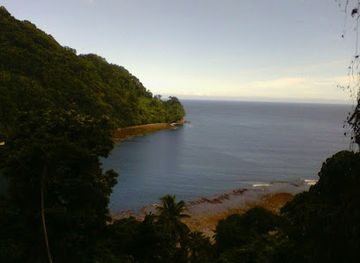
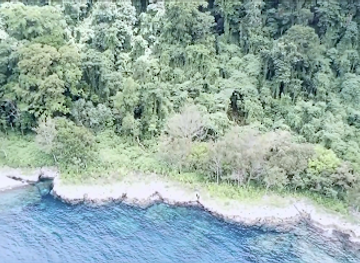
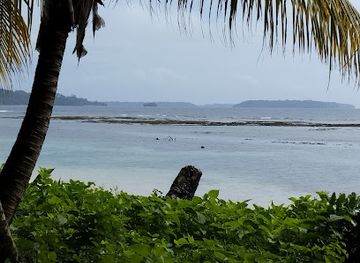
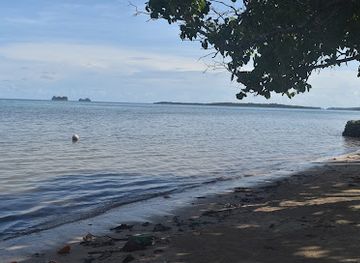
Western Province's attractions are primarily aquatic and cultural. Around Gizo, clear-water reefs, small coral islands and sheltered beaches support snorkelling, diving, kayaking and fishing, while nearby Kennedy Island offers a concise introduction to the region's Pacific War history. Munda provides access to reef excursions, Roviana Lagoon and the wartime landscape around its airfield, as well as journeys into the forested interior of New Georgia. Marovo Lagoon and Vangunu bring together limestone and volcanic islands, mangroves, coral gardens and village communities, with guided canoeing and lagoon trips often central to a stay. Divers can explore varied walls, channels and wartime wreck sites, but conditions and access should be assessed with local operators. On land, Kolombangara and other volcanic islands offer demanding forest experiences rather than developed hiking infrastructure. Tetepare is notable for community-led conservation and carefully managed visits, while village stays and cultural tours provide context about canoe building, carving, customary marine management and local history. The province is not a conventional sightseeing circuit: its appeal lies in combining remote landscapes with the knowledge of people who navigate, fish and care for these islands.
-
Island
San Cristobal
Explore the natural beauty and vibrant culture of San Cristobal Island, a hidden paradise in the Solomon Islands perfect for every traveler.
-
Island
Mborokua Island
Experience Mborokua Island: A secluded paradise in the Solomon Islands, offering pristine beaches, vibrant marine life, and cultural richness.
-
Tourist attraction
Bunikalo
Explore Nggatokae Island, a serene tropical paradise in the Solomon Islands, where adventure meets relaxation amidst stunning natural beauty.
-
Island
Shortland Islands
Explore the stunning Shortland Islands, a hidden paradise of lush landscapes, rich culture, and vibrant marine life in the Solomon Islands.
Best landmarks in Western Province
Munda Airfield is one of Western Province's most significant wartime landmarks, recalling the 1943 New Georgia campaign and the strategic struggle for control of the islands. Near Gizo, Kennedy Island is the best-known memorial landscape associated with the loss of PT-109 and the survival of John F. Kennedy and his crew; its importance is historical as well as geographic. The broad waters and forested margins of Marovo Lagoon form a natural landmark on a continental scale, with islands, reef passages and village settlements defining the visual identity of the province. Roviana Lagoon contains culturally important ancestral and archaeological sites, including places associated with former chiefly power, although access and photography require local permission. The volcanic mass of Kolombangara, rising dramatically from the sea, is another defining feature, with its forested slopes and interior crater landscape visible from surrounding waters. Tetepare's intact-looking forest and protected coastline represent a different kind of landmark: a place whose significance lies in community conservation and customary stewardship rather than monumental architecture.
-
Hotel
Heritage Park Hotel
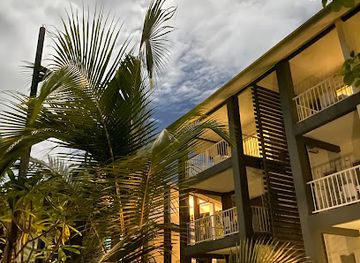
Discover the Heritage Park Hotel, a perfect blend of comfort and cultural immersion in Honiara, Solomon Islands, ideal for adventure seekers and relaxation.
-
 Resort hotel
Coral Sea Resort & Casino
Experience luxury and excitement at Coral Sea Resort & Casino, your premier destination in Honiara for relaxation, dining, and entertainment.
-
Market
Honiara Central Market
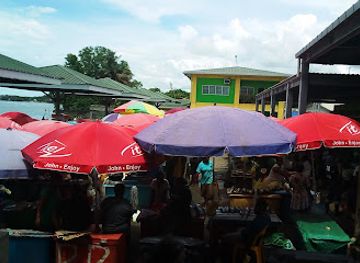
Discover the vibrant Honiara Central Market, a cultural hub where local produce and crafts come together in the heart of the Solomon Islands.
-
Hotel
Solomon Kitano Mendana Hotel
Experience the beauty of Honiara from the comfort of Solomon Kitano Mendana Hotel, where local culture meets modern luxury.
Explore Western Province on the map
Plan your trip on one map. See where the top cities, national parks and sights are, and book hotels and experiences in a few clicks.
Best hotels in Western Province
Best restaurants in Western Province
Dining in Western Province is closely tied to island logistics and local produce rather than to a large restaurant industry. Gizo and Munda offer the widest choice, including hotel and guesthouse dining, simple cafés, takeaway food and meals based on the day's supply of fish. In villages and remote lodges, visitors may encounter reef fish, tuna, coconut, cassava, sweet potato, taro, breadfruit, rice and seasonal tropical fruit, often prepared simply and shared as part of a hosted stay. Marovo-area accommodation can provide meals arranged around boat transfers and available provisions, so dietary requirements should be explained in advance. Local markets and small shops are useful for fruit, snacks and basic supplies, though choice and opening arrangements vary. Restaurants may offer familiar international dishes for travellers, but the most characterful meals are often connected to family kitchens, village hosts or fresh catches rather than formal menus. Solomon Islands' betel nut is widely encountered in the region, but it is a local practice rather than a restaurant speciality and should not be treated as a recreational substitute for food or drink.
-
Resort hotel
Coral Sea Resort & Casino
Experience luxury and excitement at Coral Sea Resort & Casino in Honiara – your gateway to adventure in Solomon Islands.
-
Vietnamese
Saigon Sunrise - Honiara Bakery & Vietnamese Restaurant
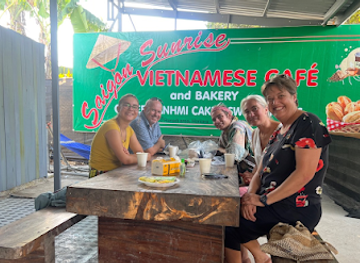
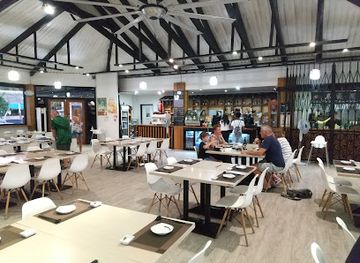
Experience authentic Vietnamese cuisine at Saigon Sunrise Bakery & Restaurant in Honiara – a culinary gem blending tradition with local flavors.
-
Resort hotel
Fatboys Resort
Experience tranquility at Fatboys Resort - your perfect escape in Gizo with stunning views and exceptional hospitality.
-
Restaurant
Tenkai Sushi Cafe
Discover exquisite Japanese cuisine at Tenkai Sushi Cafe in Honiara—where every bite tells a story.
Best bars in Western Province
Nightlife in Western Province is modest and concentrated in Gizo and Munda. Hotel bars, small local bars and waterfront venues provide places for a beer, soft drink or conversation, while some evenings may include acoustic music, dancing or community entertainment. The atmosphere is generally social and unhurried rather than built around a large nightclub circuit, and options become very limited on smaller islands and in conservation areas. Gizo has the broadest choice of accommodation-based evening venues, while Munda's nightlife is linked to its guesthouses, local community and travelling workers. Remote lodges tend to offer dinner, reef or sunset outings and quiet conversation rather than late opening hours. Establishments may close early or change arrangements according to staffing, weather and local events, so confirm locally instead of relying on online listings. Drink responsibly, arrange a safe return to your accommodation and remember that village settings require greater respect for household routines and community privacy.
-
Restaurant
Fatboys Resort
Experience the serene beauty and vibrant culture of Gizo at Fatboys Resort, your ultimate island getaway for relaxation and adventure.
-
Hotel
Gizo Hotel
Experience the charm and tranquility of Gizo Hotel, a perfect base for your adventures in the Solomon Islands.
-
Hotel
Imagination Island Coral Reef Resort
Discover the enchanting beauty and luxury of Imagination Island Coral Reef Resort in the Solomon Islands, where adventure meets relaxation in a tropical paradise.
-
Resort hotel
Zipolo Habu Resort
Discover tranquility and adventure at Zipolo Habu Resort, a paradise on Lola Island in Vona Vona Lagoon, Western Province.
Best nightclubs in Western Province
Nightlife in Western Province is modest and concentrated in Gizo and Munda. Hotel bars, small local bars and waterfront venues provide places for a beer, soft drink or conversation, while some evenings may include acoustic music, dancing or community entertainment. The atmosphere is generally social and unhurried rather than built around a large nightclub circuit, and options become very limited on smaller islands and in conservation areas. Gizo has the broadest choice of accommodation-based evening venues, while Munda's nightlife is linked to its guesthouses, local community and travelling workers. Remote lodges tend to offer dinner, reef or sunset outings and quiet conversation rather than late opening hours. Establishments may close early or change arrangements according to staffing, weather and local events, so confirm locally instead of relying on online listings. Drink responsibly, arrange a safe return to your accommodation and remember that village settings require greater respect for household routines and community privacy.
-
Bar
Point Cruz Yacht Club
Discover the vibrant atmosphere of Point Cruz Yacht Club, a premier bar in Honiara offering stunning views, great drinks, and a lively ambiance.
-
French
Club Havanah
Discover a taste of France in Honiara at Club Havanah, where exquisite cuisine meets a vibrant atmosphere for an unforgettable dining experience.
-
Casino
Supreme Casino
Discover the excitement of gaming and entertainment at Supreme Casino in Highway, where every visit offers a thrilling experience.
-
Travel lounge
The Belama Club
Discover tranquility at The Belama Club, a serene travel lounge in Honiara perfect for relaxation and socializing.
Best shops in Western Province
Shopping in Western Province is practical and locally focused. Gizo and Munda have the most useful small shops and market activity for fruit, vegetables, snacks, bottled water, basic toiletries and travel supplies, while Noro serves as an important commercial and fishing centre. Craft stalls and community sellers may offer woven items, shell work, carved objects, baskets and locally made souvenirs, although availability varies by island and season. Purchases should be made directly and respectfully, with permission sought before photographing work or entering a village sales area. Fresh produce and fish may be available near markets or through accommodation providers, but remote communities cannot guarantee a daily market. Local art and carving can carry cultural meaning, so ask about materials and provenance and never buy archaeological objects, human remains, coral or wartime relics. Larger-scale fashion retail, specialist outdoor equipment and reliable banking services are generally found in Honiara rather than within the province, so bring important personal supplies with you.
-
Dive shop
Dive Gizo
Discover the vibrant underwater world at Dive Gizo, your gateway to unforgettable diving adventures in the Solomon Islands.
-
Grocery store
Bulk Shop
Discover Honiara's Bulk Shop, your ideal grocery destination for quality products and local flavors in the heart of the Solomon Islands.
-
Electronics store
Island Deals
Explore a vast selection of original electronics at Island Deals in Honiara – your go-to destination for quality gadgets in the Solomon Islands.
-
Clothing store
Pacific Clothing
Explore the vibrant styles of Honiara at Pacific Clothing, a must-visit store for unique apparel and souvenirs.
Get your free copy of our complete guide to Western Province, delivered straight to you.
Everything on this page, from attractions and restaurants to essentials and local phrases, in one PDF you can read offline, print or share.
Already have an account? Sign in
Your Western Province guide is ready.
We'll send it to · Not you? Sign out

Getting your guide ready…
We are putting together a fresh copy of the Western Province guide. This can take up to a minute.
This can take a few moments. If your browser asks, choose Allow so the download can start. You'll find the guide in your Downloads folder.
Nothing happened? Download it again
Sorry, the guide is taking longer than usual. Please try again in a minute, or get it by email instead.
Western Province essentials
Currency and Payment
Safety
Emergency Situations
Do's and Don'ts
Local Tips
From Eve
Local phrases worth knowing
You don't need to get them perfect. A few words go a long way, and locals appreciate the effort.
Basics
| English | Local | Say it |
|---|---|---|
| Hello | Halo | [Ha-lo] |
| Goodbye | Sori | [So-ree] |
| Yes | Iyes | [Ee-yes] |
| No | Noh | [No] |
| Please/You're welcome | Plis | [Pleez] |
| Thank you | Tenkiu | [Ten-kee-oo] |
| Excuse me/Sorry | Sori | [So-ree] |
| How are you? | Yu ora? | [Yoo or-ah?] |
| Fine. And you? | Gud. An yu? | [Good. An yoo?] |
| Do you speak English? | Yu spik Inglis? | [Yoo speak In-glis?] |
| I don't understand | Mi no save | [Mee no sah-veh] |
Eating & Drinking
| English | Local | Say it |
|---|---|---|
| I'd like to see the menu, please | Mi laik lukim menu, plis | [Mee like loo-kim meh-noo, pleez] |
| I don't eat meat | Mi no eat mit | [Mee no eet meet] |
| Cheers! | Kea! | [Kea] |
| I would like to pay, please | Mi laik paea, plis | [Mee like pah-eh, pleez] |
Emergencies
| English | Local | Say it |
|---|---|---|
| Help! | Help! | [Help] |
| Go away! | Go we! | [Go way] |
| Call the Police! | Kol Polisi! | [Call Po-lee-see] |
| Call a doctor! | Kol dokta! | [Call dok-ta] |
| I'm lost | Mi los | [Mee los] |
| I'm ill | Mi sik | [Mee seek] |
Shopping
| English | Local | Say it |
|---|---|---|
| I'd like to buy... | Mi laik baea... | [Mee like bye-ah...] |
| I'm just looking | Mi jus lukim | [Mee jus loo-kim] |
| How much is it? | Hao mak it? | [How mak it?] |
| That's too expensive | Dat i tu ekspensiv | [Dat ee too eks-pen-siv] |
| Can you lower the price? | Yu ken laea da praes? | [Yoo ken lay-ah dah price?] |
Time & Numbers
| English | Local | Say it |
|---|---|---|
| What time is it? | Hao taim i? | [How time ee?] |
| It's one o'clock | I gat wan oklok | [Ee gat wan o-clock] |
| Half past (10) | Haf pas (10) | [Haf pas ten] |
| Morning | Mornin | [Morn-ing] |
| Afternoon | Aftanoon | [Af-ter-noon] |
| Evening | Ivenin | [Eve-ning] |
| Yesterday | Yeste-de | [Yes-ter-day] |
| Today | Tude | [Too-day] |
| Tomorrow | Tumoro | [Too-mo-ro] |
| 1 | Wan | [Wan] |
| 2 | Tu | [Too] |
| 3 | Tri | [Tree] |
| 4 | Foa | [Foh-ah] |
| 5 | Faiv | [Five] |
| 6 | Siks | [Six] |
| 7 | Sev | [Sev] |
| 8 | Eit | [Eight] |
| 9 | Nain | [Nine] |
| 10 | Ten | [Ten] |
Transport & Directions
| English | Local | Say it |
|---|---|---|
| Where's a/the...? | Wea a/da...? | [Where ah/dah...?] |
| What's the address? | Hao na address? | [How na ad-dress?] |
| Can you show me (on the map)? | Yu ken sho mi (pan da map)? | [Yoo ken show mee (pan dah map)?] |
| When's the next (bus)? | Hwen i next (bas)? | [When ee next (bus)?] |
| A ticket (to ....) | Wan tiket (fo ....) | [Wan tick-et (for ....)] |
History of Western Province
Early Settlement and Island Seafaring
The islands of Western Province belong to a wider western Pacific world shaped by successive movements of seafarers, including Austronesian-speaking communities associated with the Lapita horizon and later Melanesian societies. Archaeological evidence across the Solomon Islands shows long residence, exchange and adaptation to reef, lagoon and forest environments. In the western archipelago, people developed sophisticated knowledge of currents, seasonal weather, canoe construction, fishing grounds and inter-island trade. These foundations remain visible in the importance of the sea to transport, food, ceremony and social relationships.
Roviana and Other Island Chiefdoms
Before European administration, western New Georgia and neighbouring islands contained organised communities linked through kinship, exchange, warfare, chiefly authority and religious practice. Roviana Lagoon became a particularly important cultural and political centre, with fortified settlements and ancestral sites associated with influential leaders. Shell valuables, carvings, canoes and oral traditions formed part of a wider system of prestige and obligation. Visitors should understand that sites sometimes presented as historical attractions can remain spiritually significant places rather than simple archaeological displays.
Missionaries, Traders and Colonial Rule
Christian missionaries and European traders became increasingly influential in the nineteenth century, although their arrival followed earlier contact, violence and disruption associated with maritime labour recruiting and commercial expansion. Mission stations, new forms of schooling and the suppression or transformation of older religious practices altered communities across the western islands. The British Solomon Islands Protectorate gradually extended administrative control, bringing the region into a colonial framework while leaving many local authorities, languages and customary relationships important in everyday life.
The New Georgia Campaign, 1943
Western Province was a major theatre of the Pacific War. In 1943, Allied and Japanese forces fought for control of New Georgia and its airfield at Munda, part of a wider campaign to move north-west through the Solomon Islands. Battles took place on land, in lagoons and at sea, while island communities endured displacement, shortages and military occupation. Munda's airfield remains the most visible reminder, but wartime relics and submerged equipment occur across the province. They should be approached with guides and treated as military heritage rather than souvenirs.
Kennedy and PT-109
In August 1943, the patrol torpedo boat PT-109, commanded by the future United States president John F. Kennedy, was struck by a Japanese destroyer in waters near the eastern end of the New Georgia group. Kennedy and surviving crew members reached a small island now known as Kennedy Island, and local islanders later helped relay information and supplies through the wartime network. The episode has become one of the province's best-known international stories, although it forms only one part of a much larger local wartime history.
Independence and Provincial Administration
The Solomon Islands became independent from Britain in 1978, and Western Province developed within the new national state while retaining its own provincial institutions and dispersed island geography. Gizo became the administrative centre, with Munda and Noro serving important roles in transport, aviation, fishing and commerce. The province's distance from Honiara has continued to shape access to public services and markets. Sea transport, small airfields and locally managed facilities remain central to connecting communities separated by open water.
Conservation and Community Tourism
In recent decades, communities and conservation organisations have placed increasing emphasis on protecting reefs, forests, customary marine areas and threatened wildlife while creating local income. Tetepare is a prominent example of community-led stewardship, and conservation initiatives around Marovo, Vangunu and other islands reflect the value of customary tenure. These efforts respond to pressures including logging, overfishing, climate change and changing markets. Visitors encounter a living debate about how tourism, livelihoods and environmental protection can be balanced rather than a landscape untouched by modern change.
Western Province in Photos
Browse through our photo collection highlighting the charm and character of the destination.
Neighbouring regions of Western Province
The closest regions to Western Province, if you have time for more than one.
-

-

-

-

-


Swipe for more regions
Explore more
Explore more of Solomon Islands
Discover the Solomon Islands: An unspoiled tropical paradise with pristine beaches, vibrant coral reefs, rich history, and unique cultural experiences.
Explore Solomon Islands