

Free Middle Shabelle Travel Guide & Mobile App
Explore Middle Shabelle with free travel guides. Discover regional history, expert tips, proposed trips, and audio guides on web or mobile app.


Middle Shabelle offers Somalia's Shabelle River landscapes, agricultural heritage and inland culture, but requires exceptional security planning for any visit.
Read more about Middle Shabelle
When is the best time to visit Middle Shabelle?
Best: December–February · 30°C| Month | High (°C) | Rainfall (mm) |
|---|---|---|
| January (best) | 30 | 1 |
| February (best) | 30 | 2 |
| March | 31 | 5 |
| April | 32 | 10 |
| May | 33 | 30 |
| June | 32 | 60 |
| July | 31 | 40 |
| August | 31 | 20 |
| September | 32 | 10 |
| October | 32 | 5 |
| November | 32 | 3 |
| December (best) | 30 | 1 |
Getting to and around Middle Shabelle
How to get there
Transportation
Top city travel guides in Middle Shabelle
The cities of Middle Shabelle, and the easiest places to base yourself.

Swipe for more cities
Best attractions in Middle Shabelle
Middle Shabelle's principal interest lies in its riverine landscape and living agricultural culture rather than in a developed circuit of tourist attractions. Around Jowhar, the Shabelle River supports irrigated fields, plantations and settlements that contrast sharply with Somalia's drier inland scenery. The countryside can reveal how canals, seasonal floods, livestock and farming shape daily life, although access to agricultural land requires permission and careful security planning. Balcad and other river communities provide views of the region's transport and market networks, but they do not have a dependable visitor infrastructure. The coastal districts, including Adale and Warsheikh, add a maritime dimension through fishing communities, beaches and Islamic heritage, yet travel towards them is particularly sensitive and should not be attempted independently. Older mosques, cemeteries, settlement sites and traces of colonial agricultural development may be culturally important, but many are undocumented, difficult to reach or vulnerable to conflict and neglect. Birdlife and wetland ecology along the river may interest specialists, while seasonal flooding and drought are important parts of the landscape. In practice, any cultural, environmental or photographic visit must be organised as a controlled field trip rather than a conventional excursion.
-
Beach
Jaziira Beach Muqdisho
Experience the beauty of Jaziira Beach in Muqdisho, where golden sands meet vibrant Somali culture and endless adventure awaits.

Best landmarks in Middle Shabelle
The Shabelle River is Middle Shabelle's defining natural landmark, forming a narrow, fertile corridor through a region otherwise marked by dry scrub, pasture and seasonal water stress. Its banks, irrigation works and cultivated fields explain the location of Jowhar and many surrounding settlements, although they are working landscapes requiring permission for access. Jowhar itself is the region's principal administrative and historical reference point, with its importance derived from river agriculture, colonial-era development and its continuing role in south-central Somali politics. Balcad is another significant settlement along the route towards Mogadishu and reflects the corridor's connection with the capital, which lies outside the region. Along the coast, the old Islamic and trading settlements of Warsheikh and Adale provide a link to Somalia's western Indian Ocean history, but surviving structures and access conditions should be verified locally rather than assumed. The region has fewer formally conserved monuments than Somalia's better-known historic centres, and some sites may be undocumented, damaged or inaccessible. No landmark visit should take place without current security clearance and community-level permission.
-
Historical landmark
The Tomb of the Unknown Soldier
Discover the Tomb of the Unknown Soldier in Mogadishu, a poignant homage to national heroes and a testament to Somalia's resilience and history.
-
Beach
Jaziira Beach Muqdisho
Experience the beauty of Jaziira Beach in Muqdisho, where golden sands meet azure waters, offering relaxation and adventure in a vibrant cultural setting.


Explore Middle Shabelle on the map
Plan your trip on one map. See where the top cities, national parks and sights are, and book hotels and experiences in a few clicks.
Best hotels in Middle Shabelle
Best restaurants in Middle Shabelle
Middle Shabelle's food culture is based on Somali staples and the produce of the Shabelle valley. Rice, pasta, sorghum, maize, flatbreads, meat and stewed vegetables are common elements of meals, while bananas, citrus and other crops grown under irrigation are associated with the river corridor. Goat, camel and beef may appear in homes and local eateries, and tea is an important everyday drink. In Jowhar and other urban centres, modest restaurants and cafés may serve Somali dishes alongside food influenced by broader Italian and regional traditions, but standards, availability and opening arrangements are changeable. Rural hospitality is more likely to involve a family meal than a restaurant experience, and visitors should accept food respectfully while observing local religious customs. Alcohol is prohibited. Because refrigeration, clean water, supply chains and payment facilities can be unreliable, travellers should arrange meals through their host or security organisation, carry suitable drinking water and avoid assuming that a named dish or establishment will be available on arrival.
-
Restaurant
Salsabiil Restaurant
Discover authentic Somali cuisine at Salsabiil Restaurant in Mogadishu - a culinary gem offering unforgettable flavors.
-
Restaurant
The Village Restaurant
Experience the rich flavors of Somali cuisine at The Village Restaurant in Jazeera – where every meal tells a story.
-
Restaurant
Jaziira Beach Restaurant - Makhayad
Experience exquisite dining at Jaziira Beach Restaurant in Jazeera, where fresh seafood meets breathtaking ocean views.
-
Restaurant
Saalax Restaurant
Discover authentic Somali cuisine at Saalax Restaurant in Jowhar – where tradition meets taste.


Best bars in Middle Shabelle
Middle Shabelle does not have a conventional bar or nightclub scene for international visitors. Alcohol is prohibited, and evening social life is more likely to centre on family gatherings, tea, cafés, restaurants, religious or community activities and private hospitality. Jowhar has the region's largest concentration of urban services, but nightlife should not be interpreted in the manner of a European or major international city. Security concerns, curfews, power interruptions and local restrictions can limit movement after dark, while rural districts have few formal entertainment venues. Visitors should not go out at night without explicit advice from their host and security team, and should avoid photographing or drawing attention to public gatherings. Any café or restaurant visit should be treated as a daytime or controlled evening arrangement rather than an independent nightlife activity.
-
Bar
Baar FIAT
Discover the lively energy of Baar FIAT, a vibrant bar in Mogadishu, where local culture meets unforgettable nightlife.
-
Bar
Mounta Sinay
Experience the vibrant nightlife at Mounta Sinay, a cultural hotspot in Mogadishu, blending local flavors with a lively atmosphere.
-
 Restaurant
خبز صامولي يافقرا
Experience the authentic flavors of Somalia at خبز صامولي يافقرا, where traditional dishes meet a warm and inviting atmosphere.
-
Bar
Humbaal Beach
Experience the beauty and vibrancy of Humbaal Beach in Mogadishu, where sun, sea, and culture blend seamlessly for an unforgettable getaway.


Best nightclubs in Middle Shabelle
Middle Shabelle does not have a conventional bar or nightclub scene for international visitors. Alcohol is prohibited, and evening social life is more likely to centre on family gatherings, tea, cafés, restaurants, religious or community activities and private hospitality. Jowhar has the region's largest concentration of urban services, but nightlife should not be interpreted in the manner of a European or major international city. Security concerns, curfews, power interruptions and local restrictions can limit movement after dark, while rural districts have few formal entertainment venues. Visitors should not go out at night without explicit advice from their host and security team, and should avoid photographing or drawing attention to public gatherings. Any café or restaurant visit should be treated as a daytime or controlled evening arrangement rather than an independent nightlife activity.
-
Night club
Banadir Beach Club
Discover the lively atmosphere and vibrant Somali culture at Banadir Beach Club, Mogadishu's premier night club destination.
-
Night club
Villa MAAREYE
Discover the vibrant nightlife at Villa MAAREYE, Mogadishu's premier nightclub, where music and culture come alive in an energetic atmosphere.
Best shops in Middle Shabelle
Shopping in Middle Shabelle is primarily practical and market-based, with Jowhar and other major settlements serving agricultural communities and livestock traders. Local markets may offer rice, maize, sorghum, sesame, fruit, vegetables, tea, clothing, household goods and small quantities of produce from the Shabelle valley, although stock and opening arrangements vary with security and supply conditions. Informal stalls and small shops are more characteristic than purpose-built shopping centres. Visitors may encounter woven goods, modest craft items or locally produced foods, but there is no dependable tourist craft industry or standard range of regional souvenirs. Bargaining can be part of market transactions, but it should be conducted politely and without photographing sellers or goods without permission. United States dollars may be accepted for larger purchases, while Somali shillings are useful for smaller transactions; confirm this before entering a market. Shopping should be arranged with a local host, as carrying visible cash or remaining in busy markets can create additional security risks.
-
Shopping mall
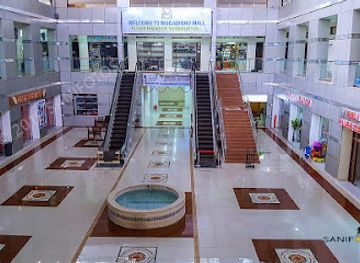
Mogadishu Mall
Discover the vibrant shopping and dining scene at Mogadishu Mall, where local culture meets global brands in the heart of Somalia.
-
Supermarket
Hayat Market (KM4 Taleex)
Discover the vibrant culture and flavors of Mogadishu at Hayat Market, your premier supermarket destination for local and international goods.
-
Shopping mall
BIN AARIF
Experience the vibrant shopping, dining, and entertainment at BIN AARIF, the premier shopping mall in Mogadishu, where culture meets modernity.
-
Store
Al Amaana Shop
Experience the heart of Somali culture at Al Amaana Shop, where authentic crafts and local products await every traveler in Mogadishu.


Get your free copy of our complete guide to Middle Shabelle, delivered straight to you.
Everything on this page, from attractions and restaurants to essentials and local phrases, in one PDF you can read offline, print or share.
Already have an account? Sign in
Your Middle Shabelle guide is ready.
We'll send it to · Not you? Sign out

Getting your guide ready…
We are putting together a fresh copy of the Middle Shabelle guide. This can take up to a minute.
This can take a few moments. If your browser asks, choose Allow so the download can start. You'll find the guide in your Downloads folder.
Nothing happened? Download it again
Sorry, the guide is taking longer than usual. Please try again in a minute, or get it by email instead.
Middle Shabelle essentials
Currency and Payment
Safety
Emergency Situations
Do's and Don'ts
Local Tips
From Eve
Local phrases worth knowing
You don't need to get them perfect. A few words go a long way, and locals appreciate the effort.
Basics
| English | Local | Say it |
|---|---|---|
| Hello | Salaam | [sah-lahm] |
| Goodbye | Nabad gelyo | [nah-bahd geh-lyo] |
| Yes | Haa | [hah] |
| No | Maya | [mah-yah] |
| Please/You're welcome | Fadlan | [fahd-lahn] |
| Thank you | Mahadsanid | [mah-hahd-sah-nid] |
| Excuse me/Sorry | Iga raali ahow | [ee-gah rah-lee ah-hoh] |
| How are you? | Sidee tahay? | [see-dee tah-hay] |
| Fine. And you? | Wanaagsan. Adiguna? | [wah-nahg-sahn. ah-dee-goo-nah?] |
| Do you speak English? | Ma ku hadashaa Ingiriis? | [mah koo hah-dah-shah een-gee-rees?] |
| I don't understand | Ma fahmin | [mah fah-min] |
Eating & Drinking
| English | Local | Say it |
|---|---|---|
| I'd like to see the menu, please | Fadlan ii soo bandhig menu-ga | [fahd-lahn ee soo ban-dhig meh-noo-gah] |
| I don't eat meat | Cunto hilib ma cunno | [koon-toh hee-lib mah koon-noh] |
| Cheers! | Nabad gelyo! | [nah-bahd geh-lyo!] |
| I would like to pay, please | Fadlan ii keen lacagta | [fahd-lahn ee keen lah-chahg-tah] |
Emergencies
| English | Local | Say it |
|---|---|---|
| Help! | Caawimaad! | [cah-wee-mahd!] |
| Go away! | Ka tag! | [kah tahg!] |
| Call the Police! | Wac booliiska! | [wahk boh-lee-skah!] |
| Call a doctor! | Wac dhakhtar! | [wahk dahk-tahr!] |
| I'm lost | Waan lumay | [wahn loo-may] |
| I'm ill | Waan xanuunsanahay | [wahn ha-noon-sahn-ah-hay] |
Shopping
| English | Local | Say it |
|---|---|---|
| I'd like to buy... | Waxaan rabaa inaan iibsado... | [wah-han rah-bah ee-nahn eeb-sah-doo...] |
| I'm just looking | Kaliya waan daawanayaa | [kah-lee-yah wahn dah-wah-nah-yah] |
| How much is it? | Immisa ayey ku kacaysaa? | [im-mee-sah ayeh koo kah-cah-y-sah?] |
| That's too expensive | Taasi waa qaali | [tah-see wah kah-lee] |
| Can you lower the price? | Ma hoos u dhigaysaa qiimaha? | [mah hohs oo dee-gah-y-sah kee-mah-hah?] |
Time & Numbers
| English | Local | Say it |
|---|---|---|
| What time is it? | Waa maxay saacadu? | [wah mah-hay sah-ah-ka-doo?] |
| It's one o'clock | Waa hal saac | [wah hal sah-ahk] |
| Half past (10) | Bar saac (10) | [bar sah-ahk (10)] |
| Morning | Subax | [soo-bahx] |
| Afternoon | Galab | [gah-lahb] |
| Evening | Fiid | [fee-d] |
| Yesterday | Shalay | [shah-lay] |
| Today | Maanta | [maan-tah] |
| Tomorrow | Berri | [beh-ree] |
| 1 | Kow | [koh] |
| 2 | Laba | [lah-bah] |
| 3 | Saddex | [sah-dehx] |
| 4 | Afar | [ah-far] |
| 5 | Shan | [shan] |
| 6 | Lix | [lix] |
| 7 | Todoba | [toh-doh-bah] |
| 8 | Siddeed | [si-ddeed] |
| 9 | Sagaal | [sah-gahl] |
| 10 | Toban | [toh-bahn] |
Transport & Directions
| English | Local | Say it |
|---|---|---|
| Where's a/the...? | Halkee ku yaalaa...? | [hal-kay koo yah-lah?] |
| What's the address? | Waa maxay cinwaanka? | [wah mah-hay sin-wahn-kah?] |
| Can you show me (on the map)? | Ma ii muujin kartaa (khariidada)? | [mah ee moo-jeen kar-tah (khah-reed-ah-dah)?] |
| When's the next (bus)? | Goormee ayaa la filayaa (bas)? | [goor-mee ah-yah lah fi-lay-yah (buhs)?] |
| A ticket (to ....) | Tigid (u ....) | [ti-gid (oo ....)] |
History of Middle Shabelle
Early Riverine Settlement and Islamic Networks
The Shabelle valley has long supported settled agriculture in an otherwise dry part of the Horn of Africa. Communities developed around access to river water, seasonal flood patterns and trade routes linking inland settlements with the Somali coast. Islam became central to social and cultural life over many centuries through scholars, merchants and regional networks connected with the wider western Indian Ocean. Much of this history survives through oral traditions, settlement patterns and religious institutions rather than through extensive monumental ruins.
Coastal Trade and Somali Sultanates
The coast adjoining present-day Middle Shabelle participated in the commercial world of the western Indian Ocean, where Somali ports exchanged livestock, hides, agricultural products and other goods with merchants from Arabia, the Swahili coast and further afield. Coastal settlements such as Warsheikh were connected to Islamic scholarship and maritime commerce, while inland river communities supplied food and other products. Political authority changed over time and was influenced by local clan structures, regional sultanates and the changing balance of coastal trade.
Italian Colonial Rule and Commercial Agriculture
Italy established colonial control over parts of southern Somalia during the late nineteenth and early twentieth centuries, eventually incorporating the territory into Italian Somaliland. The Shabelle valley attracted particular attention because irrigation and fertile soils could support commercial agriculture. Roads, administrative centres and plantations altered land use and labour relations, while Jowhar became associated with the colonial agricultural economy. These developments left a complicated legacy, combining infrastructure and market links with coercive administration and unequal control of land and resources.
Independence and the Shabelle Agricultural Corridor
Somalia became independent in 1960 through the union of the former British Somaliland and Italian Somaliland territories. After independence, the Shabelle valley remained one of the country's important farming areas, supplying crops to urban markets and supporting communities along the river. State-led agricultural policies and irrigation projects expanded at different times, but drought, flooding, land disputes and political instability repeatedly affected production. Jowhar's role as an administrative and agricultural centre continued through these changes.
Civil War and Fragmented Authority
The collapse of Somalia's central government in 1991 brought prolonged conflict and fragmented authority to Middle Shabelle. Control of towns, roads, farmland and river access shifted among local factions, clan-based forces, regional authorities and armed Islamist groups. The consequences included displacement, disrupted agriculture, damaged infrastructure and restricted humanitarian access. The region's strategic position near Mogadishu and its productive river corridor made it particularly important in the political and military struggles of south-central Somalia.
Hirshabelle State and Continuing Insecurity
Middle Shabelle became part of Hirshabelle State, a federal member state formed in the 2010s together with neighbouring Hiran. State-building has taken place alongside disputes over representation, administration and security. The federal government and allied forces have contested territory with al-Shabaab, which has maintained the capacity to conduct attacks, impose pressure on communities and threaten transport routes. Flooding, drought and humanitarian emergencies continue to compound insecurity, so the region's political geography and travel conditions remain subject to rapid change.
Middle Shabelle in Photos
Browse through our photo collection highlighting the charm and character of the destination.
Neighbouring regions of Middle Shabelle
The closest regions to Middle Shabelle, if you have time for more than one.
-

-

-

-

-


Swipe for more regions
Explore more

Explore more of Somalia
Explore Somalia: Discover its untouched beaches, ancient ruins, and rich cultural heritage in a land of resilient people and breathtaking landscapes.
Explore Somalia