

Free Myrtle Beach Travel Guide & Mobile App
Plan your Myrtle Beach trip with Evendo. Get free guides to top attractions, restaurants, hotels, and bars. Web access or download the mobile app.


Myrtle Beach blends Atlantic beaches, oceanfront attractions, seafood, golf and Southern culture into a lively South Carolina coastal escape for memorable holidays.
Atlantic Setting and Coastal Character
Myrtle Beach occupies a central stretch of South Carolina’s Grand Strand, a long arc of sandy shoreline on the Atlantic coast. The city is defined by its broad beach, warm-weather outdoor life and easy relationship with the ocean: mornings bring walkers and anglers to the water’s edge, while the beachfront fills with families, cyclists and visitors watching the sky change over the surf. Beyond the sand, the landscape shifts into maritime woodland, tidal creeks and low-lying coastal neighbourhoods.Read more about Myrtle Beach
Seaside Entertainment
Southern Flavours and Outdoor Life
When is the best time to visit Myrtle Beach?
Best: April, October–November · 19–26°C| Month | High (°C) | Rainfall (mm) |
|---|---|---|
| January | 14 | 100 |
| February | 16 | 95 |
| March | 21 | 110 |
| April (best) | 26 | 85 |
| May | 31 | 100 |
| June | 35 | 140 |
| July | 36 | 160 |
| August | 36 | 170 |
| September | 31 | 140 |
| October (best) | 26 | 100 |
| November (best) | 19 | 90 |
| December | 16 | 110 |
Getting to and around Myrtle Beach
How to get there
Transportation
Best attractions in Myrtle Beach
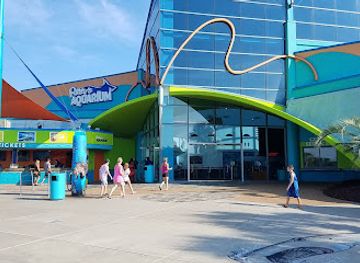
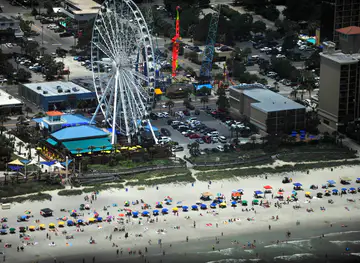
Myrtle Beach’s principal attractions cluster around the Atlantic shore and the commercial districts just inland. The Myrtle Beach Boardwalk provides a lively route beside the sand, with arcades, amusements and the SkyWheel, whose enclosed gondolas offer broad views over the coastline. Ripley’s Aquarium at Broadway at the Beach explores marine habitats through large tanks and interactive displays, while Broadway itself combines shops, restaurants and family entertainment around a lake. Myrtle Beach State Park offers a more natural setting within the city, with maritime forest, beach access and space for fishing and walking. The Market Common occupies part of the former air base and adds landscaped public areas, retail and dining to the southern end. Golf courses, miniature-golf venues and seasonal shows reflect the resort’s long-standing leisure culture, while the beach remains the city’s defining open-air attraction.
-
Tourist attraction
Broadway at the Beach
Discover the excitement of Broadway at the Beach, Myrtle Beach's top destination for shopping, dining, and entertainment, perfect for all ages.
9 min walk · 0.7 km from city centre
-
Tourist attraction
Broadway at the Beach
Experience the ultimate blend of shopping, dining, and entertainment at Broadway at the Beach in Myrtle Beach, SC.
9 min walk · 0.7 km from city centre
-
Aquarium
Ripley's Aquarium of Myrtle Beach
Explore the captivating underwater world at Ripley's Aquarium of Myrtle Beach, home to diverse marine life and interactive exhibits for all ages.
12 min walk · 1.0 km from city centre
-
Aquarium
Ripley's Aquarium of Myrtle Beach
Experience the magic of marine life at Ripley's Aquarium of Myrtle Beach, a family-friendly destination full of underwater wonders and interactive exhibits.
12 min walk · 1.0 km from city centre


Best landmarks in Myrtle Beach
The SkyWheel is Myrtle Beach’s most conspicuous modern landmark, rising above the Boardwalk and expressing the city’s identity as an oceanfront resort. The Boardwalk itself is significant as a public seafront promenade and entertainment corridor rather than as a historic monument. Myrtle Beach State Park’s pier provides a more restrained coastal landmark, linking the city’s recreational life with the practical traditions of fishing and beach access. The former Myrtle Beach Air Force Base area, now associated with The Market Common, represents an important layer of twentieth-century military history and subsequent urban reuse. Along the shore, the long sweep of beach and the line of beachfront hotels form a changing collective landmark rather than a single protected historic district. Unlike older South Carolina cities, Myrtle Beach has comparatively little colonial or antebellum architecture, reflecting its later development as a resort.
-
 Shopping mall
Broadway at the Beach
Explore Broadway at the Beach, Myrtle Beach's top shopping and entertainment destination offering attractions, dining, and vibrant nightlife for all ages.
9 min walk · 0.7 km from city centre
-
Aquarium
Ripley's Aquarium of Myrtle Beach
Discover the marine marvels at Ripley's Aquarium of Myrtle Beach, an enchanting underwater adventure for the whole family.
12 min walk · 1.0 km from city centre
-
Amusement park ride
SkyWheel Myrtle Beach
Experience breathtaking views from the SkyWheel Myrtle Beach, a must-visit attraction for tourists seeking adventure and stunning coastal panoramas.
6 min drive · 1.8 km from city centre
-
State park
Myrtle Beach State Park
Experience the natural beauty of Myrtle Beach State Park, a perfect blend of sun, sand, and adventure in South Carolina's coastal paradise.
23 min drive · 7.7 km from city centre


Explore Myrtle Beach on the map
Plan your Myrtle Beach trip on one map. See where the top attractions, landmarks, restaurants, bars and hotels are, find what's near where you're staying, and book hotels and experiences in a few clicks.
Neighbourhoods in Myrtle Beach
-

-
-

-


Swipe for more neighbourhoods
Best hotels in Myrtle Beach
Best restaurants in Myrtle Beach
Myrtle Beach’s dining scene is rooted in the seafood and Southern cooking of the Carolina coast, with shrimp, oysters, flounder, crab and other locally familiar catches appearing alongside fried seafood platters, grilled fish and casual beachfront meals. Barbecue is another important regional influence, often served with slaw, beans and other traditional sides, while Lowcountry flavours can be found in dishes built around rice, sausage and seafood. The restaurant landscape ranges from family-run seafood houses and breakfast cafés to steakhouses, international cuisines and contemporary dining in the central resort area, Broadway at the Beach, The Market Common and nearby Murrells Inlet. Calabash-style seafood, associated with the neighbouring North Carolina coast, is also widely represented in the wider Grand Strand dining scene. Seasonal specials and market availability may shape menus, so freshness and preparation vary between establishments.
-
Breakfast
National House of Pancakes
Experience delightful breakfasts at National House of Pancakes in Myrtle Beach - where fluffy pancakes meet friendly service.
7 min drive · 2.5 km from city centre
-
Family-friendly
The Hangout
Experience unforgettable family dining at The Hangout in Myrtle Beach – where great food meets fun activities!
11 min walk · 0.9 km from city centre
-
Seafood
Sea Captain's House
Experience coastal dining at its finest at Sea Captain's House in Myrtle Beach—where fresh seafood meets stunning ocean views.
7 min drive · 2.3 km from city centre
-
American
RipTydz Oceanfront Grille & Rooftop Bar
Enjoy breathtaking ocean views and delicious American cuisine at RipTydz Oceanfront Grille & Rooftop Bar in Myrtle Beach.
5 min drive · 1.8 km from city centre


Best bars in Myrtle Beach
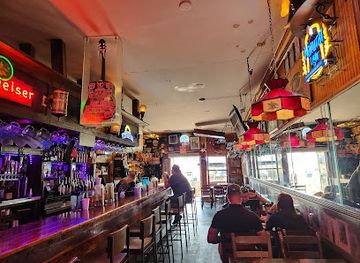
Myrtle Beach’s evening scene is shaped more by resort entertainment, live music and family attractions than by a single concentrated nightclub district. The central Boardwalk and nearby Ocean Boulevard offer bars, arcades and venues with a seasonal holiday atmosphere, while Broadway at the Beach brings restaurants, music and late-evening activity around its lake. Country music, beach-oriented bands, karaoke and tribute performances are common parts of the entertainment mix, and established theatres present concerts, comedy and large-scale variety shows. The Market Common provides a calmer setting for evening drinks, dining and cinema-going. Nightlife becomes busier during summer and major holiday periods, whereas quieter months can feel more local and relaxed. Visitors should check current venue arrangements and local rules, particularly concerning alcohol, transport and late-night travel.
-
American
RipTydz Oceanfront Grille & Rooftop Bar
Experience the perfect blend of American cuisine and stunning ocean views at RipTydz Oceanfront Grille & Rooftop Bar in Myrtle Beach.
5 min drive · 1.8 km from city centre
-
Live music bar
The Bowery
Discover the vibrant energy of The Bowery, Myrtle Beach's iconic live music bar and restaurant, where great food and entertainment come together.
6 min drive · 2.0 km from city centre
-
Grill
Beach House Bar & Grill
Experience the vibrant atmosphere and delicious coastal cuisine at Beach House Bar & Grill, the ultimate dining destination in Myrtle Beach.
5 min drive · 1.7 km from city centre
-
Grill
8th Ave Tiki Bar & Grill
Discover the vibrant 8th Ave Tiki Bar & Grill, a tropical paradise in Myrtle Beach offering delicious Mediterranean cuisine and fun nightlife experiences.
6 min drive · 2.1 km from city centre


Best nightclubs in Myrtle Beach
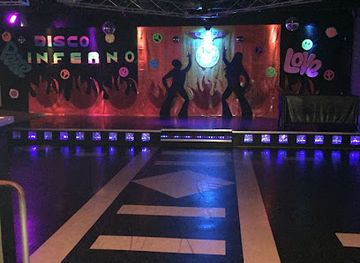
Myrtle Beach’s evening scene is shaped more by resort entertainment, live music and family attractions than by a single concentrated nightclub district. The central Boardwalk and nearby Ocean Boulevard offer bars, arcades and venues with a seasonal holiday atmosphere, while Broadway at the Beach brings restaurants, music and late-evening activity around its lake. Country music, beach-oriented bands, karaoke and tribute performances are common parts of the entertainment mix, and established theatres present concerts, comedy and large-scale variety shows. The Market Common provides a calmer setting for evening drinks, dining and cinema-going. Nightlife becomes busier during summer and major holiday periods, whereas quieter months can feel more local and relaxed. Visitors should check current venue arrangements and local rules, particularly concerning alcohol, transport and late-night travel.
-
Night club
The Bowery
Discover the vibrant nightlife of The Bowery in Myrtle Beach, where live music and delicious cuisine create an unforgettable experience.
6 min drive · 2.0 km from city centre
-
Bar
Tin Roof
Enjoy live music, delicious food, and a vibrant atmosphere at Tin Roof, the ultimate bar and restaurant in Myrtle Beach.
5 min drive · 1.7 km from city centre
-
Adult entertainment club
The Treasure Club Myrtle Beach, SC
Discover the electrifying nightlife at The Treasure Club, Myrtle Beach's premier adult entertainment venue with vibrant performances and a welcoming atmosphere.
6 min drive · 1.8 km from city centre
-
Gay bar
Pulse Ultra Club
Discover the energetic nightlife at Pulse Ultra Club, Myrtle Beach's vibrant gay bar with electrifying performances and a welcoming atmosphere.
17 min drive · 5.7 km from city centre


Best shops in Myrtle Beach
Shopping in Myrtle Beach ranges from resort souvenirs and beachwear to regional food products, independent gifts and contemporary retail. Broadway at the Beach is one of the city’s most recognisable shopping and entertainment complexes, with stores arranged around a lake, while The Market Common offers shops, restaurants and landscaped public spaces in the southern part of the city. Tanger Outlets provides an outlet-style retail experience along the wider Grand Strand, though it is a commercial centre rather than a traditional market. Visitors seeking local character can look for South Carolina foods, coastal artwork, shell-inspired gifts, surf clothing and handmade items, while specialist shops and beach retailers supply practical holiday goods. The area does not have a centuries-old covered market tradition comparable with Charleston; its shopping culture reflects modern resort development, seasonal tourism and the broader retail pattern of the American Southeast.
-
Shopping mall
Broadway at the Beach
Discover the ultimate shopping and entertainment experience at Broadway at the Beach in Myrtle Beach, a paradise for tourists with diverse attractions.
9 min walk · 0.7 km from city centre
-
Outlet mall
Tanger Outlets Myrtle Beach Hwy 501
Discover unbeatable deals at Tanger Outlets Myrtle Beach with over 100 stores offering designer brands and exceptional discounts in a beautiful setting.
25 min drive · 8.2 km from city centre
-
Shopping mall
Coastal Grand Mall
Experience the vibrant shopping and dining at Coastal Grand Mall, Myrtle Beach's top destination for tourists seeking retail therapy.
11 min drive · 3.7 km from city centre
-
Shopping mall
The Market Common - Myrtle Beach
Explore The Market Common in Myrtle Beach for a delightful shopping and dining experience amidst beautiful scenery and lively entertainment options.
20 min drive · 6.7 km from city centre


Get your free copy of our complete guide to Myrtle Beach, delivered straight to you.
Everything on this page, from attractions and restaurants to essentials and local phrases, in one PDF you can read offline, print or share.
Already have an account? Sign in
Your Myrtle Beach guide is ready.
We'll send it to · Not you? Sign out

Getting your guide ready…
We are putting together a fresh copy of the Myrtle Beach guide. This can take up to a minute.
This can take a few moments. If your browser asks, choose Allow so the download can start. You'll find the guide in your Downloads folder.
Nothing happened? Download it again
Sorry, the guide is taking longer than usual. Please try again in a minute, or get it by email instead.
Myrtle Beach essentials
Currency and Payment
Safety
Emergency Situations
Do's and Don'ts
Local Tips
From Eve
Local phrases worth knowing
You don't need to get them perfect. A few words go a long way, and locals appreciate the effort.
Basics
| English | Local | Say it |
|---|---|---|
| Hello | Hey y'all | [hey y'all] |
| Goodbye | See ya later | [see ya later] |
| Yes | Yessir | [yessir] |
| No | Nah | [nah] |
| Please/You're welcome | Please/No problem | [please/no problem] |
| Thank you | Thank ya | [thank ya] |
| Excuse me/Sorry | Excuse me/My bad | [excuse me/my bad] |
| How are you? | How y'all doin'? | [how y'all doin'] |
| Fine. And you? | I'm good, how 'bout you? | [I'm good, how 'bout you?] |
| Do you speak English? | Y'all speak English? | [y'all speak English?] |
| I don't understand | I don't get it | [I don't get it] |
Eating & Drinking
| English | Local | Say it |
|---|---|---|
| I'd like to see the menu, please | Can I see the menu, please | [can I see the menu, please] |
| I don't eat meat | I don't eat meat | [I don't eat meat] |
| Cheers! | Cheers! | [cheers!] |
| I would like to pay, please | Can I pay now, please | [can I pay now, please] |
Emergencies
| English | Local | Say it |
|---|---|---|
| Help! | Help! | [help!] |
| Go away! | Go away! | [go away!] |
| Call the Police! | Call the cops! | [call the cops!] |
| Call a doctor! | Call a doctor! | [call a doctor!] |
| I'm lost | I'm lost | [I'm lost] |
| I'm ill | I'm sick | [I'm sick] |
Shopping
| English | Local | Say it |
|---|---|---|
| I'd like to buy... | I wanna buy... | [I wanna buy...] |
| I'm just looking | Just browsing | [just browsing] |
| How much is it? | How much does it cost? | [how much does it cost?] |
| That's too expensive | That's too pricey | [that's too pricey] |
| Can you lower the price? | Can ya give me a discount? | [can ya give me a discount?] |
Time & Numbers
| English | Local | Say it |
|---|---|---|
| What time is it? | What time is it? | [what time is it?] |
| It's one o'clock | It's one o'clock | [it's one o'clock] |
| Half past (10) | Half past ten | [half past ten] |
| Morning | Morning | [morning] |
| Afternoon | Afternoon | [afternoon] |
| Evening | Evening | [evening] |
| Yesterday | Yesterday | [yesterday] |
| Today | Today | [today] |
| Tomorrow | Tomorrow | [tomorrow] |
| 1 | One | [one] |
| 2 | Two | [two] |
| 3 | Three | [three] |
| 4 | Four | [four] |
| 5 | Five | [five] |
| 6 | Six | [six] |
| 7 | Seven | [seven] |
| 8 | Eight | [eight] |
| 9 | Nine | [nine] |
| 10 | Ten | [ten] |
Transport & Directions
| English | Local | Say it |
|---|---|---|
| Where's a/the...? | Where's the...? | [where's the...?] |
| What's the address? | What's the address? | [what's the address?] |
| Can you show me (on the map)? | Can you show me (on the map)? | [can you show me (on the map)?] |
| When's the next (bus)? | When's the next bus? | [when's the next bus?] |
| A ticket (to ....) | A ticket to ... | [a ticket to ...] |
History of Myrtle Beach
Indigenous Coastal Communities
Before European settlement, the coastal plain around present-day Myrtle Beach was used and inhabited by Indigenous peoples, including communities associated with the Waccamaw and neighbouring coastal groups. The rivers, estuaries, maritime forests and ocean supplied fish, shellfish, game and plant resources, while inland routes connected the shore with the wider Carolina low country. European maps and later colonial records applied changing names to the coastline, which was known broadly as part of Long Bay. Much of the area remained lightly developed for centuries because its sandy barrier shore, wetlands and pine forests were difficult to exploit on a large scale. This earlier relationship with the coast remains relevant to understanding the region’s ecosystems, even though modern Myrtle Beach is now dominated by tourism and urban development.
Colonial Settlement and Plantation Coast
South Carolina’s colonial expansion reached the Grand Strand through farming, timber extraction and coastal trade rather than through the dense urban settlement associated with Charleston. European and enslaved African communities shaped the broader low country economy, cultivating crops and working in forestry, transport and domestic trades. The coast around Long Bay remained comparatively isolated, with scattered settlements connected by sandy roads and waterways. After the American Revolution, families continued to farm and harvest the region’s extensive pine forests. The social and economic systems of slavery, followed by emancipation and Reconstruction, affected the wider Horry County area profoundly. Myrtle Beach itself was not yet a resort city, but the resources and transport patterns established during these periods laid foundations for later commercial development.
Timber, Railways and the Birth of Myrtle Beach
The decisive early twentieth-century change came from the Burroughs and Collins Company, a timber and turpentine enterprise that bought large tracts around Long Bay. In 1900, the company’s Conway and Seashore Railroad connected the coast with Conway, making it easier to move timber and bring visitors towards the beach. A company settlement developed around the railway and was named Myrtle Beach, reportedly after the wax myrtle plants common in the area. The railroad also encouraged modest recreational use of the shore. As timber operations declined, the beach’s scenery and accessibility became increasingly valuable in their own right, allowing a commercial seaside community to emerge from an industrial landscape.
Incorporation and Resort Development
Myrtle Beach incorporated as a town in 1938, formalising local government as its population and visitor economy grew. Roads and improved transport links gradually replaced the railway’s central role, while hotels, cottages, amusement facilities and golf courses expanded the seasonal resort. The Second World War brought a major military presence through the construction of Myrtle Beach Army Air Field, later Myrtle Beach Air Force Base. After the war, rising car ownership and greater leisure travel accelerated the city’s transformation into one of the Southeast’s principal beach destinations. The resort economy increasingly combined oceanfront accommodation with entertainment, restaurants and attractions, establishing the pattern of development still visible along the Grand Strand.
Military Closure and Contemporary Myrtle Beach
Myrtle Beach Air Force Base closed in 1993 after decades as a significant local employer and military installation. Its former land was redeveloped for mixed uses, including The Market Common, housing, offices, retail and public spaces, creating a new urban district away from the traditional oceanfront. During the late twentieth and early twenty-first centuries, Myrtle Beach continued to grow through tourism, residential construction, golf, entertainment and seasonal migration. The city’s identity now rests on several overlapping layers: a working coastal environment, a large visitor economy, a history of timber and military activity, and an expanding metropolitan area within Horry County. Debates over growth, traffic, beach management and environmental pressure remain part of the city’s modern story.
Myrtle Beach in Photos
Browse through our photo collection highlighting the charm and character of the destination.
Cities near Myrtle Beach
The closest cities to Myrtle Beach, if you have time for more than one stop.
-

-

-

-

-


Swipe for more cities
Explore more

Explore more of South Carolina
Explore South Carolina: A blend of historic charm, natural beauty, and southern hospitality. From Charleston's cobblestone streets to Myrtle Beach's sandy shores, adventure awaits.
Explore South Carolina