

Free Beaufort Travel Guide & Mobile App
Plan your Beaufort trip with Evendo. Get free guides to top attractions, restaurants, hotels, and bars. Web access or download the mobile app.


Beaufort, South Carolina, pairs antebellum streets, waterfront parks, Gullah Geechee heritage, film locations and Lowcountry landscapes for sightseeing.
Water, Architecture and Place
Beaufort occupies a graceful position on Port Royal Island, where tidal creeks and broad salt-marsh views define the landscape. Its compact historic district, centred on Bay Street and the Beaufort River waterfront, is known for carefully preserved antebellum residences, live-oak canopies and streets laid out during the colonial period. Rather than feeling like a conventional resort, Beaufort has the measured pace of a working coastal town, with shrimp boats, galleries, cafés and independent shops sharing space with houses that have witnessed several centuries of change.Read more about Beaufort
A Layered Cultural Heritage
Exploring the Lowcountry
When is the best time to visit Beaufort?
Best: April, October–November · 21–27°C| Month | High (°C) | Rainfall (mm) |
|---|---|---|
| January | 16 | 85 |
| February | 19 | 90 |
| March | 22 | 100 |
| April (best) | 26 | 85 |
| May | 30 | 90 |
| June | 33 | 140 |
| July | 34 | 160 |
| August | 34 | 170 |
| September | 32 | 150 |
| October (best) | 27 | 90 |
| November (best) | 21 | 80 |
| December | 17 | 90 |
Getting to and around Beaufort
How to get there
Transportation
Best attractions in Beaufort
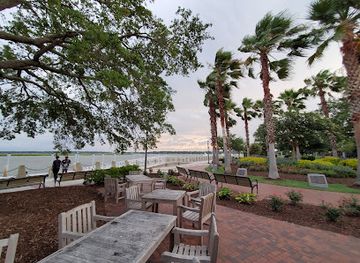
Beaufort’s principal attractions are concentrated around its historic core and waterfront. The Beaufort Historic District invites slow walks beneath live oaks, past antebellum residences and streets leading towards Waterfront Park, where views open across the Beaufort River. The Verdier House offers an interior perspective on nineteenth-century domestic life, while the Beaufort History Museum in the former Arsenal provides broader local context. The Pat Conroy Literary Center explores the work and influence of the celebrated South Carolina writer. Film enthusiasts can recognise locations associated with productions including The Big Chill and Forrest Gump. Outside the city, Penn Center on St Helena Island interprets African American education and emancipation, while Hunting Island State Park combines maritime forest, beach and tidal scenery; both require separate travel and should not be treated as downtown attractions.
-
Tourist attraction
Henry C. Chambers Waterfront Park
Explore the natural beauty and cultural richness of Beaufort, SC at Henry C. Chambers Waterfront Park, a serene waterfront escape.
18 min drive · 5.9 km from city centre
-
Tourist attraction
Henry C. Chambers Waterfront Park
Discover the serene beauty of Henry C. Chambers Waterfront Park in Beaufort, SC, a perfect spot for relaxation, exploration, and community events.
18 min drive · 5.9 km from city centre
-
Tour agency
Beaufort Tours
Explore the enchanting Beaufort, SC, where history meets breathtaking coastal landscapes and Southern hospitality awaits every traveler.
17 min drive · 5.7 km from city centre
-
Tourist attraction
Pigeon Point Park
Experience the tranquil beauty of Pigeon Point Park in Beaufort, SC, where nature meets recreation in a stunning waterfront setting.
16 min drive · 5.2 km from city centre



Best landmarks in Beaufort
The Beaufort Historic District is the city’s defining architectural landmark, preserving a colonial street plan and a substantial collection of eighteenth- and nineteenth-century buildings beneath mature live oaks. The John Mark Verdier House, with its prominent position on Bay Street, represents the prosperity of the antebellum period and now helps interpret the era’s domestic and social history. Beaufort’s Arsenal, a nineteenth-century civic and military building, houses the Beaufort History Museum and reflects the town’s role as an administrative centre. Nearby St Helena’s Anglican Church, founded in the colonial period and rebuilt over time, connects the city to the region’s early religious history. Waterfront Park is less historic in architectural terms but is an important civic landmark, framing views of the Beaufort River and the tidal landscape that shaped the town’s economy and settlement.
-
Park
Henry C. Chambers Waterfront Park
Discover the tranquility of Henry C. Chambers Waterfront Park, a scenic oasis in Beaufort, South Carolina, perfect for relaxation and cultural exploration.
18 min drive · 5.9 km from city centre
-
Chocolate shop
Chocolate Tree
Discover the rich flavors and artisanal craftsmanship at Chocolate Tree, Beaufort's premier destination for handcrafted chocolate delights.
17 min drive · 5.8 km from city centre
-
Shopping mall
Beaufort Town Center
Explore the lively Beaufort Town Center in South Carolina, featuring unique shops, diverse dining options, and a vibrant community atmosphere.
11 min drive · 3.5 km from city centre
-
Park
Pigeon Point Park
Discover the serene beauty of Pigeon Point Park in Beaufort, SC – a perfect blend of nature, wildlife, and outdoor activities for all ages.
16 min drive · 5.2 km from city centre


Explore Beaufort on the map
Plan your Beaufort trip on one map. See where the top attractions, landmarks, restaurants, bars and hotels are, find what's near where you're staying, and book hotels and experiences in a few clicks.
Best hotels in Beaufort
Best restaurants in Beaufort
Beaufort’s food culture is rooted in the Lowcountry, where tidal waters, rice-growing traditions and African, European and Caribbean influences meet. Menus commonly feature local shrimp, oysters, blue crab, fish and clams, alongside rice dishes, grits, okra, greens and seasonal vegetables. Frogmore stew, also known as Lowcountry boil, is a communal combination of seafood, sausage, corn and potatoes associated with the coastal South, while barbecue and fried seafood reflect wider regional traditions. Downtown restaurants range from relaxed cafés and seafood houses to more contemporary kitchens, and markets or seasonal stalls provide opportunities to sample local produce. Gullah Geechee foodways are particularly important to the region’s culinary history, though they should be understood as a living cultural tradition rather than a marketing label. The best dining areas are concentrated around Bay Street, Carteret Street and the surrounding historic centre.
-
Seafood
Ladys Island Dockside
Savor fresh seafood with stunning waterfront views at Ladys Island Dockside in Beaufort, SC – A coastal culinary treasure.
23 min drive · 7.6 km from city centre
-
Steak
Outback Steakhouse
Discover the taste of Australia with hearty steaks and vibrant flavors at Outback Steakhouse in Beaufort, SC.
11 min drive · 3.6 km from city centre
-
Grill
Bricks On Boundary
Discover Bricks On Boundary in Beaufort, SC - where delicious American grill meets inviting atmosphere for an unforgettable dining experience.
14 min drive · 4.8 km from city centre
-
Hamburger
Fat Patties
Discover the ultimate burger experience at Fat Patties in Beaufort, SC – where flavor meets comfort in every bite.
26 min drive · 8.8 km from city centre


Best bars in Beaufort
Beaufort’s evening scene is sociable and relatively low-key rather than centred on large nightclubs. Downtown Bay Street and the adjacent historic core contain restaurants with bars, craft-beer selections, wine lists and outdoor seating, while smaller venues may host acoustic music or regional performers. Evening walks around Waterfront Park can be atmospheric, though activity becomes quieter outside the central streets. Live music, literary events and performances at local cultural venues often provide a stronger evening focus than clubbing, reflecting Beaufort’s identity as a small historic town. Nearby Port Royal has its own modest collection of bars and casual gathering places, but the wider Lowcountry is not a late-night entertainment district. Coastal weather and seasonal tourism influence schedules, so visitors should check individual venues rather than assume that every place remains open late.
-
Grill
Bricks On Boundary
Experience the vibrant flavors of American cuisine at Bricks On Boundary, a standout grill in Beaufort, SC, perfect for every food lover.
14 min drive · 4.8 km from city centre
-
Italian
Panini's On The Waterfront
Discover the charm of Beaufort's waterfront dining at Panini's, where Italian flavors meet live music and stunning views.
17 min drive · 5.8 km from city centre
-
Gastropub
Old Bull Tavern
Discover the vibrant flavors and community spirit at Old Bull Tavern in Beaufort's Historic Downtown, where gastropub meets warm hospitality.
17 min drive · 5.8 km from city centre
-
Barbecue
Q on Bay
Experience the best southern barbecue at Q on Bay in Beaufort, where family-friendly dining meets a lively sports bar atmosphere.
18 min drive · 5.9 km from city centre


Best nightclubs in Beaufort
Beaufort’s evening scene is sociable and relatively low-key rather than centred on large nightclubs. Downtown Bay Street and the adjacent historic core contain restaurants with bars, craft-beer selections, wine lists and outdoor seating, while smaller venues may host acoustic music or regional performers. Evening walks around Waterfront Park can be atmospheric, though activity becomes quieter outside the central streets. Live music, literary events and performances at local cultural venues often provide a stronger evening focus than clubbing, reflecting Beaufort’s identity as a small historic town. Nearby Port Royal has its own modest collection of bars and casual gathering places, but the wider Lowcountry is not a late-night entertainment district. Coastal weather and seasonal tourism influence schedules, so visitors should check individual venues rather than assume that every place remains open late.
-
Night club
Rosie O'Grady's
Rosie O'Grady's in Beaufort, SC, offers an exciting blend of live music, bar, and dining, perfect for an unforgettable night out.
10 min drive · 3.4 km from city centre
-
Bar
Wet Willie's
Experience the vibrant atmosphere and delicious frozen cocktails at Wet Willie's, a must-visit bar and American restaurant in Beaufort, SC.
10 min drive · 3.4 km from city centre
-
Bar
CryBabies
Experience the lively nightlife at CryBabies Bar in Beaufort, SC, known for its karaoke, friendly atmosphere, and delicious drinks.
8 min drive · 2.6 km from city centre
-
Bar
Highway 21 Bar
Discover the vibrant nightlife at Highway 21 Bar in Beaufort, SC, where great drinks and lively music create unforgettable memories.
13 min walk · 1.1 km from city centre


Best shops in Beaufort
Shopping in Beaufort is concentrated along Bay Street, Carteret Street and nearby historic-district blocks, where independent galleries, bookshops, clothing boutiques, homeware stores and cafés occupy restored buildings. The retail atmosphere is more local and leisurely than mall-oriented, with art reflecting marshes, live oaks and water often prominent in galleries and craft shops. Visitors may find coastal photography, paintings, handmade jewellery, regional books and food products suited to the Lowcountry setting. Nearby markets and seasonal community events can add produce, baked goods and artisan work, although their dates and scale vary. Seafood and other edible gifts should be bought from reputable vendors and packed appropriately for travel. Shopping should be balanced with respect for the historic streetscape: many attractive shopfronts form part of a living residential and commercial district rather than a purpose-built tourist quarter.
-
Shopping mall
Island Square Shopping Center
Discover a shopping haven at Island Square Shopping Center in Beaufort, SC, offering diverse stores, local dining, and a vibrant atmosphere for all visitors.
25 min drive · 8.3 km from city centre
-
Gift shop
Amidst The Alders
Explore Amidst The Alders in Port Royal, SC for unique gifts, local art, and a creative shopping experience that captures the spirit of South Carolina.
23 min drive · 7.8 km from city centre
-
Clothing store
bealls
Explore Bealls in Beaufort, SC for a diverse selection of clothing and accessories for the whole family at moderate prices.
9 min drive · 3.0 km from city centre
-
Book store
NeverMore Books
Explore the enchanting world of books at NeverMore Books in Historic Downtown Beaufort, SC - a literary paradise for every book lover.
17 min drive · 5.7 km from city centre


Get your free copy of our complete guide to Beaufort, delivered straight to you.
Everything on this page, from attractions and restaurants to essentials and local phrases, in one PDF you can read offline, print or share.
Already have an account? Sign in
Your Beaufort guide is ready.
We'll send it to · Not you? Sign out

Getting your guide ready…
We are putting together a fresh copy of the Beaufort guide. This can take up to a minute.
This can take a few moments. If your browser asks, choose Allow so the download can start. You'll find the guide in your Downloads folder.
Nothing happened? Download it again
Sorry, the guide is taking longer than usual. Please try again in a minute, or get it by email instead.
Beaufort essentials
Currency and Payment
Safety
Emergency Situations
Do's and Don'ts
Local Tips
From Eve
Local phrases worth knowing
You don't need to get them perfect. A few words go a long way, and locals appreciate the effort.
Basics
| English | Local | Say it |
|---|---|---|
| Hello | Hey y'all | [hey y'all] |
| Goodbye | See ya | [see ya] |
| Yes | Yeah | [yeah] |
| No | Nah | [nah] |
| Please/You're welcome | Please/No problem | [please/no problem] |
| Thank you | Thank ya | [thank ya] |
| Excuse me/Sorry | Pardon me/My bad | [pardon me/my bad] |
| How are you? | How y'all doin'? | [how y'all doin'] |
| Fine. And you? | I'm doin' good. And you? | [I'm doin' good. And you?] |
| Do you speak English? | Ya'll speak English? | [ya'll speak English?] |
| I don't understand | I don't git it | [I don't git it] |
Eating & Drinking
| English | Local | Say it |
|---|---|---|
| I'd like to see the menu, please | I wanna see the menu, please | [I wanna see the menu, please] |
| I don't eat meat | I don't eat meat | [I don't eat meat] |
| Cheers! | Cheers! | [cheers] |
| I would like to pay, please | I wanna pay, please | [I wanna pay, please] |
Emergencies
| English | Local | Say it |
|---|---|---|
| Help! | Help! | [help!] |
| Go away! | Git away! | [git away!] |
| Call the Police! | Call the Po-lice! | [call the po-lice!] |
| Call a doctor! | Call a doctor! | [call a doctor!] |
| I'm lost | I'm lost | [I'm lost] |
| I'm ill | I'm sick | [I'm sick] |
Shopping
| English | Local | Say it |
|---|---|---|
| I'd like to buy... | I wanna buy... | [I wanna buy...] |
| I'm just looking | I'm just browsin' | [I'm just browsin'] |
| How much is it? | How much does it cost? | [how much does it cost?] |
| That's too expensive | That's too pricey | [that's too pricey] |
| Can you lower the price? | Can you cut the price? | [can you cut the price?] |
Time & Numbers
| English | Local | Say it |
|---|---|---|
| What time is it? | What time is it? | [what time is it?] |
| It's one o'clock | It's one o'clock | [it's one o'clock] |
| Half past (10) | Half past ten | [half past ten] |
| Morning | Mornin' | [mornin'] |
| Afternoon | Afternoon | [afternoon] |
| Evening | Evenin' | [evenin'] |
| Yesterday | Yestaday | [yestaday] |
| Today | Today | [today] |
| Tomorrow | Tamorra | [tamorra] |
| 1 | One | [one] |
| 2 | Two | [two] |
| 3 | Three | [three] |
| 4 | Four | [four] |
| 5 | Five | [five] |
| 6 | Six | [six] |
| 7 | Seven | [seven] |
| 8 | Eight | [eight] |
| 9 | Nine | [nine] |
| 10 | Ten | [ten] |
Transport & Directions
| English | Local | Say it |
|---|---|---|
| Where's a/the...? | Where's a/the...? | [where's a/the...?] |
| What's the address? | What's the address? | [what's the address?] |
| Can you show me (on the map)? | Can you show me (on the map)? | [can you show me (on the map)?] |
| When's the next (bus)? | When's the next (bus)? | [when's the next (bus)?] |
| A ticket (to ....) | A ticket (to ....) | [a ticket (to ....)] |
History of Beaufort
Indigenous Coast and Port Royal Sound
Long before European settlement, the lands and waterways around Port Royal Sound were used by Indigenous communities, including the Coosaw and Yemassee, whose economies were closely connected to fishing, shellfish gathering, hunting and coastal trade. Spanish explorers reached the broader South Carolina coast in the sixteenth century, but permanent European settlement developed later under the English Carolina colony. The tidal rivers and sheltered sound made the area strategically valuable, although hurricanes, disease, conflict and difficult relations with Indigenous peoples repeatedly challenged early colonisation. These older patterns of movement and exchange remain part of the historical geography of Beaufort, whose modern streets occupy a landscape shaped by waterways, marshes and longstanding coastal knowledge.
Colonial Beaufort Takes Shape
The town of Beaufort was established by the English in the early eighteenth century and received its name from Henry Somerset, Duke of Beaufort, one of the Carolina proprietors. Its position on Port Royal Island supported maritime trade and the administration of surrounding plantations, while the town plan created the compact street pattern still visible in the historic district. Rice and indigo became important plantation commodities in the Lowcountry, relying on the forced labour of enslaved Africans and their descendants. The region’s colonial prosperity therefore rested on a deeply unequal social and economic order, while African cultural knowledge helped shape agricultural practices, language, foodways and religious traditions that remain significant to the area.
Plantation Economy and Antebellum Society
During the late eighteenth and nineteenth centuries, Beaufort developed as a market and administrative centre within a plantation landscape producing sea-island cotton, rice and other crops. Wealthy planters built substantial residences in and around town, including houses whose proportions, piazzas and landscaped settings contribute to the character of today’s historic district. Enslaved people formed the majority of the population in much of the surrounding Lowcountry and sustained both rural plantations and urban households through skilled and unskilled labour. The contrast between elegant domestic architecture and the realities of slavery is essential to understanding Beaufort’s heritage. The city’s later cultural identity also grew from the resilience and creativity of these African American communities.
The Civil War and Port Royal Experiment
In November 1861, Union forces captured Port Royal Sound during the early stages of the American Civil War, and Beaufort became one of the first Southern towns occupied by the Union. Many enslavers fled, leaving thousands of formerly enslaved people in the surrounding area. Northern missionaries, teachers and government officials helped establish schools and administrative programmes, creating what became known as the Port Royal Experiment. In 1862, the Penn School was founded on nearby St Helena Island to educate African Americans, later developing into the institution preserved today as Penn Center. The period brought profound disruption but also new educational and political possibilities for the region’s Black population.
Reconstruction, Preservation and Cultural Memory
After the Civil War, Beaufort entered Reconstruction amid the end of slavery, contested land ownership and the creation of new African American institutions. The town remained smaller and less industrialised than many American cities, helping preserve much of its historic building stock and street pattern. Gullah Geechee communities across the Sea Islands maintained distinctive linguistic, culinary, musical and craft traditions despite economic pressure and migration. During the twentieth century, Beaufort’s maritime setting and architecture attracted artists, writers and filmmakers, while organised preservation efforts strengthened appreciation of its historic district. Contemporary Beaufort continues to negotiate tourism and development alongside the responsibility to interpret slavery, emancipation and African American history accurately.
Beaufort in Photos
Browse through our photo collection highlighting the charm and character of the destination.
Cities near Beaufort
The closest cities to Beaufort, if you have time for more than one stop.
-

-

-

-

-


Swipe for more cities
Explore more

Explore more of South Carolina
Explore South Carolina: A blend of historic charm, natural beauty, and southern hospitality. From Charleston's cobblestone streets to Myrtle Beach's sandy shores, adventure awaits.
Explore South Carolina