

Belle Fourche Reservoir Travel Guide - Free Web & App
Your ultimate guide to Belle Fourche Reservoir. Discover top landmarks, proposed trips, and local tips. Free on the web or via the Evendo companion app.


Belle Fourche Reservoir in South Dakota offers fishing, boating, camping, prairie scenery and easy access to Belle Fourche and the northern Black Hills.
Landscape and Setting
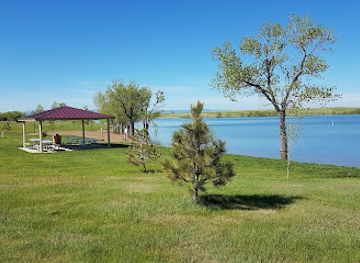
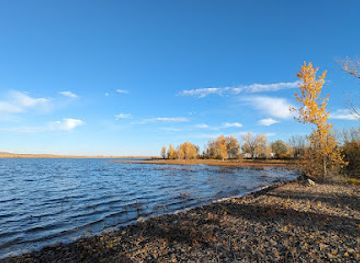
\n\nBelle Fourche Reservoir occupies a broad, open basin in north-eastern Wyoming? No. Belle Fourche Reservoir lies in western South Dakota, north of the town of Belle Fourche in Butte County, where the Bureau of Reclamation's Orman Dam stores water for the Belle Fourche irrigation project. The reservoir's shoreline combines expansive water, dry grassland, low rolling terrain and wide skies rather than the forested scenery associated with the nearby Black Hills. Its character changes with the light and season: summer brings boating, fishing and camping, while spring and autumn offer cooler conditions for walking, wildlife observation and quiet shoreline views.\n\nRecreation on the Reservoir
\n\nThe reservoir is managed for both water storage and public recreation, with opportunities centred on angling, boating, picnicking, camping and observing the open-country landscape. Visitors should check current South Dakota Game, Fish and Parks information before travelling, since water levels, access conditions, boating regulations and facility availability can change. The surrounding country is especially suited to travellers who enjoy spacious natural settings and practical outdoor recreation rather than a dense concentration of attractions.\n\nGateway Towns and Regional Context
\n\nBelle Fourche is the principal service town for visits to the reservoir, providing fuel, food, supplies and connections to the wider Black Hills and northern Great Plains. The smaller community of Newell lies in the broader agricultural landscape to the north-east, while larger regional excursions may include Spearfish, Deadwood or the Black Hills, all outside the reservoir itself. Belle Fourche Reservoir is therefore best understood as a water-based rural destination: a place to combine time outdoors with an exploration of the historic ranching, irrigation and frontier communities of north-eastern South Dakota.When is the best time to visit Belle Fourche Reservoir?
Best: June, August–September · 21–27°C| Month | High (°C) | Rainfall (mm) |
|---|---|---|
| January | -1 | 15 |
| February | 1 | 15 |
| March | 6 | 25 |
| April | 14 | 35 |
| May | 21 | 50 |
| June (best) | 26 | 60 |
| July | 29 | 60 |
| August (best) | 27 | 50 |
| September (best) | 21 | 35 |
| October | 14 | 25 |
| November | 4 | 20 |
| December | -1 | 15 |
Getting to and around Belle Fourche Reservoir
How to get there
Transportation
Best attractions in Belle Fourche Reservoir
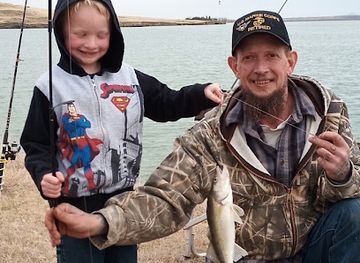
Belle Fourche Reservoir's principal attraction is the broad expanse of water held behind Orman Dam, where visitors can fish, launch boats where permitted, camp and enjoy open views across the surrounding prairie. The reservoir's appeal lies in its working landscape as much as in its recreation: irrigation structures, shoreline inlets and grass-covered hills reveal how water management supports farming in this dry part of South Dakota. Anglers may find species such as walleye, yellow perch, crappie, northern pike and bass, subject to current fisheries conditions and regulations. Wildlife watching is best approached quietly from established access areas, with waterbirds and prairie species potentially visible rather than guaranteed. Belle Fourche, the nearest service town, adds museums, local history and community facilities outside the reservoir itself, while the northern Black Hills, Spearfish and Deadwood provide wider regional excursions rather than attractions within Belle Fourche Reservoir.
-
Park
Rocky Point State Recreation Area
Explore the natural beauty and outdoor adventures at Rocky Point State Recreation Area in South Dakota, perfect for fishing, hiking, and camping enthusiasts.
-
Campground
Rocky Point Campground
Escape to Rocky Point Campground in South Dakota, where nature meets tranquility and adventure awaits at every corner.
-
 Tourist attraction
Whitetail Creek Outfitter
Discover the spirit of the Black Hills at Whitetail Creek Outfitter, where adventure meets breathtaking landscapes in South Dakota.
Explore Belle Fourche Reservoir on the map
Plan your trip on one map. See where the top attractions, landmarks, restaurants and hotels are, and book hotels and experiences in a few clicks.
Best hotels in Belle Fourche Reservoir
Best bars in Belle Fourche Reservoir
Evening entertainment around Belle Fourche Reservoir is limited and quiet, reflecting its rural setting and its role as a recreation and irrigation site rather than a resort. Visitors staying near the water are more likely to spend the evening fishing, sitting around an authorised campsite or watching the changing light over the prairie than seeking organised nightlife. Belle Fourche provides the nearest established selection of local bars, taverns and casual evening venues, although the atmosphere is community-oriented rather than centred on a nightclub district. Spearfish and the northern Black Hills offer a wider range of pubs, live entertainment and late-evening hospitality, but they are separate regional destinations requiring a drive. Check current opening arrangements locally, particularly outside the main summer period.
-
Livestock breeder
BAR 69 ANGUS
Discover the authentic ranch experience at Bar 69 Angus in Belle Fourche, South Dakota, where livestock breeding meets scenic beauty.
Best shops in Belle Fourche Reservoir
Shopping at Belle Fourche Reservoir is limited to practical supplies rather than destination retail, so visitors should buy groceries, fuel, fishing equipment, camping provisions and other essentials in Belle Fourche before travelling to the shoreline. The town is also the most convenient place to look for locally produced food, western-themed goods, small independent retail and souvenirs connected with the area's ranching and frontier identity, although individual stock and opening arrangements vary. Newell may provide additional small-community services in the wider area, while Spearfish and larger Black Hills centres offer a broader range of outdoor retailers, galleries and visitor shopping outside the reservoir. There is no substantial shopping district at the water itself, and visitors should not rely on finding specialist equipment or extensive retail facilities once they have left the main service towns.
-
Fishing store
Wheel In Bait Shop
Explore the Wheel In Bait Shop in Belle Fourche for all your fishing needs and embark on memorable fishing adventures in South Dakota's beautiful landscapes.
-
Convenience store
Rocky Point Park Shop
Your go-to convenience store in Belle Fourche, SD, offering essential supplies and local products for outdoor adventures at Rocky Point Recreation Area.
Get your free copy of our complete guide to Belle Fourche Reservoir, delivered straight to you.
Everything on this page, from attractions and restaurants to essentials and local phrases, in one PDF you can read offline, print or share.
Already have an account? Sign in
Your Belle Fourche Reservoir guide is ready.
We'll send it to · Not you? Sign out

Getting your guide ready…
We are putting together a fresh copy of the Belle Fourche Reservoir guide. This can take up to a minute.
This can take a few moments. If your browser asks, choose Allow so the download can start. You'll find the guide in your Downloads folder.
Nothing happened? Download it again
Sorry, the guide is taking longer than usual. Please try again in a minute, or get it by email instead.
Belle Fourche Reservoir essentials
Currency and Payment
Safety
Emergency Situations
Do's and Don'ts
Local Tips
From Eve
Local phrases worth knowing
You don't need to get them perfect. A few words go a long way, and locals appreciate the effort.
Basics
| English | Local | Say it |
|---|---|---|
| Hello | Howdy | [haw-dee] |
| Goodbye | See ya | [see yah] |
| Yes | Yup | [yuhp] |
| No | Nah | [nuh] |
| Please/You're welcome | Please/You're welcome | [pleez/yer welcome] |
| Thank you | Thanks | [thanks] |
| Excuse me/Sorry | Pardon me | [par-dun me] |
| How are you? | Howdy | [haw-dee] |
| Fine. And you? | Just fine. You? | [just fine. yoo?] |
| Do you speak English? | Ya speak English? | [yah speak ing-lish?] |
| I don't understand | I dunno | [i dun-no] |
Eating & Drinking
| English | Local | Say it |
|---|---|---|
| I'd like to see the menu, please | Menu, please | [men-yoo, pleez] |
| I don't eat meat | No meat for me | [no meat for mee] |
| Cheers! | Cheers! | [cheers!] |
| I would like to pay, please | Check, please | [chek, pleez] |
Emergencies
| English | Local | Say it |
|---|---|---|
| Help! | Help! | [help!] |
| Go away! | Git! | [git!] |
| Call the Police! | Call the cops! | [call the cops!] |
| Call a doctor! | Get a doc! | [get a doc!] |
| I'm lost | Lost | [lost] |
| I'm ill | Sick | [sick] |
Shopping
| English | Local | Say it |
|---|---|---|
| I'd like to buy... | I wanna buy... | [i wanna buy...] |
| I'm just looking | Just lookin' | [just look-in'] |
| How much is it? | How much? | [how much?] |
| That's too expensive | Too pricey | [too pry-see] |
| Can you lower the price? | Lower the price? | [low-er the pryce?] |
Time & Numbers
| English | Local | Say it |
|---|---|---|
| What time is it? | Time? | [time?] |
| It's one o'clock | One o'clock | [wun o-klok] |
| Half past (10) | Half past ten | [haff past ten] |
| Morning | Mornin' | [morn-in'] |
| Afternoon | Afternoon | [after-noon] |
| Evening | Evenin' | [even-in'] |
| Yesterday | Yesterdee | [yester-dee] |
| Today | Today | [to-day] |
| Tomorrow | Tomorrow | [to-mor-row] |
| 1 | One | [wun] |
| 2 | Two | [too] |
| 3 | Three | [three] |
| 4 | Four | [four] |
| 5 | Five | [five] |
| 6 | Six | [six] |
| 7 | Seven | [seven] |
| 8 | Eight | [ate] |
| 9 | Nine | [nine] |
| 10 | Ten | [ten] |
Transport & Directions
| English | Local | Say it |
|---|---|---|
| Where's a/the...? | Where's the...? | [wheres the...?] |
| What's the address? | Address? | [address?] |
| Can you show me (on the map)? | Show me | [show me] |
| When's the next (bus)? | Next bus? | [next bus?] |
| A ticket (to ....) | Ticket | [ticket] |
History of Belle Fourche Reservoir
A River-Shaped Prairie Basin
Before the reservoir was built, the Belle Fourche River flowed through a largely agricultural landscape shaped by grassland, seasonal water and the practical demands of ranching. The river is part of the wider Belle Fourche drainage, a north-eastern South Dakota waterway that supported settlement and farming in an otherwise semi-arid Great Plains environment. The area's human history is inseparable from the challenge of making water available during dry periods, since reliable irrigation could transform the productivity of the surrounding plains.
The Belle Fourche Irrigation Project
The federal Belle Fourche Project was authorised in the early twentieth century as part of the expanding United States reclamation programme. Its purpose was to capture and distribute water for irrigated agriculture in the Belle Fourche Valley. Orman Dam and the associated reservoir became the central storage works of the project, creating a managed water supply where natural flows were variable. The undertaking brought engineering, construction and government water management into a landscape already being settled and cultivated, while also shaping the agricultural economy around Belle Fourche.
Orman Dam and Reservoir Development
Construction of Orman Dam took place during the first decade of the twentieth century, and the completed works established Belle Fourche Reservoir as a major local water-storage feature. The dam, canals and distribution system altered the relationship between the river and the surrounding farms, allowing water to be held back and released for irrigation. The reservoir's modern identity consequently combines infrastructure with landscape: its shoreline is both a recreational setting and part of an active water-management system.
Recreation and Water Stewardship
During the later twentieth century, public recreation became an increasingly visible part of the reservoir's role alongside irrigation. Fishing, boating, camping and day visits introduced a seasonal leisure dimension to the agricultural project, with South Dakota agencies and the Bureau of Reclamation involved in managing access and resources. Present-day visits still depend on the balance between recreation, water supply, wildlife habitat and changing reservoir levels. Understanding that working landscape helps explain why facilities and permitted activities may vary according to operational and environmental conditions.
Belle Fourche Reservoir in Photos
Browse through our photo collection highlighting the charm and character of the destination.
Neighbouring destination travel guides
The closest destinations to Belle Fourche Reservoir, if you have time for more than one.
-

-

-

-

-


Swipe for more destinations
Explore more

Explore more of Black Hills
Discover the Black Hills in South Dakota: A land of majestic mountains, rich history, and thrilling outdoor adventures. Explore iconic monuments, scenic parks, and historic towns.
Explore Black Hills
Explore more of South Dakota
Discover South Dakota: From the iconic Mount Rushmore and Crazy Horse Memorial to the stunning Badlands and charming small towns, it's a land of history and natural beauty.
Explore South Dakota