

Devils Tower National Monument Travel Guide - Free Web & App
Your ultimate guide to Devils Tower National Monument. Discover top landmarks, proposed trips, and local tips. Free on the web or via the Evendo companion app.


Devils Tower National Monument in Wyoming combines striking geology, Indigenous heritage, wildlife, scenic trails and climbing near the Black Hills.
A Landmark on the Northern Plains
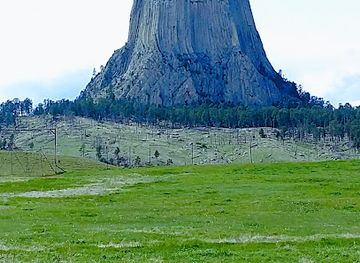
Devils Tower National Monument rises dramatically from the grasslands of north-eastern Wyoming, close to the western edge of the Black Hills and within reach of South Dakota’s western attractions. The monument is centred on a vast column of pale igneous rock that stands 867 feet above the surrounding landscape. Its nearly vertical sides and sharply defined columns make it one of the most recognisable geological features in the United States, while the open setting gives the tower a powerful sense of isolation and scale.Read more about Devils Tower National Monument
Geology, Wildlife and Landscape
Living Cultural Significance
When is the best time to visit Devils Tower National Monument?
Best: June–August · 23–26°C| Month | High (°C) | Rainfall (mm) |
|---|---|---|
| January | -1 | 15 |
| February | 2 | 15 |
| March | 8 | 25 |
| April | 14 | 35 |
| May | 18 | 45 |
| June (best) | 23 | 55 |
| July (best) | 26 | 55 |
| August (best) | 25 | 45 |
| September | 20 | 35 |
| October | 12 | 25 |
| November | 5 | 15 |
| December | 2 | 15 |
Getting to and around Devils Tower National Monument
How to get there
Transportation
Explore Devils Tower National Monument on the map
Plan your trip on one map. See where the top attractions, landmarks, restaurants and hotels are, and book hotels and experiences in a few clicks.
Best hotels in Devils Tower National Monument
Best bars in Devils Tower National Monument
Devils Tower National Monument has no nightlife district and evenings are generally quiet once visitors have left the trails. The most characteristic evening settings are rural bars, restaurants and traditional gathering places in nearby communities such as Hulett, Sundance and Moorcroft, where the atmosphere is informal and shaped by local residents, ranching country and passing road travellers. Larger towns in the Black Hills, including Spearfish and Rapid City, offer a wider choice of pubs, breweries, live entertainment and late-opening venues, but they are outside the monument and require a drive. In or near the monument, darkness, open skies and the sounds of the surrounding landscape are more meaningful evening experiences than clubs or organised entertainment. Check transport arrangements carefully before drinking, as distances are substantial and public transport is limited.
-
Restaurant
The Diamond Bar at Devils Tower
Experience the flavors of Wyoming at The Diamond Bar, a charming restaurant near the iconic Devils Tower, perfect for tourists and locals alike.
Get your free copy of our complete guide to Devils Tower National Monument, delivered straight to you.
Everything on this page, from attractions and restaurants to essentials and local phrases, in one PDF you can read offline, print or share.
Already have an account? Sign in
Your Devils Tower National Monument guide is ready.
We'll send it to · Not you? Sign out

Getting your guide ready…
We are putting together a fresh copy of the Devils Tower National Monument guide. This can take up to a minute.
This can take a few moments. If your browser asks, choose Allow so the download can start. You'll find the guide in your Downloads folder.
Nothing happened? Download it again
Sorry, the guide is taking longer than usual. Please try again in a minute, or get it by email instead.
Devils Tower National Monument essentials
Currency and Payment
Safety
Emergency Situations
Do's and Don'ts
Local Tips
From Eve
Local phrases worth knowing
You don't need to get them perfect. A few words go a long way, and locals appreciate the effort.
Basics
| English | Local | Say it |
|---|---|---|
| Hello | Hau | [how] |
| Goodbye | Háóke | [ha-oh-keh] |
| Yes | Han | [hahn] |
| No | Nah | [nah] |
| Please/You're welcome | Tȟačhíŋča | [tah-chin-cha] |
| Thank you | Piláma | [pee-lah-mah] |
| Excuse me/Sorry | Háŋ | [hahn] |
| How are you? | Hečíya kiŋ | [heh-chee-yah keen] |
| Fine. And you? | Pȟežíla. Ní kiŋ | [pah-zhee-lah. nee keen] |
| Do you speak English? | Ištáŋma kiŋ | [ee-shtaang-mah keen] |
| I don't understand | Wíyaka šni | [wee-yah-kah shnee] |
Eating & Drinking
| English | Local | Say it |
|---|---|---|
| I'd like to see the menu, please | Menu kiŋ tȟaŋhaŋ čhaŋháŋpi kiŋ čha | [meh-noo keen tahng-hahn chan-hahn-pee keen chah] |
| I don't eat meat | Pȟežítu yuha šni | [pah-zhee-too yoo-hah shnee] |
| Cheers! | Škéeye! | [shkay-yay] |
| I would like to pay, please | Iyéčhiya kiŋ čha | [ee-ye-chi-yah keen chah] |
Emergencies
| English | Local | Say it |
|---|---|---|
| Help! | Wíyaka! | [wee-yah-kah] |
| Go away! | Líla! | [lee-lah] |
| Call the Police! | Wíyaka tȟáŋka kiŋ | [wee-yah-kah tahng-kah keen] |
| Call a doctor! | Wíyaka wičháša kiŋ | [wee-yah-kah wee-chah-shah keen] |
| I'm lost | Wíyaka yeló | [wee-yah-kah yeh-loh] |
| I'm ill | Wíyaka na tȟáŋka | [wee-yah-kah nah tahng-kah] |
Shopping
| English | Local | Say it |
|---|---|---|
| I'd like to buy... | Níyukši tȟaŋháŋ čha | [nee-yook-shee tahng-hahn chah] |
| I'm just looking | Šniyéčhiya | [shnee-ye-chi-yah] |
| How much is it? | Hečha kiŋ šni | [heh-chah keen shnee] |
| That's too expensive | Hečíyata kiŋ | [heh-chee-yah-tah keen] |
| Can you lower the price? | Tȟaŋhaŋ čhaŋháŋpi kiŋ čha | [tahng-hahn chan-hahn-pee keen chah] |
Time & Numbers
| English | Local | Say it |
|---|---|---|
| What time is it? | Hiyá šni | [hee-yah shnee] |
| It's one o'clock | Itókiča | [ee-toh-kee-cha] |
| Half past (10) | Naĥpéya | [nah-hpay-yah] |
| Morning | Wíyaka | [wee-yah-kah] |
| Afternoon | Wíyaka kiŋ | [wee-yah-kah keen] |
| Evening | Héhaŋ | [heh-hahn] |
| Yesterday | Ičháŋ | [ee-chahn] |
| Today | Líla | [lee-lah] |
| Tomorrow | Šlíla | [shlee-lah] |
| 1 | Hoká | [hoh-kah] |
| 2 | Náŋmá | [nahng-mah] |
| 3 | Yamní | [yahm-nee] |
| 4 | Topá | [toh-pah] |
| 5 | Zaptaŋ | [zahp-tahng] |
| 6 | Pȟežúta | [pah-zhoo-tah] |
| 7 | Šakpá | [shahk-pah] |
| 8 | Šákpe | [shah-kpeh] |
| 9 | Naháŋ | [nah-hahn] |
| 10 | Nážiŋča | [nah-zhee-ng-chah] |
Transport & Directions
| English | Local | Say it |
|---|---|---|
| Where's a/the...? | Heóka... | [heh-oh-kah] |
| What's the address? | Heóka kiŋ tȟáŋka | [heh-oh-kah keen tahng-kah] |
| Can you show me (on the map)? | Kiŋ tȟaŋhaŋ čhaŋháŋpi kiŋ čha | [keen tahng-hahn chan-hahn-pee keen chah] |
| When's the next (bus)? | Heóka na kiŋ tȟáŋka | [heh-oh-kah nah keen tahng-kah] |
| A ticket (to ....) | Wíyaka kiŋ | [wee-yah-kah keen] |
History of Devils Tower National Monument
An Ancient Igneous Formation
Devils Tower formed from igneous rock deep below the surface, although the precise mechanism remains debated. As surrounding sedimentary layers were eroded over geological time, the more resistant phonolite porphyry was exposed as an isolated tower. The rock cooled into the striking columns visible today, making the formation an important example of columnar jointing. Its prominence is heightened by the surrounding grasslands and wooded ridges of north-eastern Wyoming, where the tower appears abruptly above the Belle Fourche River landscape.
Indigenous Names and Traditions
Long before European-American administration, Devils Tower was a significant place for Indigenous peoples of the northern Great Plains, including the Lakota, Cheyenne and Kiowa. Indigenous names commonly translated as Bear Lodge or Bear’s Lodge reflect traditions associated with the formation and the surrounding landscape. The English name Devils Tower arose through nineteenth-century mapping and translation, and remains contested because it does not reflect the site’s Indigenous cultural meaning. Ceremonies and prayer offerings continue to demonstrate that the monument is a living sacred place rather than only a geological attraction.
Exploration and the National Monument
United States military expeditions and surveyors entered the wider Black Hills and northern Great Plains during the nineteenth century, bringing the formation into wider non-Indigenous public attention. Devils Tower was proclaimed the first United States national monument by President Theodore Roosevelt on 24 September 1906 under the Antiquities Act. The designation protected the tower and its immediate surroundings at a time when federal conservation policy was beginning to preserve prominent natural and archaeological features for public benefit.
Climbing and Public Recognition
The tower became an important destination for technical rock climbing during the twentieth century, with climbers drawn to its long vertical columns. At the same time, improved roads and the growth of national-park tourism made the monument more accessible to visitors travelling through Wyoming and the Black Hills. Its dramatic appearance also gave it a prominent place in popular culture, particularly after its inclusion in the 1977 film Close Encounters of the Third Kind. Film recognition increased public interest but did not replace the site’s older geological and Indigenous significance.
Conservation and Cultural Respect
Modern management at Devils Tower combines protection of geological features, wildlife habitat, visitor access and Indigenous cultural values. The National Park Service encourages visitors to respect the monument as a sacred place and supports a voluntary closure to climbing during June, when traditional ceremonies take place. This approach reflects a broader shift in conservation thinking: safeguarding the site involves not only maintaining trails and natural habitats, but also recognising enduring cultural relationships with the tower and surrounding landscape.
Devils Tower National Monument in Photos
Browse through our photo collection highlighting the charm and character of the destination.
Neighbouring destination travel guides
The closest destinations to Devils Tower National Monument, if you have time for more than one.
-

-

-

-

-


Swipe for more destinations
Explore more

Explore more of Black Hills
Discover the Black Hills in South Dakota: A land of majestic mountains, rich history, and thrilling outdoor adventures. Explore iconic monuments, scenic parks, and historic towns.
Explore Black Hills
Explore more of South Dakota
Discover South Dakota: From the iconic Mount Rushmore and Crazy Horse Memorial to the stunning Badlands and charming small towns, it's a land of history and natural beauty.
Explore South Dakota