

Free Rapid City Travel Guide & Mobile App
Plan your Rapid City trip with Evendo. Get free guides to top attractions, restaurants, hotels, and bars. Web access or download the mobile app.


Rapid City blends Black Hills scenery, Lakota heritage, dinosaur landmarks, public art and easy access to Mount Rushmore and Badlands adventures.
A Black Hills Base
Rapid City stands on the eastern edge of South Dakota’s Black Hills, where the open prairie rises towards pine-covered hills, granite formations and deep ravines. The city is the region’s principal urban centre and a practical base for exploring Mount Rushmore National Memorial, Custer State Park, Crazy Horse Memorial and Badlands National Park, all outside the city itself. Within Rapid City, broad streets, public art and a compact downtown provide a more approachable introduction to the region’s history and culture.Read more about Rapid City
Downtown History and Culture
Prairie, Pine and Stone
When is the best time to visit Rapid City?
Best: June, August–September · 20–27°C| Month | High (°C) | Rainfall (mm) |
|---|---|---|
| January | 0 | 12 |
| February | 1 | 12 |
| March | 7 | 23 |
| April | 14 | 38 |
| May | 20 | 59 |
| June (best) | 24 | 70 |
| July | 28 | 56 |
| August (best) | 27 | 47 |
| September (best) | 20 | 37 |
| October | 13 | 25 |
| November | 4 | 14 |
| December | 0 | 11 |
Getting to and around Rapid City
How to get there
Transportation
Best attractions in Rapid City
Rapid City’s attractions range from regional museums to open-air curiosities and public art. The Journey Museum and Learning Center presents the geological, archaeological and cultural history of the Black Hills, while the Museum of Geology at the South Dakota School of Mines and Technology displays important fossils, minerals and rocks from South Dakota and beyond. Downtown, the City of Presidents route places bronze statues of former US presidents along the streets, and Art Alley changes constantly through permitted graffiti and murals. Dinosaur Park, high above the city, combines broad views with concrete prehistoric figures dating from the 1930s. Main Street Square forms a gathering place for civic events, and the Skyline Wilderness Area offers walking trails and wooded scenery within the city. Rapid Creek and nearby parks add open space, while Mount Rushmore and other Black Hills attractions are regional excursions rather than Rapid City sights proper.
-
Non-profit organization
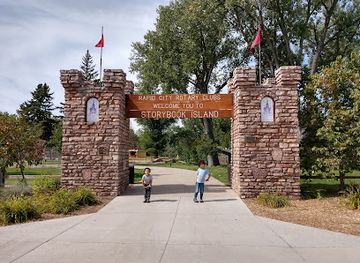
Storybook Island
Experience the magic of childhood at Storybook Island, a charming theme park in Rapid City, South Dakota, filled with beloved storybook characters and enchanting displays.
8 min drive · 2.7 km from city centre
-
Tourist attraction
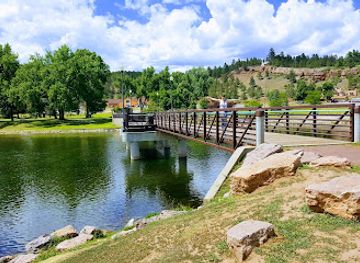
Canyon Lake Park
Explore the natural beauty and recreational delights of Canyon Lake Park, a serene escape in Rapid City, South Dakota.
15 min drive · 5.0 km from city centre
-
Tourist attraction
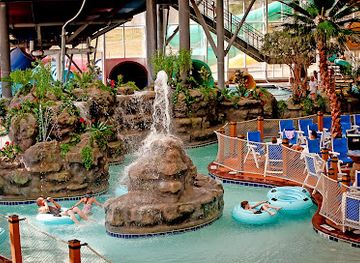
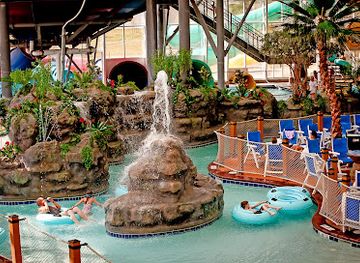
WaTiki® Indoor Waterpark Resort
Experience year-round aquatic fun at WaTiki® Indoor Waterpark Resort in Rapid City, SD, featuring thrilling slides and family-friendly attractions.
21 min drive · 6.9 km from city centre
-
Restaurant
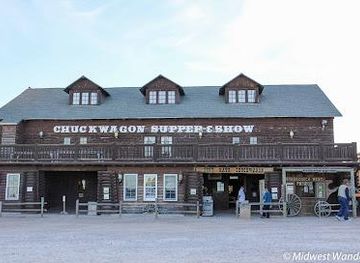
Fort Hays Chuckwagon Supper & Show
Discover the charm of the Wild West at Fort Hays Chuckwagon Supper & Show - a delightful blend of dining and entertainment in Rapid City, South Dakota.
27 min drive · 9.1 km from city centre

Best landmarks in Rapid City
Rapid City’s landmarks express its frontier origins, civic history and relationship with the Black Hills. The bronze presidents along the City of Presidents route turn downtown streets into an open-air political gallery, while the Dahl Arts Center represents the city’s contemporary cultural life. The Cathedral of Our Lady of Perpetual Help, completed in 1962, is a prominent modern Catholic church on the city’s west side, and the Chapel in the Hills is a distinctive Norwegian-style wooden church inspired by stave-church architecture. Dinosaur Park, perched above Skyline Drive, is both a roadside-era attraction and a recognisable part of the city’s skyline. Rapid Creek and the flood memorials associated with the 1972 disaster carry more sombre civic significance. Mount Rushmore is often linked with Rapid City, but it is a separate national memorial in the Black Hills, not a city landmark.
-
Park
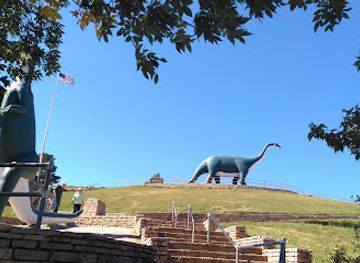
Dinosaur Park
Explore Dinosaur Park in Rapid City, SD: A unique park featuring life-sized dinosaur sculptures, stunning views, and educational fun for the whole family.
15 min walk · 1.2 km from city centre
-
Non-profit organization
Storybook Island
Explore Storybook Island, a magical theme park in Rapid City, SD, where fairy tales come to life in a delightful, family-friendly setting.
8 min drive · 2.7 km from city centre
-
 Hotel
HotelHotel Alex Johnson Rapid City, Curio Collection by Hilton
Discover the historic Hotel Alex Johnson in Rapid City, SD—a perfect blend of charm, comfort, and convenience near the Black Hills attractions.
3 min walk · 0.3 km from city centre
-
Water park
WaTiki® Indoor Waterpark Resort
Experience the ultimate indoor water adventure at WaTiki® Indoor Waterpark Resort in Rapid City, South Dakota – fun for the whole family awaits!
21 min drive · 6.9 km from city centre
Explore Rapid City on the map
Plan your Rapid City trip on one map. See where the top attractions, landmarks, restaurants, bars and hotels are, find what's near where you're staying, and book hotels and experiences in a few clicks.
Best hotels in Rapid City
Best restaurants in Rapid City
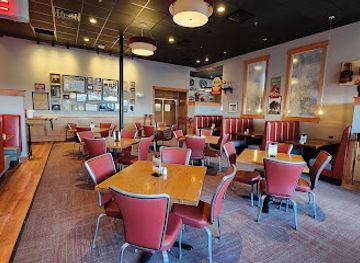
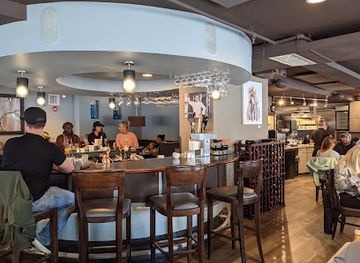
Rapid City’s dining scene reflects its position between the prairie and the Black Hills, with menus shaped by ranching, hunting traditions, agricultural produce and the wider culinary culture of the American West. Downtown contains the broadest concentration of restaurants, cafés, bakeries and bars, ranging from casual meals to contemporary interpretations of regional ingredients. Visitors may encounter bison, beef, freshwater fish and locally sourced produce, although availability varies by season and restaurant. Fry bread and other Indigenous foods belong to the wider cultural landscape of the region, but they should not be treated as interchangeable with generic Western fare. Coffee shops and breweries contribute to the city’s everyday social life, while food trucks and informal eateries add variety in warmer months. The surrounding Black Hills also support small-scale producers, farm stands and tasting experiences, though these are generally reached by car rather than found in one central market district.
-
Hamburger
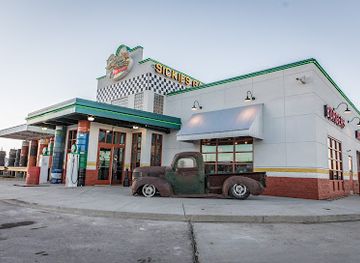
Sickies Garage Burgers & Brews
Discover the ultimate burger haven at Sickies Garage Burgers & Brews in Rapid City - where great taste meets American spirit.
18 min drive · 6.1 km from city centre
-
Steak
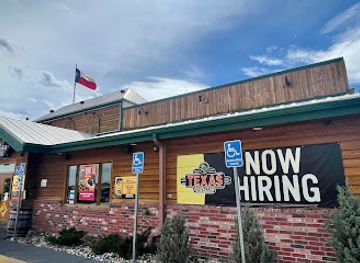
Texas Roadhouse
Experience the authentic flavors of America at Texas Roadhouse in Rapid City - where every steak is grilled to perfection.
10 min drive · 3.2 km from city centre
-
American
Colonial House Restaurant & Bar
Experience the heart of American cuisine at Colonial House Restaurant & Bar in Rapid City—where every meal tells a story.
6 min drive · 2.0 km from city centre
-
American
Tally's Silver Spoon
Discover Tally's Silver Spoon in Rapid City: A delightful blend of American cuisine with innovative breakfast options awaits you.
4 min walk · 0.3 km from city centre
Best bars in Rapid City
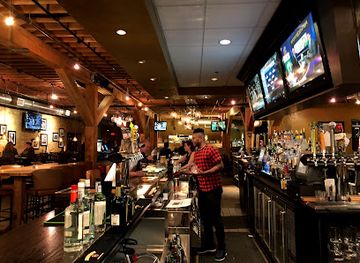
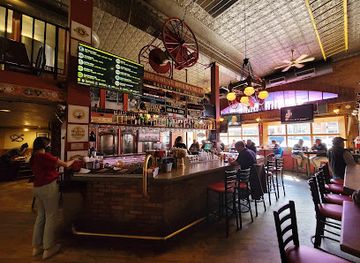
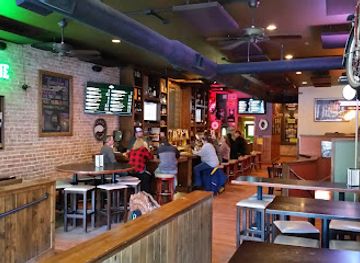
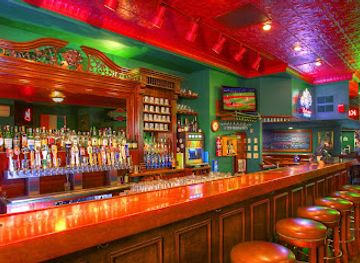
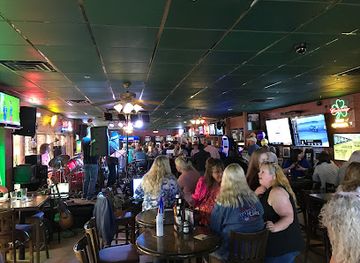
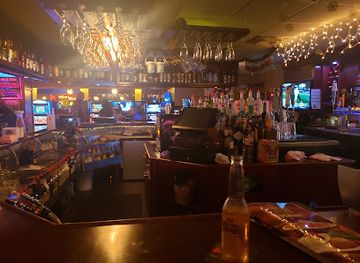
Rapid City’s evening life is concentrated mainly downtown, where bars, breweries, cocktail rooms and live-music venues occupy historic commercial streets near Main Street Square and Saint Joseph Street. The atmosphere is generally relaxed and regional rather than built around large nightclubs, with residents, visitors and outdoor workers sharing the same evening circuit. Local breweries provide informal meeting places, while music venues may feature touring bands, regional performers and community events; schedules change regularly. Cultural evenings can also include performances, gallery events and seasonal programming in central public spaces. Outside downtown, nightlife becomes quieter and more dispersed, and many visitors spend evenings dining or returning from the Black Hills rather than staying out late. Transport by car should be planned carefully, particularly when accommodation lies beyond the central area or when roads are affected by winter weather.
-
Bar
Murphy's Pub & Grill
Discover the best of Rapid City at Murphy's Pub & Grill, where delicious food meets a vibrant atmosphere in a local favorite destination.
2 min walk · 0.2 km from city centre
-
Brewery
Firehouse Brewing Company
Discover the heart of Rapid City at Firehouse Brewing Company, where craft beer meets delicious American cuisine in a vibrant setting.
4 min walk · 0.3 km from city centre
-
Bar
Independent Ale House
Experience Rapid City's local flavor at the Independent Ale House, where craft beers and gourmet pizzas create a vibrant dining atmosphere.
2 min walk · 0.2 km from city centre
-
Irish pub
Paddy O'Neill's Irish Pub & Grill
Discover the charm of an authentic Irish pub in Rapid City, with delightful cuisine, extensive drinks, and a lively atmosphere.
4 min walk · 0.3 km from city centre
Best nightclubs in Rapid City
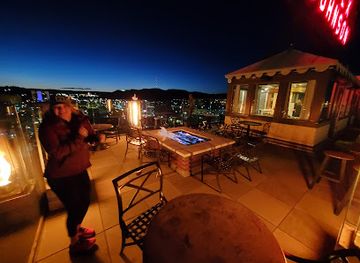
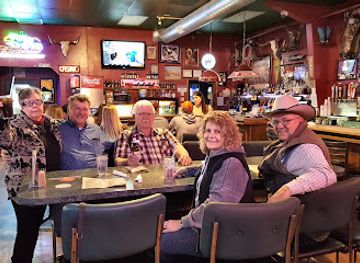
Rapid City’s evening life is concentrated mainly downtown, where bars, breweries, cocktail rooms and live-music venues occupy historic commercial streets near Main Street Square and Saint Joseph Street. The atmosphere is generally relaxed and regional rather than built around large nightclubs, with residents, visitors and outdoor workers sharing the same evening circuit. Local breweries provide informal meeting places, while music venues may feature touring bands, regional performers and community events; schedules change regularly. Cultural evenings can also include performances, gallery events and seasonal programming in central public spaces. Outside downtown, nightlife becomes quieter and more dispersed, and many visitors spend evenings dining or returning from the Black Hills rather than staying out late. Transport by car should be planned carefully, particularly when accommodation lies beyond the central area or when roads are affected by winter weather.
-
Bar
Juniper at Vertex Sky Bar
Experience elevated dining and breathtaking views at Juniper at Vertex Sky Bar in Rapid City, SD, perfect for a memorable night out.
3 min walk · 0.3 km from city centre
-
Night club
Joe's Place Bar & Grill
Discover the vibrant nightlife and delicious dining at Joe's Place Bar & Grill in Rapid City, where every visit promises great food and fun.
16 min drive · 5.3 km from city centre
-
Bar
Sally O'Malley's Pub & Casino
Discover the lively ambiance and exceptional entertainment at Sally O'Malley's Pub & Casino in Rapid City, South Dakota.
23 min drive · 7.6 km from city centre
-
Sports bar
Cheers Sports Bar & Casino
Experience the lively atmosphere of Cheers Sports Bar & Casino in Rapid City - a perfect blend of sports, dining, and entertainment.
10 min drive · 3.2 km from city centre
Best shops in Rapid City
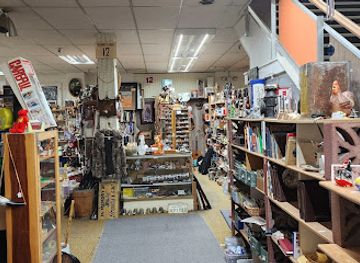
Shopping in Rapid City is divided between a walkable downtown core, larger commercial areas and specialist retailers serving visitors bound for the Black Hills. Downtown streets offer independent shops, galleries, Western-style goods, books, clothing and locally themed souvenirs, with Art Alley adding a distinctly urban visual character. Visitors will find South Dakota minerals, fossils, beadwork, Native-inspired art and regional food products, but provenance matters: ask whether an item is made locally and whether Indigenous artists or authorised sellers are properly represented. Larger shopping districts provide everyday goods, outdoor equipment and services for road trips, while the Black Hills region supports additional craft studios and roadside shops reached by car. The city’s retail character is practical as well as touristic, reflecting its role as a service centre for surrounding communities rather than a specialised luxury-shopping destination.
-
Gift shop
Prairie Edge Trading Co & Galleries
Explore the vibrant world of Native American art and culture at Prairie Edge Trading Co & Galleries in Rapid City, a must-visit for every traveler.
4 min walk · 0.3 km from city centre
-
Children's clothing store
Once Upon a Child Rapid City
Discover affordable and sustainable children's clothing, shoes, and toys at Once Upon a Child Rapid City, the perfect family-friendly shopping destination.
5 min drive · 1.5 km from city centre
-
Hobby store
Who's Hobby House
Discover a world of creativity at Who's Hobby House, Rapid City’s premier destination for hobby supplies and inspiration.
2 min walk · 0.1 km from city centre
-
Antique store
St. Joe Antiques Mall
Discover unique antiques and vintage treasures at St. Joe Antiques Mall, a must-visit destination in Rapid City, South Dakota.
3 min walk · 0.2 km from city centre


Get your free copy of our complete guide to Rapid City, delivered straight to you.
Everything on this page, from attractions and restaurants to essentials and local phrases, in one PDF you can read offline, print or share.
Already have an account? Sign in
Your Rapid City guide is ready.
We'll send it to · Not you? Sign out

Getting your guide ready…
We are putting together a fresh copy of the Rapid City guide. This can take up to a minute.
This can take a few moments. If your browser asks, choose Allow so the download can start. You'll find the guide in your Downloads folder.
Nothing happened? Download it again
Sorry, the guide is taking longer than usual. Please try again in a minute, or get it by email instead.
Rapid City essentials
Currency and Payment
Safety
Emergency Situations
Do's and Don'ts
Local Tips
From Eve
Local phrases worth knowing
You don't need to get them perfect. A few words go a long way, and locals appreciate the effort.
Basics
| English | Local | Say it |
|---|---|---|
| Hello | Howdy | [haw-dee] |
| Goodbye | See ya | [see yah] |
| Yes | Yup | [yuhp] |
| No | Nah | [nuh] |
| Please/You're welcome | Please/No problem | [pleez/no problem] |
| Thank you | Thanks | [thanks] |
| Excuse me/Sorry | Pardon me/My bad | [par-dun me/my bad] |
| How are you? | How's it going? | [hows it go-ing] |
| Fine. And you? | Good. You? | [good. yoo?] |
| Do you speak English? | You speak English? | [yoo speak ing-lish?] |
| I don't understand | I'm lost | [im lost] |
Eating & Drinking
| English | Local | Say it |
|---|---|---|
| I'd like to see the menu, please | Menu, please | [men-yoo, please] |
| I don't eat meat | No meat for me | [no meat for me] |
| Cheers! | Cheers! | [cheers!] |
| I would like to pay, please | Check, please | [chek, please] |
Emergencies
| English | Local | Say it |
|---|---|---|
| Help! | Help! | [help!] |
| Go away! | Get lost! | [get lost!] |
| Call the Police! | Call the cops! | [call the cops!] |
| Call a doctor! | Doctor! | [doc-tor!] |
| I'm lost | I'm lost | [im lost] |
| I'm ill | I'm sick | [im sick] |
Shopping
| English | Local | Say it |
|---|---|---|
| I'd like to buy... | I want to buy... | [i want to buy] |
| I'm just looking | Just looking | [just looking] |
| How much is it? | How much? | [how much?] |
| That's too expensive | Too pricey | [too pricey] |
| Can you lower the price? | Can you do better? | [can you do bet-ter] |
Time & Numbers
| English | Local | Say it |
|---|---|---|
| What time is it? | What time? | [what time?] |
| It's one o'clock | It's one | [its one] |
| Half past (10) | Half past ten | [half past ten] |
| Morning | Morning | [mor-ning] |
| Afternoon | Afternoon | [af-ter-noon] |
| Evening | Evening | [eve-ning] |
| Yesterday | Yesterday | [yes-ter-day] |
| Today | Today | [to-day] |
| Tomorrow | Tomorrow | [to-mor-row] |
| 1 | One | [wun] |
| 2 | Two | [too] |
| 3 | Three | [three] |
| 4 | Four | [for] |
| 5 | Five | [fiv] |
| 6 | Six | [siks] |
| 7 | Seven | [sev-en] |
| 8 | Eight | [ayt] |
| 9 | Nine | [nine] |
| 10 | Ten | [ten] |
Transport & Directions
| English | Local | Say it |
|---|---|---|
| Where's a/the...? | Where's the...? | [wheres the] |
| What's the address? | Address? | [address?] |
| Can you show me (on the map)? | Show me (on the map)? | [show me on the map] |
| When's the next (bus)? | Next (bus)? | [next bus?] |
| A ticket (to ....) | Ticket (to ...) | [ticket to] |
History of Rapid City
The Black Hills Before Rapid City
The Rapid City area lies within the broader Black Hills region, known to the Lakota as He Sapa. The hills have long held spiritual, cultural and political importance for the Lakota and other Indigenous peoples of the Northern Plains. The 1851 and 1868 Fort Laramie treaties recognised Lakota rights to extensive territory, including the Black Hills. That treaty framework was fundamentally disrupted after the US Army-backed 1874 Black Hills expedition, led by George Armstrong Custer, reported gold in the region. The resulting rush brought miners, prospectors and military pressure into an area that the United States had agreed to protect. Rapid City’s later growth therefore belongs to a history shaped both by settler expansion and the continuing significance of Indigenous sovereignty and cultural memory.
Gold-Rush Foundations
Rapid City was founded in 1876 by a group of prospectors led by John Brennan and Samuel Scott, who established a settlement near Rapid Creek during the Black Hills gold rush. The town was first known as Hay Camp before adopting the name Rapid City, taken from the nearby watercourse. Although the richest mining activity developed elsewhere in the hills, the settlement benefited from its position on routes linking the mines with the surrounding plains. Businesses, transport services and civic institutions followed, turning the camp into a regional service centre. The creek that helped determine the settlement’s location later became central to the city’s history in a far more destructive way.
Incorporation and Regional Growth
Rapid City was incorporated in 1882 as the mining frontier began to settle into a more permanent urban pattern. Its economy broadened beyond prospecting through ranching, trade, construction and public administration. The city’s position east of the Black Hills allowed it to serve communities scattered across the hills and the surrounding prairie. Schools, churches, commercial streets and civic buildings established a more durable townscape, while improved transport connected Rapid City to wider regional markets. The city also developed an enduring relationship with nearby military and federal institutions, including the installation now known as Ellsworth Air Force Base. This combination of commerce, government and defence helped Rapid City remain important even as individual mining settlements declined.
Tourism and the Carving of Mount Rushmore
Tourism became increasingly important in the twentieth century as roads improved and the Black Hills’ scenery and monuments attracted visitors. Mount Rushmore National Memorial, carved into the granite of the Black Hills from 1927 to 1941 under sculptor Gutzon Borglum, became the region’s best-known attraction and strengthened Rapid City’s role as a gateway town. The monument’s public image is inseparable from the region’s contested history: it stands in the Black Hills, land whose seizure remains a central Lakota grievance. Rapid City’s museums and visitor economy grew alongside tourism, while the city’s proximity to parks, caves, scenic drives and other memorials made it a practical base rather than an attraction defined by a single site.
The 1972 Rapid Creek Flood
On 9 June 1972, exceptionally heavy rainfall in the Black Hills caused Rapid Creek to overflow, producing one of the most destructive natural disasters in South Dakota’s history. The flood killed more than 230 people in the Rapid City area, destroyed or damaged homes and businesses, and altered the city’s relationship with the creek corridor. Subsequent planning introduced flood-control measures, open-space policies and changes to development along vulnerable land. Memorials and interpretive displays preserve the event’s human significance, while Rapid Creek remains both a valued natural feature and a reminder that the Black Hills can generate sudden, severe weather. The flood is an essential part of modern Rapid City’s civic identity.
A Contemporary Regional Centre
Since the late twentieth century, Rapid City has expanded as the Black Hills’ principal centre for healthcare, education, retail, government and tourism. The city has continued to attract visitors through institutions such as The Journey Museum and Learning Center, the Museum of Geology and the South Dakota School of Mines and Technology. Downtown renewal has added public gathering places, murals and commemorative sculpture without erasing the city’s frontier-era street plan. At the same time, debates over Indigenous representation, the Black Hills and public memory remain part of the region’s cultural life. Rapid City today reflects overlapping histories of Lakota homeland, settler development, military presence, geology and outdoor tourism.
Rapid City in Photos
Browse through our photo collection highlighting the charm and character of the destination.
Cities near Rapid City
The closest cities to Rapid City, if you have time for more than one stop.
-

-

-

-

-


Swipe for more cities
Explore more

Explore more of South Dakota
Discover South Dakota: From the iconic Mount Rushmore and Crazy Horse Memorial to the stunning Badlands and charming small towns, it's a land of history and natural beauty.
Explore South Dakota