

Free South Chungcheong Province Travel Guide & Mobile App
Explore South Chungcheong Province with free travel guides. Discover regional history, expert tips, proposed trips, and audio guides on web or mobile app.


South Chungcheong combines Baekje heritage, west-coast wetlands, temple towns, seafood, hot springs and rural landscapes across central South Korea.
Read more about South Chungcheong Province
When is the best time to visit South Chungcheong Province?
Best: May–June, October · 20–26°C| Month | High (°C) | Rainfall (mm) |
|---|---|---|
| January | 4 | 30 |
| February | 6 | 30 |
| March | 12 | 50 |
| April | 18 | 60 |
| May (best) | 22 | 80 |
| June (best) | 26 | 110 |
| July | 29 | 300 |
| August | 29 | 270 |
| September | 25 | 150 |
| October (best) | 20 | 60 |
| November | 13 | 50 |
| December | 5 | 30 |
Getting to and around South Chungcheong Province
How to get there
Transportation
Top city travel guides in South Chungcheong Province
The cities of South Chungcheong Province, and the easiest places to base yourself.
-

-
-


Swipe for more cities
Best attractions in South Chungcheong Province
South Chungcheong’s attractions range from major archaeological sites to tidal landscapes and living religious centres. In Gongju, Gongsanseong Fortress, the Royal Tomb of King Muryeong and the National Museum of Gongju explain Baekje’s royal and artistic legacy, while Buyeo preserves the former Sabi capital through the Buyeo National Museum, Jeongnimsa Temple Site and Gungnamji Pond. The Baekje Historic Areas are the province’s most important heritage concentration. Along the coast, Taeanhaean National Park offers beaches, pine woods, islands, mudflats and maritime walks, while Boryeong’s Daecheon area combines a broad beach with coastal recreation. Seosan is notable for wetlands, migratory birds and the historic sites of Haemieupseong and Gaesimsa. Inland alternatives include Sudeoksa Temple and Deoksan in Yesan, Asan’s traditional Oeam Folk Village and hot-spring facilities, and Cheonan’s Independence Hall of Korea. These attractions are best experienced through several focused excursions rather than a single city-centre itinerary.
-
Science museum
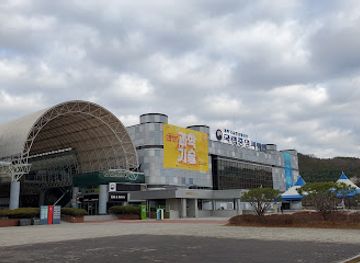
National Science Museum
Discover the National Science Museum in Daejeon, a hub of innovation and education that brings science to life for tourists and families alike.
-
Local history museum
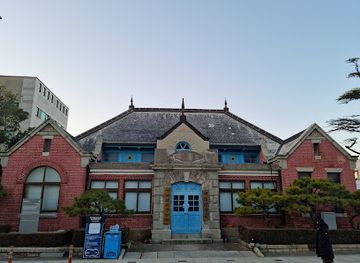
Gunsan Modern History Museum
Immerse yourself in the rich history of Gunsan at the Modern History Museum, a captivating journey through time showcasing the city's remarkable evolution.
-
Tourist attraction
Cheongnamdae
Explore the serene beauty and rich heritage of Cheongnamdae, a tranquil tourist attraction in Cheongju-si, perfect for relaxation and exploration.
-
Sudeoksa
Discover serenity and spirituality at Sudeoksa, a stunning Buddhist temple nestled in the lush landscapes of Chungcheongnam-do, Korea.
Best landmarks in South Chungcheong Province
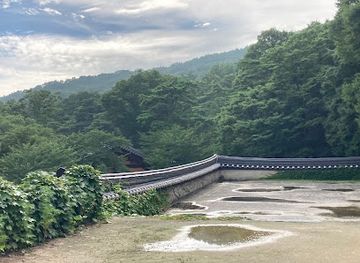
South Chungcheong’s most recognisable landmarks are closely tied to Baekje and the western coast. Gongsanseong Fortress follows the contours of a hill above the Geum River in Gongju, making its surviving walls both a defensive monument and a viewpoint over the historic city. Nearby, the Royal Tomb of King Muryeong is an especially important Baekje royal burial site. In Buyeo, the stone pagoda at the Jeongnimsa Temple Site and the landscaped grounds of Gungnamji evoke the former Sabi capital, while Busosanseong’s wooded heights overlook the Baekma River. Haemieupseong in Seosan is a substantial walled Joseon-era town with gates, ramparts and an enduring association with local religious history. Sudeoksa Temple in Yesan is one of the province’s major Buddhist landmarks, set against forested mountain slopes. On the coast, Taean’s long beaches, pine-backed shorelines and tidal flats are geographical landmarks rather than single monuments, defining the province’s western edge.
-
Mountain cable car
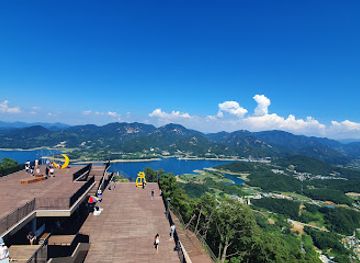
Cheongpung Cable Car
Discover breathtaking vistas and serene landscapes at Cheongpung Cable Car, a top tourist attraction in Jecheon-si, South Korea.
-
Tourist attraction
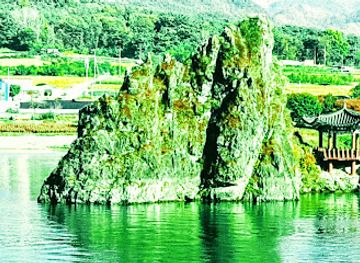
Dodamsambong Peaks
Explore the stunning Dodamsambong Peaks in Danyang, a breathtaking natural landmark offering serene beauty and unforgettable views in South Korea.
-
Tourist attraction
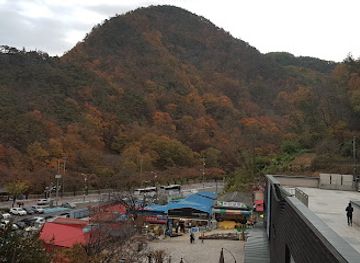
Gosu Cave
Discover the breathtaking beauty of Gosu Cave in Danyang, a stunning natural wonder featuring incredible rock formations and rich geological history.
-
Tourist attraction
Cheongnamdae
Explore Cheongnamdae, a serene presidential retreat in Cheongju-si, surrounded by stunning landscapes and rich history, perfect for your next adventure.
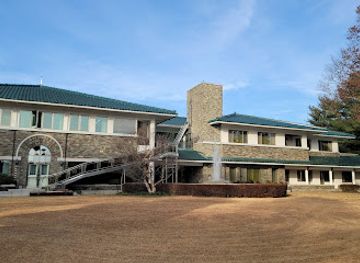
Explore South Chungcheong Province on the map
Plan your trip on one map. See where the top cities, national parks and sights are, and book hotels and experiences in a few clicks.
Best hotels in South Chungcheong Province
Best restaurants in South Chungcheong Province
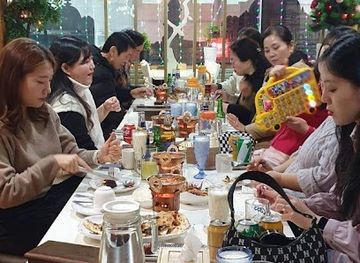
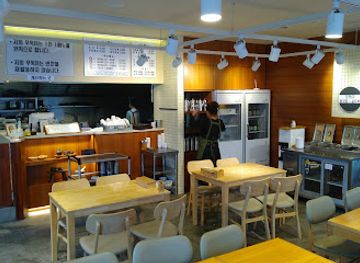
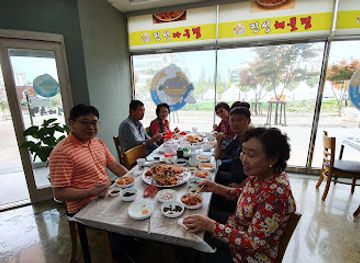
Dining in South Chungcheong reflects fertile plains, mountain produce and the province’s long western coastline. Seafood restaurants and markets are important in Taean, Boryeong and Seosan, where menus may feature locally landed shellfish, fish and seasonal tidal-flat produce; availability changes with weather and the fishing calendar. Seosan is associated with garlic and other agricultural products, while Geumsan is South Korea’s leading ginseng-growing area, supplying roots, teas, extracts and dishes. Nonsan’s strawberries are a notable seasonal product and appear in cafés, desserts and farm sales. Gongju is known for chestnuts, which are used in snacks and traditional preparations. Across the province, visitors will find Korean set meals, soups, grilled dishes, noodles, market food, cafés and rural restaurants rather than one single regional cuisine. Local markets and traditional eateries often provide the clearest sense of everyday provincial food culture.
-
Nepalese
New Himalaya Nepal Restaurant
Savor the exquisite tastes of authentic Nepalese dishes at New Himalaya Restaurant in Asan-si.
-
Restaurant
Restoran Good Korean Cheap Food
Experience authentic Korean cuisine at Restoran Good Korean Cheap Food - where flavor meets affordability in Asan-si.
-
Restaurant
Restaurant
Experience the best of Korean cuisine in DongGyeryong-si's charming restaurant amidst beautiful landscapes.
Best bars in South Chungcheong Province
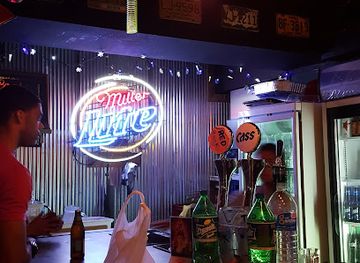
South Chungcheong has a modest and locally focused evening scene rather than a concentrated club culture. Cheonan and Asan offer the broadest choice of cafés, Korean barbecue restaurants, beer venues, karaoke rooms and late-opening eateries, with activity concentrated around transport hubs and university districts. Gongju and Buyeo are quieter, and evenings there tend to centre on restaurants, cafés and waterside or historic-area walks rather than large nightclubs. In seaside towns such as Boryeong and Taean, summer weekends bring more activity around beach restaurants and casual drinking venues, although the atmosphere is seasonal. Traditional pubs, locally brewed drinks, soju and beer are common, while rural districts generally become quiet earlier. Visitors should check current opening arrangements rather than assume that a venue operates year-round.
-
Bar restaurant furniture store
IDK Bar
Experience the vibrant nightlife of Pyeongtaek-si at IDK Bar, where local culture meets a relaxed atmosphere for an unforgettable evening.
-
 Bar
BarBar
Immerse yourself in Iksan's nightlife at this vibrant bar, the perfect spot for drinks, music, and making new friends.
-
Bar
DRUNK PUB
Experience the lively nightlife of Gimpo-si at Drunk Pub, where craft drinks and a vibrant atmosphere create unforgettable memories.
-
Bar
Fatxi maxamad
Experience vibrant nightlife and local flavors at Fatxi Maxamad, a lively bar in the heart of Muju-gun, South Korea.
Best nightclubs in South Chungcheong Province
South Chungcheong has a modest and locally focused evening scene rather than a concentrated club culture. Cheonan and Asan offer the broadest choice of cafés, Korean barbecue restaurants, beer venues, karaoke rooms and late-opening eateries, with activity concentrated around transport hubs and university districts. Gongju and Buyeo are quieter, and evenings there tend to centre on restaurants, cafés and waterside or historic-area walks rather than large nightclubs. In seaside towns such as Boryeong and Taean, summer weekends bring more activity around beach restaurants and casual drinking venues, although the atmosphere is seasonal. Traditional pubs, locally brewed drinks, soju and beer are common, while rural districts generally become quiet earlier. Visitors should check current opening arrangements rather than assume that a venue operates year-round.
-
Bar
TLC (Magic Bar)
Discover TLC (Magic Bar) in Gunsan - a vibrant bar offering unique entertainment and a welcoming atmosphere for an unforgettable night out.
-
Night club
club chroma
Unleash your night at Club Chroma, Incheon’s ultimate destination for vibrant nightlife, electrifying music, and unforgettable parties.
-
Rock music club
Bald Eagles Club
Discover the electrifying rock music scene at Bald Eagles Club in Pyeongtaek-si, a must-visit for music lovers and nightlife enthusiasts.
-
Bar
International Cultural Village (A-Town)
Discover the lively nightlife and cultural richness of the International Cultural Village in A-Town, a must-visit bar for tourists seeking fun and entertainment.

Best shops in South Chungcheong Province
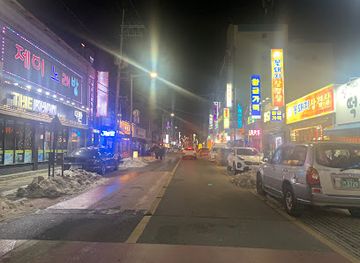
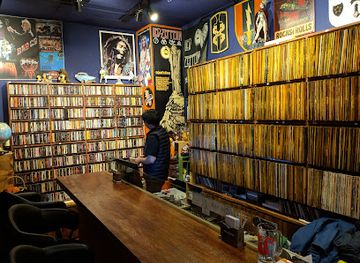
Shopping in South Chungcheong is strongest in traditional markets, town-centre streets and food-producing districts rather than in a single regional luxury quarter. Cheonan and Asan provide department stores, modern retail and extensive café districts, while Gongju and Buyeo are useful for crafts, books, food products and souvenirs connected with Baekje heritage. Local markets across the province sell fresh produce, prepared food, clothing and household goods, often on rotating traditional market days. Geumsan is the principal place to look for ginseng roots and processed ginseng products, while Nonsan is associated with seasonal strawberries and Seosan with garlic and other farm produce. Coastal towns offer dried seafood and regional marine products, subject to local regulations and transport considerations. At temples and heritage sites, small shops may sell tea, Buddhist items, postcards and craft goods; choose packaged food and labelled products when taking regional specialities overseas.
-
Outlet mall
Yeoju Premium Outlets
Discover unbeatable deals and a wide variety of brands at Yeoju Premium Outlets, where shopping meets adventure in Gyeonggi-do, South Korea.
-
Beauty supply store
chanel beauty Cheonan-Asan
Experience luxury at Chanel Beauty in Cheonan-Asan, offering a curated selection of cosmetics and fragrances in a chic shopping environment.
-
Tourist attraction
Baekje Cultural Land
Discover the captivating history and culture of the Baekje Kingdom at Baekje Cultural Land in Korea.
-
National museum
Gongju National Museum
Explore Korea's rich heritage at Gongju National Museum, home to Baekje artifacts and a captivating journey through history.
Get your free copy of our complete guide to South Chungcheong Province, delivered straight to you.
Everything on this page, from attractions and restaurants to essentials and local phrases, in one PDF you can read offline, print or share.
Already have an account? Sign in
Your South Chungcheong Province guide is ready.
We'll send it to · Not you? Sign out

Getting your guide ready…
We are putting together a fresh copy of the South Chungcheong Province guide. This can take up to a minute.
This can take a few moments. If your browser asks, choose Allow so the download can start. You'll find the guide in your Downloads folder.
Nothing happened? Download it again
Sorry, the guide is taking longer than usual. Please try again in a minute, or get it by email instead.
South Chungcheong Province essentials
Currency and Payment
Safety
Emergency Situations
Do's and Don'ts
Local Tips
From Eve
Local phrases worth knowing
You don't need to get them perfect. A few words go a long way, and locals appreciate the effort.
Basics
| English | Local | Say it |
|---|---|---|
| Hello | 안녕하세요 | [annyeonghaseyo] |
| Goodbye | 안녕히 가세요 | [annyeonghi gaseyo] |
| Yes | 네 | [ne] |
| No | 아니요 | [aniyo] |
| Please/You're welcome | 제발/천만에요 | [jebal/chunmaneyo] |
| Thank you | 감사합니다 | [gamsahamnida] |
| Excuse me/Sorry | 죄송합니다 | [joesonghamnida] |
| How are you? | 어떻게 지내세요? | [eotteoke jinaeseyo?] |
| Fine. And you? | 잘 지내요. 당신은요? | [jal jinaeyo. dangsineunyo?] |
| Do you speak English? | 영어 할 수 있어요? | [yeongeo hal su isseoyo?] |
| I don't understand | 이해하지 못해요 | [ihaehaji mothaeyo] |
Eating & Drinking
| English | Local | Say it |
|---|---|---|
| I'd like to see the menu, please | 메뉴 보여주세요 | [menyu boyeojuseyo] |
| I don't eat meat | 고기를 안 먹어요 | [gogireul an meogeoyo] |
| Cheers! | 건배! | [geonbae!] |
| I would like to pay, please | 계산해 주세요 | [gyesanhae juseyo] |
Emergencies
| English | Local | Say it |
|---|---|---|
| Help! | 도와주세요! | [dowajuseyo!] |
| Go away! | 가 버려요! | [ga beoryeoyo!] |
| Call the Police! | 경찰에 전화해 주세요! | [gyeongchare jeonhwae juseyo!] |
| Call a doctor! | 의사 불러주세요! | [uisa bulleojuseyo!] |
| I'm lost | 길을 잃었어요 | [gireul ilheosseoyo] |
| I'm ill | 아파요 | [apayo] |
Shopping
| English | Local | Say it |
|---|---|---|
| I'd like to buy... | ...사고 싶어요 | [sago sipeoyo] |
| I'm just looking | 그냥 보고 있어요 | [geunyang bogo isseoyo] |
| How much is it? | 얼마예요? | [eolmayeyo?] |
| That's too expensive | 너무 비싸요 | [neomu bissayo] |
| Can you lower the price? | 가격을 내려줄 수 있어요? | [gagyeogeul naeryeojul su isseoyo?] |
Time & Numbers
| English | Local | Say it |
|---|---|---|
| What time is it? | 지금 몇 시예요? | [jigeum myeot siyeyo?] |
| It's one o'clock | 한 시예요 | [han siyeyo] |
| Half past (10) | 열 시 반이에요 | [yeol si ban-ieyo] |
| Morning | 아침 | [achim] |
| Afternoon | 오후 | [ohu] |
| Evening | 저녁 | [jeonyeok] |
| Yesterday | 어제 | [eojje] |
| Today | 오늘 | [oneul] |
| Tomorrow | 내일 | [naeil] |
| 1 | 하나 | [hana] |
| 2 | 둘 | [dul] |
| 3 | 셋 | [set] |
| 4 | 넷 | [net] |
| 5 | 다섯 | [daseot] |
| 6 | 여섯 | [yeoseot] |
| 7 | 일곱 | [ilgop] |
| 8 | 여덟 | [yeodeol] |
| 9 | 아홉 | [ahop] |
| 10 | 열 | [yeol] |
Transport & Directions
| English | Local | Say it |
|---|---|---|
| Where's a/the...? | ...어디에요? | [eodi-yeyo?] |
| What's the address? | 주소가 뭐예요? | [jusoga mwoyeyo?] |
| Can you show me (on the map)? | 지도에서 보여줄 수 있어요? | [jidoe-seo boyeojul su isseoyo?] |
| When's the next (bus)? | 다음 (버스) 언제예요? | [daeum (beoseu) eonje-yeyo?] |
| A ticket (to ....) | ...행 티켓 | [haeng tiket] |
History of South Chungcheong Province
Early settlements and Mahan communities
Long before the formation of the medieval Korean states, the region’s river valleys, plains and western coast supported farming and maritime communities. South Chungcheong formed part of the wider cultural zone associated with Mahan, one of the Samhan confederations described in early Korean historical records. Archaeological remains, including settlements, tombs and artefacts, reveal growing social complexity and exchange across central-western Korea. The province’s navigable rivers and access to the Yellow Sea later helped make it strategically valuable, linking inland agricultural districts with coastal trade routes.
Baekje’s capital at Ungjin and Sabi
South Chungcheong was central to Baekje history from the fifth to seventh centuries. After the fall of the earlier capital at Hanseong, Baekje established its capital at Ungjin, present-day Gongju, before moving south to Sabi, present-day Buyeo. Gongsanseong, royal tombs, temple sites and planned palace-area remains illustrate the political and artistic sophistication of the kingdom. Baekje maintained close cultural and diplomatic links with China and Japan, and its Buddhist art, architecture and technology influenced neighbouring societies. The surviving sites are recognised through the UNESCO-listed Baekje Historic Areas.
Unified Silla, Goryeo and the growth of Buddhist centres
After Baekje was defeated in the seventh century, the region became part of Unified Silla and later the Goryeo state. Political centres shifted, but Buddhist institutions continued to shape the landscape. Temples, pagodas and mountain sanctuaries developed in places such as the Sudeoksa area, while transport routes connected inland settlements with provincial administration and coastal commerce. During Goryeo, the province’s position between the capital region and the southwest reinforced its role as a corridor for officials, goods and religious culture rather than a purely local farming district.
Joseon administration, learning and defensive towns
Under Joseon rule, South Chungcheong was organised through county seats, magistracies, military installations and Confucian institutions. Historic settlements such as Haemi developed around administrative and defensive functions, and Haemieupseong remains one of the clearest surviving examples of a walled town in the province. Agriculture expanded across the fertile plains, while ports and river routes supported regional trade. Confucian values shaped education, family organisation and official life, although Buddhist temples and older local traditions remained important parts of the cultural landscape.
Religious change and the late Joseon period
The province was also significant in the history of Korean Catholicism. Catholic ideas reached the region through intellectual and personal networks in the late eighteenth century, and persecution in the nineteenth century affected communities in areas including Haemi and Solmoe near Dangjin. Martyr sites and memorial spaces now preserve this chapter of religious history. At the same time, rural society faced economic pressures and political upheaval, while reformist and popular movements challenged established authority in the decades before the twentieth century.
Colonial rule, independence and modern memory
South Chungcheong experienced Japanese colonial administration, land and industrial changes, and the expansion of modern transport during the first half of the twentieth century. Cheonan is closely associated with Yu Gwan-sun, an important figure in the March First independence movement, and the province contains several places connected with the struggle for national independence. The Second World War and the Korean War brought further disruption. Institutions such as the Independence Hall of Korea in Cheonan present these national histories within a South Korean context.
Industrialisation and the contemporary province
From the later twentieth century, South Chungcheong changed rapidly through industrial development, improved highways and high-speed rail. Petrochemical, steel, manufacturing and port-related activity expanded around Seosan, Dangjin, Asan and the Asan Bay area, while Cheonan grew as a major transport and education centre. Alongside this urban and industrial growth, rice farming, fishing, tourism and traditional food production remained important. The modern province therefore combines globally connected industrial zones with historic inland towns, agricultural districts and protected western-coast environments.
South Chungcheong Province in Photos
Browse through our photo collection highlighting the charm and character of the destination.
Neighbouring regions of South Chungcheong Province
The closest regions to South Chungcheong Province, if you have time for more than one.
-

-

-

-
-


Swipe for more regions
Explore more

Explore more of South Korea
Discover South Korea: A land where ancient traditions meet futuristic innovations, offering diverse experiences from bustling cities to serene natural landscapes.
Explore South Korea