

San Juan (Cádiz) Travel Guide - Free
Explore San Juan in Cádiz with Evendo's free guide. Find the best shops, historic streets, restaurants, and gems on web or mobile.


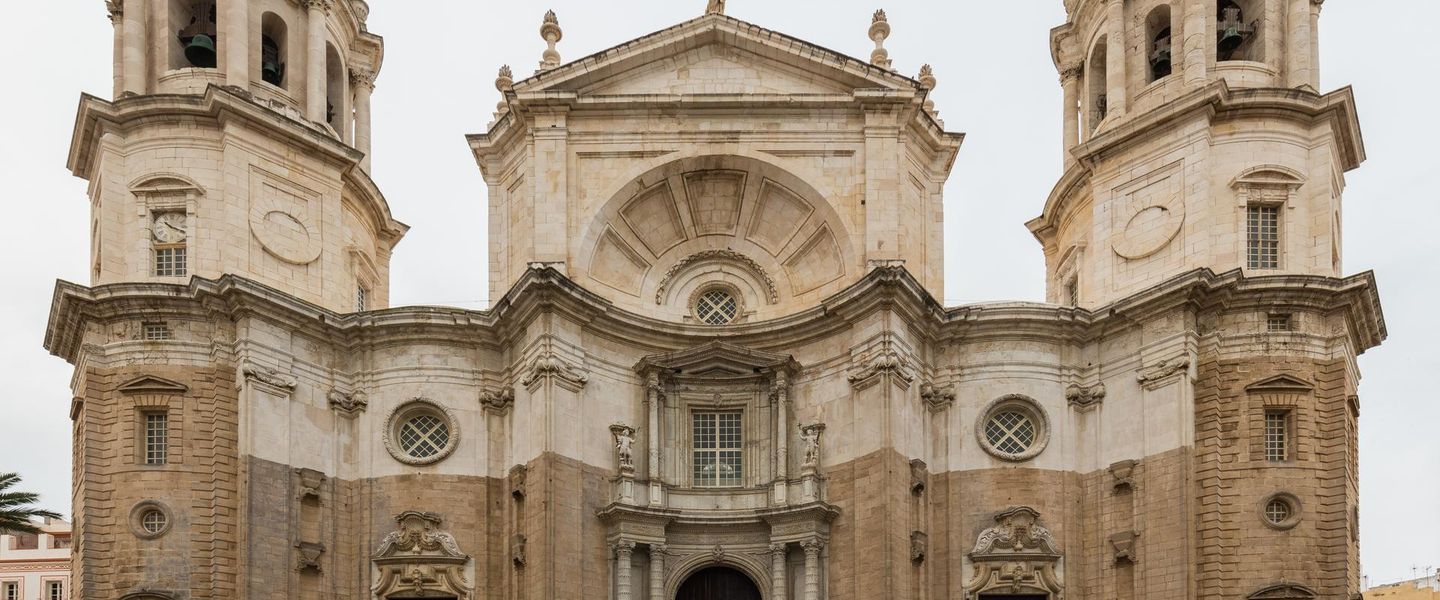


San Juan in Cádiz reveals narrow historic streets, Mudejar heritage, traditional taverns and intimate glimpses of old-town life and flamenco culture.
A Compact Old-City Quarter
San Juan occupies a small, characterful part of Cádiz’s historic centre, focused around Calle San Juan and the streets leading towards the eastern side of the old town. It is not a sharply defined administrative district so much as a locally recognised quarter within the densely built casco antiguo, where narrow lanes, whitewashed façades and balconies create a distinctly intimate atmosphere. The neighbourhood is easy to explore on foot, yet its streets retain the irregular pattern of an old Atlantic port rather than the formal scale of a modern city centre.Read more about San Juan
Churches, Courtyards and Everyday Cádiz
Old-Port Culture After Dark
Explore San Juan on the map
A handpicked selection of must-see spots in San Juan, mapped for you.
Best hotels in San Juan
San Juan essentials
Getting There
Getting Around
Safety
Emergency Situations
Do's and Don'ts
Local Tips

From Eve
Local phrases worth knowing
You don't need to get them perfect. A few words go a long way, and locals appreciate the effort.
Basics
| English | Local | Say it |
|---|---|---|
| Hello | Hola | [oh-lah] |
| Goodbye | Adiós | [ah-dee-ohs] |
| Yes | Sí | [see] |
| No | No | [noh] |
| Please/You're welcome | Por favor/De nada | [por fah-bor/deh nah-dah] |
| Thank you | Gracias | [grah-thyahs] |
| Excuse me/Sorry | Perdón/Lo siento | [pair-dohn/loh see-ehn-toh] |
| How are you? | ¿Cómo estás? | [koh-moh ehs-tahs] |
| Fine. And you? | Bien. ¿Y tú? | [byen. ee too] |
| Do you speak English? | ¿Hablas inglés? | [ah-blahs een-glays] |
| I don't understand | No entiendo | [noh ehn-tyen-doh] |
Eating & Drinking
| English | Local | Say it |
|---|---|---|
| I'd like to see the menu, please | Me gustaría ver la carta, por favor | [meh goos-tah-ree-ah vehr lah kahr-tah, por fah-bor] |
| I don't eat meat | No como carne | [noh koh-moh kahr-neh] |
| Cheers! | ¡Salud! | [sah-lood] |
| I would like to pay, please | Me gustaría pagar, por favor | [meh goos-tah-ree-ah pah-gar, por fah-bor] |
Emergencies
| English | Local | Say it |
|---|---|---|
| Help! | ¡Ayuda! | [ah-yoo-dah] |
| Go away! | ¡Vete! | [veh-teh] |
| Call the Police! | ¡Llama a la policía! | [yah-mah ah lah poh-lee-see-ah] |
| Call a doctor! | ¡Llama a un doctor! | [yah-mah ah oon dohk-tohr] |
| I'm lost | Estoy perdido | [ehs-toy pair-dee-doh] |
| I'm ill | Estoy enfermo | [ehs-toy ehn-fehr-moh] |
Shopping
| English | Local | Say it |
|---|---|---|
| I'd like to buy... | Me gustaría comprar... | [meh goos-tah-ree-ah kohm-prahr...] |
| I'm just looking | Solo estoy mirando | [soh-loh ehs-toy mee-rahn-doh] |
| How much is it? | ¿Cuánto cuesta? | [kwan-toh kwehs-tah] |
| That's too expensive | Esto es demasiado caro | [ehs-toh ehs deh-mah-syah-doh kahr-oh] |
| Can you lower the price? | ¿Puedes bajar el precio? | [pweh-dehs bah-har ehl pree-seh-oh] |
Time & Numbers
| English | Local | Say it |
|---|---|---|
| What time is it? | ¿Qué hora es? | [keh oh-rah ehs] |
| It's one o'clock | Es la una | [ehs lah oo-nah] |
| Half past (10) | Y media (10) | [ee meh-dee-ah (deez)] |
| Morning | Mañana | [mah-nyah-nah] |
| Afternoon | Tarde | [tahr-deh] |
| Evening | Noche | [noh-cheh] |
| Yesterday | Ayer | [ah-yehr] |
| Today | Hoy | [oy] |
| Tomorrow | Mañana | [mah-nyah-nah] |
| 1 | Uno | [oo-noh] |
| 2 | Dos | [dohs] |
| 3 | Tres | [trehs] |
| 4 | Cuatro | [kwah-troh] |
| 5 | Cinco | [seen-koh] |
| 6 | Seis | [says] |
| 7 | Siete | [syeh-teh] |
| 8 | Ocho | [oh-choh] |
| 9 | Nueve | [nweh-veh] |
| 10 | Diez | [dyeth] |
Transport & Directions
| English | Local | Say it |
|---|---|---|
| Where's a/the...? | ¿Dónde está...? | [dohn-deh ehs-tah] |
| What's the address? | ¿Cuál es la dirección? | [kwal ehs lah dee-rehk-syohn] |
| Can you show me (on the map)? | ¿Puedes mostrarme (en el mapa)? | [pweh-dehs mohs-trar-meh (ehn ehl mah-pah)] |
| When's the next (bus)? | ¿Cuándo es el próximo (autobús)? | [kwan-doh ehs ehl proh-ksee-moh (ow-toh-boos)] |
| A ticket (to ....) | Un billete (a ....) | [oon bee-yeh-teh (ah ...)] |
History of San Juan
A Quarter After the Christian Conquest
San Juan’s name is associated with the Iglesia de San Juan de los Caballeros, a church whose origins belong to the reorganisation of Cádiz after the Christian conquest in 1262. The exact boundaries of the modern neighbourhood are informal, but the quarter forms part of the historic city rebuilt and repopulated during the later medieval period. Its narrow street pattern reflects the compact character of the old settlement, where religious foundations, modest homes and small commercial activities stood close together. The church’s Mudejar-influenced tower is a reminder that medieval Cádiz developed through the interaction of Christian institutions and architectural traditions shaped by the Islamic past of the Iberian Peninsula.
The Port City Takes Shape
From the sixteenth century onwards, Cádiz grew in importance as an Atlantic port, and the San Juan quarter was absorbed into an increasingly dense urban fabric. Houses were adapted for merchants, artisans and maritime workers, while churches and confraternities helped organise religious and social life. The neighbourhood’s lanes connected it with the wider network of streets leading towards the port, markets and defensive edges of the island city. Much of the architecture visible today, including enclosed balconies, inward-looking courtyards and façades rebuilt or remodelled over time, belongs to the long period in which commercial prosperity transformed Cádiz from a modest fortified settlement into an international centre of maritime exchange.
Eighteenth-Century Commercial Cádiz
The eighteenth century brought particular prosperity to Cádiz after the city became the principal Spanish base for trade with the Americas in 1717. San Juan benefited indirectly from this expansion as old houses were improved, urban plots became more valuable and the surrounding centre filled with institutions, shops and residences connected to shipping and commerce. Its streets were never an isolated enclave: they formed part of the port city’s dense social landscape, where merchants, employees, artisans and service workers lived within walking distance of the docks and commercial offices. The resulting mixture of domestic architecture and small-scale religious buildings remains central to the quarter’s historical character.
War, Constitutionalism and Urban Change
Cádiz’s role during the Peninsular War and the constitutional assemblies of 1810–1812 affected the whole historic centre, including San Juan, although the neighbourhood was not itself the setting for every major political event associated with the city. The period reinforced Cádiz’s reputation as a place of debate, commerce and maritime connection. During the nineteenth and twentieth centuries, changing trade patterns, economic pressures and population movement altered the old quarter, while many buildings were subdivided, repaired or adapted for new uses. San Juan retained its residential scale even as some surrounding streets acquired more distinctly commercial and institutional functions.
A Living Historic Quarter
In recent decades, the wider old town has seen conservation, tourism and the reuse of historic buildings alongside the continuing presence of local residents and everyday businesses. San Juan’s appeal rests less on a single grand monument than on the survival of a coherent small-scale urban environment centred on its church, lanes and traditional building forms. Increased visitor interest has brought restaurants, cultural itineraries and renewed attention to Cádiz’s architectural heritage, while also making preservation and residential continuity important local concerns. The quarter remains part of the inhabited city rather than a museum district, with historic fabric and ordinary neighbourhood life occupying the same streets.
San Juan in Photos
Browse through our photo collection highlighting the charm and character of the destination.
Neighbourhoods near San Juan
The closest neighbourhoods to San Juan, if you have time for more than one stop.
-
-

-

-

-


Swipe for more neighbourhoods
Explore more

Explore more of Cádiz
Cádiz, Spain, pairs Phoenician history, Atlantic beaches, grand plazas, seafood cuisine and Andalusian culture on a compact peninsula for memorable sightseeing.
Explore Cádiz