

Estatua de Felipe III, Madrid Travel Guide
Free Guide: Bronze king commands Plaza Mayor's historic core, where 17th-century sculpture meets Madrid's endless street energy and architectural symmetry.


A brief summary of Estatua de Felipe III
Bronze king commands Plaza Mayor's historic core, where 17th-century sculpture meets Madrid's endless street energy and architectural symmetry.
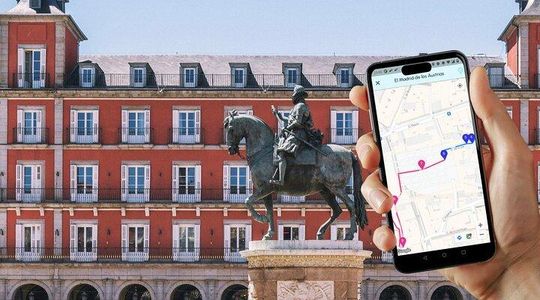
At the heart of Madrid's iconic Plaza Mayor stands the imposing equestrian statue of King Felipe III, a 17th-century masterpiece that captures the grandeur of Spanish Habsburg rule. Crafted by Giambologna and Pietro Tacca, this bronze monument depicts the king in triumphant pose atop a rearing stallion, surrounded by the square's vibrant arcades and historic facades. Commissioned in 1616 but erected in 1848, it symbolizes royal authority amid the bustling life of one of Europe's oldest public squares. Visitors are drawn to its intricate details—the king's flowing cape, the horse's dynamic muscles—and the way it anchors the plaza's timeless energy, where street performers, markets, and cafes create a lively backdrop. A perfect vantage for photos and people-watching, it embodies Madrid's blend of history and vitality. (512 characters)
On-site amenities
 Restrooms
 Food options
 Seating areas
 Trash bins
 Information boards
Opening hours
- Every day12 am–12 am
Opening hours as listed on the venue’s Google Business Profile. Hours can change for services and special events, so check with the venue before you go.
- Address
- Pl. Mayor, Centro, 28012 Madrid
- Website
Getting there
Walking
Metro
Bus
Bicycle
Discover more about Estatua de Felipe III
Historical Origins and Creation
The Estatua de Felipe III originates from the early 17th century, commissioned by Philip IV to honor his grandfather, King Philip III, whose reign (1598-1621) marked a peak of Spanish imperial power. Designed by the renowned Italian sculptor Giambologna (Giovanni da Bologna), with final casting by his pupil Pietro Tacca, the statue was completed around 1616. Intended initially for another site, it languished in storage for over two centuries due to political shifts and urban changes. In 1848, during Queen Isabella II's reign, it found its permanent home at the center of Plaza Mayor, elevated on a granite pedestal adorned with allegorical figures representing Justice, Fortitude, Prudence, and Faith. This relocation transformed the square, providing a focal point that enhanced its ceremonial role.
Artistic Mastery and Symbolism
Standing over 11 meters tall, the bronze equestrian statue showcases Baroque dynamism. Philip III is portrayed in full regalia, extending his baton in a gesture of command, while his steed rears dramatically on its hind legs, muscles tensed in vivid realism. The king's attire—crown, ermine-trimmed cape, and ornate armor—reflects Habsburg splendor, with intricate chasing that highlights the sculptors' technical prowess. The pedestal features bas-reliefs of the king's triumphs, including battles and diplomatic victories, underscoring themes of absolutist monarchy. This artwork exemplifies the transition from Mannerism to full Baroque, blending Italian finesse with Spanish gravitas, and serves as a testament to the era's artistic exchanges across Europe.
Plaza Mayor Context and Atmosphere
Positioned precisely at the geographic and visual heart of Plaza Mayor, built between 1617 and 1620 under Philip III's orders, the statue integrates seamlessly with the square's uniform red-brick architecture, granite balconies, and slate roofs. The plaza, one of Madrid's oldest (dating to 1580s plans by Juan de Herrera), pulses with life: tapas bars spill onto terraces, street artists perform, and markets hawk local crafts. The statue's elevated perch offers unobstructed views, framing the surrounding 132 three-story buildings with their frescoed eaves. At dusk, when the plaza's lights illuminate the bronze, casting long shadows, the scene evokes centuries of fiestas, royal proclamations, and public spectacles—from bullfights to autos-da-fé.
Cultural Significance Through Time
Over four centuries, the statue has witnessed Madrid's evolution from imperial capital to modern metropolis. It survived the 1631 fire that gutted Plaza Mayor, Napoleonic invasions in 1808 when French troops used the square as barracks, and the Spanish Civil War. Restored multiple times—most notably in the 20th century to combat corrosion—the monument now stands as a protected cultural asset under Madrid's heritage laws. It draws scholars studying Habsburg iconography and tourists captivated by its story, often serving as a backdrop for city tours that explore the plaza's role in events like the 1766 Esquilache Riots or Carnival celebrations.
Visitor Experience and Surroundings
Approaching the statue, expect a multisensory immersion: the chatter of multilingual crowds, aromas of churros and jamón from nearby vendors, and the occasional strum of a guitarist. Circumnavigate the pedestal to appreciate bas-reliefs up close, or climb nearby arches for elevated perspectives. The site's openness invites lingering, with the statue's commanding presence fostering reflection on Spain's Golden Age. Seasonal markets—Christmas nativities or Easter processions—amplify the vibe, while evenings bring a romantic glow, perfect for toasting with sangria under its watchful gaze. This landmark distills Madrid's essence: resilient history amid exuberant daily life. (2876 characters)
Preservation and Legacy
Managed by Madrid's regional government, the statue benefits from ongoing conservation, including periodic cleanings to preserve its patina. Its endurance mirrors Plaza Mayor's, repeatedly rebuilt yet retaining 17th-century bones. As a symbol of continuity, it inspires contemporary art installations and photography exhibitions in the plaza, ensuring Felipe III's legacy rides on through modern eyes.
Evendo Review Centre
 Google
Guest reviews
Best time to go
Quietest: Jan, Feb & Mar · at 1am or at 2am or at 3am
Busy times are Evendo estimates for a typical year, to help you plan. Actual crowds vary with events, school holidays and the weather.
Explore Estatua de Felipe III on the map
A handpicked selection of must-see spots near Estatua de Felipe III, mapped for you.
Get your free copy of our complete guide to Estatua de Felipe III, delivered straight to you.
Everything on this page, from opening hours and how to get there to Eve’s tips and the best time to go, in one PDF you can read offline, print or share.
Already have an account? Sign in
Your Estatua de Felipe III guide is ready.
We'll send it to · Not you? Sign out

Getting your guide ready…
We are putting together a fresh copy of the Estatua de Felipe III guide. This can take up to a minute.
This can take a few moments. If your browser asks, choose Allow so the download can start. You'll find the guide in your Downloads folder.
Nothing happened? Download it again
Sorry, the guide is taking longer than usual. Please try again in a minute, or get it by email instead.
Unlock the best of Estatua de Felipe III
Skip-the-line tickets, guided tours with entry, and walking tours of the area, booked in a few clicks.


Other nearby places you may find interesting
The closest places of the same kind, if this one is not quite what you had in mind.
-
-
-
-
-


Swipe for more places
More to explore near Estatua de Felipe III

 Best experiences near Estatua de Felipe III

 Best hotels near Estatua de Felipe III

 Best landmarks near Estatua de Felipe III

 Best attractions near Estatua de Felipe III

 Best shops near Estatua de Felipe III

 Best restaurants near Estatua de Felipe III

 Best bars near Estatua de Felipe III
Do you manage this location?
Take control to get all the benefits, like improved information, better appearance, and stronger visibility across AI-powered discovery.
Explore more
Explore more of Sol
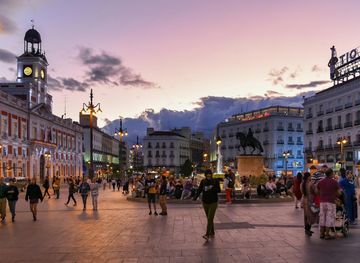
Experience the vibrant pulse of Madrid in Sol: where historic landmarks, shopping, and lively nightlife converge in the city's bustling heart.
Explore Sol
Explore more of Madrid
Discover Madrid: A city of art, culture, and culinary delights, where history and modern vibrancy meet in the heart of Spain.
Explore Madrid
