

Free Interior Rainforest Travel Guide & Mobile App
Explore Interior Rainforest with free travel guides. Discover regional history, expert tips, proposed trips, and audio guides on web or mobile app.


Explore Suriname’s Interior Rainforest through river journeys, forest trails, Maroon culture and remote reserves beyond the coastal plain.
Read more about Interior Rainforest
When is the best time to visit Interior Rainforest?
Best: December–February · 28°C| Month | High (°C) | Rainfall (mm) |
|---|---|---|
| January (best) | 28 | 150 |
| February (best) | 28 | 170 |
| March | 28 | 190 |
| April | 29 | 200 |
| May | 29 | 210 |
| June | 29 | 230 |
| July | 29 | 250 |
| August | 29 | 230 |
| September | 29 | 210 |
| October | 29 | 190 |
| November | 28 | 170 |
| December (best) | 28 | 150 |
Getting to and around Interior Rainforest
How to get there
Transportation
Top city travel guides in Interior Rainforest
The cities of Interior Rainforest, and the easiest places to base yourself.
-

-

-

-

-

-


Swipe for more cities
Destinations in Interior Rainforest
Resorts, valleys and scenic spots worth a trip of their own.
-

-

-


Swipe for more destinations
Best attractions in Interior Rainforest
The interior rainforest’s attractions are primarily ecological and cultural rather than architectural. Brownsberg Nature Park provides one of the most accessible introductions to Suriname’s upland forest, with trails, waterfalls, wildlife habitats and viewpoints towards the Brokopondo Reservoir. Along the Upper Suriname River, canoe journeys combine rapids, forest walks and visits arranged through Maroon communities, where local knowledge gives context to the landscape. Farther south, the Central Suriname Nature Reserve includes remote rainforest, major rivers and dramatic granite formations; the Raleighvallen and Voltzberg area is known for guided walks, birdwatching, canoeing and the demanding ascent of Voltzberg. Kabalebo in western Suriname offers another remote base for forest excursions and river travel. Wildlife watching is possible throughout these areas, with primates, macaws, toucans, amphibians and river animals among the potential sightings, but forest conditions make chance and patience part of the experience. The most meaningful attractions are often combinations of place and activity: a dawn boat ride, a trail through buttress-rooted trees, a swim judged safe by local guides, or a conversation about forest use in a village. Visitors should select trips according to access, physical demands, community arrangements and conservation practices rather than trying to cover the entire interior in one hurried itinerary.
-
Tourist attraction
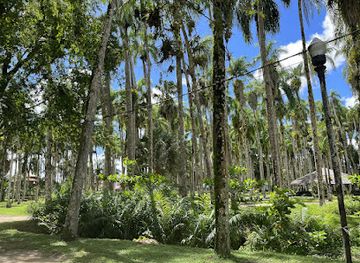
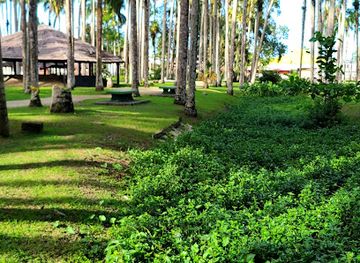
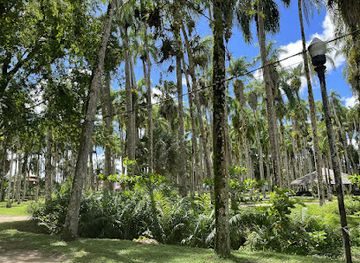
Palmtree Garden
Experience the tranquil beauty of Palmtree Garden in Paramaribo, a lush park filled with vibrant flora and captivating sculptures that reflect local culture.
-
Tourist attraction
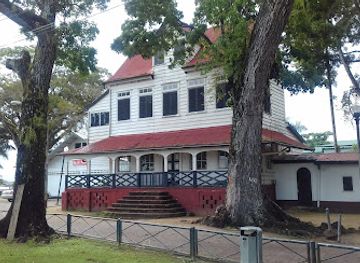
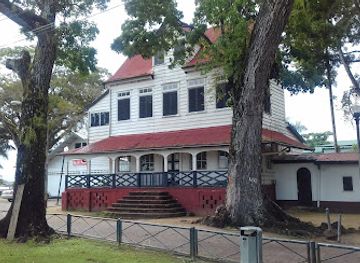
Fort Zeelandia
Discover the rich history of Suriname at Fort Zeelandia, a historic fort turned museum in Paramaribo, showcasing the country's colonial past.
-
Tourist attraction
Paramaribo Zoo
Explore the vibrant wildlife at Paramaribo Zoo, a must-visit destination in Suriname for families and nature lovers seeking adventure.
-
Tourist attraction
Readytex Art Gallery
Immerse yourself in Suriname's artistic heritage at Readytex Art Gallery, where local creativity meets cultural expression.
Best landmarks in Interior Rainforest
The Brokopondo Reservoir is one of the interior’s most recognisable landscapes, with drowned tree trunks rising through the water as a visible reminder of the Afobaka Dam project and the transformation of the former forest valley. Brownsberg’s forested plateau and viewpoints form another important geographical marker, linking accessible rainforest travel with the wider reservoir basin. In the Central Suriname Nature Reserve, Voltzberg is the defining natural landmark: a prominent granite inselberg rising above the surrounding forest and reached by a strenuous guided trail. The forested river corridors of the Upper Suriname and Coppename systems are landmarks in their own right, shaping settlement, transport, fishing and tourism. Rapids and exposed granite ledges provide the visual character of many journeys, although their appearance changes with rainfall and water level. Village waterfronts, landing places and traditional wooden structures are culturally significant places, but they should be treated as lived environments rather than photographed as open-air exhibits. The interior contains few monumental buildings; its most important landmarks are natural formations and human settlements that reveal how water, forest, conservation and community life have jointly shaped Suriname beyond the coast.
-
Tourist attraction
Palmtree Garden
Explore the lush tranquility of Palmtree Garden, a serene park in Paramaribo filled with beautiful palm trees and captivating sculptures.
-
Tourist attraction
Fort Zeelandia
Discover the rich history of Suriname at Fort Zeelandia, a well-preserved fortress and museum showcasing colonial heritage and cultural treasures.
-
Tourist attraction
Paramaribo Zoo
Explore the enchanting Paramaribo Zoo, where Suriname's diverse wildlife comes alive in a family-friendly environment filled with education and fun.
-
Nature preserve
Peperpot Nature Park
Experience the tranquility of Peperpot Nature Park, a stunning nature preserve in Suriname, perfect for nature lovers and outdoor enthusiasts seeking adventure.
Explore Interior Rainforest on the map
Plan your trip on one map. See where the top cities, national parks and sights are, and book hotels and experiences in a few clicks.
Best hotels in Interior Rainforest
Best restaurants in Interior Rainforest
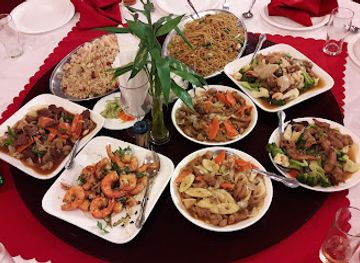
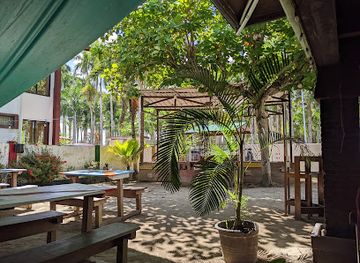
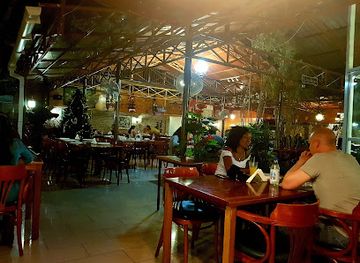
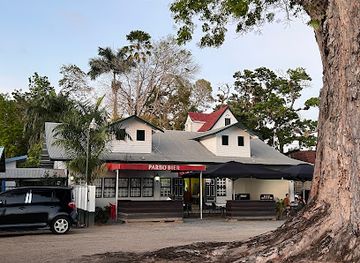
Dining in the interior rainforest is usually part of lodge, guesthouse or community-hosted travel rather than a separate restaurant scene. Meals commonly draw on Surinamese staples such as rice, root vegetables, plantain, fresh or preserved fish, chicken and vegetable stews, with ingredients and recipes varying between coastal kitchens, Maroon communities and Indigenous households. Along the rivers, fish may be especially important, while cassava and other forest-grown or cultivated foods can appear in local meals. Breakfasts and packed lunches are often designed for early boat departures and forest walks, and dietary requirements must be communicated well in advance because remote supplies are limited. Paramaribo is the place for the country’s broadest range of restaurants before or after an expedition; in the interior, expect simple, fresh, practical cooking rather than a choice of menus. Some lodges serve beer, soft drinks and locally familiar beverages, but visitors should bring no assumptions about alcohol availability in villages or conservation areas. Food should be accepted respectfully, while guests may politely explain allergies or restrictions before travelling.
-
 Restaurant
Torarica Resort
Experience unparalleled comfort and exquisite cuisine at Torarica Resort in Paramaribo - your ultimate travel destination.
-
Chinese
Chi Min
Discover the rich flavors of authentic Chinese cuisine at Chi Min in Paramaribo - where every dish tells a story.
-
Latin American
Las Tías Suriname
Discover the vibrant flavors of Latin America at Las Tías Suriname, where culinary excellence meets warm hospitality in Paramaribo.
-
Indonesian
Restaurant Sarinah
Discover authentic Indonesian flavors at Restaurant Sarinah in Paramaribo – where every dish tells a story.
Best bars in Interior Rainforest
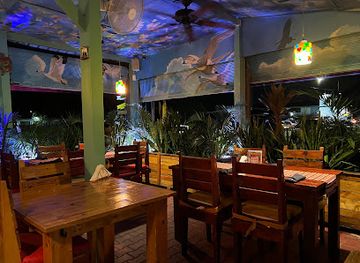
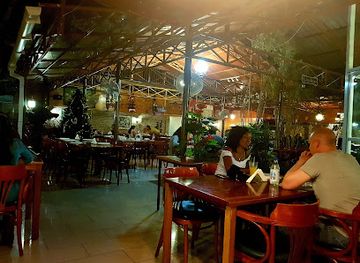
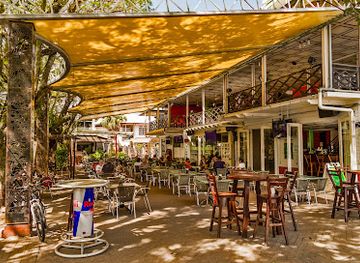
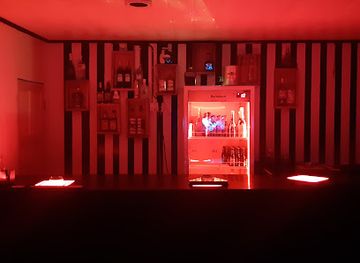
The interior rainforest has no conventional nightclub circuit. Evening life centres on lodge dining areas, riverside verandas, village social spaces and occasional gatherings with music, conversation and storytelling. Some accommodation providers serve beer, rum-based drinks or soft drinks, but supplies, licensing and local expectations differ considerably, particularly in remote communities. Evenings are often valued for listening to forest sounds, watching the river, identifying nocturnal wildlife or discussing the day’s activities rather than seeking entertainment venues. Visitors should ask before drinking alcohol in a village or around ceremonial events and should avoid loud behaviour that disturbs residents or wildlife. Night walks and boat outings can be rewarding when organised by trained local guides, but they require strict attention to instructions, footwear, lighting and water safety. In practical terms, the interior’s evening culture is quiet, communal and closely tied to the setting, with Paramaribo providing Suriname’s more extensive bars, live music and late-night options outside this rainforest region.
-
Cafe
'T vat
Visit 'T vat Cafe in Paramaribo for a cozy atmosphere, delicious local food, and a taste of Surinamese culture.
-
Restaurant
Zus & Zo
Experience the authentic flavors of Suriname at Zus & Zo, a restaurant in Paramaribo where every meal tells a story.
-
Indonesian
Restaurant Sarinah
Experience the authentic flavors of Indonesia at Restaurant Sarinah in Paramaribo, where delicious dishes and warm hospitality await you.
-
Surnamese
De Gadri
Experience authentic Surinamese cuisine at De Gadri, where local flavors and fresh ingredients come together in a delightful culinary adventure.
Best nightclubs in Interior Rainforest
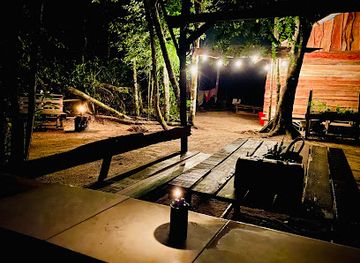
The interior rainforest has no conventional nightclub circuit. Evening life centres on lodge dining areas, riverside verandas, village social spaces and occasional gatherings with music, conversation and storytelling. Some accommodation providers serve beer, rum-based drinks or soft drinks, but supplies, licensing and local expectations differ considerably, particularly in remote communities. Evenings are often valued for listening to forest sounds, watching the river, identifying nocturnal wildlife or discussing the day’s activities rather than seeking entertainment venues. Visitors should ask before drinking alcohol in a village or around ceremonial events and should avoid loud behaviour that disturbs residents or wildlife. Night walks and boat outings can be rewarding when organised by trained local guides, but they require strict attention to instructions, footwear, lighting and water safety. In practical terms, the interior’s evening culture is quiet, communal and closely tied to the setting, with Paramaribo providing Suriname’s more extensive bars, live music and late-night options outside this rainforest region.
-
Bar
Land of Promise - Reggae Escape
Experience the heart of reggae culture at Land of Promise - Reggae Escape, a vibrant bar and resort in Hannover, Suriname, perfect for relaxation and fun.
-
Night club
Club Manilla Suriname
Discover the vibrant nightlife of Paramaribo at Club Manilla, where music, dance, and fun come together in a lively atmosphere.
-
Bar
Bar Excellente Suriname
Discover the vibrant atmosphere and local flavors at Bar Excellente Suriname, a prime destination for drinks and socializing in Paramaribo.
-
Night club
Diamond Pool Terras / Diamond Nightclub
Dive into the lively nightlife at Diamond Pool Terras, a premier nightclub in Paramaribo, Suriname, where vibrant music and socializing come alive.

Best shops in Interior Rainforest
Shopping opportunities in the interior rainforest are limited and should not be confused with a conventional retail destination. Community visits and lodge stays may offer locally made carvings, woven items, beadwork, baskets, textiles or small artworks, with styles and materials varying among Maroon and Indigenous communities. Buy directly and respectfully where possible, ask about the maker and intended use, and avoid products made from protected wildlife, rare timber or archaeological material. Some visitors purchase locally produced snacks, pepper sauces, cassava-based foods or crafts, although availability depends on the village and season. There are generally no large shopping centres, dependable market schedules or extensive souvenir outlets along remote river routes. Paramaribo is the practical place for broader shopping, including Surinamese food products, books, handicrafts and art, before travelling inland. Keep purchases compact, dry and easy to transport, and remember that removing plants, stones, feathers or other natural materials from protected areas is inappropriate and may breach regulations. The most valuable purchase from the rainforest is therefore usually a responsibly made craft that supports its maker rather than an item taken from the forest itself.
-
Shopping mall
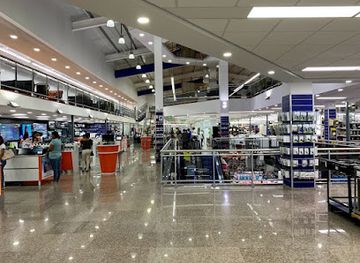
Hermitage Mall
Experience shopping bliss at Hermitage Mall, Paramaribo's premier destination for fashion, dining, and entertainment in a vibrant atmosphere.
-
Tourist attraction
Fort Zeelandia
Explore Suriname's colonial history at Fort Zeelandia, a captivating museum showcasing the nation's diverse heritage and stunning architecture.
-
Department store
Kirpalani Super Store (KSS)
Explore Kirpalani Super Store in Paramaribo, a modern department store offering a wide range of local products and a taste of Surinamese culture.
-
Art gallery
Readytex Art Gallery
Discover the rich cultural heritage of Suriname at Readytex Art Gallery, featuring local art, crafts, and unique souvenirs.

Get your free copy of our complete guide to Interior Rainforest, delivered straight to you.
Everything on this page, from attractions and restaurants to essentials and local phrases, in one PDF you can read offline, print or share.
Already have an account? Sign in
Your Interior Rainforest guide is ready.
We'll send it to · Not you? Sign out

Getting your guide ready…
We are putting together a fresh copy of the Interior Rainforest guide. This can take up to a minute.
This can take a few moments. If your browser asks, choose Allow so the download can start. You'll find the guide in your Downloads folder.
Nothing happened? Download it again
Sorry, the guide is taking longer than usual. Please try again in a minute, or get it by email instead.
Interior Rainforest essentials
Currency and Payment
Safety
Emergency Situations
Do's and Don'ts
Local Tips
From Eve
Local phrases worth knowing
You don't need to get them perfect. A few words go a long way, and locals appreciate the effort.
Basics
| English | Local | Say it |
|---|---|---|
| Hello | Hallo | [Ha-lo] |
| Goodbye | Tot ziens | [Tot zeens] |
| Yes | Ja | [Ya] |
| No | Nee | [Nay] |
| Please/You’re welcome | Alstublieft | [Al-stu-bleef] |
| Thank you | Dank u | [Dank oo] |
| Excuse me/Sorry | Sorry | [Sor-ree] |
| How are you? | Hoe gaat het? | [Hoo gaat het?] |
| Fine. And you? | Goed. En met jou? | [Hoot. En met yau?] |
| Do you speak English? | Spreekt u Engels? | [Spreekt oo En-gels?] |
| I don’t understand | Ik begrijp het niet | [Ik be-graif het neet] |
Eating & Drinking
| English | Local | Say it |
|---|---|---|
| I’d like to see the menu, please | Ik zou graag het menu willen zien, alstublieft | [Ik zou grahkh het me-nu vil-len zeen, al-stu-bleef] |
| I don’t eat meat | Ik eet geen vlees | [Ik eet geen vlays] |
| Cheers! | Proost! | [Prohst!] |
| I would like to pay, please | Ik wil graag betalen, alstublieft | [Ik vil grahkh be-ta-len, al-stu-bleef] |
Emergencies
| English | Local | Say it |
|---|---|---|
| Help! | Help! | [Help!] |
| Go away! | Ga weg! | [Ga vek!] |
| Call the Police! | Bel de politie! | [Bel de po-li-tie!] |
| Call a doctor! | Bel een dokter! | [Bel een dok-ter!] |
| I’m lost | Ik ben verloren | [Ik ben ve-lor-en] |
| I’m ill | Ik ben ziek | [Ik ben zeek] |
Shopping
| English | Local | Say it |
|---|---|---|
| I’d like to buy... | Ik zou graag ... willen kopen | [Ik zou grahkh ... vil-len ko-pen] |
| I’m just looking | Ik kijk alleen maar | [Ik kijke al-len mar] |
| How much is it? | Hoeveel kost het? | [Hoo-vayl kost het?] |
| That’s too expensive | Dat is te duur | [Dat is te dur] |
| Can you lower the price? | Kunt u de prijs verlagen? | [Kunt oo de prays ver-lah-ghen?] |
Time & Numbers
| English | Local | Say it |
|---|---|---|
| What time is it? | Hoe laat is het? | [Hoo laat is het?] |
| It’s one o’clock | Het is één uur | [Het is een oor] |
| Half past (10) | Half elf | [Half elf] |
| Morning | Ochtend | [Okht-end] |
| Afternoon | Middag | [Mid-dahg] |
| Evening | Avond | [A-vond] |
| Yesterday | Gisteren | [Gis-ter-en] |
| Today | Vandaag | [Van-dahg] |
| Tomorrow | Morgen | [Mor-ghen] |
| 1 | 1 | [1] |
| 2 | 2 | [2] |
| 3 | 3 | [3] |
| 4 | 4 | [4] |
| 5 | 5 | [5] |
| 6 | 6 | [6] |
| 7 | 7 | [7] |
| 8 | 8 | [8] |
| 9 | 9 | [9] |
| 10 | 10 | [10] |
Transport & Directions
| English | Local | Say it |
|---|---|---|
| Where's a/the...? | Waar is een ...? | [Waar is een ...?] |
| What’s the address? | Wat is het adres? | [Wat is het a-dres?] |
| Can you show me (on the map)? | Kunt u het me laten zien (op de kaart)? | [Kunt oo het me la-ten zeen (op de kaart)?] |
| When’s the next (bus)? | Wanneer is de volgende (bus)? | [Van-der is de vol-gen-de (bus)?] |
| A ticket (to ....) | Een ticket (naar ...) | [Een ti-ket (naar ...)] |
History of Interior Rainforest
Indigenous Forest Societies Before Colonial Rule
Long before European colonisation, the interior of present-day Suriname was occupied and travelled by Indigenous peoples whose knowledge of rivers, plants, soils and forest seasons remains central to life in the region. Communities developed complex relationships with forest resources, using cultivated clearings, fishing grounds and hunting territories without transforming the interior into a densely settled landscape. Archaeological evidence and continuing Indigenous traditions show that the rainforest is not an empty wilderness but a cultural environment shaped by generations of careful use and knowledge.
Plantations and the Formation of Maroon Communities
During the seventeenth and eighteenth centuries, Dutch colonial plantations along Suriname’s rivers depended heavily on enslaved African labour. Many enslaved people escaped into the forest, where they established independent communities and defended their autonomy against colonial expeditions. These groups, now broadly known as Maroons, developed settlements along interior rivers and preserved as well as reshaped African cultural practices in dialogue with Indigenous neighbours. Their history explains why the Upper Suriname River and other forest regions have distinctive languages, village structures, religious traditions and artistic forms.
Treaties and Autonomous Interior Territories
In the eighteenth century, Dutch authorities concluded treaties with several Maroon groups after prolonged conflict proved difficult to sustain. The agreements recognised a degree of autonomy, although colonial interference and later economic pressures continued. These historical arrangements helped shape patterns of settlement in the interior and the authority of Maroon communities over village affairs. Modern visitors encounter the legacy not as a museum display but in living communities whose rules, leadership and cultural expectations remain important to travel through the forest.
Colonial Mapping, Trade and River Routes
For much of Suriname’s colonial history, the major rivers were the practical routes into the interior. Traders, missionaries, government officials and explorers used waterways to reach forest communities, while geological and botanical expeditions gradually expanded European knowledge of the region. River travel remains significant today because the rainforest’s dense vegetation and limited road network make waterways more useful than conventional roads in many districts. The pattern is especially clear along the Upper Suriname River and around remote southern reserves.
Bauxite, Dams and the Brokopondo Reservoir
Twentieth-century mining and infrastructure projects brought major changes to Suriname’s interior. Bauxite extraction supported the colonial and later national economy, while the Afobaka Dam, completed in the 1960s, created the Brokopondo Reservoir to provide electricity for industry. The reservoir flooded a large forested area and displaced communities, leaving drowned tree trunks visible above the water in some places. Brownsberg and surrounding areas are now associated with both forest tourism and this important, contested chapter of industrial transformation.
Jungle Warfare and Displacement in the 1980s
The Interior War in Suriname, fought mainly during the 1980s between the national army and the Jungle Commando led by Ronnie Brunswijk, affected Maroon communities and transport routes in the forest. Violence and insecurity caused displacement, damaged infrastructure and disrupted the relationship between the interior and the coastal districts. Although the conflict ended decades ago, its memory remains part of local history and helps explain why some communities approach outside institutions, visitors and development projects with a strong concern for autonomy and trust.
Protected Areas and Contemporary Forest Stewardship
From the late twentieth century onwards, Suriname and international conservation organisations established large protected areas, including Brownsberg Nature Park and the Central Suriname Nature Reserve. These areas protect extensive rainforest, rivers, granite formations and wildlife habitat, while raising continuing questions about access, community rights, mining and sustainable livelihoods. The reserve landscape is therefore both a conservation achievement and a setting where Indigenous and Maroon perspectives must be considered. Contemporary tourism is most responsible when it supports local guides and communities without treating the forest solely as a spectacle.
Interior Rainforest in Photos
Browse through our photo collection highlighting the charm and character of the destination.
Neighbouring regions of Interior Rainforest
The closest regions to Interior Rainforest, if you have time for more than one.
-

-

-

-

-


Swipe for more regions
Explore more
Explore more of Suriname
Discover Suriname - A blend of cultures, stunning rainforests, and historic charm awaits in this hidden gem of South America.
Explore Suriname