

Free Sughd Region Travel Guide & Mobile App
Explore Sughd Region with free travel guides. Discover regional history, expert tips, proposed trips, and audio guides on web or mobile app.


Explore Sughd Region for Khujand's history, ancient Sogdian sites, fertile valleys and the high lakes and trails of Tajikistan's Fann Mountains.
Read more about Sughd Region
When is the best time to visit Sughd Region?
Best: May–June, September · 23–29°C| Month | High (°C) | Rainfall (mm) |
|---|---|---|
| January | 6 | 25 |
| February | 8 | 20 |
| March | 14 | 25 |
| April | 19 | 30 |
| May (best) | 23 | 25 |
| June (best) | 29 | 15 |
| July | 31 | 10 |
| August | 30 | 10 |
| September (best) | 23 | 15 |
| October | 16 | 20 |
| November | 11 | 25 |
| December | 7 | 30 |
Getting to and around Sughd Region
How to get there
Transportation
Top city travel guides in Sughd Region
The cities of Sughd Region, and the easiest places to base yourself.
-

-

-

-

-

-


Swipe for more cities
Destinations in Sughd Region
Resorts, valleys and scenic spots worth a trip of their own.
-

-

-


Swipe for more destinations
Best attractions in Sughd Region
Sughd's attractions range from urban history to high-mountain scenery. Khujand offers museums, the fortress area, the Syr Darya riverside and one of northern Tajikistan's principal bazaars, while Istaravshan rewards attention to its mosques, mausoleums, workshops and surviving historic quarters. Around Panjakent, ancient Panjakent and Sarazm provide two very different archaeological experiences: one a Sogdian city of the early medieval period, the other a prehistoric settlement linked to early regional exchange. South and east of the lowlands, Iskanderkul and the Seven Lakes are gateways to hiking, photography and village-based mountain travel. The Fann Mountains bring steep valleys, scree slopes and clear alpine water, but routes vary in difficulty and access. Kayrakkum Reservoir offers a broad waterscape near Khujand, while the Zeravshan valley combines irrigated farmland, orchards and rugged mountain approaches. The region's appeal lies in this progression from market cities and archaeological sites to increasingly remote landscapes, rather than in a single concentrated attraction zone.
-
Sughd Region Museum
Explore the rich historical tapestry of Tajikistan at Sughd Region Museum, where culture and heritage come to life through captivating exhibits.
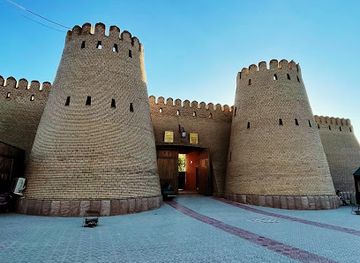
Best landmarks in Sughd Region
Khujand Fortress and the city's historic religious and civic ensemble express the importance of the Syr Darya settlement, although much of the visible urban fabric reflects reconstruction and later development. The mausoleum associated with Kamoli Khujandi commemorates one of the region's best-known Persian poets, while the Sheikh Muslihiddin complex remains a prominent religious landmark in the city centre. Istaravshan is marked by the Mug Tepa area and by mosques, mausoleums and traditional craft quarters that recall its long urban history. Near Panjakent, the excavated ruins of ancient Panjakent are among the clearest physical witnesses to Sogdian civilisation, with foundations and fragments of decorated structures spread across the archaeological site. Sarazm has a different visual character: its low excavated remains mark a much earlier settlement and a major prehistoric cultural legacy. In the natural landscape, Iskanderkul and the tiered lakes of the Haft Kul, or Seven Lakes, are recognisable landmarks of the Fann Mountains, where geology and highland water define the scenery.
-
Park
Kamoli Khujandi Park
Explore Kamoli Khujandi Park, a lush urban oasis in Khujand, Tajikistan, offering scenic beauty, recreational activities, and cultural experiences.
-
Park
Somoni Park
Discover the serenity and cultural richness of Somoni Park in Khujand, a perfect blend of nature and heritage for every traveler.
-
Historical place
Kal'ai Mug
Discover the historical wonders of Kal'ai Mug, a majestic fortress in Istaravshan, Tajikistan, showcasing rich heritage and stunning architecture.
-
Museum
Sughd Region Museum
Immerse yourself in the rich history of Tajikistan at the Sughd Region Museum, where ancient artifacts and local culture come to life.
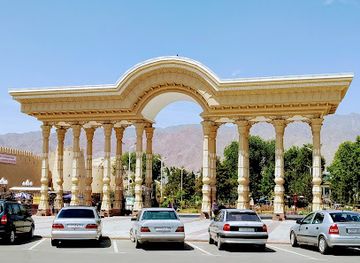

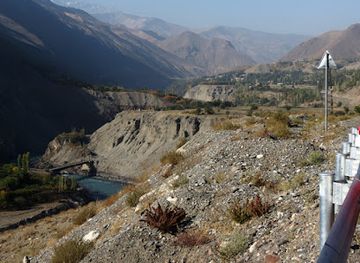
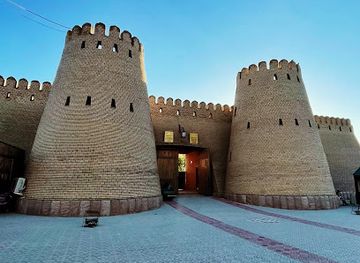
Explore Sughd Region on the map
Plan your trip on one map. See where the top cities, national parks and sights are, and book hotels and experiences in a few clicks.
Best hotels in Sughd Region
Best restaurants in Sughd Region
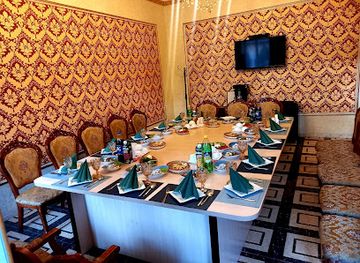
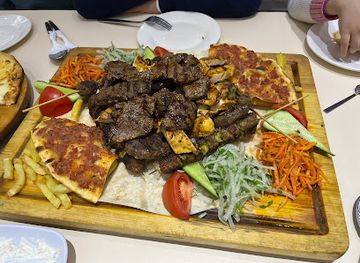
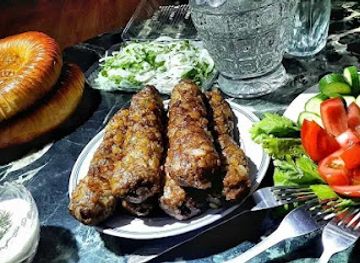
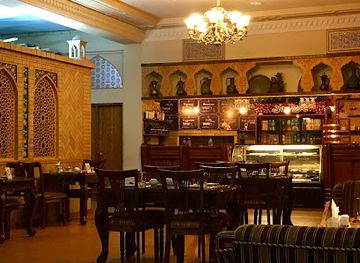
Dining in Sughd is rooted in the foodways of northern Tajikistan and the wider Central Asian crossroads. Khujand's markets and restaurants are useful places to try plov, fresh bread, samsa, lagman, shurpa and grilled meat, alongside salads, herbs, yoghurt and seasonal fruit. The fertile lowlands are known for grapes, apricots, melons, peaches and other produce that appears in bazaars and home cooking. In Istaravshan and Panjakent, smaller cafés and family-run establishments often provide straightforward local meals rather than formal restaurant service. Mountain guesthouses may serve bread, rice, soups, dairy products and preserved foods based on what is available locally. Green tea is common, and visitors may encounter both Tajik and Uzbek culinary influences. Vegetarian meals can usually be arranged, but it is sensible to explain requirements clearly in advance, particularly outside the main towns.
-
Restaurant
Cafe Ravshan
Discover the flavors of Tajikistan at Cafe Ravshan, where traditional cuisine meets warm hospitality in Khujand.
-
Turkish
Turkish cafe - Saray
Experience authentic Turkish cuisine at Saray Cafe in Khujand—delicious dishes await amidst warm hospitality.
-
Restaurant
Shashliki Takhtacha
Discover authentic Tajik flavors at Shashliki Takhtacha – where every meal is a celebration of culinary tradition.
-
Restaurant
"Zaytun" Restoran Tadzhikskoy Kukhni
Experience the essence of Tajik hospitality and culinary tradition at 'Zaytun' Restaurant in Khujand.
Best bars in Sughd Region
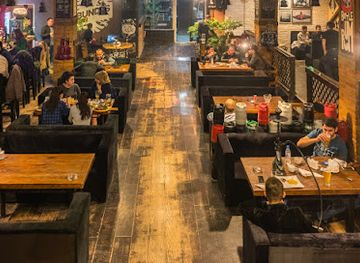
Sughd's evening culture is generally quieter than that of a major international city and is centred on restaurants, tea houses, cafés, family gatherings and evening walks. Khujand has the region's broadest choice of cafés and hotel-based dining, with some live entertainment and late-opening venues, although businesses and hours can change. In Istaravshan and Panjakent, evenings are more likely to revolve around tea, conversation and local restaurants than nightclubs. Rural and mountain districts have little organised nightlife, but guesthouses may provide communal meals and a social atmosphere. Alcohol is available in some urban establishments, yet it is not necessary for engaging with local culture; modest behaviour is especially appropriate in villages and near religious sites. Visitors should check current arrangements locally rather than relying on old venue listings.
-
Live music bar
Best Bar City
Discover Dushanbe's vibrant nightlife at the Best Bar City, the ultimate live music destination for tourists seeking unforgettable experiences.
-
Royal Resto-Bar
Experience the vibrant culinary scene at Royal Resto-Bar in Khujand, where local flavors meet a lively atmosphere for an unforgettable dining experience.
-
Bar
Барсбург
Experience the vibrant nightlife of Khujand at Барсбург, a lively bar offering a delightful blend of drinks and local culture.
-
Brewpub
Saho
Discover the essence of Khujand's brewing culture at Saho, a lively brewpub offering local flavors and unique craft beers.
Best nightclubs in Sughd Region
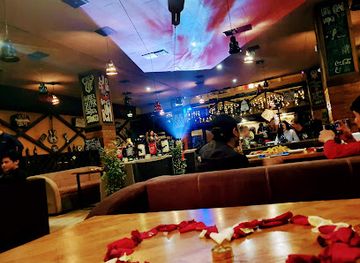
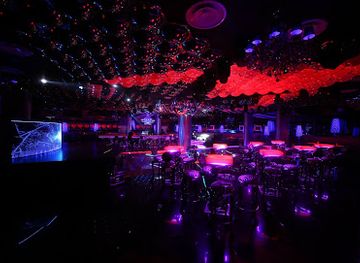
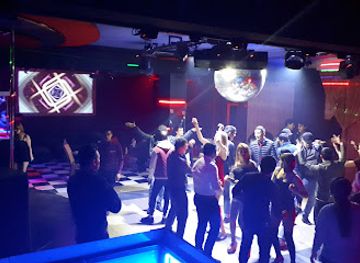
Sughd's evening culture is generally quieter than that of a major international city and is centred on restaurants, tea houses, cafés, family gatherings and evening walks. Khujand has the region's broadest choice of cafés and hotel-based dining, with some live entertainment and late-opening venues, although businesses and hours can change. In Istaravshan and Panjakent, evenings are more likely to revolve around tea, conversation and local restaurants than nightclubs. Rural and mountain districts have little organised nightlife, but guesthouses may provide communal meals and a social atmosphere. Alcohol is available in some urban establishments, yet it is not necessary for engaging with local culture; modest behaviour is especially appropriate in villages and near religious sites. Visitors should check current arrangements locally rather than relying on old venue listings.
-
Live music bar
Best Bar City
Discover the heart of Dushanbe's nightlife at Best Bar City, where live music and vibrant energy create unforgettable evenings.
-
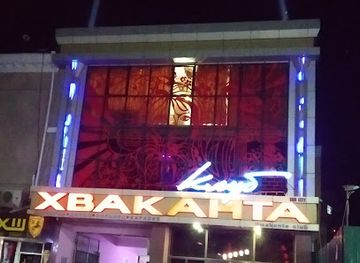
Night club
Khvakanta
Dive into the vibrant nightlife of Khujand at Khvakanta, where music and dance come alive in a culturally rich atmosphere.
-
Night club
Royal Club
Royal Club: Dushanbe's premier nightlife destination, where electrifying music meets exquisite cocktails in an unforgettable atmosphere.
-
Night club
Yosuman
Discover the vibrant nightlife at Yosuman, Khujand's top night club, where the music is loud and the atmosphere is electric.
Best shops in Sughd Region
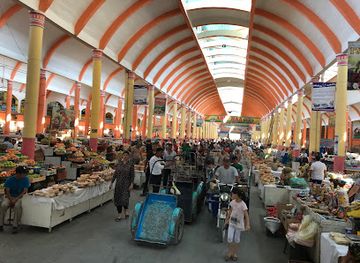
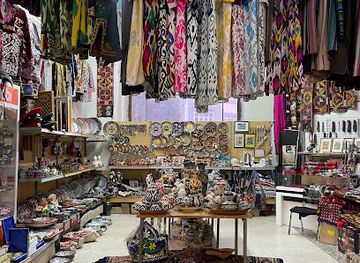
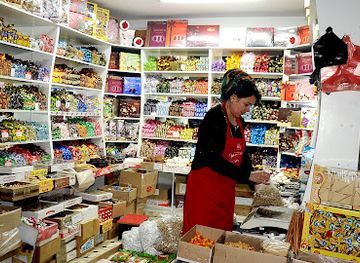
Shopping in Sughd is strongest in traditional bazaars, craft workshops and produce markets rather than large-scale modern retail. Khujand's central market is useful for dried fruit, nuts, spices, bread, textiles and seasonal fruit, while urban shops offer practical goods and contemporary clothing. Istaravshan is particularly associated with hand-crafted knives, woodcarving and other metal and artisanal work; buy directly from established workshops and ask about materials, permissible export and safe packing. Panjakent and the Zeravshan valley are good places to look for dried apricots, raisins, walnuts, honey and other local produce, though quality and packaging vary. Small rugs, embroidered textiles and ceramics may also be available, but provenance and transport requirements should be considered before purchasing archaeological-looking objects or old textiles. Bargaining can be customary in some markets, but it should remain courteous and proportionate.
-
Market
Panjshanbe Bozor
Discover the vibrant culture of Tajikistan at Panjshanbe Bozor, Khujand's bustling market filled with local delights and unique treasures.
-
Department store
Central Department Store
Explore the Central Department Store in Dushanbe for an unforgettable shopping experience filled with local culture and unique finds.
-
Market
Afghan bazaar
Discover the rich culture and vibrant offerings of the Afghan Bazaar in Khujand, a must-visit destination for every traveler.
-
Shopping mall
Guli Surkh
Explore Guli Surkh in Istaravshan, Tajikistan – a vibrant shopping mall blending local culture with modern retail experiences.

Get your free copy of our complete guide to Sughd Region, delivered straight to you.
Everything on this page, from attractions and restaurants to essentials and local phrases, in one PDF you can read offline, print or share.
Already have an account? Sign in
Your Sughd Region guide is ready.
We'll send it to · Not you? Sign out

Getting your guide ready…
We are putting together a fresh copy of the Sughd Region guide. This can take up to a minute.
This can take a few moments. If your browser asks, choose Allow so the download can start. You'll find the guide in your Downloads folder.
Nothing happened? Download it again
Sorry, the guide is taking longer than usual. Please try again in a minute, or get it by email instead.
Sughd Region essentials
Currency and Payment
Safety
Emergency Situations
Do's and Don'ts
Local Tips
From Eve
Local phrases worth knowing
You don't need to get them perfect. A few words go a long way, and locals appreciate the effort.
Basics
| English | Local | Say it |
|---|---|---|
| Hello | Салом | [Salom] |
| Goodbye | Хайр | [Khair] |
| Yes | Ҳа | [Ha] |
| No | Не | [Ne] |
| Please/You're welcome | Лутфан/Хуш омадед | [Lutfan/Khush omaded] |
| Thank you | Ташаккур | [Tashakkur] |
| Excuse me/Sorry | Бахшед | [Bakhshid] |
| How are you? | Чи хел ҳастед? | [Chi hel hastid?] |
| Fine. And you? | Хуб. Шумо? | [Khub. Shumo?] |
| Do you speak English? | Шумо забони англисӣ медонед? | [Shumo zaboni anglisi medoned?] |
| I don't understand | Ман намефаҳмам | [Man namefahmam] |
Eating & Drinking
| English | Local | Say it |
|---|---|---|
| I'd like to see the menu, please | Лутфан, ман менюро бинам | [Lutfan, man menyuro binam] |
| I don't eat meat | Ман гӯшти намехӯрам | [Man gushti namekhuram] |
| Cheers! | Саломат бошед! | [Salomat boshed!] |
| I would like to pay, please | Лутфан, ман мехоҳам пардохт кунам | [Lutfan, man mekhoham pardokht kunam] |
Emergencies
| English | Local | Say it |
|---|---|---|
| Help! | Кумак! | [Kumak!] |
| Go away! | Рав! | [Rav!] |
| Call the Police! | Полисро даъват кунед! | [Polisro da'vat kuned!] |
| Call a doctor! | Докторро даъват кунед! | [Doktorro da'vat kuned!] |
| I'm lost | Ман гум шудаам | [Man gum shudaam] |
| I'm ill | Ман бемор ҳастам | [Man bemor hastam] |
Shopping
| English | Local | Say it |
|---|---|---|
| I'd like to buy... | Ман мехоҳам ... харам | [Man mekhoham ... kharam] |
| I'm just looking | Ман фақат нигоҳ мекунам | [Man faqat nigoh mekunam] |
| How much is it? | Ин чанд пул аст? | [In chand pul ast?] |
| That's too expensive | Ин хеле гарон аст | [In kheli garon ast] |
| Can you lower the price? | Шумо метавонед нархро поён баред? | [Shumo metonid narxro poyon bareed?] |
Time & Numbers
| English | Local | Say it |
|---|---|---|
| What time is it? | Санҷиш кунак? | [Sanjish kunak?] |
| It's one o'clock | Санҷиш як соат аст | [Sanjish yak so'at ast] |
| Half past (10) | Ним (10) | [Nim (10)] |
| Morning | Субҳ | [Subh] |
| Afternoon | Баъд аз зуҳр | [Ba'd az zuhr] |
| Evening | Шом | [Shom] |
| Yesterday | Парҳез | [Parhez] |
| Today | Имрӯз | [Imruz] |
| Tomorrow | Фардо | [Fardo] |
| 1 | 1 | [1] |
| 2 | 2 | [2] |
| 3 | 3 | [3] |
| 4 | 4 | [4] |
| 5 | 5 | [5] |
| 6 | 6 | [6] |
| 7 | 7 | [7] |
| 8 | 8 | [8] |
| 9 | 9 | [9] |
| 10 | 10 | [10] |
Transport & Directions
| English | Local | Say it |
|---|---|---|
| Where's a/the...? | Кӯтоҳ, ... куҷост? | [Kuto'h, ... kujost?] |
| What's the address? | Суроғаи куҷо аст? | [Surogai kujo ast?] |
| Can you show me (on the map)? | Шумо метавонед маро нишон диҳед (дар харита)? | [Shumo metonid maro nishon dihed (dar kharita)?] |
| When's the next (bus)? | Ки автобуси навбатӣ меояд? | [Ki avtobusi navbati meoyad?] |
| A ticket (to ....) | Як бонк (ба ....) | [Yak bonk (ba ....)] |
History of Sughd Region
Sarazm and the earliest settled communities
Sarazm, near Panjakent, preserves the remains of a settlement occupied from the fourth millennium BCE into the third millennium BCE. Its buildings, craft evidence and imported materials show that communities in the Zeravshan valley participated in far-reaching exchanges linking the Iranian plateau, Central Asia and regions farther east. The site is among the most important archaeological records of early urban development in the region and is recognised by UNESCO. Its position beside productive land and routes through the mountains helps explain why northern Tajikistan became a long-term meeting ground for farmers, metalworkers, herders and traders.
Sogdiana and ancient Panjakent
From antiquity, much of present-day Sughd formed part of the cultural world of Sogdiana, a network of Iranian-speaking city-states and agricultural settlements centred on the Zeravshan and Kashkadarya valleys. Ancient Panjakent flourished particularly between the fifth and eighth centuries CE. Its palaces, temples, houses and wall paintings reveal a sophisticated urban society involved in commerce along the Silk Roads. The settlement was eventually abandoned after the Arab conquest and changing regional power structures, but its excavated murals and architecture remain central to understanding pre-Islamic civilisation in Central Asia.
The Arab conquest and Islamic transformation
Arab armies reached Transoxiana in the eighth century, bringing northern present-day Tajikistan into a new political and religious sphere after prolonged resistance by local rulers and communities. Islam spread gradually through cities, courts, trade and scholarship rather than replacing earlier traditions overnight. The Zeravshan and Fergana routes continued to connect settlements, while Persian language and literary culture remained influential. Over succeeding centuries, mosques, mausoleums and schools reshaped the built environment of places such as Istaravshan and Khujand, whose identities developed through both local traditions and wider Islamic civilisation.
Khujand, the Samanids and medieval trade
Khujand occupied a strategic position on the Syr Darya and on routes crossing Central Asia. It prospered at different times under regional dynasties, including the Samanids in the ninth and tenth centuries, a period associated with the consolidation of Persianate Islamic culture. The city was also affected by the Mongol invasions of the thirteenth century and later recovered as political control shifted among competing Central Asian powers. Its river crossing, agricultural hinterland and commercial links explain why Khujand repeatedly became one of the region's principal urban centres.
Timurid and Kokand-era urban culture
The Timurid period strengthened the architectural and intellectual connections between Central Asian cities, while later Khujand and Istaravshan came under the influence of the Kokand Khanate. In the eighteenth and early nineteenth centuries, the Fergana-based khanate controlled or contested much of the surrounding region. Mosques, mausoleums, bazaars and craft workshops developed within this political and commercial environment. Istaravshan's reputation for metalwork, knives, woodcarving and other skilled trades reflects an urban tradition that predates modern tourism and remains visible in its workshops and markets.
Russian conquest and the imperial frontier
The Russian Empire expanded into Central Asia during the nineteenth century, bringing northern Tajik lands into a new administrative and military framework. Khujand was incorporated into Russian-controlled territory in the 1860s, and roads, communications and commercial patterns increasingly connected the region with imperial centres. Russian rule did not erase existing agricultural, religious or craft institutions, but it altered taxation, administration and trade. The northern districts later became closely linked with the political geography of the Uzbek Soviet Socialist Republic before the creation of Tajikistan's modern borders.
Soviet transformation and modern Sughd
Under Soviet rule, irrigation, cotton cultivation, mechanised agriculture and industrial development transformed Sughd's lowland economy. Khujand, then known as Leninabad, expanded as an administrative and industrial city, while collective farming reorganised rural life. New roads and institutions improved connections but also tied the region to centrally planned production and extensive water use. After Tajikistan became independent in 1991, the province was renamed Sughd. Today its historic cities, agricultural plains, Soviet-era infrastructure and mountain districts together reflect several overlapping layers of northern Tajikistan's past.
Sughd Region in Photos
Browse through our photo collection highlighting the charm and character of the destination.
Neighbouring regions of Sughd Region
The closest regions to Sughd Region, if you have time for more than one.
-

-

-
-

-


Swipe for more regions
Explore more

Explore more of Tajikistan
Discover Tajikistan: A land of majestic mountains, ancient history, and warm hospitality. Ideal for adventure seekers and culture enthusiasts alike.
Explore Tajikistan