

Old Fort (Stone Town) Travel Guide - Free
Explore Old Fort in Stone Town with Evendo's free guide. Find the best shops, historic streets, restaurants, and gems on web or mobile.


Old Fort in Stone Town, Tanzania, brings together Swahili history, seafront walks, Forodhani evenings, cultural performances and heritage architecture.
A Fortified Centre of Stone Town
Old Fort occupies one of the most recognisable corners of Stone Town, facing the Indian Ocean beside Forodhani Gardens and the waterfront. Known locally as Ngome Kongwe, the fortress is built from coral rag and occupies the site of an earlier Portuguese structure, giving this compact area a layered architectural identity. Its thick walls, arched entrances and open interior contrast with the narrow lanes and carved-door houses that define the surrounding historic town.Read more about Old Fort
History in the Streets
Waterfront Culture and Evening Life
Best attractions in Old Fort
The Old Fort itself is the principal attraction, with substantial coral-stone walls, arched gateways and an open courtyard that reveal how Zanzibar’s rulers transformed an earlier Portuguese site into an Omani stronghold. Its cultural spaces have hosted performances and festival events, although programmes and access can vary. Immediately outside, Forodhani Gardens provides a seafront promenade and an evening food market atmosphere, while the waterfront offers views towards the harbour and the island’s maritime setting. Nearby buildings such as the House of Wonders and the former Sultan’s Palace are important parts of Stone Town’s waterfront heritage, but should be understood as adjacent landmarks rather than sections of the fort. The surrounding lanes add much of the area’s appeal: carved wooden doors, coral-stone walls, small galleries, spice shops and cafés create a compact route between major sights and the everyday life of the old town.
-
Tourist attraction
Imran Jape
Explore the Old Fort in Zanzibar, a historic site showcasing diverse architecture and vibrant local culture in the heart of Stone Town.
3 min walk · 0.2 km from neighbourhood centre

Best landmarks in Old Fort
Old Fort, or Ngome Kongwe, is the defining landmark: a robust coral-rag enclosure built under Omani rule on a site linked with Zanzibar’s Portuguese past. Its walls and courtyard express Stone Town’s strategic relationship with the Indian Ocean and its development as a fortified port. The fort stands beside Forodhani Gardens, whose open waterfront setting has become an important public space, and near the House of Wonders and former Sultan’s Palace, two prominent buildings on the historic seafront. These neighbouring structures should not be conflated with the fort, but together they convey the concentration of political and ceremonial architecture in this part of Stone Town. The surrounding historic lanes, carved doors and coral-stone façades are also significant, forming a lived architectural setting rather than a collection of isolated monuments.
-
Fortress
Old Fort
Discover the Old Fort of Zanzibar: A historic fortress showcasing the island's rich heritage and vibrant culture, nestled in the heart of Stone Town.
2 min walk · 0.2 km from neighbourhood centre
-
Museum
Gos tour in #zanzibar
Explore the rich history of Zanzibar at the Slave Market Museum, an essential destination for understanding the island's complex past.
5 min walk · 0.4 km from neighbourhood centre
-
Museum
Freddie Mercury Museum
Discover the vibrant legacy of Freddie Mercury at the museum dedicated to the iconic Queen frontman in Zanzibar's historic Stone Town.
2 min walk · 0.2 km from neighbourhood centre
-
Historical landmark
Old Portuguese Arch
Discover the Old Portuguese Arch in Stone Town, Zanzibar - a historical landmark that embodies the rich cultural heritage and architectural beauty of the island.
3 min walk · 0.3 km from neighbourhood centre


Explore Old Fort on the map
A handpicked selection of must-see spots in Old Fort, mapped for you.
Best hotels in Old Fort
Best restaurants in Old Fort
Dining around Old Fort is closely tied to Stone Town’s waterfront and its mixture of Swahili, Arab, Indian and wider Indian Ocean influences. Forodhani Gardens becomes the area’s best-known evening food setting, with vendors preparing dishes such as Zanzibar pizza, grilled seafood and skewered meats in a public market atmosphere. Quality and hygiene can vary between stalls, so visitors should observe which vendors are busy and how food is handled. The lanes around the fort contain cafés, juice sellers and small restaurants rather than a single formal dining quarter, while nearby streets offer curries, rice dishes, seafood and spiced Swahili cooking. Eating here is as much about the setting and social movement around the seafront as it is about a restaurant meal; visitors should also remember that menus, stalls and individual businesses change over time.
-
Restaurant
Lukmaan Restaurant
Discover authentic Zanzibari cuisine at Lukmaan Restaurant in Stone Town—where every dish tells a story.
3 min walk · 0.3 km from neighbourhood centre
-
Seafood
Cape Town Fish Market Zanzibar
Experience fresh seafood in a vibrant atmosphere at Cape Town Fish Market Zanzibar, where every meal tells a story of local flavors.
4 min walk · 0.3 km from neighbourhood centre
-
Fusion restaurant
Beach House Zanzibar
Experience exquisite fusion cuisine at Beach House Zanzibar - where local flavors meet international flair in a stunning coastal setting.
4 min walk · 0.3 km from neighbourhood centre
-
Restaurant
Livingstone Beach Restaurant
Experience exquisite dining with stunning ocean views at Livingstone Beach Restaurant in Zanzibar's historic Stone Town.
3 min walk · 0.2 km from neighbourhood centre


Best bars in Old Fort
The Old Fort area is more associated with waterfront dining, cultural events and evening strolling than with a concentrated nightclub scene. After sunset, Forodhani Gardens becomes the main gathering point, with food stalls, the promenade and views across the harbour creating a sociable public setting. A few nearby hotels, restaurants and cafés provide places for a drink, while music and performance events may take place at the fort or elsewhere in Stone Town according to the cultural calendar. Nightlife is generally modest and dispersed rather than organised around one club strip, and the atmosphere changes quickly once visitors leave the active waterfront. Respect local Muslim customs, keep noise down near residential lanes and arrange a trusted taxi when travelling beyond the old town after dark.
-
Fortress
Old Fort
Explore the Old Fort in Zanzibar, a historical gem blending culture, stunning architecture, and breathtaking views of the ocean.
2 min walk · 0.2 km from neighbourhood centre
-
Restaurant
6 Degrees South
Discover culinary excellence at 6 Degrees South, a vibrant restaurant in Stone Town, Zanzibar, serving local and international flavors in a picturesque setting.
4 min walk · 0.3 km from neighbourhood centre
-
Fusion restaurant
Beach House Zanzibar
Experience the vibrant fusion of local and international cuisine at Beach House Zanzibar, a culinary destination in the heart of Stone Town.
4 min walk · 0.3 km from neighbourhood centre
-
Restaurant
Patamu (Tatu)
Savor the rich flavors of Zanzibar at Patamu (Tatu), a must-visit restaurant in Stone Town offering authentic local cuisine and a warm ambiance.
4 min walk · 0.3 km from neighbourhood centre


Best nightclubs in Old Fort
The Old Fort area is more associated with waterfront dining, cultural events and evening strolling than with a concentrated nightclub scene. After sunset, Forodhani Gardens becomes the main gathering point, with food stalls, the promenade and views across the harbour creating a sociable public setting. A few nearby hotels, restaurants and cafés provide places for a drink, while music and performance events may take place at the fort or elsewhere in Stone Town according to the cultural calendar. Nightlife is generally modest and dispersed rather than organised around one club strip, and the atmosphere changes quickly once visitors leave the active waterfront. Respect local Muslim customs, keep noise down near residential lanes and arrange a trusted taxi when travelling beyond the old town after dark.
-
Fortress
Old Fort
Discover the rich history and stunning architecture of Zanzibar's Old Fort, a cultural gem in the heart of Stone Town.
2 min walk · 0.2 km from neighbourhood centre
-
Restaurant
6 Degrees South
Discover the vibrant flavors of Zanzibar at 6 Degrees South, a restaurant offering fresh seafood and stunning waterfront views.
4 min walk · 0.3 km from neighbourhood centre
-
Fusion restaurant
Beach House Zanzibar
Experience the vibrant flavors of Zanzibar at Beach House – a fusion restaurant and cocktail bar in the heart of Stone Town.
4 min walk · 0.3 km from neighbourhood centre
-
Restaurant
Patamu (Tatu)
Discover the vibrant nightlife and culinary delights at Patamu (Tatu) in the heart of Stone Town, Zanzibar.
4 min walk · 0.3 km from neighbourhood centre


Best shops in Old Fort
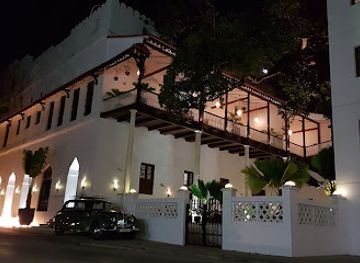
Shopping around Old Fort is primarily small-scale and visitor-oriented, with shops and stalls in the surrounding Stone Town lanes selling spices, textiles, carved objects, jewellery, artwork and souvenirs connected to Zanzibar’s Indian Ocean trading culture. The area near the waterfront and Forodhani Gardens is useful for browsing rather than for conventional department-store retail, and products vary between individual sellers. Visitors should compare workmanship and materials, ask politely about prices and keep receipts for substantial purchases. The most distinctive retail experience comes from moving between small independent businesses, galleries and market-style stalls while observing the carved doors and historic façades around them. Spice products and crafts are widely associated with Zanzibar, but travellers should avoid assuming that every item labelled as local was produced on the island.
-
Souvenir store
Memories Of Zanzibar
Discover the vibrant essence of Zanzibar at Memories Of Zanzibar, where local crafts and unique souvenirs await every traveler.
2 min walk · 0.2 km from neighbourhood centre
-
Antique store
The Zanzibar Curio Shop
Explore the vibrant artistry of Zanzibar at The Zanzibar Curio Shop, where unique antiques and handcrafted treasures await every traveler.
3 min walk · 0.2 km from neighbourhood centre
-
Souvenir store
aromas of zanzibar
Discover the heart of Zanzibar through unique souvenirs at Aromas of Zanzibar, capturing the island's vibrant culture and artisanal craftsmanship.
2 min walk · 0.1 km from neighbourhood centre
-
Shopping mall
Stonetown Traders
Experience the heart of Zanzibar at Stonetown Traders, where shopping meets culture and local craftsmanship.
1 min walk · 0.1 km from neighbourhood centre


Old Fort essentials
Getting There
Getting Around
Safety
Emergency Situations
Do's and Don'ts
Local Tips

From Eve
Local phrases worth knowing
You don't need to get them perfect. A few words go a long way, and locals appreciate the effort.
Basics
| English | Local | Say it |
|---|---|---|
| Hello | Jambo | [jahm-boh] |
| Goodbye | Kwaheri | [kwah-heh-ree] |
| Yes | Ndio | [n-dee-oh] |
| No | Hapana | [hah-pah-nah] |
| Please/You're welcome | Tafadhali | [tah-fah-dah-lee] |
| Thank you | Asante | [ah-sahn-teh] |
| Excuse me/Sorry | Samahani | [sah-mah-hah-nee] |
| How are you? | Habari gani? | [hah-bah-ree gah-nee] |
| Fine. And you? | Nzuri. Na wewe? | [n-zoo-ree. nah weh-weh] |
| Do you speak English? | Unazungumza Kiingereza? | [oo-nah-zoo-ngoom-zah kee-een-geh-reh-zah] |
| I don't understand | Sielewi | [see-leh-wee] |
Eating & Drinking
| English | Local | Say it |
|---|---|---|
| I'd like to see the menu, please | Ningependa kuona menyu, tafadhali | [nee-ngeh-pehn-dah kwoh-nah meh-nyoo, tah-fah-dah-lee] |
| I don't eat meat | Sili nyama | [see-lee nyah-mah] |
| Cheers! | Afya! | [ah-fyah] |
| I would like to pay, please | Ningependa kulipa, tafadhali | [nee-ngeh-pehn-dah koo-lee-pah, tah-fah-dah-lee] |
Emergencies
| English | Local | Say it |
|---|---|---|
| Help! | Msaada! | [msah-ah-dah] |
| Go away! | Nenda zako! | [nen-dah zah-koh] |
| Call the Police! | Piga simu polisi! | [pee-gah see-moo poh-lee-see] |
| Call a doctor! | Piga simu daktari! | [pee-gah see-moo dahk-tah-ree] |
| I'm lost | Nimepotea | [nee-meh-poh-teh-ah] |
| I'm ill | Ninaumwa | [nee-nah-oom-wah] |
Shopping
| English | Local | Say it |
|---|---|---|
| I'd like to buy... | Ningependa kununua... | [nee-ngeh-pehn-dah koo-noo-nwah] |
| I'm just looking | Natazama tu | [nah-tah-zah-mah too] |
| How much is it? | Bei ni kiasi gani? | [bay nee kyah-see gah-nee] |
| That's too expensive | Hiyo ni ghali sana | [hee-yoh nee gah-lee sah-nah] |
| Can you lower the price? | Unaweza kupunguza bei? | [oo-nah-weh-zah koo-poon-goo-zah bay] |
Time & Numbers
| English | Local | Say it |
|---|---|---|
| What time is it? | Saa ngapi? | [sah-ah ngah-pee] |
| It's one o'clock | Saa moja | [sah-ah moh-jah] |
| Half past (10) | Saa moja na nusu | [sah-ah moh-jah nah noo-soo] |
| Morning | Asubuhi | [ah-soo-boo-hee] |
| Afternoon | Mchana | [m-chah-nah] |
| Evening | Jioni | [joh-nee] |
| Yesterday | Jana | [jah-nah] |
| Today | Leo | [leh-oh] |
| Tomorrow | Kesho | [keh-shoh] |
| 1 | Moja | [moh-jah] |
| 2 | Mbili | [m-bee-lee] |
| 3 | Tatu | [tah-too] |
| 4 | Nne | [n-neh] |
| 5 | Tano | [tah-noh] |
| 6 | Sita | [see-tah] |
| 7 | Saba | [sah-bah] |
| 8 | Nane | [nah-neh] |
| 9 | Tisa | [tee-sah] |
| 10 | Kumi | [koo-mee] |
Transport & Directions
| English | Local | Say it |
|---|---|---|
| Where's a/the...? | Iko wapi...? | [ee-koh wah-pee] |
| What's the address? | Anwani ni ipi? | [ahn-wah-nee nee ee-pee] |
| Can you show me (on the map)? | Unaweza kunionyesha (kwenye ramani)? | [oo-nah-weh-zah koo-nee-oh-nyeh-shah (kweh-neh rah-mah-nee)] |
| When's the next (bus)? | Basi lifuata lini? | [bah-see lee-foo-ah-tah lee-nee] |
| A ticket (to ....) | Tiketi (kwenda ...) | [tee-keh-tee (kwehn-dah)] |
History of Old Fort
Portuguese Beginnings
The Old Fort stands on a site associated with Portuguese occupation of Zanzibar, when the island formed part of a wider Indian Ocean trading world connected to the East African coast, Arabia and South Asia. Portuguese control was eventually challenged by Omani forces, who captured Zanzibar in the late seventeenth century. Although the present fortress is chiefly associated with the Omani period, its location reflects the strategic value of the waterfront: it overlooked maritime approaches and occupied a central position within the settlement that developed into Stone Town.
The Omani Fortress
After the Portuguese were expelled, Omani rulers constructed the substantial stone fort generally dated to the late seventeenth or early eighteenth century. Built from local coral rag, it combined defensive walls with an interior enclosure and became known as Ngome Kongwe, or Old Fort. Its position beside the sea and near the principal urban centre illustrates Stone Town’s role under Omani rule, when Zanzibar grew in importance as a political capital, port and commercial crossroads. The fort’s surviving fabric is among the most direct reminders of that transformation.
A Changing Urban Role
As Stone Town expanded and political, commercial and residential functions spread through the surrounding streets, the fort’s military importance declined. The area remained closely connected to the waterfront, markets and public life, while neighbouring buildings reflected the town’s Swahili, Arab, Indian and European influences. The fort was reused for civic and cultural purposes rather than remaining solely a defensive installation. Its courtyard and walls later provided a setting for public performances and cultural events, helping maintain the structure’s place in everyday urban life.
Heritage and Cultural Use
During the twentieth century and after Zanzibar’s political changes, the Old Fort became increasingly valued as part of Stone Town’s historic character. Conservation efforts across the old town recognised the importance of its coral-stone buildings, waterfront setting and multicultural architectural heritage; Stone Town was inscribed on the UNESCO World Heritage List in 2000. The fort now functions principally as a heritage and cultural site, while its surroundings connect historic interpretation with public events, evening food culture and the continuing life of Zanzibar’s principal old town.
Old Fort in Photos
Browse through our photo collection highlighting the charm and character of the destination.
Neighbourhoods near Old Fort
The closest neighbourhoods to Old Fort, if you have time for more than one stop.
-

-

-

-


Swipe for more neighbourhoods
Explore more

Explore more of Stone Town
Stone Town, Tanzania, offers UNESCO-listed Swahili architecture, spice-infused cuisine, historic markets, ocean views and evocative island culture to explore.
Explore Stone Town