

Free Central Thailand Travel Guide & Mobile App
Explore Central Thailand with free travel guides. Discover regional history, expert tips, proposed trips, and audio guides on web or mobile app.


Explore Central Thailand from Bangkok’s temples and markets to Ayutthaya’s ruins, Kanchanaburi’s rivers and the canal country of the western plain.
Read more about Central Thailand
When is the best time to visit Central Thailand?
Best: December–February · 30–32°C| Month | High (°C) | Rainfall (mm) |
|---|---|---|
| January (best) | 30 | 10 |
| February (best) | 32 | 20 |
| March | 34 | 30 |
| April | 36 | 50 |
| May | 35 | 150 |
| June | 34 | 160 |
| July | 33 | 150 |
| August | 33 | 150 |
| September | 33 | 200 |
| October | 32 | 160 |
| November | 31 | 60 |
| December (best) | 30 | 20 |
Getting to and around Central Thailand
How to get there
Transportation
Top city travel guides in Central Thailand
The cities of Central Thailand, and the easiest places to base yourself.
-
-

-
-

-

-


Swipe for more cities
Destinations in Central Thailand
Resorts, valleys and scenic spots worth a trip of their own.
-

-

-

-


Swipe for more destinations
Best attractions in Central Thailand
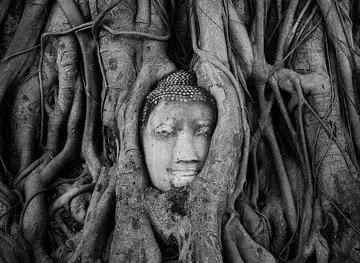
Central Thailand offers a wide range of experiences within a river-shaped landscape. Bangkok combines royal compounds, Buddhist temples, museums, galleries, markets and neighbourhoods built along the Chao Phraya and its canals. The Historic City of Ayutthaya provides the region’s most important archaeological experience, with monasteries, prangs and Buddha images distributed across an island and surrounding parkland. Lopburi adds Khmer-influenced monuments and an early urban history, while Nakhon Pathom centres on major Buddhist heritage and a long-established provincial town. Kanchanaburi brings a different emphasis: wartime museums and railway sites sit alongside rivers, caves, reservoirs and forested protected areas. Around Samut Songkhram, canals, orchards, salt farms and riverside settlements reveal the working landscape of the Mae Klong basin. Cycling, boating, food-market visits and short nature excursions complement the historical sites, although travel times and facilities are more predictable in Bangkok and major towns than in rural districts.
-
Museum
Hellfire Pass Interpretive Centre
Discover the profound history of World War II at Hellfire Pass Interpretive Centre, a poignant museum in Kanchanaburi, Thailand.
-
Tourist attraction
Dragon Paradise Park Suphanburi
Experience the enchanting Dragon Paradise Park in Suphanburi, a vibrant blend of wildlife, culture, and adventure for all ages.
-
National park
Sai Yok National Park
Experience the breathtaking beauty of Sai Yok National Park with its stunning waterfalls, rich wildlife, and lush landscapes in Thailand's natural paradise.
-
Education center
Snake Farm
Explore the captivating Snake Farm in Bangkok, a premier educational center and tourist attraction dedicated to snake conservation and awareness.


Best landmarks in Central Thailand
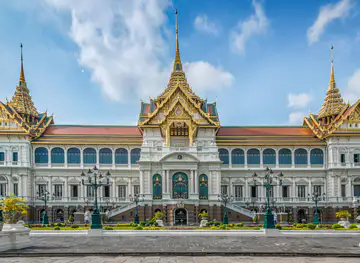
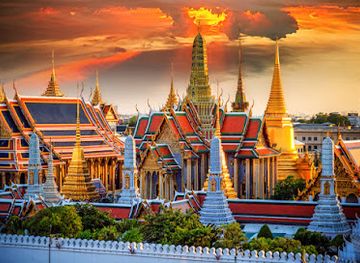
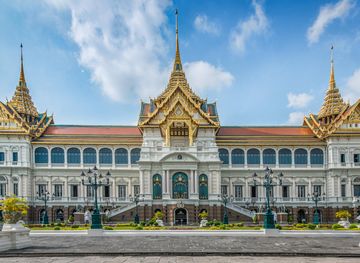
The Grand Palace and Wat Phra Kaew in Bangkok are among the most recognisable landmarks in Thailand, representing the country’s royal and Buddhist traditions within the historic Rattanakosin area. Along the Chao Phraya, Wat Arun’s riverside prang forms another defining image of the capital, while the river itself explains much of Bangkok’s historic urban structure. In Ayutthaya, Wat Mahathat, Wat Phra Si Sanphet and Wat Chaiwatthanaram are prominent survivals of the former capital, each illustrating a different aspect of royal, monastic and architectural history. Phra Pathom Chedi in Nakhon Pathom is one of the central plain’s dominant religious monuments, rising above the surrounding city. Lopburi’s Prang Sam Yot preserves Khmer-influenced brick architecture in the old urban centre. In Kanchanaburi, the Bridge over the River Khwae and the surviving railway landscape are powerful wartime symbols, while the province’s limestone hills and river valleys provide a contrasting natural set of landmarks.
-
Castle
The Grand Palace
Explore the opulent beauty and rich history of The Grand Palace in Bangkok, a must-see cultural landmark that showcases Thailand's royal heritage.
-
Traditional market
Chatuchak Weekend Market
Experience the vibrant energy of Chatuchak Weekend Market, Bangkok's largest market, where shopping, food, and culture collide in a unique weekend adventure.
-
Buddhist temple
The Temple of the Emerald Buddha
Discover the spiritual heart of Thailand at the Temple of the Emerald Buddha, a stunning showcase of art, culture, and devotion in the heart of Bangkok.
-
Buddhist temple
Wat Arun Ratchawararam Ratchawaramahawihan
Discover the stunning beauty and spiritual significance of Wat Arun, Bangkok's iconic Temple of Dawn, with breathtaking views and rich cultural experiences.


Explore Central Thailand on the map
Plan your trip on one map. See where the top cities, national parks and sights are, and book hotels and experiences in a few clicks.
Best hotels in Central Thailand
Best restaurants in Central Thailand
Central Thai food is shaped by the fertile plain, freshwater waterways and proximity to Bangkok’s diverse urban population. Rice, river fish, prawns, coconut, palm sugar, pomelo, guava and seasonal fruit appear in markets and family-run eateries across the region. Bangkok offers the broadest range, from traditional central Thai cooking and palace-influenced dishes to regional food brought by communities from elsewhere in Thailand. Ayutthaya is associated with river prawns and boat-noodle traditions, although menus vary between historic areas and modern town restaurants. The Mae Klong and Samut Songkhram districts are known for coconut, seafood and produce from orchards and waterways, while Kanchanaburi has riverside restaurants and local specialities alongside familiar Thai staples. Provincial markets, morning food stalls, modest noodle shops, cafés and rural restaurants often provide a more direct way to encounter local ingredients than formal dining rooms. Food safety standards and payment options vary, so busy stalls with high turnover are usually the most practical choice for visitors.
-
Thai
Nara Thai Cuisine Central World
Experience authentic Thai cuisine at Nara Thai Cuisine in Central World – where tradition meets modern dining in Bangkok.
-
Thai
Cabbages & Condoms
Experience authentic Thai cuisine at Cabbages & Condoms, where great food meets social responsibility in Bangkok's vibrant atmosphere.
-
Thai
Blue Elephant Bangkok Sathorn Cooking School & Restaurant
Experience authentic Thai cuisine and cooking classes at Blue Elephant Bangkok Sathorn - a culinary gem in the heart of Thailand.
-
Thai
Eathai
Discover authentic Thai cuisine at Eathai—Bangkok's vibrant food court showcasing regional flavors in a modern setting.


Best bars in Central Thailand
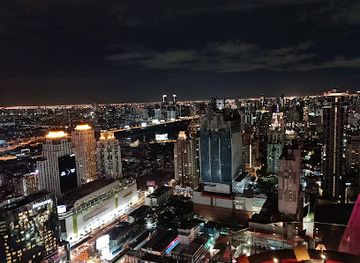
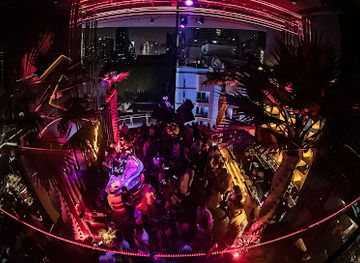
Nightlife in Central Thailand differs sharply between Bangkok and the provinces. The capital has the country’s widest selection of cocktail bars, rooftop venues, live-music rooms, late-night restaurants and clubs, concentrated in different commercial and entertainment areas rather than one single district. In Ayutthaya, evening life is quieter and centres on riverside restaurants, hotel bars, casual cafés and small local venues, with the illuminated temple landscape providing an atmospheric backdrop without functioning as a nightlife quarter. Kanchanaburi has guesthouse bars, riverside restaurants, relaxed pubs and some live music, while provincial towns such as Nakhon Pathom and Lopburi tend towards local restaurants, beer gardens and modest music venues. Samut Songkhram and the rural central plain generally close earlier, with social life focused on food, markets and community gatherings. Visitors should check current closing arrangements and avoid treating memorial or religious sites as entertainment venues.
-
Bar
Red Sky
Experience breathtaking views and exquisite dining at Red Sky, Bangkok's premier rooftop bar and restaurant, where luxury meets panoramic beauty.
-
Bar
Beer Republic
Explore Beer Republic in Bangkok for a vibrant mix of live music, delicious food, and an extensive selection of beers in a lively atmosphere.
-
Cocktail bar
TEP BAR - Cultural Bar of Thailand
Experience the vibrant culture of Thailand at TEP BAR, where traditional flavors meet modern mixology in a lively Bangkok setting.
-
Live music bar
The Iron Fairies Music Bar Bangkok
Discover the whimsical charm of The Iron Fairies Music Bar in Bangkok, a magical venue for live music and delightful cocktails.


Best nightclubs in Central Thailand
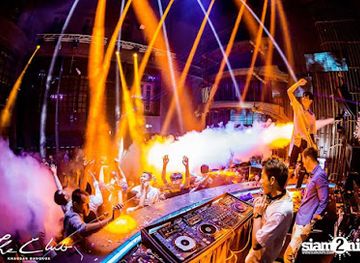
Nightlife in Central Thailand differs sharply between Bangkok and the provinces. The capital has the country’s widest selection of cocktail bars, rooftop venues, live-music rooms, late-night restaurants and clubs, concentrated in different commercial and entertainment areas rather than one single district. In Ayutthaya, evening life is quieter and centres on riverside restaurants, hotel bars, casual cafés and small local venues, with the illuminated temple landscape providing an atmospheric backdrop without functioning as a nightlife quarter. Kanchanaburi has guesthouse bars, riverside restaurants, relaxed pubs and some live music, while provincial towns such as Nakhon Pathom and Lopburi tend towards local restaurants, beer gardens and modest music venues. Samut Songkhram and the rural central plain generally close earlier, with social life focused on food, markets and community gatherings. Visitors should check current closing arrangements and avoid treating memorial or religious sites as entertainment venues.
-
Night club
Venti Nightclub
Experience the electric atmosphere of Venti Nightclub in Bangkok, where music and dance come alive every night.
-
Night club
The Club
Experience the thrill of Bangkok's nightlife at The Club, where vibrant music meets an electrifying atmosphere in the heart of the city.
-
Night club
Levels Club
Discover the electrifying nightlife at Levels Club in Bangkok, where unforgettable parties and vibrant atmospheres await you.
-
Night club
MUIN Bangkok Club
Dive into the vibrant nightlife of Bangkok at MUIN Club, where exceptional music and a lively atmosphere create an unforgettable experience.


Best shops in Central Thailand
Shopping ranges from Bangkok’s extensive retail districts and department stores to the market streets and produce stalls of provincial towns. The capital is the best place for contemporary fashion, design, books, antiques, crafts and food products from throughout Thailand, while older neighbourhood markets offer a more local shopping rhythm. Ayutthaya has shops selling historical reproductions, handicrafts, snacks and regional sweets, although visitors should distinguish locally made goods from mass-produced souvenirs. Nakhon Pathom and the Mae Klong basin are useful places to look for pomelo, coconut products, palm sugar, fruit preserves and other agricultural goods when in season. Kanchanaburi’s town markets combine everyday produce with crafts and practical souvenirs connected to the province’s natural and historical identity. Weekend and floating markets can be lively but vary in scale and operating patterns; check locally rather than assuming every market trades daily. Bargaining may be appropriate in some open markets, but not in fixed-price shops, supermarkets or established boutiques.
-
Shopping mall
centralwOrld
Discover the ultimate shopping experience at centralwOrld, Bangkok's largest mall with diverse shopping, dining, and entertainment options.
-
Shopping mall
MBK Center
Discover the heart of Bangkok shopping at MBK Center, where you can find unique souvenirs, local crafts, and delicious food all under one roof.
-
Shopping mall
The Platinum Fashion Mall
Discover unbeatable fashion deals and a vibrant shopping atmosphere at The Platinum Fashion Mall in the heart of Bangkok, Thailand.
-
Department store
Emporium
Discover the luxury of shopping at Emporium, Bangkok's premier destination for fashion, dining, and entertainment.


Get your free copy of our complete guide to Central Thailand, delivered straight to you.
Everything on this page, from attractions and restaurants to essentials and local phrases, in one PDF you can read offline, print or share.
Already have an account? Sign in
Your Central Thailand guide is ready.
We'll send it to · Not you? Sign out

Getting your guide ready…
We are putting together a fresh copy of the Central Thailand guide. This can take up to a minute.
This can take a few moments. If your browser asks, choose Allow so the download can start. You'll find the guide in your Downloads folder.
Nothing happened? Download it again
Sorry, the guide is taking longer than usual. Please try again in a minute, or get it by email instead.
Central Thailand essentials
Currency and Payment
Safety
Emergency Situations
Do's and Don'ts
Local Tips
From Eve
Local phrases worth knowing
You don't need to get them perfect. A few words go a long way, and locals appreciate the effort.
Basics
| English | Local | Say it |
|---|---|---|
| Hello | สวัสดี | [sawasdee] |
| Goodbye | ลาก่อน | [laa korn] |
| Yes | ใช่ | [chai] |
| No | ไม่ | [mai] |
| Please/You're welcome | กรุณา/ยินดี | [karuna/yindi] |
| Thank you | ขอบคุณ | [khop khun] |
| Excuse me/Sorry | ขอโทษ | [kho thot] |
| How are you? | คุณสบายดีไหม? | [khun sabai di mai?] |
| Fine. And you? | สบายดี ขอบคุณ แล้วคุณล่ะ? | [sabai di khop khun laeo khun la?] |
| Do you speak English? | คุณพูดภาษาอังกฤษได้ไหม? | [khun phut phasa angkrit dai mai?] |
| I don't understand | ฉันไม่เข้าใจ | [chan mai khao jai] |
Eating & Drinking
| English | Local | Say it |
|---|---|---|
| I'd like to see the menu, please | ขอดูเมนูหน่อยได้ไหม? | [kho du menu noi dai mai?] |
| I don't eat meat | ฉันไม่รับประทานเนื้อ | [chan mai rap prathan neua] |
| Cheers! | ชนแก้ว! | [chon kaew] |
| I would like to pay, please | ฉันอยากจ่ายเงินค่ะ | [chan yak jai ngern kha] |
Emergencies
| English | Local | Say it |
|---|---|---|
| Help! | ช่วยด้วย! | [chuai duay!] |
| Go away! | ไปให้พ้น! | [pai hai phon!] |
| Call the Police! | เรียกตำรวจ! | [riak tamruat!] |
| Call a doctor! | เรียกหมอ! | [riak mor!] |
| I'm lost | ฉันหลงทาง | [chan long thang] |
| I'm ill | ฉันป่วย | [chan puai] |
Shopping
| English | Local | Say it |
|---|---|---|
| I'd like to buy... | ฉันอยากซื้อ... | [chan yak sue...] |
| I'm just looking | ฉันแค่ดู | [chan khae du] |
| How much is it? | ราคาเท่าไหร่? | [rakha thao rai?] |
| That's too expensive | แพงเกินไป | [phaeng koen pai] |
| Can you lower the price? | คุณช่วยลดราคาได้ไหม? | [khun chuai lot rakha dai mai?] |
Time & Numbers
| English | Local | Say it |
|---|---|---|
| What time is it? | ตอนนี้กี่โมง? | [ton ni kii mong?] |
| It's one o'clock | ตอนนี้หนึ่งโมง | [ton ni neung mong] |
| Half past (10) | สิบโมงครึ่ง | [sip mong krueng] |
| Morning | เช้า | [chao] |
| Afternoon | บ่าย | [bai] |
| Evening | เย็น | [yen] |
| Yesterday | เมื่อวาน | [meua wan] |
| Today | วันนี้ | [wan ni] |
| Tomorrow | พรุ่งนี้ | [prung ni] |
| 1 | หนึ่ง | [neung] |
| 2 | สอง | [song] |
| 3 | สาม | [sam] |
| 4 | สี่ | [si] |
| 5 | ห้า | [ha] |
| 6 | หก | [hok] |
| 7 | เจ็ด | [jet] |
| 8 | แปด | [paet] |
| 9 | เก้า | [kao] |
| 10 | สิบ | [sip] |
Transport & Directions
| English | Local | Say it |
|---|---|---|
| Where's a/the...? | ที่ไหนมี...? | [thi nai mi...?] |
| What's the address? | ที่อยู่คืออะไร? | [thi yu khue arai?] |
| Can you show me (on the map)? | คุณช่วยแสดงให้ฉันดูได้ไหม? | [khun chuai sadaeng hai chan du dai mai?] |
| When's the next (bus)? | รถบัสคันถัดไปเมื่อไหร่? | [rot bas khan that pai meua rai?] |
| A ticket (to ....) | ตั๋วไป...หนึ่งใบ | [tua pai...neung bai] |
History of Central Thailand
Early Riverine and Dvaravati Settlements
The central plain has supported settled communities since prehistoric times, with rivers and fertile alluvial soils encouraging agriculture, craft production and regional exchange. From roughly the first millennium CE, Dvaravati culture flourished across much of central Thailand. Nakhon Pathom was one of its most important centres, and archaeological evidence from the area includes religious monuments, stucco decoration and early Buddhist art. These communities were connected to wider networks extending across mainland Southeast Asia. Their legacy is particularly important because it demonstrates that the central plain was a cultural and religious crossroads long before the rise of the better-known Thai kingdoms.
Khmer Influence and Lopburi
Between approximately the eleventh and thirteenth centuries, Khmer political and artistic influence reached deep into central Thailand. Lopburi, known historically as Lavo, became a significant centre, and the city’s monuments preserve elements of Khmer architecture alongside later Thai adaptations. Prang Sam Yot is the best-known surviving example, while other religious structures and archaeological collections reveal the area’s role in regional politics and trade. Khmer influence did not simply disappear when new Thai-speaking powers expanded; architectural forms, religious imagery and court practices were absorbed into later traditions across the central plain.
Sukhothai and the Rise of Ayutthaya
Ayutthaya was founded in 1350 on an island formed by the Chao Phraya, Pa Sak and Lopburi rivers. Its position offered fertile land, defensive advantages and access to inland and maritime trade. As the Ayutthaya kingdom expanded, the city became the political centre of a powerful Siamese state. Royal temples, monasteries and palaces accumulated around the waterways, while merchants from Asia and Europe established commercial communities. Ayutthaya’s influence extended well beyond the central plain, shaping political institutions, court culture and religious architecture that later kingdoms inherited.
The Destruction of Ayutthaya in 1767
Ayutthaya was repeatedly involved in conflict with Burma, and the city fell to Burmese forces in 1767 after a prolonged war. The capital was damaged and abandoned as the principal seat of government, although its religious monuments and urban remains endured. The destruction marked a decisive break in Siamese political history, but it did not erase Ayutthaya’s cultural importance. Its ruins, including major prangs, monasteries and Buddha images, now form the Historic City of Ayutthaya, recognised internationally for the archaeological evidence they provide of the former capital.
Bangkok Becomes the Siamese Capital
After the fall of Ayutthaya, King Taksin established a short-lived capital at Thon Buri before King Rama I founded Bangkok as the capital of the Chakri dynasty in 1782. The new royal city developed on the eastern bank of the Chao Phraya, with canals, defensive walls, temples and palace compounds reflecting Ayutthayan precedents. The Grand Palace and Wat Phra Kaew became central expressions of royal and religious authority. Bangkok’s growth gradually transformed the central plain’s transport, administration and economy, while the river remained a crucial route for people and goods.
Rice, Canals and Modernisation
From the nineteenth century onwards, the central plain was increasingly reshaped for commercial rice production. Canals extended the navigable network and opened previously less-connected areas to farming, settlement and trade. Bangkok became a major export and administrative centre, while market towns such as Suphan Buri, Nakhon Pathom and the communities around the Mae Klong developed through agriculture and river commerce. Roads and railways later reduced the relative importance of waterways, but rice fields, canal networks, orchards and produce markets still reveal the economic landscape created during this period of modernisation.
Kanchanaburi and the Second World War Railway
During the Second World War, Japanese forces used prisoners of war and forcibly recruited Asian labourers to construct the Thailand–Burma Railway through difficult terrain in western Thailand. Kanchanaburi became associated with the railway, bridges over the Khwae Yai and Khwae Noi rivers, prisoner-of-war cemeteries and memorial museums. Thousands died from disease, exhaustion, malnutrition and harsh working conditions. The surviving railway and memorial sites are important places of remembrance, and responsible visits should recognise the experiences of both Allied prisoners and the much larger number of Asian labourers whose suffering was long underrepresented in popular accounts.
Central Thailand in Contemporary Thailand
In the late twentieth and early twenty-first centuries, Bangkok and the surrounding plain became Thailand’s principal urban, industrial, administrative and cultural zone. Expanded roads, mass transit, airports and suburban development have connected the capital with formerly agricultural districts, while Ayutthaya and Kanchanaburi have developed strong heritage and nature-tourism economies. Flooding, land conversion and pressure on waterways remain significant challenges for the low-lying plain. At the same time, food production, religious practice, historic conservation and canal-based communities continue to shape the region’s identity alongside rapid metropolitan growth.
Central Thailand in Photos
Browse through our photo collection highlighting the charm and character of the destination.
Neighbouring regions of Central Thailand
The closest regions to Central Thailand, if you have time for more than one.
-

-

-

-
-


Swipe for more regions
Explore more
Explore more of Thailand
Discover Thailand: A land of diverse landscapes, rich culture, and warm hospitality, where ancient traditions blend seamlessly with modern attractions.
Explore Thailand