

Free Golden Triangle Travel Guide & Mobile App
Explore Golden Triangle with free travel guides. Discover regional history, expert tips, proposed trips, and audio guides on web or mobile app.


Explore Thailand’s Golden Triangle for Mekong views, Chiang Saen’s Lanna ruins, borderland food, hill scenery and the history of opium.
Read more about Golden Triangle
When is the best time to visit Golden Triangle?
Best: December–February · 27–28°C| Month | High (°C) | Rainfall (mm) |
|---|---|---|
| January (best) | 27 | 15 |
| February (best) | 28 | 30 |
| March | 31 | 50 |
| April | 34 | 80 |
| May | 35 | 120 |
| June | 34 | 150 |
| July | 34 | 160 |
| August | 34 | 160 |
| September | 33 | 140 |
| October | 31 | 120 |
| November | 29 | 60 |
| December (best) | 27 | 20 |
Getting to and around Golden Triangle
How to get there
Transportation
Best attractions in Golden Triangle
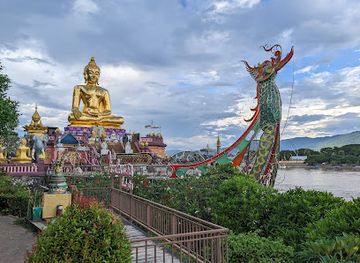
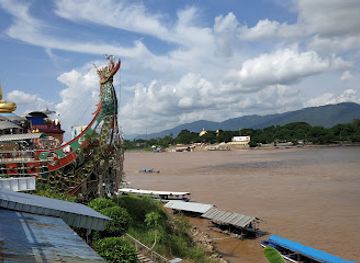
The Golden Triangle’s attractions combine river scenery, Lanna archaeology and the history of a sensitive international border. Sop Ruak is the principal viewpoint, where the Mekong and Ruak rivers meet and the Thai, Lao and Myanmar landscapes can be seen together; nearby river excursions offer a closer view of the waterways, subject to conditions and authorised routes. Chiang Saen provides the strongest concentration of heritage, including the Chiang Saen National Museum, surviving fortifications and a group of historic temples such as Wat Pa Sak and Wat Phra That Jom Kitti. The Hall of Opium presents a substantial, educational account of cultivation, trafficking, addiction and alternative development, avoiding a purely romanticised frontier narrative. Beyond the river plain, the wider Thai side of the region leads towards forested hills, tea-growing areas and Doi Tung, which should be understood as a separate upland destination within Chiang Rai province. Visitors interested in nature can seek birdlife and rural scenery, while cyclists and photographers can follow quieter roads around Chiang Saen, taking account of heat, traffic and seasonal smoke haze.
-
Buddhist temple
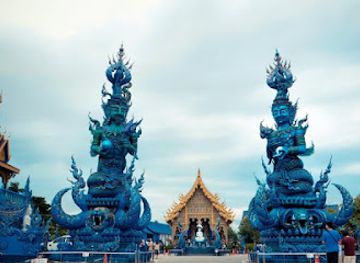
Wat Rong Suea Ten
Discover the breathtaking beauty of Wat Rong Suea Ten, the iconic Blue Temple of Chiang Rai, where art, spirituality, and tranquility converge.
-
Buddhist temple
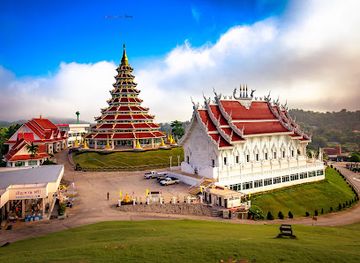
Wat Huay Pla Kang
Discover the captivating beauty and spiritual essence of Wat Huay Pla Kang, a stunning Buddhist temple in Chiang Rai, Thailand.
-
Tourist attraction
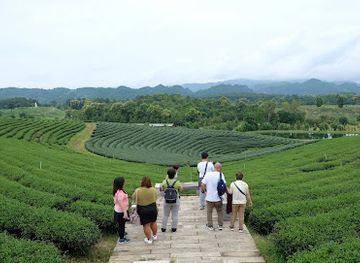
Choui Fong Tea
Discover the serene beauty and exquisite flavors of Choui Fong Tea in Chiang Rai, a must-visit destination for tea lovers and nature enthusiasts.
-
Night market
Chiang Rai Night Bazaar
Explore the vibrant Chiang Rai Night Bazaar for a unique blend of local crafts, street food, and cultural experiences in the heart of northern Thailand.
Best landmarks in Golden Triangle
The confluence of the Mekong and Ruak rivers at Sop Ruak is the Golden Triangle’s defining geographical landmark, although the exact meeting point is best understood from the Thai riverbank rather than as a single monument. Chiang Saen’s old defensive walls, moat remains and historic gates mark the former Lanna city and remain among the region’s most important physical reminders of its past. Wat Pa Sak is noted for its graceful chedi and distinctive northern Thai decorative style, while Wat Phra That Jom Kitti occupies an elevated position near the old town and has long been associated with Chiang Saen’s Buddhist landscape. Wat Phra That Pha Ngao, south of Chiang Saen, is another prominent religious site with views towards the Mekong plain. The Hall of Opium is a modern architectural and educational landmark whose importance lies in its interpretation of the borderland’s twentieth-century history. Across the river, Laos and Myanmar form part of the visual scene, but they are neighbouring countries, not Thai landmarks within the region.
-
Buddhist temple
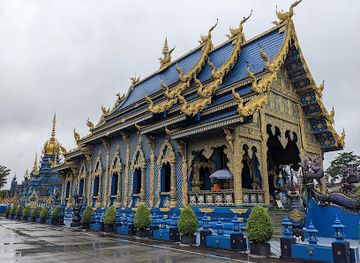
Wat Rong Suea Ten
Experience the serene beauty of Wat Rong Suea Ten, Chiang Rai's stunning Blue Temple, known for its vibrant architecture and rich cultural significance.
-
Buddhist temple
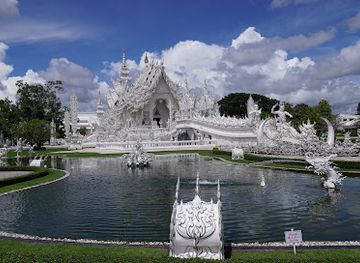
Wat Rong Khun - White Temple
Discover the breathtaking Wat Rong Khun, a stunning white temple in Chiang Rai blending intricate artistry with profound Buddhist philosophy.
-
Tourist attraction
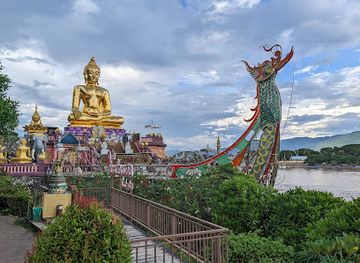
The Golden Triangle
Experience the mesmerizing beauty and rich cultural tapestry of the Golden Triangle, a unique destination at the crossroads of Thailand, Laos, and Myanmar.
-
Monument
Three Kings Monument
Discover the Three Kings Monument in Chiang Mai, a cultural icon celebrating the city's rich heritage and a must-visit attraction for every traveler.
Explore Golden Triangle on the map
Plan your trip on one map. See where the top cities, national parks and sights are, and book hotels and experiences in a few clicks.
Best hotels in Golden Triangle
Best restaurants in Golden Triangle
Dining in the Golden Triangle is centred on northern Thai cooking, riverside restaurants, local markets and modest cafés rather than a dense fine-dining scene. In Chiang Saen and Sop Ruak, menus commonly include grilled meats, freshwater fish, rice dishes, noodle soups, chilli relishes and salads, with herbs and fermented ingredients characteristic of northern Thailand. Khao soi, the region’s curry noodle dish, is widely associated with northern Thai cuisine, while sai ua sausage, nam phrik and sticky rice provide other familiar flavours. Food near the Mekong may reflect ingredients and tastes shared across the wider borderlands, but dishes should not automatically be labelled Lao or Burmese simply because the neighbouring countries are visible. Markets and small family-run eateries are useful for inexpensive regional meals; larger riverside restaurants are more likely to offer English-language menus and group dining. Bottled water is widely available, and visitors should choose busy food stalls with good turnover when eating outdoors in hot weather.
-
Restaurant
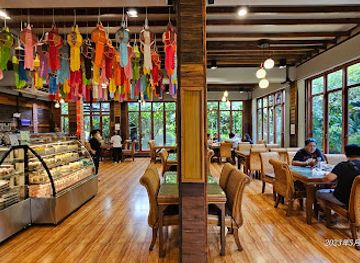
Lalitta Café
Discover the perfect blend of local flavors and cozy ambiance at Lalitta Café in Chiang Rai – an essential stop for every traveler.
-
Restaurant
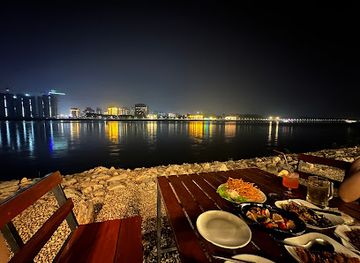
Golden Time Café Chiangsean
Experience authentic Thai cuisine at Golden Time Café while enjoying stunning riverside views in Chiang Saen's picturesque Golden Triangle.
-
Restaurant
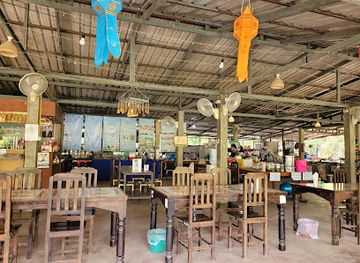
Give Green Farm House
Discover the charm of Chiang Rai at Give Green Farm House – where fresh ingredients meet authentic Thai flavors in a tranquil setting.
-
Restaurant
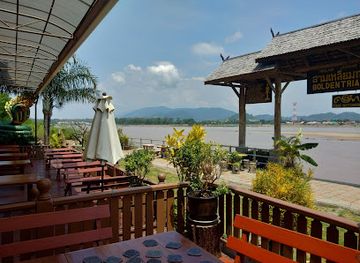
ร้านอาหารครัวไท (Thai Kitchen )
Experience authentic Thai flavors at Thai Kitchen in Chiang Saen - where every dish tells a story.
Best bars in Golden Triangle
Evening life in the Golden Triangle is quiet and social rather than club-focused. Chiang Saen has local beer gardens, restaurants and relaxed riverside venues where evenings centre on food, conversation and views of the Mekong. Sop Ruak becomes subdued after the main day-trip groups leave, with limited late-night entertainment. Travellers seeking a broader choice of bars, live music or international nightlife will find more options in Chiang Rai city, outside the Golden Triangle area. Small hotels and guesthouses may have simple lounges, while some restaurants serve Thai beer, spirits and soft drinks; opening arrangements vary and should be checked locally. Respectful behaviour is important near temples, museums and residential areas, and drinking is not necessary to appreciate the region’s evening atmosphere. Night-time river activities should be avoided unless organised by a reputable operator, since visibility, currents and access arrangements change after dark.
-
Tourist attraction
The Golden Triangle
Explore the Golden Triangle: a captivating blend of cultures, history, and stunning landscapes at the crossroads of Thailand, Myanmar, and Laos.
-
Night market
Chiang Rai Night Bazaar
Experience the cultural heartbeat of Chiang Rai at the Night Bazaar, where vibrant markets, delicious street food, and local crafts come alive after dark.
-
Night club
Zoe in Yellow
Experience the vibrant nightlife at Zoe in Yellow, Chiang Mai's premier night club with a lively atmosphere and unforgettable memories.
-
 Hotel
HotelLe Méridien Chiang Rai Resort, Thailand
Discover the luxury and tranquility of Le Méridien Chiang Rai Resort, set amidst breathtaking landscapes and rich Thai culture.
Best nightclubs in Golden Triangle
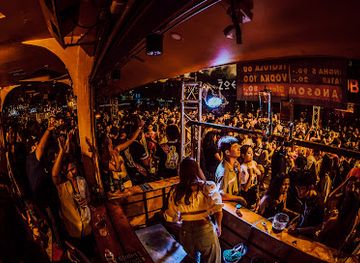
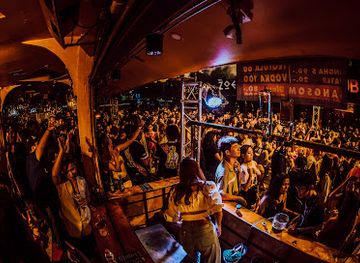
Evening life in the Golden Triangle is quiet and social rather than club-focused. Chiang Saen has local beer gardens, restaurants and relaxed riverside venues where evenings centre on food, conversation and views of the Mekong. Sop Ruak becomes subdued after the main day-trip groups leave, with limited late-night entertainment. Travellers seeking a broader choice of bars, live music or international nightlife will find more options in Chiang Rai city, outside the Golden Triangle area. Small hotels and guesthouses may have simple lounges, while some restaurants serve Thai beer, spirits and soft drinks; opening arrangements vary and should be checked locally. Respectful behaviour is important near temples, museums and residential areas, and drinking is not necessary to appreciate the region’s evening atmosphere. Night-time river activities should be avoided unless organised by a reputable operator, since visibility, currents and access arrangements change after dark.
-
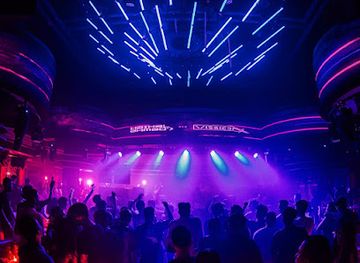
Night club
Illuzion Phuket
Experience the electrifying nightlife of Illuzion Phuket, a premier nightclub featuring world-class DJs, breathtaking shows, and an unforgettable atmosphere.
-
Night club
Zoe in Yellow
Zoe in Yellow: Chiang Mai's premier night club offering vibrant music, a lively crowd, and unforgettable nightlife experiences.
-
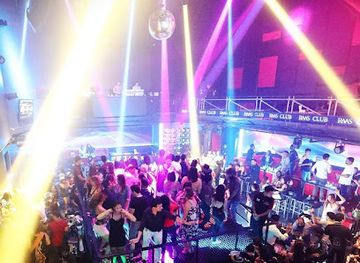
Disco club
RAAS CLUB PATTAYA
Dive into the heart of Pattaya's nightlife at RAAS CLUB, where music, dance, and unforgettable memories await in a vibrant disco atmosphere.
-
Night club
Venti Nightclub
Venti Nightclub: The Ultimate Destination for Nightlife and Dancing in Bangkok's Entertainment Hub.

Best shops in Golden Triangle
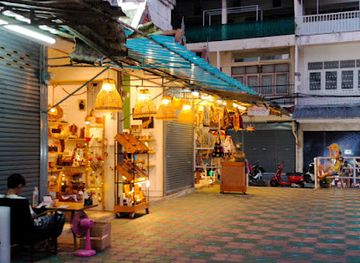
Shopping in the Golden Triangle is modest in scale and concentrated in Chiang Saen, Sop Ruak and local markets rather than large retail centres. Visitors can look for northern Thai textiles, woven bags, carved wooden items, ceramics, hill-country produce, tea and packaged regional foods, while riverside stalls often sell souvenirs linked to the three-country setting. Chiang Saen’s local shops and markets are more useful for everyday food and small handicrafts than for luxury goods. Tea from the wider Chiang Rai highlands can be a practical souvenir, although its exact growing area should be checked if provenance matters. Bargaining may be acceptable in informal markets, but a courteous approach is preferable and fixed prices are common in established shops. Avoid purchasing wildlife products, archaeological objects or items that appear to have been removed from temples or ruins. For extensive branded shopping, Chiang Rai city is the more appropriate destination outside the Golden Triangle.
-
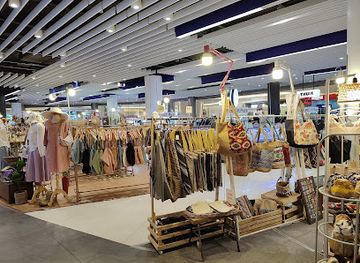
Shopping mall
MAYA Lifestyle Shopping Center Chiangmai
Explore the vibrant MAYA Lifestyle Shopping Center in Chiang Mai, offering shopping, dining, and entertainment for a complete cultural experience.
-
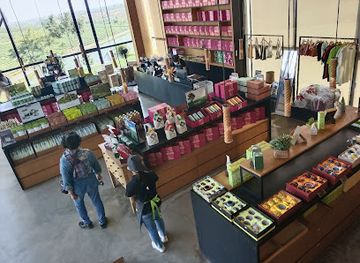
Tourist attraction
Choui Fong Tea
Experience the beauty of tea culture at Choui Fong Tea, a serene escape in the heart of Chiang Rai's picturesque tea plantations.
-
Tourist attraction
The Golden Triangle
Discover the Golden Triangle: A captivating blend of natural beauty, rich culture, and unforgettable experiences at the crossroads of Thailand, Myanmar, and Laos.
-
Night market
Chiang Rai Night Bazaar
Explore Chiang Rai Night Bazaar: A bustling night market filled with delicious food, unique crafts, and vibrant culture, perfect for every traveler.

Get your free copy of our complete guide to Golden Triangle, delivered straight to you.
Everything on this page, from attractions and restaurants to essentials and local phrases, in one PDF you can read offline, print or share.
Already have an account? Sign in
Your Golden Triangle guide is ready.
We'll send it to · Not you? Sign out

Getting your guide ready…
We are putting together a fresh copy of the Golden Triangle guide. This can take up to a minute.
This can take a few moments. If your browser asks, choose Allow so the download can start. You'll find the guide in your Downloads folder.
Nothing happened? Download it again
Sorry, the guide is taking longer than usual. Please try again in a minute, or get it by email instead.
Golden Triangle essentials
Currency and Payment
Safety
Emergency Situations
Do's and Don'ts
Local Tips
From Eve
Local phrases worth knowing
You don't need to get them perfect. A few words go a long way, and locals appreciate the effort.
Basics
| English | Local | Say it |
|---|---|---|
| Hello | Howdy | [hau-di] |
| Goodbye | See ya later | [si ya lay-ter] |
| Yes | Yep | [yep] |
| No | Nah | [nah] |
| Please/You're welcome | Sure thing | [shur thing] |
| Thank you | Thanks a lot | [thangs a lot] |
| Excuse me/Sorry | Pardon me | [par-don me] |
| How are you? | How’s it going? | [hauz it go-ing] |
| Fine. And you? | Good. You? | [gud. you?] |
| Do you speak English? | Do ya speak English? | [do ya speek ing-glish] |
| I don't understand | I don’t get it | [I dont get it] |
Eating & Drinking
| English | Local | Say it |
|---|---|---|
| I'd like to see the menu, please | Can I see the menu? | [kan I see the men-u] |
| I don't eat meat | I’m a vegetarian | [I’m a vege-tar-i-an] |
| Cheers! | Cheers! | [cheers] |
| I would like to pay, please | Can I get the bill? | [kan I get the bil] |
Emergencies
| English | Local | Say it |
|---|---|---|
| Help! | Help! | [help] |
| Go away! | Leave me alone! | [leave me a-lone] |
| Call the Police! | Call 911! | [call nine-one-one] |
| Call a doctor! | Get a doctor! | [get a doc-tor] |
| I'm lost | I’m lost | [I’m lost] |
| I'm ill | I’m not feeling well | [I’m not feel-ing well] |
Shopping
| English | Local | Say it |
|---|---|---|
| I'd like to buy... | I want to buy... | [I want to buy] |
| I'm just looking | Just browsing | [just brow-sing] |
| How much is it? | What’s the price? | [what's the price] |
| That's too expensive | That’s way too much | [that’s way too much] |
| Can you lower the price? | Can ya give me a discount? | [kan ya give me a dis-kount] |
Time & Numbers
| English | Local | Say it |
|---|---|---|
| What time is it? | What time is it? | [what time is it] |
| It's one o'clock | It's one o’clock | [it's one o'clock] |
| Half past (10) | Half past ten | [half past ten] |
| Morning | Morning | [mor-ning] |
| Afternoon | Afternoon | [af-ter-noon] |
| Evening | Evening | [e-ven-ing] |
| Yesterday | Yesterday | [yes-ter-day] |
| Today | Today | [to-day] |
| Tomorrow | Tomorrow | [to-mor-row] |
| 1 | One | [one] |
| 2 | Two | [two] |
| 3 | Three | [three] |
| 4 | Four | [four] |
| 5 | Five | [five] |
| 6 | Six | [six] |
| 7 | Seven | [seven] |
| 8 | Eight | [eight] |
| 9 | Nine | [nine] |
| 10 | Ten | [ten] |
Transport & Directions
| English | Local | Say it |
|---|---|---|
| Where's a/the...? | Where's the...? | [where's the] |
| What's the address? | What’s the address? | [what’s the ad-dress] |
| Can you show me (on the map)? | Can you point it out? | [kan you point it out] |
| When's the next (bus)? | When's the next bus? | [when's the next bus] |
| A ticket (to ....) | A ticket to... | [a tick-et to] |
History of Golden Triangle
Early Mekong and Lanna Settlement
The Mekong basin around Chiang Saen has supported settlement and exchange for centuries. Archaeological evidence in the wider Chiang Rai area reflects earlier communities, while the later political and religious landscape was shaped by the Lanna kingdom. The river provided a transport corridor linking settlements in present-day northern Thailand with communities upstream and across the water. This long history explains why the region contains both archaeological remains and living Buddhist sites rather than being solely a modern border attraction.
The Founding of Chiang Saen in the Lanna Era
Chiang Saen is traditionally associated with King Saen Phu, who established the city in the fourteenth century within the Lanna world. Its strategic position beside the Mekong gave it defensive and commercial importance. Earthen walls, moats, gates and temple foundations remain visible around the old town, although successive conflicts and periods of political change altered the settlement. Chiang Saen’s monuments provide the clearest physical expression of the region’s Lanna heritage.
Buddhist Art and Riverine Trade
From the medieval period onwards, Buddhism shaped the architecture, art and social organisation of Chiang Saen and neighbouring settlements. Temples served as religious centres, repositories of manuscripts and focal points for communities connected by the river. Local artistic traditions developed distinctive forms of Buddha image and chedi decoration, influenced by wider Lanna and Mekong cultures. Trade in forest products, livestock, food and household goods also connected the Thai bank with communities in present-day Laos and Myanmar.
Shifting Frontiers and the Modern Border
The boundaries of the modern Thai state emerged through nineteenth- and early twentieth-century political negotiations, as older Lanna and Mekong networks were incorporated into more centralised systems of administration. Chiang Saen’s position became increasingly defined by an international frontier rather than only by local river commerce. The borders with Laos and Myanmar continue to shape movement, trade, security procedures and the visual character of the Golden Triangle.
The Opium Economy in the Twentieth Century
The highlands of mainland South-East Asia became widely associated with opium cultivation and trafficking during the twentieth century, although the production zones and trading networks extended well beyond Thailand’s Golden Triangle viewpoint. Opium affected communities, regional politics and international policy, while the label itself became a powerful shorthand for a much larger borderland. The Hall of Opium near Sop Ruak presents this history through the effects of cultivation, addiction, prohibition and changing development policies.
Alternative Development and the Doi Tung Model
Thailand’s response to highland poverty and opium production included projects that promoted education, healthcare, sustainable livelihoods and alternative crops. The Doi Tung Development Project, established in Chiang Rai province in the late twentieth century, became an important example of this approach. Although Doi Tung is a separate upland destination rather than part of the Mekong confluence, its history helps visitors understand the social and environmental transformation of the wider northern border region.
The Golden Triangle as a Tourism Region
From the late twentieth century, improved roads and growing interest in the Mekong frontier turned Sop Ruak and Chiang Saen into established stops on northern Thailand itineraries. Tourism shifted emphasis towards river scenery, Lanna archaeology, museums, hill landscapes and cross-border geography. The region’s contemporary identity therefore combines an ancient river settlement, a sensitive international frontier and a tourism narrative increasingly concerned with historical explanation rather than the romanticised image of the opium trade.
Golden Triangle in Photos
Browse through our photo collection highlighting the charm and character of the destination.
Neighbouring regions of Golden Triangle
The closest regions to Golden Triangle, if you have time for more than one.
-

-

-

-

-


Swipe for more regions
Explore more
Explore more of Thailand
Discover Thailand: A land of diverse landscapes, rich culture, and warm hospitality, where ancient traditions blend seamlessly with modern attractions.
Explore Thailand