

Free Ainaro Travel Guide & Mobile App
Explore Ainaro with free travel guides. Discover regional history, expert tips, proposed trips, and audio guides on web or mobile app.


Explore Ainaro in Timor-Leste for Mount Ramelau, coffee highlands, rural culture, mountain roads and the contrasting southern coast.
Read more about Ainaro
When is the best time to visit Ainaro?
Best: July–September · 28–29°C| Month | High (°C) | Rainfall (mm) |
|---|---|---|
| January | 28 | 261 |
| February | 28 | 230 |
| March | 29 | 210 |
| April | 29 | 160 |
| May | 29 | 110 |
| June | 29 | 60 |
| July (best) | 29 | 30 |
| August (best) | 28 | 20 |
| September (best) | 28 | 40 |
| October | 28 | 80 |
| November | 28 | 160 |
| December | 28 | 210 |
Getting to and around Ainaro
How to get there
Transportation
Top city travel guides in Ainaro
The cities of Ainaro, and the easiest places to base yourself.
-

-

-


Swipe for more cities
Destinations in Ainaro
Resorts, valleys and scenic spots worth a trip of their own.

Swipe for more destinations
Best attractions in Ainaro
Ainaro's attractions are predominantly landscapes and community-based experiences rather than large formal visitor complexes. The municipality's defining excursion is Mount Ramelau, or Tatamailau, approached principally from Hatobuilico. The pre-dawn climb leads through highland scenery to a summit associated with wide views across Timor-Leste, although cloud can obscure the panorama. Around Maubisse and the higher valleys, visitors can see coffee gardens, vegetable plots, eucalyptus-covered slopes and villages adapting agriculture to cooler conditions. Ainaro town offers a more grounded look at municipal life through its market, streets and surrounding valley. Rural walks can reveal churches, springs, cultivated hillsides and traditional settlement patterns, but they should be arranged with local permission and guidance. In the lower country, Hato-Udo presents a warmer environment, agricultural plains and access towards the southern coast, creating a strong contrast with the uplands. The municipality is also suitable for visitors interested in Timor-Leste's recent history, including community memories, religious buildings and landscapes connected with the independence struggle. Facilities are modest, so the appeal lies in walking, scenery, conversation, photography and agricultural observation rather than a tightly packaged sightseeing circuit.
-
Sculpture
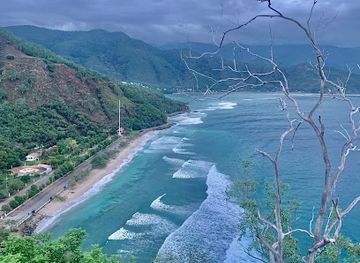
Cristo Rei of Dili
Explore the iconic Cristo Rei of Dili, a majestic statue symbolizing faith and resilience, offering breathtaking views and cultural insights in Timor-Leste.
-
Cultural center
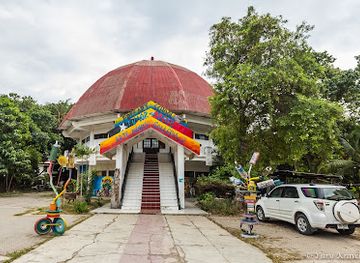
Arte Moris
Discover the colorful world of East Timorese art at Arte Moris, a cultural center in Dili showcasing local creativity and artistic expression.
-
Museum
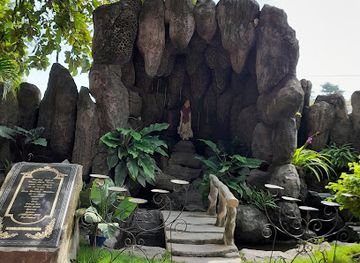
Centro Nacional Chega!
Explore the rich history of East Timor at Centro Nacional Chega!, a museum dedicated to the country's struggle for independence and resilience.
-
Catholic cathedral
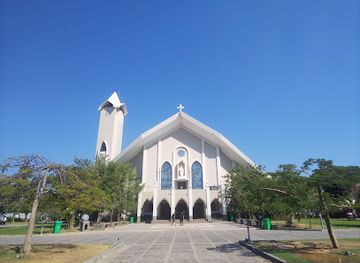
Immaculate Conception Cathedral
Explore the Immaculate Conception Cathedral, the largest in Timor-Leste, where stunning architecture meets rich cultural heritage in Dili.
Best landmarks in Ainaro
Mount Ramelau, known as Tatamailau, is Ainaro's most recognisable natural landmark and the highest mountain on Timor. Its ridgeline dominates the highland horizon, while the summit approach from Hatobuilico has both geographical and cultural significance. The mountain's prominence is especially clear above the cooler landscapes around Maubisse and the upper Ainaro valleys. Ainaro town itself is marked by its position in a cultivated mountain valley, where roads, churches and public buildings reflect layers of Portuguese, Indonesian and independent Timor-Leste administration. Maubisse's upland setting and historic association with colonial-era retreat architecture distinguish it from the hotter southern districts, although much of the area's importance is found in its living communities rather than monumental buildings. Hato-Udo's southern landscape supplies another important visual contrast: broad lowland terrain leading towards the Timor Sea beneath the municipality's interior ranges. Local churches, cemeteries, roadside memorials and customary sites may be historically significant, but their meaning is often best understood through local explanation. In Ainaro, the strongest landmarks are therefore a combination of mountain, valley, village and remembered landscape rather than a concentration of preserved monuments.
-
Sculpture
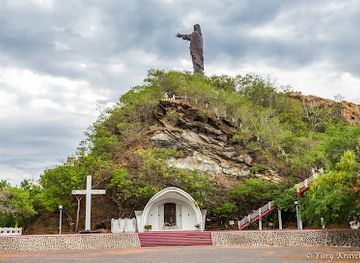
Cristo Rei of Dili
Explore the iconic Cristo Rei of Dili, a majestic statue symbolizing peace and resilience, offering stunning views of Timor-Leste’s natural beauty.
-
History museum
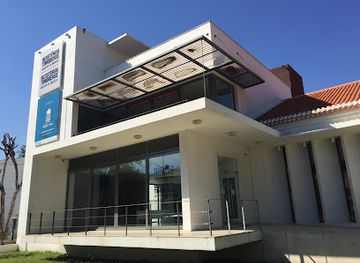
Timorese Resistance Archive & Museum
Explore the Timorese Resistance Archive & Museum for an insightful journey into Timor-Leste's struggle for independence and cultural heritage.
-
Mountain peak
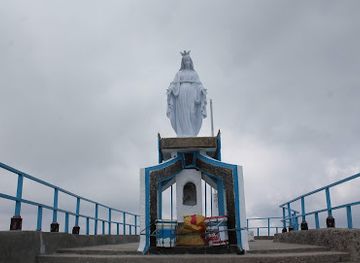
Tatamailau
Discover the breathtaking heights of Tatamailau, the highest peak in Timor-Leste, where adventure meets cultural significance amidst stunning landscapes.
-
Hotel
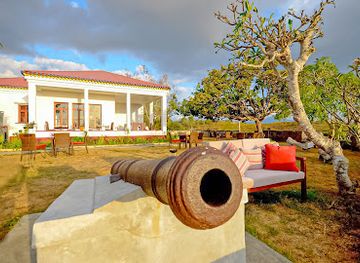
Balibo Fort Hotel
Experience the allure of history and comfort at Balibo Fort Hotel, a cultural landmark in Timor Leste offering a unique travel experience.
Explore Ainaro on the map
Plan your trip on one map. See where the top cities, national parks and sights are, and book hotels and experiences in a few clicks.
Best hotels in Ainaro
Best restaurants in Ainaro
Dining in Ainaro is largely local, seasonal and informal. Small eateries, market stalls and family kitchens commonly serve rice or maize with vegetables, beans, eggs, chicken, pork or locally available fish, while soups and simple noodle dishes are also familiar across Timor-Leste. Batar da'an, a maize, bean and pumpkin stew associated with Timorese home cooking, may appear in regional variations. The cooler highlands around Maubisse and Hatobuilico are notable for coffee cultivation, and freshly brewed local coffee is one of the most relevant tastes to seek out. Vegetable production is important in the uplands, while warmer Hato-Udo has different growing conditions and access towards the southern coast. Dining choices become more limited away from municipal centres, so carry snacks and water on long journeys and do not expect extensive menus or late service. Markets are useful places to observe local produce, but visitors should ask prices politely and avoid photographing sellers without consent.
-
Restaurant
Restaurante Bermeta Hato'e
Discover authentic Timorese flavors at Restaurante Bermeta Hato'e in Letetoho – where every dish tells a story.
-
Restaurant
Ans Restaurante
Savor authentic Timorese flavors at Ans Restaurante - a culinary gem that captures the essence of local cuisine in every dish.
-
Restaurant
Bingtang Restaurant
Savor authentic Timorese cuisine at Bingtang Restaurant in Ainaro, where every dish tells a story.
-
Restaurant
Restorante Ainaro Vila
Discover authentic Timorese flavors at Restorante Ainaro Vila - a culinary gem in the heart of Ainaro.
Best bars in Ainaro
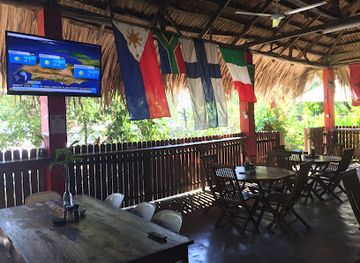
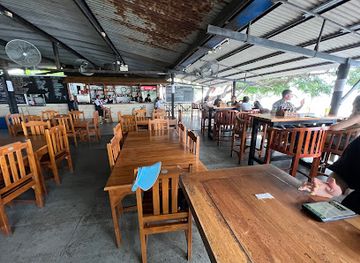
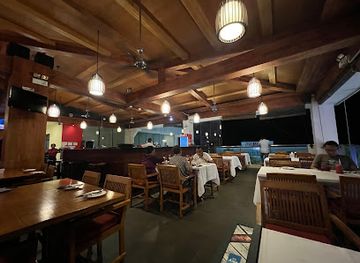
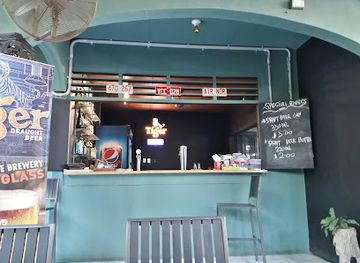
Ainaro does not have a large nightclub scene. Evening life is centred on family homes, small cafés, roadside food stalls and modest local establishments where people meet, talk and watch sport. In Ainaro town and Maubisse, a few venues may serve beer, coffee or simple meals, but opening arrangements and availability can change. Hatobuilico is primarily a trekking base rather than a nightlife centre, and evenings there are usually quiet, especially before early summit departures. Hato-Udo has a warmer lowland atmosphere but similarly limited organised entertainment. Visitors should not expect a dense bar district or regular international-style club programme; respectful conversation, local food and an early night are more characteristic of travel in the municipality. Alcohol should be consumed discreetly and responsibly, particularly in small communities and around religious or customary events.
-
Restaurant
Caz Bar
Discover the vibrant culinary scene of Dili at Caz Bar, where local flavors and international dishes meet in a welcoming atmosphere.
-
Bar
Castaway Bar and Restaurant
Experience the perfect blend of relaxation and culinary delight at Castaway Bar and Restaurant in Dili, Timor-Leste.
-
Restaurant
Panorama Restaurant & Sky Bar
Discover the breathtaking views and exquisite flavors at Panorama Restaurant & Sky Bar, Dili's premier dining destination.
-
Bar
Spooners Bar and Grill
Discover the vibrant culinary scene at Spooners Bar and Grill, a must-visit for tourists in Díli craving local flavors and refreshing drinks.
Best nightclubs in Ainaro
Ainaro does not have a large nightclub scene. Evening life is centred on family homes, small cafés, roadside food stalls and modest local establishments where people meet, talk and watch sport. In Ainaro town and Maubisse, a few venues may serve beer, coffee or simple meals, but opening arrangements and availability can change. Hatobuilico is primarily a trekking base rather than a nightlife centre, and evenings there are usually quiet, especially before early summit departures. Hato-Udo has a warmer lowland atmosphere but similarly limited organised entertainment. Visitors should not expect a dense bar district or regular international-style club programme; respectful conversation, local food and an early night are more characteristic of travel in the municipality. Alcohol should be consumed discreetly and responsibly, particularly in small communities and around religious or customary events.
-
Bar
Spooners Bar and Grill
Discover Spooners Bar and Grill in Dili, where delightful cuisine meets a vibrant atmosphere, perfect for unwinding after a day of adventure.
-
Night club
Symphoni Karaoke & Cafe
Experience the ultimate night out at Symphoni Karaoke & Cafe in Belu Regency, where music and fun blend seamlessly for an unforgettable time.
-
Bar
Black Box Cafe and Bar
Discover the lively Black Box Cafe and Bar in Dili – a perfect blend of local culture, refreshing drinks, and a vibrant nightlife scene.
-
Bar
Tower Cafe & Bar
Discover the lively atmosphere of Tower Cafe & Bar in Dili, where local culture meets vibrant nightlife, and savor a diverse array of drinks and bites.

Best shops in Ainaro
Shopping in Ainaro is practical and locally oriented. Markets and small shops in Ainaro town and Maubisse are useful for fruit, vegetables, rice, maize, snacks, limited household goods and travel supplies, while rural stalls appear along roads according to season and harvest. The most distinctive purchases are highland coffee and tais, the handwoven textiles produced across Timor-Leste in regionally varied patterns and colours. Tais may be sold as cloth, scarves or other finished items, and visitors should ask about price, production and permission before photographing the maker or design. Handicrafts and woven goods are more likely to be found through community contacts than in a specialised retail quarter. Local produce markets offer a better sense of the municipality's agricultural economy than souvenirs designed exclusively for tourists. Carry cash, check quality and agree prices clearly, while remembering that buying directly from producers can support household income but should not turn customary or sacred objects into casual commodities.
-
Gift shop
Oil Paintings For Sale
Discover stunning oil paintings in Dili, showcasing the vibrant culture and breathtaking landscapes of Timor-Leste.
-
Supermarket
Lita Store
Explore Lita Store in Dili, where local flavors meet convenience in a vibrant supermarket atmosphere.
-
Grocery store
Qulina Supermarket
Explore local flavors and international products at Qulina Supermarket, Dili's vibrant grocery store filled with culinary delights.
-
 Coffee shop
The Corner Store Network Timor Leste (Coffee shop, Resto, Local products & Souvenirs)
Discover the heart of Timor Leste at The Corner Store Network, where local flavors and artisanal crafts create a unique experience.
Get your free copy of our complete guide to Ainaro, delivered straight to you.
Everything on this page, from attractions and restaurants to essentials and local phrases, in one PDF you can read offline, print or share.
Already have an account? Sign in
Your Ainaro guide is ready.
We'll send it to · Not you? Sign out

Getting your guide ready…
We are putting together a fresh copy of the Ainaro guide. This can take up to a minute.
This can take a few moments. If your browser asks, choose Allow so the download can start. You'll find the guide in your Downloads folder.
Nothing happened? Download it again
Sorry, the guide is taking longer than usual. Please try again in a minute, or get it by email instead.
Ainaro essentials
Currency and Payment
Safety
Emergency Situations
Do's and Don'ts
Local Tips
From Eve
Local phrases worth knowing
You don't need to get them perfect. A few words go a long way, and locals appreciate the effort.
Basics
| English | Local | Say it |
|---|---|---|
| Hello | Olá | [oh-lah] |
| Goodbye | Adeus | [ah-deh-oos] |
| Yes | Sim | [seem] |
| No | Não | [now] |
| Please/You're welcome | Por favor | [poor fah-vor] |
| Thank you | Obrigado | [oh-bree-gah-doo] |
| Excuse me/Sorry | Desculpe | [des-kool-peh] |
| How are you? | Como está? | [koh-moo es-tah] |
| Fine. And you? | Bem. E você? | [beng. eh voh-seh] |
| Do you speak English? | Você fala inglês? | [voh-seh fah-lah een-glays] |
| I don't understand | Eu não entendo | [eh-oo now en-ten-doo] |
Eating & Drinking
| English | Local | Say it |
|---|---|---|
| I'd like to see the menu, please | Eu gostaria de ver o menu, por favor | [eh-oo go-stah-ree-ah jeh veh-r oh meh-noo, poor fah-vor] |
| I don't eat meat | Eu não como carne | [eh-oo now koh-moo kar-nee] |
| Cheers! | Saúde! | [sah-oo-deh] |
| I would like to pay, please | Eu gostaria de pagar, por favor | [eh-oo go-stah-ree-ah jeh pah-gar, poor fah-vor] |
Emergencies
| English | Local | Say it |
|---|---|---|
| Help! | Ajuda! | [ah-zhoo-dah] |
| Go away! | Vá embora! | [vah em-boh-rah] |
| Call the Police! | Chame a polícia! | [sha-meh ah poh-lee-see-ah] |
| Call a doctor! | Chame um médico! | [sha-meh oom meh-jee-koh] |
| I'm lost | Estou perdido | [es-toh pehr-jee-doo] |
| I'm ill | Estou doente | [es-toh doh-en-tay] |
Shopping
| English | Local | Say it |
|---|---|---|
| I'd like to buy... | Eu gostaria de comprar... | [eh-oo go-stah-ree-ah jeh kom-prahr...] |
| I'm just looking | Estou apenas olhando | [es-toh ah-peh-nas oh-lhan-doo] |
| How much is it? | Quanto custa? | [kwan-toh koos-tah] |
| That's too expensive | Isso é muito caro | [ee-soo eh mooy-toh kah-roo] |
| Can you lower the price? | Você pode baixar o preço? | [voh-seh poh-jee bye-shar oh preh-soo] |
Time & Numbers
| English | Local | Say it |
|---|---|---|
| What time is it? | Que horas são? | [keh oh-ras sah-ooh] |
| It's one o'clock | É uma hora | [eh oo-mah oh-rah] |
| Half past (10) | Meia hora (10) | [may-ah oh-rah (dez)] |
| Morning | Manhã | [mahn-yah] |
| Afternoon | Tarde | [tar-deh] |
| Evening | Noite | [noy-tay] |
| Yesterday | Ontem | [on-tem] |
| Today | Hoje | [oh-zhi] |
| Tomorrow | Amanhã | [ah-mahn-yah] |
| 1 | Um | [oom] |
| 2 | Dois | [doyz] |
| 3 | Três | [trehz] |
| 4 | Quatro | [kwah-tro] |
| 5 | Cinco | [seen-koh] |
| 6 | Seis | [says] |
| 7 | Sete | [seh-tay] |
| 8 | Oito | [oy-toh] |
| 9 | Nove | [noh-veh] |
| 10 | Dez | [dehz] |
Transport & Directions
| English | Local | Say it |
|---|---|---|
| Where's a/the...? | Onde está um/a...? | [on-deh es-tah oom/ah...?] |
| What's the address? | Qual é o endereço? | [kwal eh oh en-deh-reh-soo] |
| Can you show me (on the map)? | Você pode me mostrar (no mapa)? | [voh-seh poh-jee meh mos-trar (noh mah-pah)?] |
| When's the next (bus)? | Quando é o próximo (ônibus)? | [kwan-doo eh oh proh-see-mo (oh-nee-boos)?] |
| A ticket (to ....) | Um bilhete (para ....) | [oom bee-lyeh-chee (pah-rah ....)] |
History of Ainaro
Early Austronesian and Timorese communities
Long before European rule, the mountains and valleys of Ainaro were occupied and shaped by Timorese communities whose livelihoods combined cultivation, exchange, livestock keeping and close relationships with customary territories. Austronesian languages, locally specific rituals and systems of authority developed across the island, with upland communities connected to the southern plains and neighbouring regions through trade and kinship. Sacred mountains, springs and groves remained important features of the cultural landscape. Many aspects of present-day rural life, including communal obligations and respect for customary places, have roots in these older structures.
Portuguese colonial influence
Portuguese authority expanded unevenly across Timor and was often negotiated through local rulers rather than imposed through continuous administration. In Ainaro, colonial influence became visible through Catholic missions, churches, schools, administrative posts and new agricultural patterns, while customary leaders continued to hold considerable local importance. The highlands around Maubisse also acquired a reputation as a cooler retreat from the lowlands. Portuguese rule brought new religious and political institutions, but it did not erase local languages, social systems or the authority attached to ancestral territories.
Japanese occupation, 1942–1945
During the Second World War, Japanese forces occupied Portuguese Timor, including the territory that is now Ainaro. The occupation disrupted agriculture, displaced communities and imposed severe demands on local people. Timorese communities were also drawn into the wider Allied and Japanese conflict, with resistance and military operations affecting many parts of the island. Although physical traces are not always easy to identify today, memories of wartime hardship remain part of the oral history of rural Timor-Leste and help explain the importance attached to land, food security and community resilience.
Decolonisation and the 1975 conflict
Portugal's political revolution in 1974 initiated rapid decolonisation, and Timor-Leste's competing political movements entered a period of confrontation. The declaration of independence in November 1975 was followed by Indonesian military intervention and the collapse of the short-lived new state. Ainaro, like other southern and central districts, became part of the conflict's wider social and military landscape. Families were displaced, political loyalties were tested and local communities faced coercion from competing forces. The period remains sensitive, and accounts may differ between families and villages.
Indonesian occupation, 1975–1999
Indonesia governed East Timor as a territory for nearly a quarter of a century, while armed resistance and clandestine networks continued. Ainaro's mountains provided terrain in which resistance forces could operate, but the same geography also brought military pressure, population movements and restrictions on rural communities. Roads, public buildings and administrative systems were expanded in this period, although development occurred within an occupation marked by serious human-rights abuses. The referendum of 1999, and the violence that followed it, transformed communities across Ainaro before the territory moved towards international administration and independence.
Independence and rural development
Timor-Leste restored its independence in 2002 after a United Nations transitional period. Since then, Ainaro has faced the practical challenges common to mountainous municipalities: improving roads, schools, health services, markets and agricultural value chains while preserving community authority and cultural identity. Coffee has remained important to the highlands, and tourism interest has centred on Mount Ramelau, rural landscapes and village-based experiences. Progress is visible but uneven, and travel through Ainaro still offers a direct view of how a young nation is building institutions across difficult terrain.
Ainaro in Photos
Browse through our photo collection highlighting the charm and character of the destination.
Neighbouring regions of Ainaro
The closest regions to Ainaro, if you have time for more than one.
-

-

-

-

-


Swipe for more regions
Explore more

Explore more of Timor-Leste
Discover Timor-Leste, a captivating blend of history, culture, and natural beauty in Southeast Asia, boasting pristine beaches, vibrant marine life, and lush landscapes.
Explore Timor-Leste