

Dili Beaches, Timor-Leste Travel Guide
Discover the untouched beauty and cultural richness of Dili Beaches in Timor-Leste, where pristine sands, clear waters, and local charm await every traveler.
Dili, the capital city of Timor-Leste, is a hidden gem for beach lovers seeking a blend of natural beauty and cultural richness. The beaches of Dili boast pristine sands and crystal-clear waters, making them perfect for swimming, snorkeling, and sunbathing. Whether you are looking to relax under the sun or explore vibrant marine life, Dili's beaches offer a serene escape from the hustle and bustle of everyday life. One of the most popular spots is Areia Branca, also known as White Sands Beach. This beach is known for its soft, white sand and gentle waves that are ideal for leisurely swims. Nearby, you will find lush greenery and a few local eateries serving delicious Timorese cuisine. The beach's laid-back atmosphere makes it a favorite among both locals and tourists. Another must-visit is Cristo Rei Beach, located near the iconic Cristo Rei statue. This beach offers stunning views and a more secluded environment. The hike up to the statue provides panoramic views of the coastline, making it a perfect spot for photography enthusiasts. Don't forget to bring your snorkeling gear, as the underwater world here is teeming with colorful fish and coral reefs. For those who love adventure, heading to Dollar Beach is a great choice. This beach is slightly more rugged and less crowded, offering a more rustic experience. It is perfect for those who enjoy exploring natural landscapes and engaging in water sports. Whether you are an avid swimmer or just want to relax by the waves, Dollar Beach provides a picturesque backdrop for your beach day. Timor-Leste's beaches in Dili are not just about sun and sea; they also offer a glimpse into the local culture and way of life. Interacting with friendly locals, sampling fresh seafood, and witnessing traditional fishing methods are all part of the experience. These beaches are ideal for anyone looking to immerse themselves in the natural beauty and cultural heritage of Timor-Leste.

Know before you go
Hi, I'm Eve. Here are a few practical things to know before exploring Dili Beaches.
- Visit early in the morning or late afternoon to avoid the midday heat and enjoy the best light for photography.
- Bring your own snorkeling gear to explore the vibrant underwater life, as rental options may be limited.
- Try local seafood dishes at the beachside eateries for an authentic taste of Timorese cuisine.
- Keep an eye on the tide schedules, especially if you plan to swim or snorkel, as some areas may have strong currents.
- Be respectful of local customs and traditions, particularly when visiting more secluded beaches.
Explore Dili Beaches: Things to Do, Places to Eat, Hotels & More
Handpicked recommendations for top attractions, local dining, accommodations, and more

Best attractions in Dili Beaches
Top-rated picks
Best Attractions

Cristo Rei of Dili
Discover the breathtaking Cristo Rei of Dili, a monumental symbol of hope and peace with stunning coastal views.

Centro Nacional Chega!
Discover the powerful history of Timor-Leste at Centro Nacional Chega!, a museum dedicated to the nation's struggle for independence and cultural resilience.

Cristo Rei Beach
Explore the serene beauty of Cristo Rei Beach in Dili, Timor-Leste, where stunning ocean views and cultural richness await every traveler.

One Dollar Beach
Experience the tranquility and beauty of One Dollar Beach in Timor-Leste, a perfect destination for relaxation and adventure.

Best landmarks in Dili Beaches
Top-rated picks
Best Landmarks

Timor Plaza
Discover Timor Plaza, the ultimate shopping and dining experience in Dili, Timor-Leste, where local culture meets modern retail.

Cristo Rei of Dili
Discover the breathtaking Cristo Rei of Dili, a monumental statue symbolizing peace and resilience, offering stunning views and cultural significance.

Timorese Resistance Archive & Museum
Explore the poignant history of East Timor's struggle for independence at the Timorese Resistance Archive & Museum in Dili.

Tais Market
Explore Tais Market in Dili for a vibrant mix of local crafts, delicious food, and authentic Timorese culture, a must-visit for every traveler in Timor-Leste.

Best restaurants in Dili Beaches
Top-rated picks
Best Restaurants

Caz Bar
Discover exquisite flavors at Caz Bar in Dili - where local cuisine meets vibrant atmosphere.

Excelsior Resort Hotel
Discover culinary delights at Excelsior Resort Hotel in Dili with exquisite dining options and a refreshing swimming pool.

Castaway Bar and Restaurant
Experience culinary delights at Castaway Bar and Restaurant in Dili - where local flavors meet vibrant hospitality.

Dive Timor Lorosae
Explore vibrant marine life at Dive Timor Lorosae - your gateway to unforgettable SCUBA adventures in Dili's pristine waters.

Best bars in Dili Beaches
Top-rated picks
Best Bars

Caz Bar
Discover the flavors and stunning ocean views at Caz Bar, a seaside restaurant in Díli, where local cuisine meets vibrant culture.

Castaway Bar and Restaurant
Experience the vibrant flavors of Timor-Leste at Castaway Bar and Restaurant, where local cuisine meets international delights in a stunning setting.

El Legendario
Experience the vibrant flavors of Timorese cuisine at El Legendario, a culinary gem in the heart of Dili, perfect for every palate.

Ocean View Restaurant
Experience exquisite dining with breathtaking ocean views at Ocean View Restaurant in Dili, where local flavors meet stunning seaside ambiance.

Best nightclubs in Dili Beaches
Top-rated picks
Best Nightclubs

Tower Cafe & Bar
Experience the vibrant nightlife at Tower Cafe & Bar in Dili, where refreshing drinks and a lively atmosphere await every traveler.

Reggae Bar
Immerse yourself in the lively atmosphere of Reggae Bar in Dili, where music, culture, and refreshing drinks create an unforgettable experience.
Sampu-Q Santa-Crus
Experience the vibrant nightlife of Dili at Sampu-Q Santa-Crus, a popular night club blending local culture with electrifying entertainment.

ARMY MADRUGADA
Experience the vibrant atmosphere of Army Madrugada, Dili's top karaoke bar, where every night is a celebration of music, laughter, and unforgettable memories.

Best shops in Dili Beaches
Top-rated picks
Best Shops

Timor Plaza
Discover Timor Plaza, Dili's premier shopping destination, blending local culture, international brands, and delightful dining experiences in one vibrant location.

Oil Paintings For Sale
Explore the vibrant world of Timorese art at Saatchi Art Gallery in Dili, featuring stunning oil paintings that capture the beauty of the landscape.

Lita Store
Explore the vibrant offerings of Lita Store in Dili, a supermarket that brings local Timorese culture and products to your fingertips.

Centro Supermarket
Discover the vibrant flavors and local products at Centro Supermarket in Dili, your gateway to Timorese culinary delights and everyday essentials.

Explore Dili Beaches on the Map
A handpicked selection of must-see spots in Dili Beaches, mapped for you.
Dili Beaches Essentials
-
Dili, the capital of Timor-Leste, is accessible primarily via Presidente Nicolau Lobato International Airport (DIL). There are direct flights from major hubs such as Bali, Darwin, and Singapore. From the airport, you can take a taxi or arrange a hotel shuttle to reach the Dili Beaches, which are generally a short drive away.
-
Getting around Dili is convenient with several transportation options. Taxis are widely available and are the most common mode of transportation for tourists. Public minibuses, known locally as 'microlets,' are a cost-effective way to travel but can be crowded. Renting a car or motorbike is also an option for those wanting more freedom to explore the area.
-
The official currency in Timor-Leste is the US Dollar (USD). Credit cards are accepted in major hotels and some restaurants, but cash is preferred in smaller establishments. ATMs are available in Dili, but it's advisable to carry enough cash for your daily expenses, especially if you plan to visit remote areas.
-
Dili is generally safe for tourists, but it's important to exercise caution. Avoid walking alone at night, particularly in less populated areas. Be wary of pickpockets in crowded places. Specific areas such as Comoro and Becora have higher crime rates; tourists should be particularly vigilant in these neighborhoods.
-
In case of an emergency, dial 112 for police assistance or 110 for medical emergencies. The main hospital in Dili is Guido Valadares National Hospital. It's advisable to have travel insurance that includes medical coverage. Pharmacies are available for minor health concerns, and many staff speak English.
-
Fashion: Do dress modestly, particularly when visiting religious sites; avoid revealing clothing. Religion: Do respect local customs and religious practices, and remove your shoes when entering places of worship. Public Transport: Do be respectful on public transport; avoid eating or drinking while on board. Greetings: Do greet people with a smile and a slight nod; a handshake is also common among men. Eating & Drinking: Do try local dishes and accept food and drink offerings graciously. Don't refuse hospitality as it may be considered impolite.
-
To experience Dili Beaches like a local, visit the Tais Market, where you can buy traditional woven fabrics and interact with local artisans. Early mornings are ideal for beach walks and catching the sunrise. For an authentic dining experience, try local eateries that serve traditional Timorese dishes such as Ikan Sabuko. Engage with locals who are often friendly and willing to share insights about their culture and history.
When is the best time to visit Dili Beaches?
Useful Local Phrases for Dili Beaches
You don't need to speak the language perfectly. Even learning a few simple words can make conversations warmer—and locals usually appreciate the effort.
— Eve

Here are the phrases I use most often in Dili Beaches. Try a few—you'll be surprised how far they go! 😊
❤️
-
- HelloBondia
[bon-dee-ya] - GoodbyeAdeus
[ah-deh-oos] - YesSim
[seem] - NoLae
[lie] - Please/You're welcomeFavor
[fah-voor] - Thank youObrigadu
[oh-bree-gah-doo] - Excuse me/SorryDeskulpa
[deh-skool-pah] - How are you?Diak ka lae?
[dee-ahk kah lie] - Fine. And you?Diak. Agora ita?
[dee-ahk. ah-go-ra ee-tah] - Do you speak English?Ita bele koalia Ingles?
[ee-tah beh-leh kwah-lee-ah een-glees] - I don't understandHau la komprende
[how lah kohm-prehn-deh]
- HelloBondia
-
- I'd like to see the menu, pleaseHau hakarak hare menu, favor
[how hah-kah-rahk hah-reh meh-noo fah-voor] - I don't eat meatHau la hakaik karne
[how lah hah-kai kar-neh] - Cheers!Saude!
[sow-deh] - I would like to pay, pleaseHau hakarak selu, favor
[how hah-kah-rahk seh-loo fah-voor]
- I'd like to see the menu, pleaseHau hakarak hare menu, favor
-
- Help!Ajuda!
[ah-joo-dah] - Go away!Ba oin!
[bah oh-een] - Call the Police!Kolle Polisia!
[kohl-leh poh-lee-see-ah] - Call a doctor!Kolle Doutor!
[kohl-leh doo-tohr] - I'm lostHau mate
[how mah-teh] - I'm illHau dook
[how doh-ohk]
- Help!Ajuda!
-
- I'd like to buy...Hau hakarak hola...
[how hah-kah-rahk hoh-la] - I'm just lookingHau sei deit hare
[how say deh-eet hah-reh] - How much is it?Kuantu?
[kwahn-too] - That's too expensiveNe'e barak boot liu
[neh-eh bah-rak boh-oht lee-oo] - Can you lower the price?Ita bele hamenus presu?
[ee-tah beh-leh hah-meh-noos preh-soo]
- I'd like to buy...Hau hakarak hola...
-
- What time is it?Oras saida ohin?
[oh-rahs sah-ee-dah oh-heen] - It's one o'clockHare iha oras ida
[hah-reh ee-hah oh-rahs ee-dah] - Half past (10)Oras sanulu resin
[oh-rahs sah-noo-loo reh-seen] - MorningTuku mane
[too-koo mah-neh] - AfternoonTuku ohin loron
[too-koo oh-heen loh-rohn] - EveningTuku kalan
[too-koo kah-lahn] - YesterdayOhin loron
[oh-heen loh-rohn] - TodayOhin
[oh-heen] - TomorrowAban
[ah-bahn] - 1Ida
[ee-dah] - 2Rua
[roo-ah] - 3Tolu
[toh-loo] - 4Aat
[ah-aht] - 5Lima
[lee-mah] - 6Neen
[neh-ehn] - 7Hitu
[hee-too] - 8Ualu
[oo-ah-loo] - 9Sia
[see-ah] - 10Sanulu
[sah-noo-loo]
- What time is it?Oras saida ohin?
-
- Where's a/the...?Iha nebe...?
[ee-hah neh-beh] - What's the address?Enderecu saida?
[ehn-deh-reh-soo sah-ee-dah] - Can you show me (on the map)?Ita bele hatene hau (iha map)?
[ee-tah beh-leh hah-teh-neh how (ee-hah mahp)] - When's the next (bus)?Ohin loron foun ba (bus)?
[oh-heen loh-rohn foh-oon bah (boos)] - A ticket (to ....)Bilhete (ba ....)
[beel-heh-teh (bah)]
- Where's a/the...?Iha nebe...?
History of Dili Beaches
-
Before the arrival of foreign powers, the area around Dili Beaches was inhabited by various indigenous tribes. These communities engaged in fishing, hunting, and small-scale agriculture. They also established social and trade networks with other coastal and inland tribes, contributing to a rich tapestry of local culture.
-
Dili, including its beaches, became a focal point during the Portuguese colonial period starting in the 16th century. The Portuguese established Dili as the capital of Portuguese Timor in 1769. The colonial government built several structures near the coastline, including forts and churches, many of which still stand today as historical landmarks.
-
During World War II, Dili Beaches witnessed significant military activity. In 1942, Japanese forces occupied Timor-Leste, including Dili. The beaches served as landing sites for Japanese troops and were also used by Allied forces in their efforts to reclaim the territory. The remnants of wartime bunkers and fortifications can still be found along the coastline.
-
From 1975 to 1999, Timor-Leste was occupied by Indonesia. Dili Beaches were not only scenic spots but also strategic locations for military operations. The Indonesian military established several outposts along the coast, and the area saw numerous conflicts and acts of resistance. Memorials and monuments now commemorate the struggles faced during this period.
-
Following the 1999 referendum, Timor-Leste gained its independence in 2002. Dili Beaches became symbols of freedom and renewal. The coastline, once marred by conflict, transformed into a place of celebration and reflection. Annual Independence Day festivities often include events held on the beaches, highlighting their importance in the national consciousness.
-
Today, Dili Beaches are central to the cultural life of Timor-Leste. They host numerous local festivals, traditional ceremonies, and community gatherings. The beaches are also popular spots for fishing, a practice deeply rooted in the local way of life. Efforts to preserve the natural beauty and cultural heritage of Dili Beaches are ongoing, with both government and community initiatives aimed at sustainable development.
Cities in Dili Beaches
Browse our curated selection of top destinations, scenic points, and must-visit spots in the area.


Neighbouring destination travel guides
Browse our curated selection of top destinations, scenic points, and must-visit spots in the area.


Your all‑in‑one travel companion app
Explore expert travel guides, compare and book tours, experiences, hotels, and more—all from the palm of your hand. Download now for seamless trip planning wherever your wanderlust takes you.


Explore More of Timor-Leste

Looking beyond Dili Beaches? Discover Timor-Leste for broader travel guides, local hot-spots, and regional highlights.
Explore Timor-LesteDili Beaches in Photos
Browse through our photo collection highlighting the charm and character of the destination.

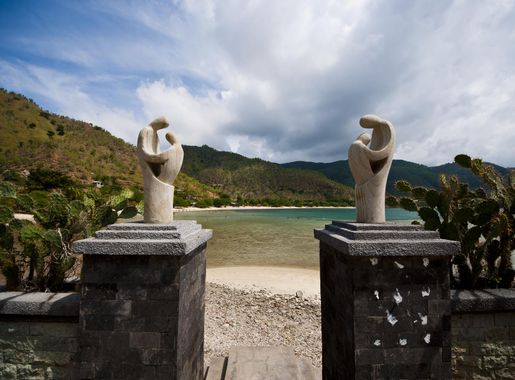


Sun-Kissed Serenity: Dili Beaches in Timor-Leste
Dili, the capital city of Timor-Leste, is a hidden gem for beach lovers seeking a blend of natural beauty and cultural richness. The beaches of Dili boast pristine sands and crystal-clear waters, making them perfect for swimming, snorkeling, and sunbathing. Whether you are looking to relax under the sun or explore vibrant marine life, Dili's beaches offer a serene escape from the hustle and bustle of everyday life. One of the most popular spots is Areia Branca, also known as White Sands Beach. This beach is known for its soft, white sand and gentle waves that are ideal for leisurely swims. Nearby, you will find lush greenery and a few local eateries serving delicious Timorese cuisine. The beach's laid-back atmosphere makes it a favorite among both locals and tourists. Another must-visit is Cristo Rei Beach, located near the iconic Cristo Rei statue. This beach offers stunning views and a more secluded environment. The hike up to the statue provides panoramic views of the coastline, making it a perfect spot for photography enthusiasts. Don't forget to bring your snorkeling gear, as the underwater world here is teeming with colorful fish and coral reefs. For those who love adventure, heading to Dollar Beach is a great choice. This beach is slightly more rugged and less crowded, offering a more rustic experience. It is perfect for those who enjoy exploring natural landscapes and engaging in water sports. Whether you are an avid swimmer or just want to relax by the waves, Dollar Beach provides a picturesque backdrop for your beach day. Timor-Leste's beaches in Dili are not just about sun and sea; they also offer a glimpse into the local culture and way of life. Interacting with friendly locals, sampling fresh seafood, and witnessing traditional fishing methods are all part of the experience. These beaches are ideal for anyone looking to immerse themselves in the natural beauty and cultural heritage of Timor-Leste.