

Toco Lighthouse Travel Guide - Free Web & App
Your ultimate guide to Toco Lighthouse. Discover top landmarks, proposed trips, and local tips. Free on the web or via the Evendo companion app.


Toco Lighthouse in Trinidad and Tobago marks the island’s rugged northeastern coast, with sea views, quiet beaches, village life and scenic coastal drives.
A Lighthouse at Galera Point
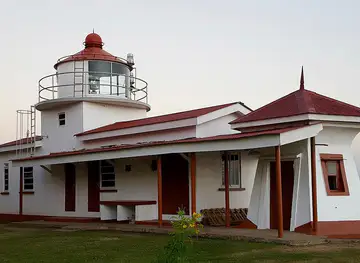
Toco Lighthouse stands at Galera Point on the northeastern tip of Trinidad, where the island’s road network gives way to a rugged Atlantic coastline. The lighthouse is the defining landmark of Toco, a quiet rural district of fishing villages, bays, forested hills and scattered settlements rather than a conventional resort destination. Its setting is especially atmospheric in changing weather, when sea spray, strong winds and shifting light emphasise the exposed character of the headland.Read more about Toco Lighthouse
The Toco Coastal Landscape
Village Life and Outdoor Exploration
When is the best time to visit Toco Lighthouse?
Best: May–July · 30–31°C| Month | High (°C) | Rainfall (mm) |
|---|---|---|
| January | 28 | 120 |
| February | 28 | 100 |
| March | 29 | 80 |
| April | 30 | 60 |
| May (best) | 30 | 40 |
| June (best) | 31 | 40 |
| July (best) | 31 | 40 |
| August | 31 | 40 |
| September | 31 | 40 |
| October | 30 | 60 |
| November | 30 | 80 |
| December | 28 | 100 |
Getting to and around Toco Lighthouse
How to get there
Transportation
Best attractions in Toco Lighthouse
The principal attraction is Toco Lighthouse at Galera Point, where the historic tower overlooks Trinidad’s exposed northeastern coast. The headland is best visited for its maritime character, open sea views and sense of distance from the island’s urban centres, although access to the tower or its grounds should be confirmed rather than assumed. Toco Bay and the shoreline near Toco village offer a calmer setting for coastal observation, while Salybia Bay and nearby beaches add opportunities for quiet walks and swimming only where local conditions make it appropriate. The road through northeastern Trinidad is part of the experience, passing small settlements, cultivated land, forested slopes and changing views of the Atlantic coast. Visitors interested in nature can use the area as a starting point for exploring the wider Toco and Balandra district, but should distinguish informal scenic stops from established attractions and avoid entering private or environmentally sensitive land without permission.
-
Zoo
Emperor Valley Zoo
Explore the enchanting world of wildlife at Emperor Valley Zoo, a top tourist attraction in Port of Spain offering fun and educational experiences for all ages.
-
Nature preserve
Argyle Falls
Explore the enchanting Argyle Falls, a nature preserve in Roxborough, Trinidad, where cascading waterfalls and lush landscapes await your discovery.
-
Public beach
Toco Beach
Discover the serene beauty of Toco Beach, a public beach in Trinidad offering relaxation, adventure, and stunning sunsets.
-
Nature preserve
Matura Turtle Watching Site
Discover the Matura Turtle Watching Site, a serene nature preserve where you can observe endangered sea turtles nesting and hatching in their natural habitat.


Best landmarks in Toco Lighthouse
Toco Lighthouse is the area’s signature historic landmark, standing at Galera Point as a reminder of the maritime navigation system that served Trinidad’s exposed northeastern waters in the late nineteenth century. Its significance comes from both its working coastal purpose and its position at the end of the island’s road journey. The headland itself is a natural landmark, defined by open Atlantic horizons, weather-shaped vegetation and rocky shoreline views. Toco Bay provides an important geographical counterpoint, with a more sheltered coastal setting beside the village, while Salybia Bay and the beaches along the northeastern road reveal the varied form of Trinidad’s coast. The surrounding forested hills and small valleys are also part of the district’s identity, although many viewpoints are informal rather than developed visitor sites. The lighthouse should be viewed respectfully, with current access confirmed before approaching enclosed areas.
-
Tourist attraction
Galera Point Lighthouse
Discover the historical charm and breathtaking views at Galera Point Lighthouse in Trinidad, a must-see destination for every traveler.
-
Public beach
Toco Beach
Discover the serene beauty of Toco Beach in Trinidad, where golden sands meet turquoise waters—an ideal getaway for relaxation and exploration.


Explore Toco Lighthouse on the map
Plan your trip on one map. See where the top attractions, landmarks, restaurants and hotels are, and book hotels and experiences in a few clicks.
Best hotels in Toco Lighthouse
Best restaurants in Toco Lighthouse
Toco is not a dining destination with a concentrated restaurant scene, but visitors can find local meals and refreshments in small village eateries, roadside establishments and food businesses serving the surrounding communities. Trinidadian cooking commonly combines Creole, African, Indian and other Caribbean influences, with dishes such as roti, pelau, callaloo, provisions, fried fish and other home-style preparations appearing according to the establishment and the day. The district’s coastal setting supports a long association with fishing, although visitors should not assume that a particular seafood dish or vendor will always be available. Sangre Grande is a more practical place to obtain a wider choice of provisions before travelling towards Toco. In remote coastal areas, opening arrangements can be informal, so carrying water and basic food is sensible when spending time around the lighthouse and beaches.
-
Italian
Buzo Osteria Italiana
Experience authentic Italian cuisine at Buzo Osteria Italiana in Port of Spain – where every dish tells a story of tradition and flavor.
-
Seafood
Richard's Bake & Shark
Experience the iconic taste of Trinidad with fresh Bake & Shark at Richard's in beautiful Maracas Bay.
-
Italian
Rizzoni's Ristorante Italiano
Experience authentic Italian cuisine at Rizzoni's Ristorante Italiano on MovieTowne Boulevard – where every dish tells a story.
-
Restaurant
Seahorse Restaurant & Bar
Discover culinary excellence at Seahorse Restaurant & Bar in Black Rock, where stunning views meet exquisite local flavors for an unforgettable dining experience.


Best bars in Toco Lighthouse
Toco has a quiet village atmosphere rather than a developed nightlife scene. Evening social life is more likely to centre on local rum shops, modest bars, community gatherings and the hospitality of accommodation providers than on dedicated nightclubs or entertainment districts. Venues and activity can vary, and visitors should not expect the late-night choice found in Port of Spain or Trinidad’s larger urban centres. The rural roads are poorly suited to aimless night driving, particularly where lighting and roadside facilities are limited, so evening plans require practical transport arrangements. Sangre Grande may offer a broader selection of ordinary bars and social venues, but it remains a regional town rather than a major nightlife destination. The most characteristic evening experience around Toco is the quiet coastal setting and local village rhythm, not organised entertainment.
-
Grill
Jade Monkey Casino Bar and Grill
Discover the lively Jade Monkey Casino Bar and Grill in Crown Point, where delicious food meets thrilling gaming in a vibrant atmosphere.
-
Tourist attraction
Galera Point Lighthouse
Explore the historic Galera Point Lighthouse, a stunning coastal landmark offering breathtaking views and rich maritime heritage in Trinidad and Tobago.
-
Bar
Arthur's Bar
Discover Arthur's Bar in Rampanalgas, a vibrant hotspot for locals and tourists to enjoy drinks, local cuisine, and lively entertainment.
-
Bar
D Hangout Bar
Discover the vibrant atmosphere of D Hangout Bar in Sangre Grande, where locals and tourists unite for great drinks and unforgettable experiences.


Best nightclubs in Toco Lighthouse
Toco has a quiet village atmosphere rather than a developed nightlife scene. Evening social life is more likely to centre on local rum shops, modest bars, community gatherings and the hospitality of accommodation providers than on dedicated nightclubs or entertainment districts. Venues and activity can vary, and visitors should not expect the late-night choice found in Port of Spain or Trinidad’s larger urban centres. The rural roads are poorly suited to aimless night driving, particularly where lighting and roadside facilities are limited, so evening plans require practical transport arrangements. Sangre Grande may offer a broader selection of ordinary bars and social venues, but it remains a regional town rather than a major nightlife destination. The most characteristic evening experience around Toco is the quiet coastal setting and local village rhythm, not organised entertainment.
-
Tourist attraction
Galera Point Lighthouse
Explore the Galera Point Lighthouse, a historic maritime beacon offering breathtaking views and a glimpse into Trinidad's rich coastal heritage.
-
Resort hotel
Thomas On The Beach
Discover paradise at Thomas On The Beach, where sun, sand, and tranquility create an unforgettable Caribbean experience.
-
Public beach
Toco Beach
Discover the serene beauty of Toco Beach, a public paradise on Trinidad's northeastern coast, perfect for relaxation and adventure.
-
Night club
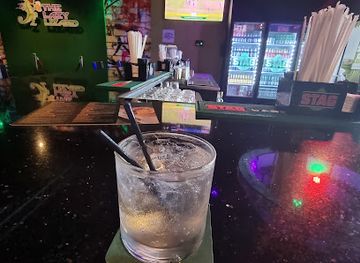
The Lazy Lizard
Discover the vibrant nightlife at The Lazy Lizard, a premier night club in Endeavour, Trinidad, where music and good times await.


Best shops in Toco Lighthouse
Shopping around Toco is limited and primarily practical, with small village shops, food sellers and locally oriented businesses rather than a permanent craft market or concentrated retail district. Visitors may find basic provisions, drinks and locally prepared food in Toco and nearby settlements, but should purchase specialist supplies before leaving larger towns such as Sangre Grande. Regional products may include fresh produce, homemade foods and fish connected with the area’s agricultural and fishing communities, although availability varies and should not be treated as guaranteed. There is no need to expect a broad range of souvenirs at the lighthouse itself. Small purchases from established local businesses can support the community, while visitors should ask permission before photographing stalls, boats, homes or people and should respect private property and informal working spaces.
-
Tourist attraction
Galera Point Lighthouse
Explore the historic Galera Point Lighthouse in Trinidad, where maritime heritage meets stunning coastal views.
-
Grocery store
Stacy's Mini Mart
Discover local flavors and friendly service at Stacy's Mini Mart in Petit Trou, the perfect stop for your grocery needs while exploring Trinidad.
-
Shopping mall
Albert Nixon Grocery, Bar and Guest House
Experience the vibrant local culture at Albert Nixon Grocery, Bar and Guest House in Toco, Trinidad, where shopping, dining, and hospitality come together.
-
Supermarket
Cumana Consumers Cooperative Supermarket
Discover the vibrant flavors of Trinidad at Cumana Consumers Cooperative Supermarket, the perfect stop for local goods and fresh produce.


Get your free copy of our complete guide to Toco Lighthouse, delivered straight to you.
Everything on this page, from attractions and restaurants to essentials and local phrases, in one PDF you can read offline, print or share.
Already have an account? Sign in
Your Toco Lighthouse guide is ready.
We'll send it to · Not you? Sign out

Getting your guide ready…
We are putting together a fresh copy of the Toco Lighthouse guide. This can take up to a minute.
This can take a few moments. If your browser asks, choose Allow so the download can start. You'll find the guide in your Downloads folder.
Nothing happened? Download it again
Sorry, the guide is taking longer than usual. Please try again in a minute, or get it by email instead.
Toco Lighthouse essentials
Currency and Payment
Safety
Emergency Situations
Do's and Don'ts
Local Tips
From Eve
Local phrases worth knowing
You don't need to get them perfect. A few words go a long way, and locals appreciate the effort.
Basics
| English | Local | Say it |
|---|---|---|
| Hello | Hello | [heh-loh] |
| Goodbye | Goodbye | [guhd-bye] |
| Yes | Yes | [yehs] |
| No | No | [noh] |
| Please/You're welcome | Please/You're welcome | [pleez/yuh waal-kum] |
| Thank you | Thank you | [thank yuh] |
| Excuse me/Sorry | Excuse me/Sorry | [ek-skews mee/saw-ree] |
| How are you? | How are you? | [haw a yuh] |
| Fine. And you? | Fine. And you? | [fahyn. ahnd yuh] |
| Do you speak English? | Do you speak English? | [doo yuh speek ing-glish] |
| I don't understand | I don't understand | [ah dohnt un-der-stan] |
Eating & Drinking
| English | Local | Say it |
|---|---|---|
| I'd like to see the menu, please | I'd like to see the menu, please | [ahd lahyk too seee duh meh-nyoo pleez] |
| I don't eat meat | I don't eat meat | [ah dohnt eet meet] |
| Cheers! | Cheers! | [cheers] |
| I would like to pay, please | I would like to pay, please | [ah wood lahyk too pay pleez] |
Emergencies
| English | Local | Say it |
|---|---|---|
| Help! | Help! | [help] |
| Go away! | Go away! | [goh uh-wey] |
| Call the Police! | Call the Police! | [kawl duh plees] |
| Call a doctor! | Call a doctor! | [kawl ah dok-tuh] |
| I'm lost | I'm lost | [ahm lost] |
| I'm ill | I'm ill | [ahm il] |
Shopping
| English | Local | Say it |
|---|---|---|
| I'd like to buy... | I'd like to buy... | [ahd lahyk too bahy] |
| I'm just looking | I'm just looking | [ahm juhst look-ing] |
| How much is it? | How much is it? | [haw much iz it] |
| That's too expensive | That's too expensive | [thats too ek-spensiv] |
| Can you lower the price? | Can you lower the price? | [kan yuh loh-er duh prahys] |
Time & Numbers
| English | Local | Say it |
|---|---|---|
| What time is it? | What time is it? | [wut tym iz it] |
| It's one o'clock | It's one o'clock | [its wun uh-klok] |
| Half past (10) | Half past (10) | [hahf past (ten)] |
| Morning | Morning | [morn-ing] |
| Afternoon | Afternoon | [af-ter-noon] |
| Evening | Evening | [eev-ning] |
| Yesterday | Yesterday | [yes-tur-day] |
| Today | Today | [tuh-day] |
| Tomorrow | Tomorrow | [toh-mor-ow] |
| 1 | 1 | [wun] |
| 2 | 2 | [too] |
| 3 | 3 | [tree] |
| 4 | 4 | [foh] |
| 5 | 5 | [fayv] |
| 6 | 6 | [siks] |
| 7 | 7 | [seh-vuhn] |
| 8 | 8 | [eyt] |
| 9 | 9 | [nyne] |
| 10 | 10 | [ten] |
Transport & Directions
| English | Local | Say it |
|---|---|---|
| Where's a/the...? | Where's a/the...? | [wehrz ah/the] |
| What's the address? | What's the address? | [wuts duh uh-dres] |
| Can you show me (on the map)? | Can you show me (on the map)? | [kan yuh show mee (on duh map)] |
| When's the next (bus)? | When's the next (bus)? | [wenz duh nekst (buhs)] |
| A ticket (to ....) | A ticket (to ....) | [ah tik-it (too)] |
History of Toco Lighthouse
An Amerindian Coastal Region
The northeastern coast of Trinidad was inhabited before European colonisation by Indigenous peoples who travelled through its forests, river valleys and coastal waters. Toco’s name is generally associated with Indigenous geographical traditions, although interpretations of individual place names can vary. The area’s position at the island’s eastern edge made the coast an important zone of movement and exchange long before the lighthouse was built. Its bays, headlands and freshwater sources shaped settlement patterns, while the forested interior remained more lightly developed than Trinidad’s central plains.
Colonial Settlement and Toco
During the colonial period, northeastern Trinidad developed as a sparsely populated agricultural and coastal district. French-speaking settlers and later communities of African, Indian and other Caribbean heritage contributed to the region’s social character, while small farms, fishing and coastal trade supported local life. The difficult terrain and distance from Port of Spain limited large-scale urban development. Roads and village connections gradually strengthened, but Toco retained a rural identity defined by dispersed settlements, cultivated plots, forested slopes and direct dependence on the sea.
The Galera Point Lighthouse
The lighthouse at Galera Point was established in the late nineteenth century to improve navigation around Trinidad’s exposed northeastern headland. Commonly associated with the year 1897, it formed part of the maritime infrastructure serving vessels approaching the island’s eastern and northern waters. Its importance lay less in creating a settlement than in marking a difficult coastal point for shipping. The tower remains the principal historic structure associated with Toco, although visitors should verify current access and operational arrangements rather than assuming that the interior is open.
A Rural Coast in the Modern Era
Modern Toco has remained comparatively rural as Trinidad expanded elsewhere. Improved roads made the district more accessible for residents and visitors, while beaches, coastal scenery and the lighthouse gave the area a modest role in domestic recreation. Tourism has not transformed Toco into a large resort, and local life continues to reflect fishing, farming and village networks. Contemporary interest increasingly overlaps with environmental awareness, responsible coastal recreation and appreciation of northeastern Trinidad’s forests, bays and maritime heritage.
Toco Lighthouse in Photos
Browse through our photo collection highlighting the charm and character of the destination.
Cities in Toco Lighthouse
The towns and cities of Toco Lighthouse, and the easiest places to base yourself.
-

-

-
-
-
-


Swipe for more cities
Neighbouring destination travel guides
The closest destinations to Toco Lighthouse, if you have time for more than one.
-

-

-
-

-


Swipe for more destinations
Explore more

Explore more of St. David
Explore St David in Tobago for forest trails, Argyle Waterfall, rural villages, cocoa country and the green hills of the island’s eastern interior.
Explore St. David
Explore more of Trinidad and Tobago
Discover Trinidad and Tobago: A Caribbean paradise where vibrant culture meets stunning natural beauty, offering unique experiences from lively festivals to serene beaches.
Explore Trinidad and Tobago