

Free Pryazovia Travel Guide & Mobile App
Explore Pryazovia with free travel guides. Discover regional history, expert tips, proposed trips, and audio guides on web or mobile app.


Explore Pryazovia’s Ukrainian Azov coast through steppe landscapes, port history, multicultural heritage and essential wartime travel awareness.
Read more about Pryazovia
When is the best time to visit Pryazovia?
Best: June, August–September · 22–27°C| Month | High (°C) | Rainfall (mm) |
|---|---|---|
| January | 2 | 30 |
| February | 4 | 25 |
| March | 9 | 35 |
| April | 15 | 40 |
| May | 21 | 45 |
| June (best) | 25 | 50 |
| July | 28 | 55 |
| August (best) | 27 | 50 |
| September (best) | 22 | 45 |
| October | 16 | 40 |
| November | 9 | 35 |
| December | 3 | 30 |
Getting to and around Pryazovia
How to get there
Transportation
Top city travel guides in Pryazovia
The cities of Pryazovia, and the easiest places to base yourself.
-

-

-

-


Swipe for more cities
Destinations in Pryazovia
Resorts, valleys and scenic spots worth a trip of their own.

Swipe for more destinations
Best attractions in Pryazovia
Pryazovia’s pre-war attraction landscape combined Sea of Azov beaches, resort promenades, fishing and port heritage, archaeological sites, steppe scenery, bird-rich wetlands and the multicultural history of towns such as Mariupol, Berdiansk and Melitopol. The Stone Grave archaeological complex near Melitopol was particularly important for its rock formations and prehistoric imagery, while the Pryazovskyi National Nature Park represented the ecological value of coastal lagoons, islands, estuaries and steppe habitats. Mariupol’s museums and Greek heritage added an urban cultural dimension, and Berdiansk’s spit linked seaside recreation with changing coastal ecosystems. Today, however, these attractions cannot be treated as open visitor sites: much of Ukrainian Pryazovia is occupied or affected by military activity, and even areas that appear undamaged may be mined, restricted or environmentally compromised. Future tourism will require official reopening, demining, restored transport, functioning emergency services and careful conservation. Until then, the region’s museums, archives and displaced cultural initiatives elsewhere in Ukraine offer the responsible way to understand its heritage.
-
Tourist attraction
Obolonsʹka Naberezhna
Explore the scenic Obolons'ka Naberezhna: a picturesque promenade in Kyiv offering stunning river views and vibrant green spaces for relaxation and recreation.
-
Tourist attraction
Taras Shevchenko Park
Explore the lush landscapes and cultural monuments of Taras Shevchenko Park, a tranquil escape in the heart of Kyiv.
-
Tourist attraction
The National Pirogov's Estate Museum
Explore The National Pirogov's Estate Museum, a serene tribute to a pioneer in medicine nestled in the lush landscapes of Vinnytsia Oblast.
-
Tourist attraction
Tunnel of Love
Explore the magical Tunnel of Love in Klevan, Ukraine, where nature and romance intertwine in a stunning landscape perfect for unforgettable memories.


Best landmarks in Pryazovia
Pryazovia’s most recognisable landmarks expressed its combination of coast, commerce, archaeology and urban history. The Stone Grave near Melitopol is a notable natural and archaeological landmark, where sandstone formations preserve evidence of very long human engagement with the steppe. Berdiansk’s historic lighthouse and harbour structures symbolise the town’s nineteenth-century maritime development, although access and condition must be checked after the war. Mariupol’s urban landmarks included the city’s port, industrial skyline, religious buildings and civic architecture shaped by its Greek-founded history; many were damaged or destroyed during the siege and occupation. Coastal spits, lagoons and estuaries also function as geographical landmarks, but they are not safe places for unsupervised exploration. The region’s future landmark map will include reconstructed, conserved and commemorative sites alongside those that survive in altered form.
-
Fortress
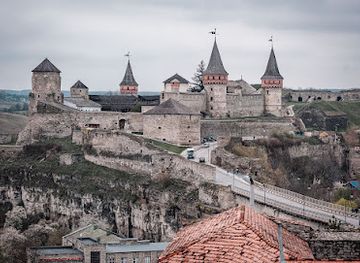
Kamianets-Podilskyi Castle
Explore the breathtaking Kamianets-Podilskyi Castle, a historical fortress that offers stunning views and a unique glimpse into Ukraine's medieval past.
-
Historical landmark
Ukrainian Motherland Monument
Explore the Ukrainian Motherland Monument, a towering symbol of national pride and resilience, offering breathtaking views and rich historical significance.
-
Museum
Vorontsov Palace
Experience the majestic Vorontsov Palace, a beautiful museum in Crimea, showcasing stunning architecture and lush gardens in a historical setting.
-
Castle
Swallow's Nest
Discover the enchanting Swallow's Nest, a fairytale castle perched on cliffs overlooking the Black Sea, a perfect blend of beauty and history.


Explore Pryazovia on the map
Plan your trip on one map. See where the top cities, national parks and sights are, and book hotels and experiences in a few clicks.
Best hotels in Pryazovia
Best restaurants in Pryazovia
Pryazovian food reflects the meeting of steppe agriculture, coastal fishing and several historical communities. Fish from the Azov basin and nearby rivers, sunflower oil, wheat, seasonal vegetables, pickled produce and freshwater catches have long been important ingredients, although war and environmental damage have disrupted fishing and local supply chains. Mariupol and surrounding settlements were also associated with the cooking traditions of Azov Greeks, alongside Ukrainian, Bulgarian, Jewish, Crimean Tatar and broader southern Ukrainian influences. Before the invasion, cafés, markets, resort restaurants and family-run establishments served practical seafood dishes, grilled foods, pastries and familiar Ukrainian cooking. In rural areas, food culture was more closely tied to household preserves, breadmaking and seasonal produce than to formal dining. Visitors should not expect a functioning restaurant scene across the region now; businesses, supplies and regulations have changed substantially, and any future recommendations will require current local verification.
-
Ukrainian
Kryivka
Discover Kryivka: A unique underground restaurant in Lviv serving authentic Ukrainian cuisine amidst captivating historical ambiance.
-
Georgian
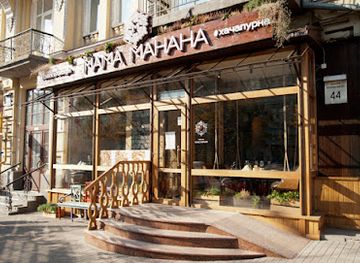
Mama Manana
Experience authentic Georgian cuisine at Mama Manana in Kyiv, where tradition meets flavor in every delightful dish.
-
Restaurant
Ostannya Barykada
Discover the flavors of Ukraine at Ostannya Barykada, where traditional meets contemporary in an inviting atmosphere.
-
Georgian
Chachapuri Restaurant
Experience authentic Georgian flavors at Chachapuri Restaurant in Kyiv—home to delectable khinkali and iconic khachapuri in a lively atmosphere.



Best bars in Pryazovia
Before the war, evening life in Pryazovia varied sharply by place and season. Berdiansk and other coastal resorts developed summer promenades, cafés, casual bars and entertainment venues, while Mariupol offered a broader urban mix of restaurants, pubs, cultural events and live music. Smaller settlements generally centred their social life on cafés, family gatherings and local establishments rather than a large club scene. Industrial cities also had a strong after-work and community-oriented culture distinct from resort nightlife. Current conditions mean that nightlife cannot be recommended: occupation, destruction, displacement, curfews, power interruptions and security restrictions have made normal evening activity impossible or highly unpredictable in much of the region. Any future reopening is likely to begin with essential services and community spaces, with commercial nightlife following only when safety and infrastructure permit.
-
Restaurant
Gas Lamp
Discover Gas Lamp in Lviv - a cozy restaurant and café offering a delightful fusion of traditional and modern Ukrainian culinary experiences.
-
Restaurant
Ostannya Barykada
Experience the flavors of Ukraine at Ostannya Barykada, where tradition meets modern culinary artistry in the heart of Kyiv.
-
Bar
Barman Dictat
Discover Barman Dictat in Kyiv: a luxurious bar offering exquisite cocktails, a vibrant atmosphere, and a taste of local nightlife.
-
Bar
Pink Freud Kyiv
Discover Pink Freud Kyiv, a vibrant bar offering creative cocktails and an artistic atmosphere in the heart of Kyiv's nightlife.


Best nightclubs in Pryazovia
Before the war, evening life in Pryazovia varied sharply by place and season. Berdiansk and other coastal resorts developed summer promenades, cafés, casual bars and entertainment venues, while Mariupol offered a broader urban mix of restaurants, pubs, cultural events and live music. Smaller settlements generally centred their social life on cafés, family gatherings and local establishments rather than a large club scene. Industrial cities also had a strong after-work and community-oriented culture distinct from resort nightlife. Current conditions mean that nightlife cannot be recommended: occupation, destruction, displacement, curfews, power interruptions and security restrictions have made normal evening activity impossible or highly unpredictable in much of the region. Any future reopening is likely to begin with essential services and community spaces, with commercial nightlife following only when safety and infrastructure permit.
-
Night club
Клуб на !FESTrepublic
Dive into the exhilarating nightlife of Lviv at Клуб на !FESTrepublic, a premier night club and concert hall offering unforgettable live music experiences.
-
Night club
Caribbean Club
Experience the vibrant nightlife of Caribbean Club in Kyiv – where music, dining, and unforgettable performances create the perfect night out.
-
Night club
Forsage
Discover the vibrant nightlife of Kyiv at Forsage, a premier night club featuring top DJs, lively music, and an electrifying atmosphere for all party lovers.
-
Night club
Skybar
Experience Kyiv's nightlife from the heights of Skybar, where stunning views and vibrant energy combine for an unforgettable evening.



Best shops in Pryazovia
Pryazovia’s pre-war shopping was practical and locally varied rather than centred on luxury retail. Mariupol and Melitopol offered ordinary high-street shops, food markets and larger retail facilities, while Berdiansk added seasonal seaside stalls, cafés and small businesses serving summer visitors. Regional purchases traditionally included sunflower products, preserves, dried or smoked fish where legally and sustainably sourced, local sweets, ceramics, textiles and Ukrainian craft goods. Greek and broader southern Ukrainian culinary traditions were also represented through home-produced foods and specialist products, though availability varied considerably. War, occupation, displacement and disrupted supply chains have transformed retail across the region, and many former businesses are closed, damaged or operating under conditions that visitors should not assume are lawful or safe. For now, regional products and crafts are best sought through reputable Ukrainian cultural initiatives and verified sellers outside occupied areas, with provenance and environmental legality checked carefully.
-
Shopping mall
Ocean Plaza
Discover Ocean Plaza in Kyiv – a vibrant shopping mall blending retail therapy with culinary delights and entertainment options for every traveler.
-
Shopping mall
Lavina Mall
Discover Lavina Mall, a vibrant shopping center in Kyiv offering a blend of retail, dining, and entertainment for all ages.
-
Shopping mall
Forum Lviv
Explore Forum Lviv, the ultimate shopping destination featuring top brands, delicious dining, and exciting entertainment in the heart of Lviv.
-
Shopping mall
ТРЦ Gulliver
Experience the best of shopping, dining, and entertainment at Gulliver Shopping Mall in Kyiv, your ultimate retail destination.



Get your free copy of our complete guide to Pryazovia, delivered straight to you.
Everything on this page, from attractions and restaurants to essentials and local phrases, in one PDF you can read offline, print or share.
Already have an account? Sign in
Your Pryazovia guide is ready.
We'll send it to · Not you? Sign out

Getting your guide ready…
We are putting together a fresh copy of the Pryazovia guide. This can take up to a minute.
This can take a few moments. If your browser asks, choose Allow so the download can start. You'll find the guide in your Downloads folder.
Nothing happened? Download it again
Sorry, the guide is taking longer than usual. Please try again in a minute, or get it by email instead.
Pryazovia essentials
Currency and Payment
Safety
Emergency Situations
Do's and Don'ts
Local Tips
From Eve
Local phrases worth knowing
You don't need to get them perfect. A few words go a long way, and locals appreciate the effort.
Basics
| English | Local | Say it |
|---|---|---|
| Hello | Привіт | [Pryvit] |
| Goodbye | До побачення | [Do pobachennya] |
| Yes | Так | [Tak] |
| No | Ні | [Ni] |
| Please/You're welcome | Будь ласка | [Bud' laska] |
| Thank you | Дякую | [Dyakuyu] |
| Excuse me/Sorry | Вибачте | [Vybachte] |
| How are you? | Як справи? | [Yak spravy?] |
| Fine. And you? | Добре. А ти? | [Dobre. A ty?] |
| Do you speak English? | Ви говорите англійською? | [Vy hovoryte anhliys'koyu?] |
| I don't understand | Я не розумію | [Ya ne rozumiyu] |
Eating & Drinking
| English | Local | Say it |
|---|---|---|
| I'd like to see the menu, please | Я б хотів подивитися меню, будь ласка | [Ya b khotiv podivytysya menyu, bud' laska] |
| I don't eat meat | Я не їм м'ясо | [Ya ne yim m'yaso] |
| Cheers! | На здоров'я! | [Na zdorov'ya!] |
| I would like to pay, please | Я б хотів заплатити, будь ласка | [Ya b khotiv zaplatyty, bud' laska] |
Emergencies
| English | Local | Say it |
|---|---|---|
| Help! | Допоможіть! | [Dopomozhit'!] |
| Go away! | Ідіть геть! | [Idit' hety!] |
| Call the Police! | Викликайте поліцію! | [Vyklykayte politsiyu!] |
| Call a doctor! | Викликайте лікаря! | [Vyklykayte likarya!] |
| I'm lost | Я загубився | [Ya zahubyvsy] |
| I'm ill | Я хворий | [Ya khvoryy] |
Shopping
| English | Local | Say it |
|---|---|---|
| I'd like to buy... | Я б хотів купити... | [Ya b khotiv kupyty...] |
| I'm just looking | Я просто дивлюся | [Ya prosto dyvlyusya] |
| How much is it? | Скільки це коштує? | [Skil'ky tse koshtuye?] |
| That's too expensive | Це занадто дорого | [Tse zanadto doroho] |
| Can you lower the price? | Можете знизити ціну? | [Mozhete znyzyty tsinu?] |
Time & Numbers
| English | Local | Say it |
|---|---|---|
| What time is it? | Котра година? | [Kotra hodyna?] |
| It's one o'clock | Одна година | [Odna hodyna] |
| Half past (10) | Пів на (10) | [Piv na (10)] |
| Morning | Ранок | [Ranok] |
| Afternoon | Після обіду | [Pislya obidu] |
| Evening | Вечір | [Vechir] |
| Yesterday | Вчора | [Vchora] |
| Today | Сьогодні | [S'ohodni] |
| Tomorrow | Завтра | [Zavtra] |
| 1 | Один | [Odyn] |
| 2 | Два | [Dva] |
| 3 | Три | [Try] |
| 4 | Чотири | [Chotyry] |
| 5 | П'ять | [P'yat] |
| 6 | Шість | [Shist'] |
| 7 | Сім | [Sim] |
| 8 | Вісім | [Visim] |
| 9 | Дев'ять | [Devyat'] |
| 10 | Десять | [Desyat'] |
Transport & Directions
| English | Local | Say it |
|---|---|---|
| Where's a/the...? | Де ...? | [De ...?] |
| What's the address? | Яка адреса? | [Yaka adresa?] |
| Can you show me (on the map)? | Можете показати мені (на карті)? | [Mozhete pokazaty meni (na karti)?] |
| When's the next (bus)? | Коли наступний (автобус)? | [Koly nastupnyy (avtobus)?] |
| A ticket (to ....) | Квиток (до ....) | [Kvytoк (do ....)] |
History of Pryazovia
Prehistoric Steppe and Stone Grave
Pryazovia lies within a steppe corridor used by human communities for thousands of years. Barrows, settlement traces and artefacts reflect successive prehistoric cultures that moved, traded and farmed across the northern Azov landscape. The Stone Grave, near Melitopol, is a major archaeological and symbolic site formed by sandstone outcrops containing rock art and inscriptions associated with long periods of human activity. Its interpretations have been debated, but its importance as a record of prehistoric life and later scholarly interest is firmly established. The open terrain also helped preserve a visible relationship between archaeology, pasture and the wider steppe.
Greek and Ancient Azov Connections
The Sea of Azov formed part of the wider maritime world known to Greek, Scythian, Sarmatian and later Roman-era peoples. Greek colonies and trading networks were concentrated particularly around the Black Sea and the Kerch Strait, but their commerce reached the Azov basin through coastal and river routes. Grain, fish, salt and other goods moved between steppe communities and ports. Pryazovia’s ancient history is therefore best understood as part of a connected northern Black Sea region rather than as an isolated coastline. Archaeological evidence records interaction between settled communities, pastoral societies and maritime traders.
Crimean Tatar and Nogai Frontier
For centuries, the northern Azov steppe was linked to the Crimean Khanate and to Nogai communities whose pastoral territories extended across the region. The steppe was a zone of movement, diplomacy, raiding and trade rather than a fixed border in the modern sense. Crimean Tatar and Nogai influence remains important to the historical understanding of place names, routes and population change. The region’s later incorporation into the Russian Empire disrupted older political and economic structures, while many communities experienced displacement, resettlement and changing control of land and waterways.
Imperial Settlement and Port Development
From the late eighteenth century, the Russian Empire consolidated control over the northern Azov coast and encouraged new settlements, agricultural colonisation and maritime commerce. Mariupol was founded in 1778 and became associated with Greek settlers from Crimea, whose communities contributed to the port city’s religious, commercial and cultural life. Berdiansk developed as a port and trading centre during the nineteenth century, while roads and railways connected the coast with the agricultural interior. The period established much of the urban and economic framework later inherited by modern Ukrainian Pryazovia.
Industrialisation and the Rise of Mariupol
Industrialisation transformed the northern Azov coast from a primarily agricultural and maritime frontier into a major manufacturing zone. Mariupol’s port, rail connections and steelworks made it one of the most important industrial cities in southern Ukraine. Metallurgy shaped employment, urban growth and the region’s relationship with national and international markets. The industrial coastline existed alongside fishing, agriculture and resort development, producing a distinctive combination of factories, beaches, shipping and steppe settlements. Soviet planning expanded heavy industry and altered coastal environments, while also leaving a strong civic and working-class legacy.
War, Occupation and Displacement Since 2014
The war in the Donbas and along the Azov coast began in 2014, when Russian-backed forces seized territory in Donetsk oblast and the security situation around Mariupol and nearby coastal areas deteriorated. The 2022 full-scale Russian invasion brought the occupation of Mariupol, Berdiansk, Melitopol and other parts of Ukrainian Pryazovia, alongside the destruction and displacement of many communities. Mariupol’s siege and devastation became a defining event of the war. The conflict has damaged housing, industry, cultural heritage and ecosystems, and has made ordinary tourism impossible across much of the region.
Contemporary Ukrainian Regional Identity
Despite occupation and displacement, Pryazovia remains part of Ukraine’s cultural and historical conversation. Mariupol Greek heritage, Azov coastal traditions, Ukrainian steppe culture and the memory of industrial communities are being documented by museums, researchers, journalists and displaced residents. Cultural initiatives outside the region preserve photographs, oral histories, artworks and family archives, while discussions of reconstruction address not only buildings and infrastructure but also language, memory, ecology and the rights of returning communities. This evolving work is important because the region’s identity cannot be reduced either to its industrial past or to the destruction caused by war.
Pryazovia in Photos
Browse through our photo collection highlighting the charm and character of the destination.
Neighbouring regions of Pryazovia
The closest regions to Pryazovia, if you have time for more than one.
-

-

-

-

-


Swipe for more regions
Explore more

Explore more of Ukraine
Explore Ukraine: From Kyiv's golden domes to the Carpathian Mountains, discover a country rich in history, culture, and natural beauty in the heart of Eastern Europe.
Explore Ukraine