

Free Donbas Travel Guide & Mobile App
Explore Donbas with free travel guides. Discover regional history, expert tips, proposed trips, and audio guides on web or mobile app.


Donbas in eastern Ukraine combines steppe, coalfield heritage and river landscapes, but wartime restrictions currently make security the first concern.
Read more about Donbas
When is the best time to visit Donbas?
Best: June–August · 25–26°C| Month | High (°C) | Rainfall (mm) |
|---|---|---|
| January | -2 | 30 |
| February | -1 | 25 |
| March | 6 | 30 |
| April | 14 | 35 |
| May | 21 | 40 |
| June (best) | 25 | 45 |
| July (best) | 26 | 40 |
| August (best) | 25 | 35 |
| September | 21 | 35 |
| October | 14 | 30 |
| November | 6 | 30 |
| December | 1 | 30 |
Getting to and around Donbas
How to get there
Transportation
Top city travel guides in Donbas
The cities of Donbas, and the easiest places to base yourself.
-

-

-

-

-


Swipe for more cities
Destinations in Donbas
Resorts, valleys and scenic spots worth a trip of their own.
-

-

-


Swipe for more destinations
Best attractions in Donbas
Donbas's attraction landscape is defined by a combination of industrial heritage, steppe ecology, river scenery, religious history and the urban culture created by mining and metallurgy. The Siverskyi Donets valley, particularly around the Sviatohirsk area in Donetsk oblast, is known for wooded banks, chalk formations and the historic Sviatohirsk Lavra, although the site and surrounding landscape have been affected by the war and access cannot be assumed. Former mining settlements, rail corridors, factories and spoil heaps reveal the scale of nineteenth- and twentieth-century industrialisation, while museums and theatres in the larger cities preserve civic and cultural histories. The northern Donetsk landscape also includes broad agricultural country, woodland and geological features distinct from the dense industrial districts. In the southern part of the historical region, the Sea of Azov coast and the port city of Mariupol once added maritime, Greek-community and urban-industrial dimensions, but the area is occupied and severely damaged. At present, many attractions are inaccessible, damaged or subject to military restrictions, so Donbas cannot responsibly be presented as an active sightseeing circuit.
-
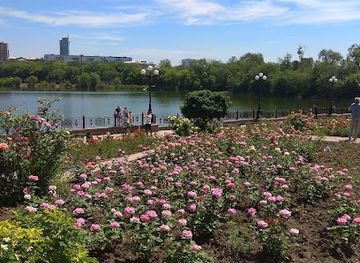
City park
Park Shcherbakova
Discover the beauty and tranquility of Park Shcherbakova in Donetsk, a city park perfect for relaxation and cultural experiences amidst nature.
-
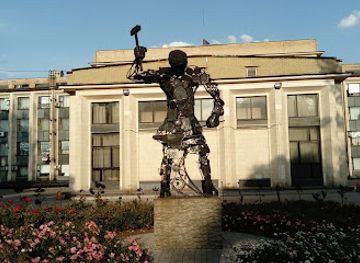
Forged Figures Park
Experience the artistry and beauty of Forged Figures Park in Donetsk, where metal sculptures and nature unite for a captivating escape.
-
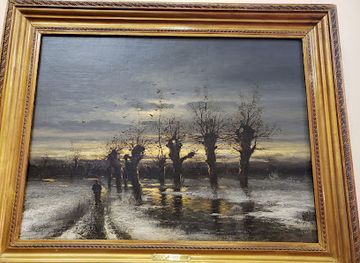
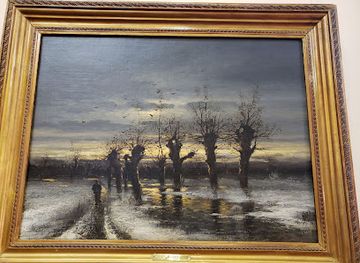
Donetsk Art Museum
Explore the artistic heritage of Donetsk at the Donetsk Art Museum, home to a diverse collection of masterpieces from various eras.
-
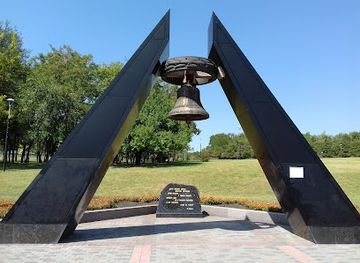
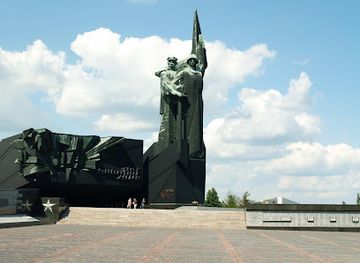
Muzey Druhoyi Svitovoyi Viyny
Explore the Museum of World War II in Donetsk, a tribute to resilience and history, showcasing artifacts that narrate the profound impact of the war.

Best landmarks in Donbas
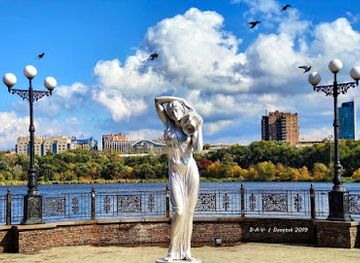
The Sviatohirsk Lavra, set among chalk hills and woodland beside the Siverskyi Donets, is one of Donbas's most recognisable historic landmarks. Its cave churches, monastic buildings and river setting represent the region's long Orthodox heritage, although the complex has suffered wartime damage and access is subject to security conditions. The Donets Ridge and the broad Siverskyi Donets valley provide the region's most distinctive natural landmarks, contrasting with spoil heaps, mine headframes and industrial skylines that record the rise of the coalfield. In Donetsk and Luhansk, civic squares, theatres, monuments and large Soviet-era public buildings once expressed the scale of industrial urbanisation, while Mariupol combined port, steelworks and Sea of Azov geography; these cities are now affected by occupation and extensive wartime destruction. The region's landmarks therefore carry both architectural and commemorative significance, but many cannot currently be visited lawfully or safely.
-
City park
Park Shcherbakova
Explore the lush greenery and vibrant atmosphere of Park Shcherbakova, a must-visit city park in Donetsk, perfect for relaxation and recreation.
-
Theme park
Forged Figures Park
Discover the enchanting Forged Figures Park in Donetsk, a theme park filled with stunning metal sculptures and a serene atmosphere for all to enjoy.
-
Park
City Park of Culture and Recreation
Discover the lush beauty of the City Park of Culture and Recreation in Donetsk, a perfect blend of nature, culture, and leisure.
-
Museum
Donetsk Art Museum
Explore the exquisite collection of Ukrainian and international art at Donetsk Art Museum, a cultural highlight in the heart of Donetsk.
Explore Donbas on the map
Plan your trip on one map. See where the top cities, national parks and sights are, and book hotels and experiences in a few clicks.
Best hotels in Donbas
Best restaurants in Donbas
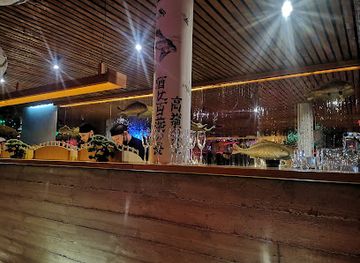
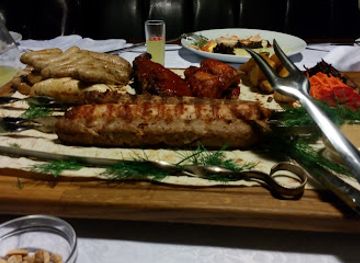
Before the war, Donbas dining reflected the region's industrial towns, agricultural hinterland and diverse population rather than a single codified cuisine. Ukrainian home cooking, soups, dumplings, rye and wheat baking, pickled vegetables, meat dishes and freshwater fish appeared alongside Russian-influenced urban foodways and the culinary traditions of Greek communities around the northern Sea of Azov. Workers' cafés, bakeries, markets, canteens, family restaurants and traditional Ukrainian eateries were important parts of everyday life, while larger cities supported more varied contemporary dining. Local produce included grains, sunflower products, vegetables and dairy goods from the surrounding steppe. In areas where businesses and markets continue to function, visitors should expect reduced choice, interrupted supplies and changing opening arrangements because of the war. Food travel is currently secondary to safety, and no establishment should be assumed open without current local confirmation.
-
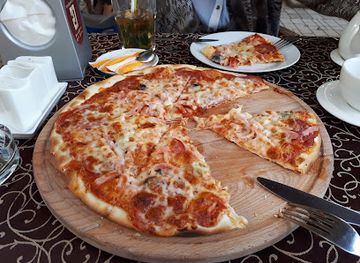
Sun City
Experience the ultimate pizza dining at Sun City in Donetsk - where every slice tells a story of flavor and passion.
-
Adachy
Discover the rich flavors of Asia at Adachy in Donetsk—your destination for authentic Pan Asian cuisine.
-
Yuzivska Pyvovarnia
Experience craft beer at Yuzivska Pyvovarnia - where tradition meets flavor in the heart of Donetsk.
-
Sun City Ukraine
Discover handcrafted brews and delectable pizzas at Sun City Ukraine – the perfect dining experience in Donetsk.

Best bars in Donbas
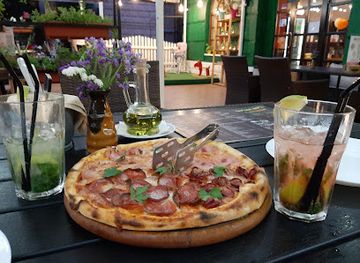
Donbas's pre-war evening culture centred on cafés, restaurants, beer halls, traditional pubs, live-music venues, cinemas and theatres in the larger cities, while smaller industrial and rural communities generally had more modest social scenes. Donetsk, Luhansk, Mariupol and other urban centres once offered the broadest choice, including contemporary bars and clubs, but these cities are occupied, damaged or affected by war and should not be treated as nightlife destinations. In Ukrainian-controlled areas, curfews, air-raid alerts, power cuts and security restrictions limit evening activity, and venues may close without notice. The sensible focus for any authorised visitor is practical access to food, shelter and reliable communications rather than entertainment. Alcohol should never be combined with driving or movement near checkpoints, damaged buildings or potentially contaminated ground.
-
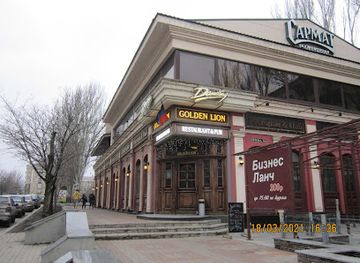
Golden Lion
Discover the Golden Lion, an inviting Irish pub in Donetsk, offering a delightful selection of drinks and hearty cuisine in a cozy atmosphere.
-
Bar
Базилик - Кафе & Доставка еды
Discover the vibrant tastes of Donetsk at Базилик - a café offering sushi, burgers, and more in a lively atmosphere.
-
Brewpub
Khmelʹnaya Marta
Explore the best of Donetsk's local brews and hearty cuisine at Khmelʹnaya Marta, a brewpub offering a true taste of Ukrainian hospitality.
-
Bar
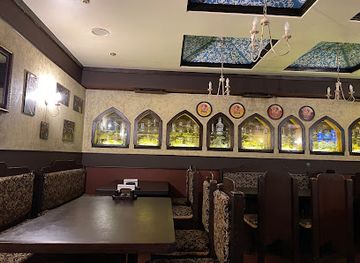
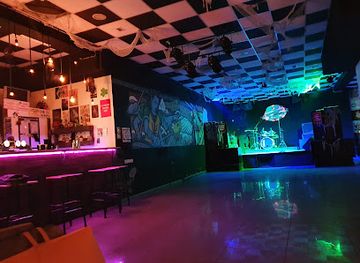
Underground Stage Party Bar
Experience the vibrant nightlife and live music at Underground Stage Party Bar in Donetsk, a true cultural gem for tourists seeking entertainment.
Best nightclubs in Donbas
Donbas's pre-war evening culture centred on cafés, restaurants, beer halls, traditional pubs, live-music venues, cinemas and theatres in the larger cities, while smaller industrial and rural communities generally had more modest social scenes. Donetsk, Luhansk, Mariupol and other urban centres once offered the broadest choice, including contemporary bars and clubs, but these cities are occupied, damaged or affected by war and should not be treated as nightlife destinations. In Ukrainian-controlled areas, curfews, air-raid alerts, power cuts and security restrictions limit evening activity, and venues may close without notice. The sensible focus for any authorised visitor is practical access to food, shelter and reliable communications rather than entertainment. Alcohol should never be combined with driving or movement near checkpoints, damaged buildings or potentially contaminated ground.
-
Night club
Caribbean Club
Immerse yourself in Kyiv's vibrant nightlife at Caribbean Club, where music, dining, and dancing come together for an unforgettable experience.
-
Night club
Forsage
Discover the electrifying nightlife of Kyiv at Forsage, a premier night club featuring top DJs, vibrant dance floors, and unforgettable experiences.
-
 Hotel
HotelShakhtar Plaza
Discover the dynamic Shakhtar Plaza in Donetsk, where luxurious accommodations meet vibrant nightlife and diverse dining experiences.
-
Irish pub
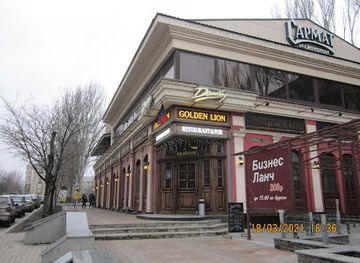
Golden Lion
Experience a slice of Ireland at Golden Lion, the vibrant Irish pub in Donetsk offering delicious dishes and a lively atmosphere.


Best shops in Donbas
Before the full-scale war, shopping in Donbas ranged from central high streets, department stores and indoor markets in the larger cities to small-town bazaars, bakeries and specialist food shops. Useful regional purchases included Ukrainian confectionery, preserves, sunflower products, embroidered textiles, ceramics, books and locally made craft goods, although none should be described as exclusive to Donbas without specific provenance. Markets also reflected the region's agricultural hinterland and diverse communities, while galleries and cultural institutions offered work by local artists. In occupied, damaged or front-line areas, retail infrastructure may be closed, relocated or operating only for essential needs, and normal consumer travel is inappropriate. For visitors in safe Ukrainian-controlled locations, the most responsible options are verified Ukrainian craft cooperatives, displaced cultural projects, museum shops and independent producers whose current operation and delivery arrangements have been confirmed locally.
-
Coffee shop
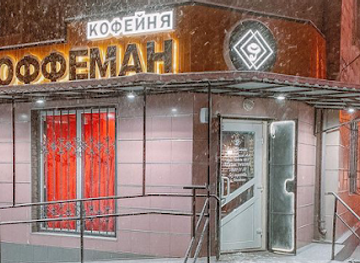
Kofeynya "Koffeman"
Discover the rich flavors of expertly roasted coffee at Kofeynya 'Koffeman' in Khartsyz'k, a cozy spot for relaxation and socializing.
-
Electronics store
Mi Store
Discover the latest Xiaomi products at Mi Store in Khartsyz'k, where technology meets style and affordability.
-
Women's clothing store
Shamli fashion store
Discover the latest trends in women's fashion at Shamli Fashion Store, Yenakijeve's premier destination for stylish clothing and accessories.
-
Home goods store
Mahazyn "Stop-Kadr"
Explore unique home goods and local craftsmanship at Mahazyn 'Stop-Kadr' in Khartsyz'k, a must-visit for every traveler.


Get your free copy of our complete guide to Donbas, delivered straight to you.
Everything on this page, from attractions and restaurants to essentials and local phrases, in one PDF you can read offline, print or share.
Already have an account? Sign in
Your Donbas guide is ready.
We'll send it to · Not you? Sign out

Getting your guide ready…
We are putting together a fresh copy of the Donbas guide. This can take up to a minute.
This can take a few moments. If your browser asks, choose Allow so the download can start. You'll find the guide in your Downloads folder.
Nothing happened? Download it again
Sorry, the guide is taking longer than usual. Please try again in a minute, or get it by email instead.
Donbas essentials
Currency and Payment
Safety
Emergency Situations
Do's and Don'ts
Local Tips
From Eve
Local phrases worth knowing
You don't need to get them perfect. A few words go a long way, and locals appreciate the effort.
Basics
| English | Local | Say it |
|---|---|---|
| Hello | Привіт | [Pryvit] |
| Goodbye | До побачення | [Do pobachennya] |
| Yes | Так | [Tak] |
| No | Ні | [Ni] |
| Please/You're welcome | Будь ласка | [Bud' laska] |
| Thank you | Дякую | [Dyakuyu] |
| Excuse me/Sorry | Вибачте | [Vybachte] |
| How are you? | Як справи? | [Yak spravy?] |
| Fine. And you? | Добре. А ти? | [Dobre. A ty?] |
| Do you speak English? | Ви говорите англійською? | [Vy hovoryte anhlijskoyu?] |
| I don't understand | Я не розумію | [Ya ne rozumiyu] |
Eating & Drinking
| English | Local | Say it |
|---|---|---|
| I'd like to see the menu, please | Я хотів би побачити меню, будь ласка | [Ya khotiv by pobachyty menyu, bud' laska] |
| I don't eat meat | Я не їм м'ясо | [Ya ne yim myaso] |
| Cheers! | На здоров'я! | [Na zdorov'ya!] |
| I would like to pay, please | Я хотів би заплатити, будь ласка | [Ya khotiv by zaplatyty, bud' laska] |
Emergencies
| English | Local | Say it |
|---|---|---|
| Help! | Допоможіть! | [Dopomozhit'!] |
| Go away! | Йди геть! | [Ydi het'!] |
| Call the Police! | Викликайте поліцію! | [Vyklykaite politsiyu!] |
| Call a doctor! | Викликайте лікаря! | [Vyklykaite likarya!] |
| I'm lost | Я загубився | [Ya zahubyvsy] |
| I'm ill | Я хворий | [Ya khvoryy] |
Shopping
| English | Local | Say it |
|---|---|---|
| I'd like to buy... | Я хотів би купити... | [Ya khotiv by kupyty...] |
| I'm just looking | Я просто дивлюсь | [Ya prosto dyvlyus'] |
| How much is it? | Скільки це коштує? | [Skil'ky tse koshtuye?] |
| That's too expensive | Це занадто дорого | [Tse zanhot'to doroho] |
| Can you lower the price? | Можете знизити ціну? | [Mozhete znyzyty tsinu?] |
Time & Numbers
| English | Local | Say it |
|---|---|---|
| What time is it? | Скільки часу? | [Skil'ky chasu?] |
| It's one o'clock | Одна година | [Odna hodyna] |
| Half past (10) | Пів на (10) | [Piv na (10)] |
| Morning | Ранок | [Ranok] |
| Afternoon | Пообід | [Poobid] |
| Evening | Вечір | [Vechir] |
| Yesterday | Вчора | [Vchora] |
| Today | Сьогодні | [S'ohodni] |
| Tomorrow | Завтра | [Zavtra] |
| 1 | 1 | [1] |
| 2 | 2 | [2] |
| 3 | 3 | [3] |
| 4 | 4 | [4] |
| 5 | 5 | [5] |
| 6 | 6 | [6] |
| 7 | 7 | [7] |
| 8 | 8 | [8] |
| 9 | 9 | [9] |
| 10 | 10 | [10] |
Transport & Directions
| English | Local | Say it |
|---|---|---|
| Where's a/the...? | Де ...? | [De ...?] |
| What's the address? | Яка адреса? | [Yaka adresa?] |
| Can you show me (on the map)? | Можете показати мені (на карті)? | [Mozhete pokazaty meni (na karti)?] |
| When's the next (bus)? | Коли наступний (автобус)? | [Koly nastupnyy (avtobus)?] |
| A ticket (to ....) | Квиток (до ...) | [Kvytochok (do ...)] |
History of Donbas
Ancient Steppe Cultures and Early Settlement
The Donbas landscape formed part of the wider Pontic steppe, crossed and settled by communities including Scythians, Sarmatians and later nomadic peoples. Archaeological remains, burial mounds and artefacts connect the region to long-distance networks linking the Black Sea, the lower Don and the Eurasian interior. The Siverskyi Donets valley provided water, woodland and routes through otherwise open country. Later Slavic settlement and frontier activity added further layers, although the density and character of habitation varied considerably across the steppe.
Cossack Frontiers and Imperial Expansion
From the early modern period, parts of the region lay within the changing frontier zones associated with the Don Cossacks, Zaporozhian Cossacks and the Russian Empire. Fortifications, seasonal settlement and agricultural colonisation gradually altered the steppe. Imperial administration encouraged migration by farmers, artisans and merchants, while Greek communities were established around the northern Sea of Azov in the eighteenth century. These movements helped create the region's later ethnic, linguistic and religious diversity rather than a single uniform local culture.
Coal and Metallurgy Transform the Region
The decisive transformation came in the nineteenth century, when geological surveys, railway construction and industrial investment developed the Donets Coal Basin. Coal mining expanded around settlements such as Bakhmut, Lysychansk and Horlivka, while iron and steel production grew in the wider Donbas and neighbouring Dnipro industrial belt. Foreign capital, migration and a rapidly expanding wage workforce turned a predominantly rural frontier into one of the Russian Empire's major industrial zones. Mines, spoil heaps, railways and company towns left a lasting physical and social imprint.
Revolution, War and Soviet Industrialisation
The region experienced upheaval during the 1917 revolutions and the subsequent civil war, followed by incorporation into Soviet Ukraine. During the 1930s, forced collectivisation, political repression and the wider famine caused profound suffering in the countryside and industrial settlements. Soviet industrialisation then expanded mines, factories, engineering works and urban infrastructure on a vast scale. The Second World War brought occupation, destruction and mass casualties, after which reconstruction reinforced Donbas's role as a major coal, steel and machinery centre of the Ukrainian Soviet Socialist Republic.
Late Soviet Decline and Independent Ukraine
By the late Soviet period, ageing mines, environmental degradation and dependence on heavy industry exposed structural weaknesses beneath the region's industrial importance. After Ukraine became independent in 1991, Donetsk and Luhansk oblasts retained substantial mining and metallurgical sectors while also developing universities, theatres, media and private enterprise. Mine closures and labour disputes affected many communities, and local political identities remained varied. Ukrainian independence also encouraged renewed attention to regional history, Ukrainian cultural heritage and the memory of communities displaced or suppressed in earlier periods.
Russian Intervention and the War Since 2014
In 2014, Russia's military intervention led to the occupation of Crimea and the establishment of Russian-backed separatist administrations in parts of Donetsk and Luhansk oblasts. Fighting, displacement and economic disruption continued despite the Minsk agreements. Russia launched its full-scale invasion of Ukraine in February 2022, occupying or contesting much larger areas of Donbas and causing severe destruction in cities including Mariupol, Bakhmut, Sievierodonetsk and Lysychansk. The war has damaged homes, mines, cultural monuments and ecosystems, while millions of residents have been displaced and Ukraine continues to resist the occupation.
Donbas in Photos
Browse through our photo collection highlighting the charm and character of the destination.
Neighbouring regions of Donbas
The closest regions to Donbas, if you have time for more than one.
-

-

-

-

-


Swipe for more regions
Explore more

Explore more of Ukraine
Explore Ukraine: From Kyiv's golden domes to the Carpathian Mountains, discover a country rich in history, culture, and natural beauty in the heart of Eastern Europe.
Explore Ukraine