

Free Tavria Travel Guide & Mobile App
Explore Tavria with free travel guides. Discover regional history, expert tips, proposed trips, and audio guides on web or mobile app.


Explore Tavria’s Black Sea history, steppe landscapes and Crimean cultural heritage while following Ukraine’s current security and access guidance.
Read more about Tavria
When is the best time to visit Tavria?
Best: June–August · 25–27°C| Month | High (°C) | Rainfall (mm) |
|---|---|---|
| January | 1 | 30 |
| February | 3 | 25 |
| March | 9 | 35 |
| April | 15 | 40 |
| May | 21 | 45 |
| June (best) | 25 | 50 |
| July (best) | 27 | 40 |
| August (best) | 27 | 35 |
| September | 22 | 30 |
| October | 15 | 35 |
| November | 8 | 40 |
| December | 3 | 30 |
Getting to and around Tavria
How to get there
Transportation
Top city travel guides in Tavria
The cities of Tavria, and the easiest places to base yourself.
-

-

-

-

-

-


Swipe for more cities
Destinations in Tavria
Resorts, valleys and scenic spots worth a trip of their own.
-

-

-

-


Swipe for more destinations
Best attractions in Tavria
Tavria’s attractions belong to several overlapping landscapes rather than one compact sightseeing circuit. In Zaporizhzhia, the National Reserve Khortytsia interprets the Dnipro islands, Cossack history and steppe ecology, while the city’s industrial heritage reflects the transformation of southern Ukraine during the twentieth century. Kherson and the lower Dnipro are associated with river, estuary and maritime history, although access to many natural and historical areas has been severely affected by the war. Crimea contains some of the region’s most important cultural sites, including the archaeological complex of Chersonesus, the Khan’s Palace at Bakhchysarai, cave settlements and mountain landscapes, but it is occupied and unsuitable for ordinary tourism. Archaeological museums, Crimean Tatar cultural institutions, historic cemeteries, kurgans, vineyards and Black Sea landscapes broaden the region’s appeal in principle. Outdoor activities once included birdwatching, boating, hiking and beach recreation, yet landmines, damaged infrastructure, military restrictions and polluted or unsafe waters mean that no natural site should be approached without current local clearance. The strongest visitor experience is therefore presently educational and urban where safe, with future access dependent on demining, reconstruction and heritage protection.
-
National reserve
Askania-Nova
Explore the breathtaking Askania-Nova National Reserve in Kherson Oblast, a UNESCO Biosphere Reserve brimming with unique wildlife and stunning landscapes.

Best landmarks in Tavria
Khortytsia Island in the Dnipro at Zaporizhzhia is Tavria’s most powerful mainland landmark, combining river geography, archaeological evidence and the historical memory of the Zaporizhian Cossacks. The Dnipro Hydroelectric Station, where accessible and viewed only from permitted locations, represents the region’s twentieth-century industrial transformation, although critical infrastructure must not be photographed. Kherson’s urban and riverfront heritage reflects its eighteenth-century imperial foundation and long maritime role, but war damage and security restrictions affect what can be seen. In Crimea, the Khan’s Palace at Bakhchysarai is the enduring architectural emblem of Crimean Tatar statehood, while Chersonesus preserves the remains of a Greek and Byzantine city on the Black Sea. The Crimean Mountains, coastal limestone formations and steppe kurgans provide natural and archaeological landmarks on a larger scale. These Crimean sites are internationally recognised as being within Ukraine but are under Russian occupation, so they should be treated as historical reference points rather than currently accessible Ukrainian travel stops.
-
Bridge
Ulitsa Pushkina
Discover the enchanting Ulitsa Pushkina bridge, a perfect blend of scenic beauty and hiking adventure in Taman', Krasnodar Krai.

Explore Tavria on the map
Plan your trip on one map. See where the top cities, national parks and sights are, and book hotels and experiences in a few clicks.
Best hotels in Tavria
Best restaurants in Tavria
Tavrian food reflects the meeting of Ukrainian, Crimean Tatar, Black Sea, steppe and imperial culinary traditions. Ukrainian cooking is represented by breads, dumplings, soups, preserved vegetables, grains and seasonal produce, while Crimean Tatar cuisine is associated with chebureki, meat-filled pastries, lagman, pilaf and other dishes shaped by Central Asian and Black Sea connections. Fish from the Dnipro and Black Sea, fruit from southern orchards, melons, tomatoes and grapes have long been important regional products, although availability and provenance vary greatly during wartime. In functioning cities, dining may range from cafés and bakeries to traditional Ukrainian restaurants and establishments serving Crimean Tatar food. Markets, where operating, offer a better insight into agricultural life than generic souvenir menus. Wine and grape cultivation are part of Tavria’s wider heritage, especially in Crimea and the southern mainland, but visitors should verify production locations and legal access carefully. Restaurant opening arrangements, supply chains and payment systems can change quickly, so current local information matters more than pre-war reviews.
-
Ukrainian
Kryivka
Discover the charm of Kryivka in Lviv - where authentic Ukrainian cuisine meets rich history in an unforgettable dining experience.
-
Grill
Meat and Justice
Discover Lviv's culinary gem at Meat and Justice—where expertly grilled meats meet unique ambiance for an unforgettable dining experience.
-
Ukrainian
Puzata Khata
Discover traditional Ukrainian flavors at Puzata Khata in Zaporizhzhia – where every dish tells a story.
-
Supermarket
Tavriya V
Explore Tavriya V in Odesa: Your ultimate destination for fresh produce and unique local finds in a vibrant shopping environment.


Best bars in Tavria
Tavria’s evening culture has traditionally centred on cafés, beer halls, restaurants, hotel bars and convivial urban meeting places rather than a single region-wide nightlife circuit. Zaporizhzhia and other larger mainland cities have historically offered live music, contemporary bars and late venues, while smaller settlements tend to close earlier and rely on cafés, family restaurants and local pubs. In Crimea, resort towns previously supported extensive seasonal nightlife, but occupation, war and restricted access mean that this is not a realistic basis for present travel planning. Across Ukrainian-controlled areas, curfews, air-raid alerts, power interruptions and security restrictions can limit evening activity, and venues may operate on reduced schedules. Visitors should prioritise establishments that follow local safety rules, know the location of the nearest shelter and avoid photographing sensitive infrastructure. Breweries, wine culture and regional food are better understood as daytime or early-evening cultural interests than as guarantees of an active club scene.
-
Bar
Barman Dictat
Barman Dictat: A Chic Bar Experience in the Heart of Kyiv with Exquisite Cocktails and Lively Atmosphere.
-
Bar
Pink Freud Kyiv
Unwind in the artistic ambiance of Pink Freud Kyiv, where innovative cocktails and a vibrant atmosphere await every traveler.
-
Bar
PUB O'HARA
Experience the vibrant atmosphere and delicious Irish cuisine at PUB O'HARA, a must-visit pub in Zaporizhzhia for tourists seeking local culture.
-
Cocktail bar
Loggerhead
Discover Loggerhead, Kyiv's premier cocktail bar, offering innovative drinks, a vibrant atmosphere, and a taste of local nightlife.


Best nightclubs in Tavria
Tavria’s evening culture has traditionally centred on cafés, beer halls, restaurants, hotel bars and convivial urban meeting places rather than a single region-wide nightlife circuit. Zaporizhzhia and other larger mainland cities have historically offered live music, contemporary bars and late venues, while smaller settlements tend to close earlier and rely on cafés, family restaurants and local pubs. In Crimea, resort towns previously supported extensive seasonal nightlife, but occupation, war and restricted access mean that this is not a realistic basis for present travel planning. Across Ukrainian-controlled areas, curfews, air-raid alerts, power interruptions and security restrictions can limit evening activity, and venues may operate on reduced schedules. Visitors should prioritise establishments that follow local safety rules, know the location of the nearest shelter and avoid photographing sensitive infrastructure. Breweries, wine culture and regional food are better understood as daytime or early-evening cultural interests than as guarantees of an active club scene.
-
Night club
Клуб на !FESTrepublic
Dive into the energetic nightlife of Lviv at Клуб на !FESTrepublic, a premier night club and concert hall featuring diverse music and thrilling events.
-
Night club
Caribbean Club
Discover the pulsating nightlife of Caribbean Club in Kyiv, where exceptional dining meets exhilarating entertainment in a vibrant atmosphere.
-
Night club
Forsage
Experience the vibrant nightlife at Forsage in Kyiv, where the music never stops and the dance floor awaits your moves.
-
Night club
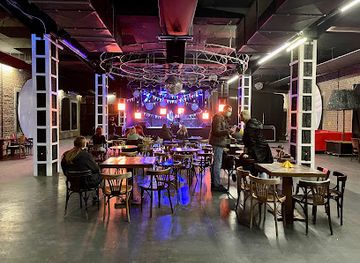
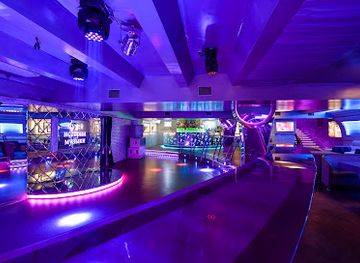
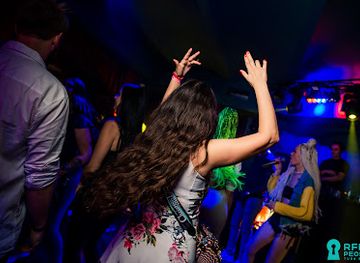
Rafinad People Night Club & Tusa Bar
Discover the vibrant nightlife of Lviv at Rafinad People Night Club & Tusa Bar, where music, dancing, and delicious cocktails create unforgettable experiences.

Best shops in Tavria
Shopping in Tavria has traditionally varied between the practical high streets of mainland cities, produce markets in agricultural districts and craft traditions connected with Ukrainian and Crimean Tatar culture. In Zaporizhzhia and Kherson, visitors may find Ukrainian books, ceramics, embroidered textiles, regional foods and contemporary crafts when local shops and markets are operating. Southern produce, honey, preserves, dried fruit and grape products have long been associated with the steppe and Black Sea economies, although wartime disruption affects supply and availability. Crimean Tatar decorative arts, textiles, embroidery and food products are culturally significant, but items should be bought from reputable Ukrainian cultural organisations or established makers rather than treated as anonymous souvenirs. Antique dealers and archaeological artefacts require particular caution: removing cultural property or buying objects of uncertain origin can be illegal. Retail hours, market locations and payment facilities are changeable, so rely on current local information and prioritise legitimate Ukrainian businesses.
-
Shopping mall
Ukraina Shopping Mall
Explore the Ukraina Shopping Mall in Kyiv for an unforgettable shopping and dining experience, featuring a wide range of stores and delectable cuisine.
-
Supermarket
Tavriia V
Discover the vibrant shopping experience at Tavriia V, the ultimate supermarket and shopping mall in Kharkiv, offering local delights and international treasures.
-
Supermarket
TC "Tavria-V" TAYIROVSKYY
Explore TC 'Tavria-V': Odesa's bustling supermarket and shopping mall, offering local delicacies, international products, and delightful dining options.
-
Supermarket
Tavria-B
Explore Mykolaiv's vibrant shopping scene at Tavria-B, your ultimate supermarket destination for fresh produce, local delights, and unique finds.


Get your free copy of our complete guide to Tavria, delivered straight to you.
Everything on this page, from attractions and restaurants to essentials and local phrases, in one PDF you can read offline, print or share.
Already have an account? Sign in
Your Tavria guide is ready.
We'll send it to · Not you? Sign out

Getting your guide ready…
We are putting together a fresh copy of the Tavria guide. This can take up to a minute.
This can take a few moments. If your browser asks, choose Allow so the download can start. You'll find the guide in your Downloads folder.
Nothing happened? Download it again
Sorry, the guide is taking longer than usual. Please try again in a minute, or get it by email instead.
Tavria essentials
Currency and Payment
Safety
Emergency Situations
Do's and Don'ts
Local Tips
From Eve
Local phrases worth knowing
You don't need to get them perfect. A few words go a long way, and locals appreciate the effort.
Basics
| English | Local | Say it |
|---|---|---|
| Hello | Привіт | [Pryvit] |
| Goodbye | До побачення | [Do pobachennya] |
| Yes | Так | [Tak] |
| No | Ні | [Ni] |
| Please/You're welcome | Будь ласка | [Budʹ laska] |
| Thank you | Дякую | [Dyakuyu] |
| Excuse me/Sorry | Вибачте | [Vybachte] |
| How are you? | Як справи? | [Yak spravy?] |
| Fine. And you? | Добре. А ти? | [Dobre. A ty?] |
| Do you speak English? | Ви говорите англійською? | [Vy hovoryte anhliysʹkoyu?] |
| I don't understand | Я не розумію | [Ya ne rozumiyu] |
Eating & Drinking
| English | Local | Say it |
|---|---|---|
| I'd like to see the menu, please | Я хотів би подивитися меню, будь ласка | [Ya khotiv by podivytysya menyu, budʹ laska] |
| I don't eat meat | Я не їм м'ясо | [Ya ne yim m'yaso] |
| Cheers! | На здоров'я! | [Na zdorov'ya!] |
| I would like to pay, please | Я хотів би заплатити, будь ласка | [Ya khotiv by zaplatyty, budʹ laska] |
Emergencies
| English | Local | Say it |
|---|---|---|
| Help! | Допоможіть! | [Dopomozhitʹ!] |
| Go away! | Ідіть геть! | [Iditʹ hetʹ!] |
| Call the Police! | Викликайте поліцію! | [Vyklykayte politsiyu!] |
| Call a doctor! | Викликайте лікаря! | [Vyklykayte likarya!] |
| I'm lost | Я заблукав | [Ya zablukav] |
| I'm ill | Я хворий | [Ya khvoryy] |
Shopping
| English | Local | Say it |
|---|---|---|
| I'd like to buy... | Я хотів би купити... | [Ya khotiv by kupyty...] |
| I'm just looking | Я тільки дивлюся | [Ya tilʹky dyvlyusya] |
| How much is it? | Скільки це коштує? | [Skilʹky tse koshtuye?] |
| That's too expensive | Це занадто дорого | [Tse zanadto doroho] |
| Can you lower the price? | Чи можете знизити ціну? | [Chy mozhete znyzyty tsinu?] |
Time & Numbers
| English | Local | Say it |
|---|---|---|
| What time is it? | Котра година? | [Kotra hodyna?] |
| It's one o'clock | Одна година | [Odna hodyna] |
| Half past (10) | Пів на (10) | [Piv na (10)] |
| Morning | Ранок | [Ranok] |
| Afternoon | День | [Denʹ] |
| Evening | Вечір | [Vechir] |
| Yesterday | Вчора | [Vchora] |
| Today | Сьогодні | [Sʹohodni] |
| Tomorrow | Завтра | [Zavtra] |
| 1 | Один | [Odin] |
| 2 | Два | [Dva] |
| 3 | Три | [Try] |
| 4 | Чотири | [Chotyry] |
| 5 | П'ять | [P'yatʹ] |
| 6 | Шість | [Shistʹ] |
| 7 | Сім | [Sim] |
| 8 | Вісім | [Visim] |
| 9 | Дев'ять | [Devyatʹ] |
| 10 | Десять | [Desyatʹ] |
Transport & Directions
| English | Local | Say it |
|---|---|---|
| Where's a/the...? | Де ...? | [De ...?] |
| What's the address? | Яка адреса? | [Yaka adresa?] |
| Can you show me (on the map)? | Можете показати мені (на карті)? | [Mozhete pokazaty meni (na karti)?] |
| When's the next (bus)? | Коли наступний (автобус)? | [Koly nastupnyy (avtobus)?] |
| A ticket (to ....) | Квиток (до ....) | [Kvytoк (do ....)] |
History of Tavria
Prehistoric Steppe Cultures and the Scythians
The grasslands north of the Black Sea were occupied by farming communities and mobile pastoral peoples long before written Ukrainian history. Scythian groups dominated much of the steppe from approximately the seventh to the third centuries BC, leaving burial mounds, or kurgans, across southern Ukraine and Crimea. Their networks connected the interior of Eurasia with Black Sea trading settlements, and their metalwork is represented in important archaeological collections. The kurgans that still punctuate parts of the landscape are among Tavria’s most recognisable archaeological traces, although many are difficult to visit safely or lie in areas affected by the war.
Greek Colonies on the Black Sea
From the seventh century BC onwards, Greek communities established ports and settlements around the northern Black Sea. Chersonesus, founded near present-day Sevastopol in Crimea, became a major agricultural and trading centre, while other colonies linked the coastal zone with the steppe hinterland. These settlements exchanged grain, fish, wine and manufactured goods with neighbouring peoples. Chersonesus later became an important Byzantine Christian centre, and its archaeological remains illustrate how closely Tavria was connected to the wider Mediterranean world. The site is in occupied Crimea and is not currently an ordinary visitor destination.
The Crimean Khanate and Crimean Tatar Culture
The Crimean Khanate was established in the fifteenth century under the Giray dynasty and remained a major power in the Black Sea region until its annexation by the Russian Empire in 1783. Its capital, Bakhchysarai, developed as a centre of Crimean Tatar political, religious and artistic life. The Khan’s Palace, mosques, cemeteries and surviving architectural traditions reflect this period, although the community’s history also includes enslavement, warfare and forced political change. The Russian annexation was followed by substantial migration, dispossession and demographic transformation, while Crimean Tatar identity continued through later repression and exile.
Cossack Frontiers and the Lower Dnipro
The lower Dnipro and its surrounding steppe were closely associated with the Zaporizhian Cossacks, whose fortified settlements and riverine communities played a major role in the military and political history of Ukraine. Khort Mytsia, an island in the Dnipro at Zaporizhzhia, is especially important in the historical imagination and is home to the National Reserve Khortytsia. Cossack society combined military service, farming, trade and local self-government, but it existed within a contested frontier shaped by the Polish-Lithuanian Commonwealth, the Crimean Khanate, the Ottoman Empire and Muscovite Russia.
Imperial Annexation and New Southern Cities
During the late eighteenth and nineteenth centuries, the Russian Empire consolidated control over the northern Black Sea coast and Crimea. New administrative and port cities, including Kherson and later Sevastopol, were developed as centres of naval power, trade and agricultural expansion. Settlers from various parts of the empire and from European communities joined existing Ukrainian, Crimean Tatar, Greek, Armenian, Jewish and other populations. The period brought roads, harbours and grain exports, but also imperial land redistribution, military colonisation and the erosion of earlier political structures.
Industrialisation, Ports and Irrigated Agriculture
In the nineteenth and twentieth centuries, Tavria’s economy increasingly depended on ports, railways, shipbuilding, grain handling, mining and large-scale agriculture. Zaporizhzhia became a major industrial centre, while the lower Dnipro and southern steppe were transformed by irrigation and state-directed farming. Melitopol developed as an important regional manufacturing and transport centre, and Black Sea ports connected Ukrainian agricultural production to international markets. These changes brought urban growth but also environmental pressure, including the loss or alteration of wetlands, steppe and river habitats.
Soviet Rule, Deportation and Post-Soviet Change
Soviet rule reshaped Tavria through collectivisation, industrialisation, centralised water and energy projects, wartime destruction and demographic engineering. In 1944, the Soviet authorities deported the Crimean Tatars from Crimea, an act now widely recognised as a major historical trauma; many survivors and descendants were permitted to return only during the late Soviet and post-Soviet periods. After Ukraine became independent in 1991, Crimea received autonomous status within Ukraine, and southern mainland regions developed as agricultural, industrial and maritime centres. Russia’s occupation of Crimea in 2014 and its full-scale invasion in 2022 have profoundly altered access, demographics and heritage protection across Tavria.
Tavria in Photos
Browse through our photo collection highlighting the charm and character of the destination.
Neighbouring regions of Tavria
The closest regions to Tavria, if you have time for more than one.
-

-

-

-

-


Swipe for more regions
Explore more

Explore more of Ukraine
Explore Ukraine: From Kyiv's golden domes to the Carpathian Mountains, discover a country rich in history, culture, and natural beauty in the heart of Eastern Europe.
Explore Ukraine