Balintore Castle (undergoing restoration) Travel Guide
Free Guide: Victorian Scottish Baronial castle near Kirriemuir, blending historic grandeur with ongoing restoration in scenic Angus moorland.


A brief summary of Balintore Castle (undergoing restoration)
Victorian Scottish Baronial castle near Kirriemuir, blending historic grandeur with ongoing restoration in scenic Angus moorland.
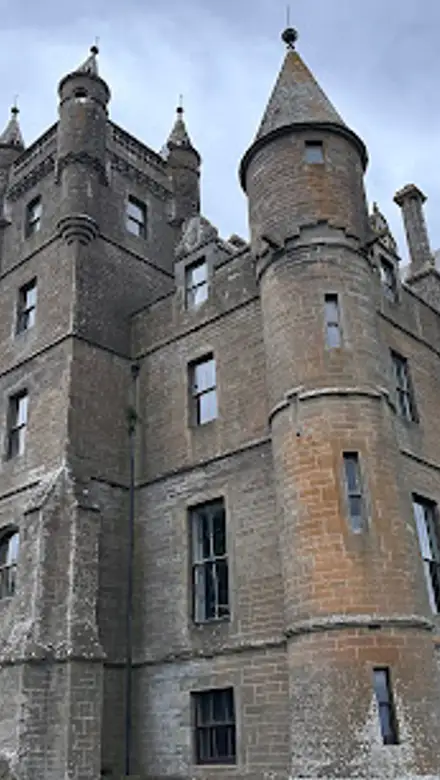
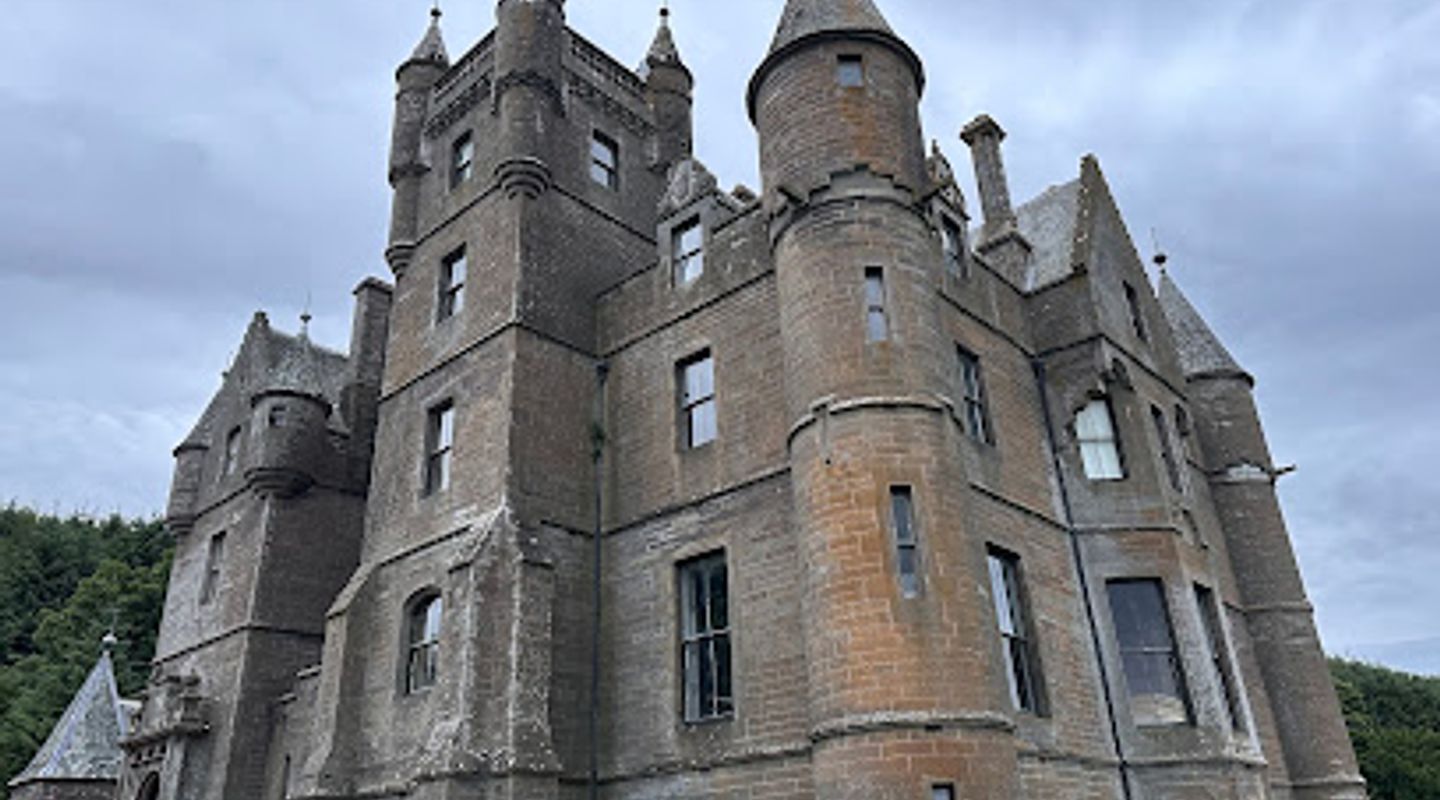
Balintore Castle, near Kirriemuir in Angus, Scotland, is a striking Victorian-era Scottish Baronial castle built in 1859 as a sporting lodge. Designed by architect William Burn, it features turreted towers, gables, and a balustraded viewing platform. After decades of neglect and abandonment, the castle is now undergoing careful restoration to preserve its historic grandeur and unique architectural heritage.
On-site amenities
 Restrooms
 Seating areas
 Information boards
- Address
- Balintore Castle near, Kirriemuir DD8 5JS
- Phone
- Website
Getting there
Car
Bus
Walking
Discover more about Balintore Castle (undergoing restoration)
Architectural Grandeur of Balintore Castle
Balintore Castle is a quintessential example of the Scottish Baronial style, designed in 1859 by the noted architect William Burn. Its distinctive features include an abundance of turreted towers, ornate gables, and a prominent balustraded viewing platform crowning the main tower, reminiscent of Buchanan Castle. The castle's design reflects the romantic architectural trends of the Victorian era, embodying both grandeur and the rugged charm of Scotland's moorland setting.
Historical Roots and Evolution
The site has a deep historical lineage, with a tower house named Balintor recorded on Timothy Pont's late 16th-century maps. This medieval predecessor shares visual echoes with the current structure, particularly the tall central tower. Commissioned by David Lyon, a wealthy Member of Parliament with fortunes from the East India Company, Balintore Castle was intended as a sporting lodge for the Victorian elite, primarily used during shooting seasons. The estate was acquired around 1858, aligning with the era's fascination with romanticized Scottish castles.
Interior Highlights and Estate Life
Inside, Balintore Castle boasts a great hall as its centerpiece, complemented by a gallery, bedrooms, a dining room, a library, and various service rooms such as the butler's pantry and beer cellar. These spaces reveal the lifestyle of its original inhabitants and their guests, designed for comfort and social gatherings during hunting seasons. The castle’s interior layout reflects Victorian social customs and the practical needs of a sporting estate.
Decline and Conservation Efforts
Following Lady Langman’s death in 1963, the castle fell out of regular use, though it remained sporadically occupied by shoot beaters into the 1980s. Neglect led to extensive dry rot and structural deterioration, prompting Angus Council to intervene using compulsory purchase powers. Since 2007, restoration efforts have been underway to stabilize and revive the castle, aiming to preserve its Category A listed status and architectural significance for future generations.
Setting and Surroundings
Perched on moorland above the village of Balintore and near the Loch of Lintrathen, the castle enjoys a commanding view of the Angus landscape. Its elevated position enhances its dramatic silhouette against the sky, making it a scenic landmark in the region. The natural surroundings contribute to the castle’s historic role as a sporting lodge and offer a tranquil retreat into Scotland’s rural heritage.
Legacy and Visitor Experience
Balintore Castle stands as a testament to Victorian romanticism and Scotland’s aristocratic sporting traditions. Its ongoing restoration invites appreciation of architectural craftsmanship and historical narratives embedded in its walls. Visitors can explore the evolving story of this once-abandoned estate, witnessing the blend of history, architecture, and nature that defines Balintore Castle’s unique character.
Evendo Review Centre
 Google
Guest reviews
Best time to go
Quietest: Jan, Feb & Dec · before 6am or at 8pm
Busy times are Evendo estimates for a typical year, to help you plan. Actual crowds vary with events, school holidays and the weather.
Explore Balintore Castle (undergoing restoration) on the map
A handpicked selection of must-see spots near Balintore Castle (undergoing restoration), mapped for you.
Get your free copy of our complete guide to Balintore Castle (undergoing restoration), delivered straight to you.
Everything on this page, from opening hours and how to get there to Eve’s tips and the best time to go, in one PDF you can read offline, print or share.
Already have an account? Sign in
Your Balintore Castle (undergoing restoration) guide is ready.
We'll send it to · Not you? Sign out

Getting your guide ready…
We are putting together a fresh copy of the Balintore Castle (undergoing restoration) guide. This can take up to a minute.
This can take a few moments. If your browser asks, choose Allow so the download can start. You'll find the guide in your Downloads folder.
Nothing happened? Download it again
Sorry, the guide is taking longer than usual. Please try again in a minute, or get it by email instead.
Other nearby places you may find interesting
The closest places of the same kind, if this one is not quite what you had in mind.
-
-
-
-
-


Swipe for more places
More to explore near Balintore Castle (undergoing restoration)
-
 Best experiences near Balintore Castle (undergoing restoration)
-
 Best hotels near Balintore Castle (undergoing restoration)
-
 Best landmarks near Balintore Castle (undergoing restoration)
-
 Best attractions near Balintore Castle (undergoing restoration)
-
 Best shops near Balintore Castle (undergoing restoration)
-
 Best restaurants near Balintore Castle (undergoing restoration)
-
 Best bars near Balintore Castle (undergoing restoration)


Do you manage this location?
Take control to get all the benefits, like improved information, better appearance, and stronger visibility across AI-powered discovery.
Explore more

Explore more of Angus
Explore Angus: A captivating destination in Scotland known for its rich history, stunning landscapes, and vibrant culture.
Explore Angus
Explore more of United Kingdom
Discover the United Kingdom: A blend of rich history, stunning landscapes, and vibrant cities, offering a unique travel experience for every visitor.
Explore United Kingdom