Background

Bristol Cathedral: A Majestic Medieval Hall Church in the Heart of Bristol

Explore Bristol Cathedral’s soaring medieval hall church, Gothic Revival nave, and centuries of rich history in the heart of Bristol.

4.7

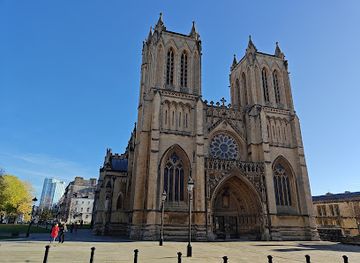
Bristol Cathedral, located on College Green in the city center, is a stunning medieval cathedral with origins dating back to 1140. Known for its unique hall church design, exquisite vaulted ceilings, and rich history as an Augustinian Abbey turned cathedral in 1542, it features remarkable Gothic Revival architecture by G.E. Street and J.L. Pearson. Visitors can explore its Romanesque Chapter House, the Lady Chapel, and the magnificent west front with twin towers.

A brief summary to Bristol Cathedral

  • Monday 8 am-5 pm
  • Tuesday 8 am-5 pm
  • Wednesday 8 am-5 pm
  • Thursday 8 am-5 pm
  • Friday 8 am-5 pm
  • Saturday 8 am-5 pm
  • Sunday 8 am-3 pm

Local tips

  • Visit on a Saturday to join a free guided tour and learn about the cathedral’s 900-year history and architecture.
  • Attend a daily service like Morning Prayer or Evensong to experience the cathedral’s spiritual atmosphere and choir music.
  • Explore the Lady Chapel to admire its intricate Gothic stonework and beautiful stained-glass windows.
  • Allow time to wander the peaceful gardens and visit the Lord Mayor’s Chapel when open on Thursdays and Saturdays.
widget icon

Getting There

  • Public Transport

    Take the Bristol bus services that stop near College Green, including routes 1, 2, and 3, with travel times ranging from 10 to 30 minutes from Bristol Temple Meads station. Buses run frequently throughout the day with single fares around £2.50.

  • Walking

    From Bristol Temple Meads railway station, a 20-minute walk through the city center on mostly flat terrain leads to College Green. The route is accessible and offers views of Bristol’s historic streets.

  • Taxi or Rideshare

    A taxi or rideshare from Bristol Temple Meads to Bristol Cathedral takes approximately 5 to 10 minutes depending on traffic, with fares typically between £6 and £10.

Bristol Cathedral location weather suitability

  • Weather icon Any Weather
  • Weather icon Rain / Wet Weather
  • Weather icon Clear Skies
  • Weather icon Mild Temperatures

Unlock the Best of Bristol Cathedral

Buy tickets

    No tickets available

Book tours with entry

    No tours available

Book tours without entry

    No tours available

Discover more about Bristol Cathedral

Origins and Architectural Evolution

Bristol Cathedral began life as the Abbey Church of St Augustine, founded around 1140 by Robert Fitzharding, a prominent local merchant who became the first Lord Berkeley. Originally an Augustinian Abbey, the church’s medieval core includes the Romanesque Chapter House and Abbey Gatehouse, dating from the 12th century, showcasing characteristic rounded arches and intricate stonework. The Elder Lady Chapel, built circa 1220 in the Gothic style, features pointed arches, delicate tracery, and ribbed vaulting, with whimsical carvings of animals and figures that add charm to its sacred space.

The Hall Church and Vaulted Ceilings

One of Bristol Cathedral’s most distinctive architectural features is its design as a medieval hall church, rare in Britain but more common in German Gothic architecture. This means the nave, choir, and aisles share the same vaulted ceiling height, creating a spacious, airy interior flooded with light. The vaulted ceilings are especially notable for their ‘starburst’ rib patterns that create a sense of soaring elegance. Nikolaus Pevsner, the renowned architectural historian, praised the east end as superior to any contemporary English or European church, highlighting the cathedral’s exceptional spatial imagination.

Gothic Revival Nave and West Front

The cathedral’s medieval nave was never completed due to the Dissolution of the Monasteries in 1539. It wasn’t until the late 19th century that architect G.E. Street designed a new nave in the Gothic Revival style, harmonizing with the medieval hall church aesthetic. J.L. Pearson later added the French Rayonnant style west front with twin bell towers, giving the cathedral its iconic façade. The interior was further enriched with finely crafted furnishings, including the choir screen, reredos, and pulpit, blending historical reverence with Victorian craftsmanship.

Spiritual Life and Community Role

Bristol Cathedral remains an active place of worship and community gathering, offering daily services such as Morning Prayer and Evensong, alongside special events and concerts that celebrate its superb acoustics. The cathedral’s peaceful gardens and the Lord Mayor’s Chapel, a remarkable medieval sanctuary open on select days, provide tranquil spaces for reflection. Its role as a spiritual heart for Bristol continues a tradition spanning nearly nine centuries.

Visiting Experience and Highlights

Visitors to Bristol Cathedral can explore its rich history through guided tours that reveal tales of its architectural feats, notable residents, and hidden stories. Highlights include the Romanesque Chapter House, the ornate Lady Chapel with its colorful stained glass, and the impressive west front adorned with biblical statues. Admission is free, though donations are welcomed to support ongoing preservation. The cathedral’s central location on College Green makes it an accessible and essential stop for those exploring Bristol’s cultural heritage.

Preservation and Modern Enhancements

Throughout the 20th century, Bristol Cathedral has seen careful restoration and enhancement, including the installation of notable stained glass windows by Arnold Robinson and Keith New. The organ, housed in a baroque casing, dates back to 1685 and is considered one of the finest in the country. These efforts ensure the cathedral remains both a historic monument and a vibrant living space, blending medieval grandeur with modern vitality.

Busiest months of the year

Busiest hours of the day

Popular Experiences near Bristol Cathedral

Popular Hotels near Bristol Cathedral

Select Currency