Holy Trinity Church, Coventry: A Medieval Jewel of History and Art
Discover Coventry’s medieval gem with its soaring spire, stunning stained glass, and one of Europe’s finest 15th-century Doom paintings.
Holy Trinity Church in Coventry is a stunning medieval parish church dating back to the 12th century, renowned for its remarkable 15th-century Doom painting and magnificent stained glass windows. As the only medieval church in Coventry to survive the WWII Blitz largely intact, it features a soaring 72-metre spire and a cruciform layout with richly decorated interiors. The church remains an active place of worship and a serene sanctuary in the city centre.
A brief summary to Holy Trinity Coventry
- Holy Trinity Church, 5A Priory Row, Coventry, CV1 5EX, GB
- Click to display
- Click to display
- Duration: 0.5 to 2 hours
- Free
-
 Indoor
- Mobile reception: 4 out of 5
- Wednesday 11 am-3 pm
- Thursday 11 am-3 pm
- Friday 11 am-3 pm
- Saturday 11 am-3 pm
- Sunday 9 am-6 pm

Know before you go
Hi, I'm Eve. Here are a few practical things to know before exploring Holy Trinity Coventry.
- Visit on weekday mornings for a peaceful experience with fewer crowds.
- Take time to study the Doom painting with a guidebook to appreciate its detailed medieval symbolism.
- Check service times if you wish to attend worship or avoid busy periods during services.
- Explore nearby historic sites such as the ruins of St Mary’s Priory and the Coventry Cathedral.
Do you manage this location?
Take control to get all the benefits, like improved information, better appearance, and stronger visibility across AI-powered discovery. Learn more
Activate your presenceOther nearby places you may find interesting


Getting There
-
Bus
Local bus services connect Coventry city centre to Holy Trinity Church with frequent stops nearby. Travel times vary from 10 to 20 minutes depending on starting point. Tickets cost approximately £2.50–£4.00. Note that service frequency reduces on Sundays and evenings.
-
Train and Walk
Arrive at Coventry Railway Station, then walk approximately 1.5 km to Holy Trinity Church in about 20 minutes through the city centre. The walking route is mostly flat and accessible. Train fares vary based on origin, with regular services from regional hubs.
-
Taxi
Taxis from Coventry Railway Station or city centre offer a direct route to Holy Trinity Church, taking around 5–10 minutes. Typical fares range from £6 to £12. Taxis provide convenient access especially if mobility is a concern.
For the on-the-go comforts that matter to you
-
 Restrooms
-
 Information Boards
-
 Seating Areas
Discover more about Holy Trinity Coventry
Enduring Medieval Heritage
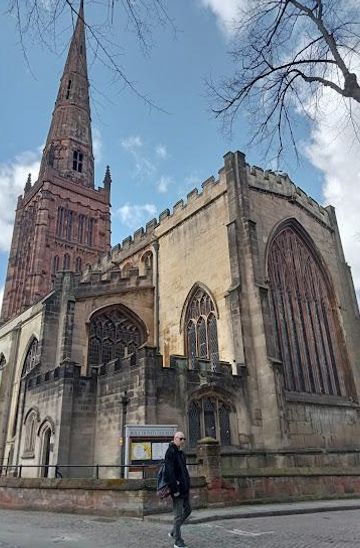
Holy Trinity Church's origins trace back to 1113, linked closely to the Benedictine Priory of St Mary founded by Earl Leofric and Lady Godiva. Although the original Norman structure was mostly destroyed by fire in 1257, the church was rebuilt in the 14th century, preserving the medieval spirit. Its cruciform plan, red sandstone construction, and soaring 72-metre spire—one of the tallest non-cathedral spires in the UK—make it a dominant landmark in Coventry's skyline. The spire was rebuilt in 1667 after a storm collapse, symbolizing resilience through centuries.Architectural and Artistic Treasures
Inside, the church impresses with a high nave, multiple aisles including the northern Marler Chapel, and a spectacular panelled roof. The 15th-century stone pulpit and lectern are among the oldest and finest in England. The church’s stained glass windows are notable, including fragments of the medieval Godiva window and the post-war 'Bride’s Window' donated by local couples. The east window was replaced after WWII damage, maintaining the church’s luminous interior.The Coventry Doom Painting
Holy Trinity is famed for its 15th-century Doom painting above the chancel arch, depicting the Last Judgement. Created in the 1430s following a local earthquake interpreted as divine wrath, it vividly illustrates the fate of souls, including a striking portrayal of three Coventry ale wives condemned for selling watered-down beer. Rediscovered in the 19th century, the painting underwent extensive restoration and was unveiled in 2004, now regarded as one of Europe’s finest medieval wall paintings.Survival Through Turmoil
Remarkably, Holy Trinity Church was the only large historic building to survive the devastating Coventry Blitz of 1940 with minimal damage, thanks to heroic efforts by its vicar and local firefighters. Though two stained glass windows were lost, the church’s structure and many interior features remained intact, preserving a vital link to Coventry’s medieval past amid the modern cityscape.A Living Spiritual and Community Hub
Today, Holy Trinity remains an active parish church offering regular worship services and community events. It provides a peaceful sanctuary for prayer and reflection in the bustling city centre. The welcoming atmosphere and dedication of clergy and volunteers enhance its role as both a historic monument and a vibrant centre of faith and community life.Visiting Experience and Atmosphere
Visitors encounter a serene and richly decorated interior filled with medieval art and architecture. The church’s large windows flood the space with natural light, highlighting intricate details such as the high pulpit and the Doom painting. The blend of history, art, and ongoing worship creates a unique atmosphere of reverence and continuity, inviting contemplation and appreciation of Coventry’s heritage.Explore the best of what Holy Trinity Coventry has to offer













More about Warwickshire
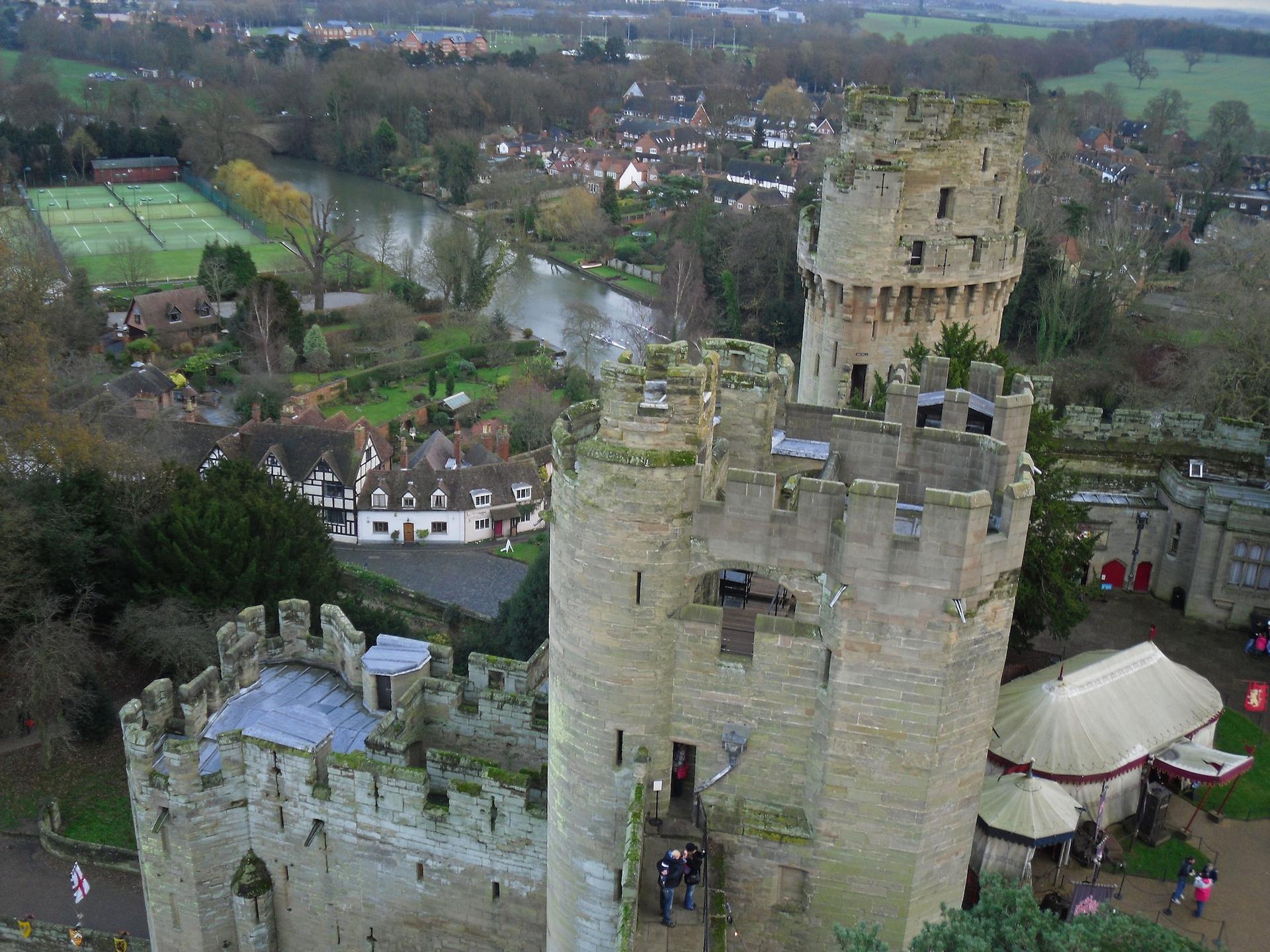
Discover Warwickshire: A blend of Shakespearean charm, medieval history, and serene countryside in the heart of England.
Tell me more about Warwickshire