

Giant's Cave, Bristol Travel Guide
Free Guide: Descend into legend and emerge with views of Bristol's most iconic bridge from an unforgettable angle.


A brief summary of Giant's Cave
Descend into legend and emerge with views of Bristol's most iconic bridge from an unforgettable angle.
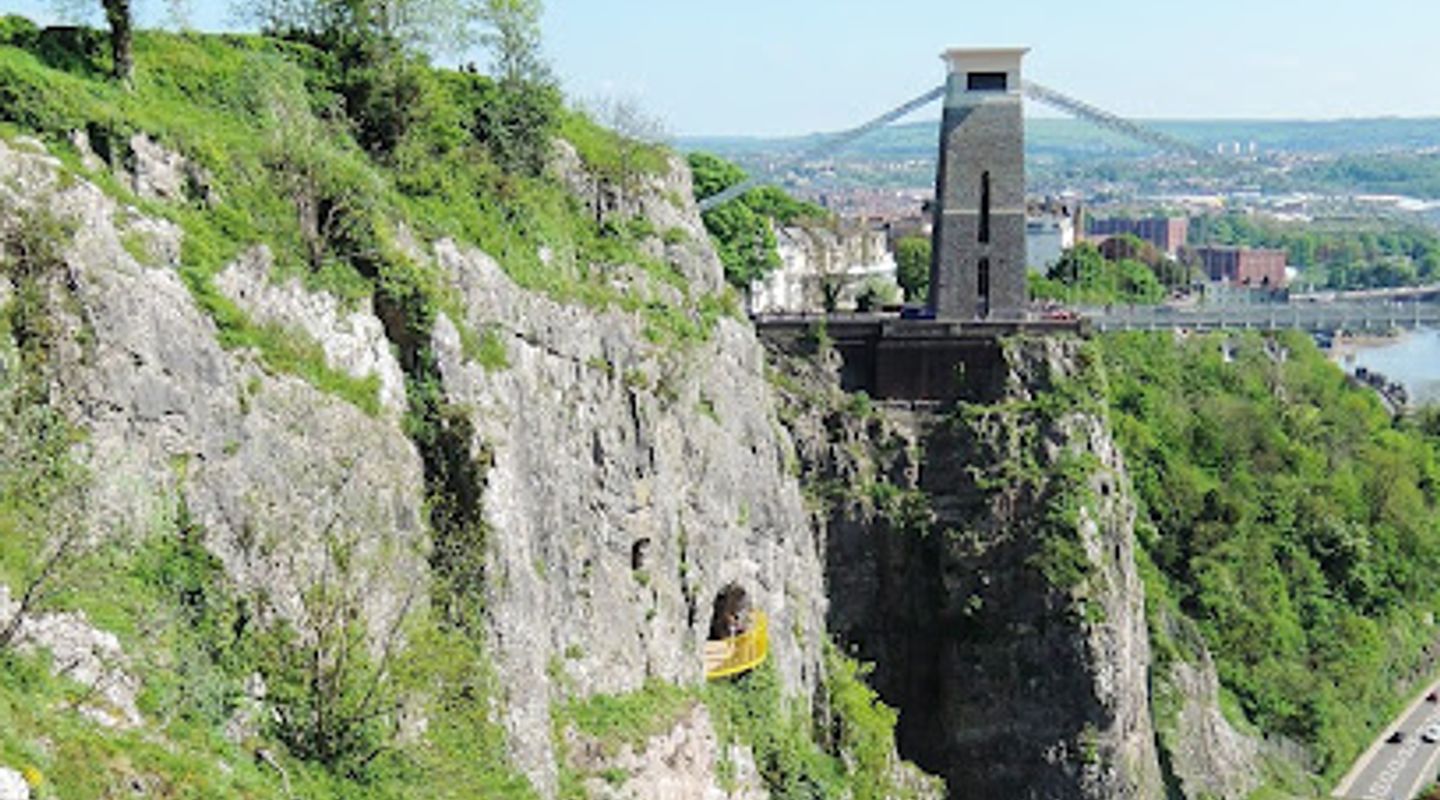
Descend 130 steep steps into a natural limestone cave carved into the Avon Gorge cliffs, where you'll emerge onto a unique viewing platform 250 feet above the river. This Victorian-era attraction, first opened to the public in 1835, offers breathtaking perspectives of the Clifton Suspension Bridge and surrounding gorge landscape. The 200-foot tunnel journey combines adventure with geology and local legend, culminating in one of Bristol's most distinctive vantage points.
On-site amenities
 Drink options
 Food options
 Seating areas
 Information boards
Opening hours
- Every day10 am–4 pm
Opening hours as listed on the venue’s Google Business Profile. Hours can change for services and special events, so check with the venue before you go.
- Address
- Clifton, Bristol BS8 3LT
- Phone
- Website
Getting there
On foot from Clifton Village
Bus from Bristol city centre
Taxi or ride-share from Bristol city centre
Car with parking
Discover more about Giant's Cave
A Natural Wonder Carved by History
The Giant's Cave, sometimes known as Ghyston's Cave or the Foxhole, is a natural cavity in the limestone face of St Vincent's Rocks within the Avon Gorge. For centuries, this cave remained virtually inaccessible, reachable only by perilous climbs down the steep cliff face or from the gorge floor below. In 1835, William West, an inhabitant of Clifton Observatory, transformed access to this geological marvel by excavating a passage through the rock from the Observatory itself. This engineering feat opened the cave to Victorian tourists and remains one of Bristol's most distinctive attractions today.
The Descent and the Journey
Your adventure begins at Clifton Observatory and takes you down 130 steep steps through a 200-foot-long tunnel carved into solid limestone. The passage is narrow in places with low ceilings, creating an intimate sense of descending into the earth itself. As you navigate the steps, you're literally walking through the geological layers that form the Avon Gorge, surrounded by ancient rock formations. The physical challenge of the descent is part of the experience—a reminder of why this cave remained hidden from casual visitors for so long. The final stretch opens onto a viewing platform that emerges from the cliff face itself.
Legendary Giants and Local Folklore
The cave's name derives from Bristol's famous giants of local legend: Goram, Ghyston, and Avona. According to folklore, these giants once inhabited the Avon Gorge, and their stories have been woven into Bristol's cultural identity for centuries. The cave is said to be their home, and visitors descending into its depths are stepping into the world of these mythical figures. Whether you believe in the legends or simply appreciate the storytelling tradition, the cave's association with these giants adds a layer of mystery and wonder to the geological experience.
Unparalleled Views from the Cliff Face
The viewing platform emerges 250 feet above the Avon River and 90 feet below the cliff top, creating a perspective found nowhere else in Bristol. From this vantage point, you see Isambard Kingdom Brunel's Clifton Suspension Bridge from an angle impossible to achieve from ground level or the bridge itself. The bridge's elegant arches frame the gorge in a way that reveals its engineering brilliance. The Avon Gorge spreads below you in all its natural grandeur, with wooded slopes descending to the river far below. On clear days, the views extend across the Clifton Downs and surrounding landscape, offering a panoramic understanding of Bristol's geography.
Victorian Engineering and Modern Access
The cave represents a fascinating intersection of natural geology and Victorian ingenuity. William West's decision to carve a passage through solid rock was ambitious for its time, and the tunnel remains a testament to 19th-century determination and engineering skill. Today, the route is maintained for safe public access, though it retains its character as a genuine cave experience rather than a sanitized tourist attraction. The narrow passages and steep steps preserve the sense of adventure while modern safety considerations ensure visitors can navigate the descent securely.
A Living Connection to Bristol's Past
Visiting the Giant's Cave connects you to multiple layers of Bristol's identity: the geological history of the Avon Gorge, the Victorian era's appetite for exploration and tourism, local folklore and legend, and the engineering achievements of the Industrial Revolution. The cave itself has remained largely unchanged for millennia, while human access to it has evolved dramatically over just two centuries. Standing on the viewing platform, you're simultaneously experiencing ancient geology and appreciating the determination of those who made this natural wonder accessible to everyone.
Evendo Review Centre
 Google
Guest reviews
Best time to go
Quietest: Jan, Feb & Nov · before 9am or from 6pm
Busy times are Evendo estimates for a typical year, to help you plan. Actual crowds vary with events, school holidays and the weather.
Explore Giant's Cave on the map
A handpicked selection of must-see spots near Giant's Cave, mapped for you.
Get your free copy of our complete guide to Giant's Cave, delivered straight to you.
Everything on this page, from opening hours and how to get there to Eve’s tips and the best time to go, in one PDF you can read offline, print or share.
Already have an account? Sign in
Your Giant's Cave guide is ready.
We'll send it to · Not you? Sign out

Getting your guide ready…
We are putting together a fresh copy of the Giant's Cave guide. This can take up to a minute.
This can take a few moments. If your browser asks, choose Allow so the download can start. You'll find the guide in your Downloads folder.
Nothing happened? Download it again
Sorry, the guide is taking longer than usual. Please try again in a minute, or get it by email instead.
Other nearby places you may find interesting
The closest places of the same kind, if this one is not quite what you had in mind.
-
-
-
-
-


Swipe for more places
More to explore near Giant's Cave

 Best experiences near Giant's Cave
 Best hotels near Giant's Cave
 Best landmarks near Giant's Cave
 Best attractions near Giant's Cave
 Best shops near Giant's Cave
 Best restaurants near Giant's Cave
 Best bars near Giant's Cave
Do you manage this location?
Take control to get all the benefits, like improved information, better appearance, and stronger visibility across AI-powered discovery.
Explore more
Explore more of Bristol
Discover Bristol: A dynamic city where historical grandeur meets modern innovation, offering a rich tapestry of culture, art, and maritime heritage.
Explore Bristol
Explore more of United Kingdom
Discover the United Kingdom: A blend of rich history, stunning landscapes, and vibrant cities, offering a unique travel experience for every visitor.
Explore United Kingdom
