
Pero's Bridge, Bristol Travel Guide
A striking pedestrian bridge honoring an enslaved man's memory and Bristol's complex past with the slave trade.
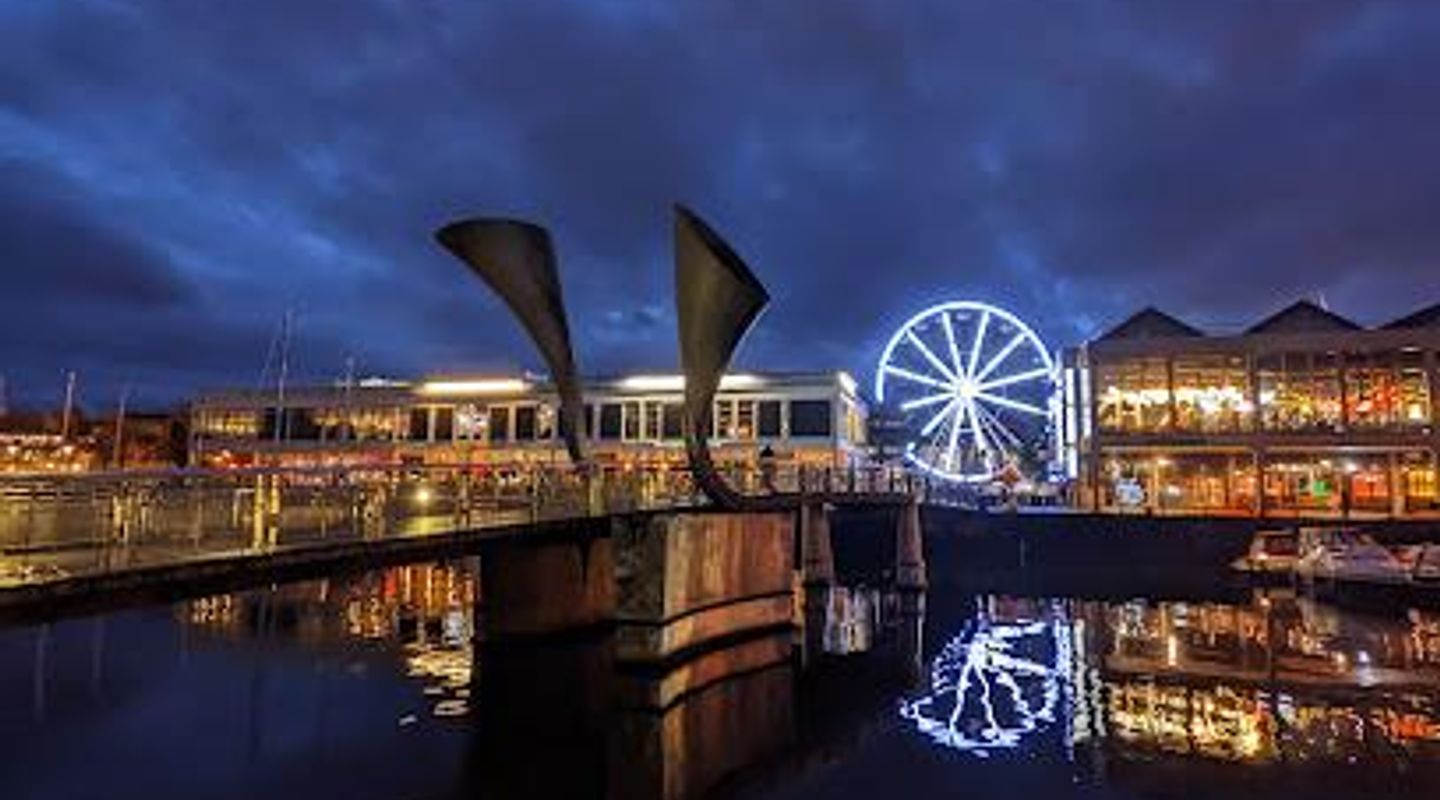
Pero's Bridge is a striking pedestrian footbridge spanning Bristol's floating harbour, completed in 1999 and named in commemoration of Pero Jones, an enslaved African who lived in 18th-century Bristol. Designed by Irish artist Eilis O'Connell and engineers Ove Arup & Partners, the bridge is instantly recognizable by its distinctive horn-shaped sculptures that serve as counterweights for its central lifting section. The bridge connects Queen Square with Millennium Square and stands as a powerful symbol of Bristol's acknowledgment of its complex history with the transatlantic slave trade.
A brief summary to Pero's Bridge
- Pero's Bridge, Bristol, BS1 5UH, GB
- Click to display
- Duration: 0.5 to 2 hours
- Free
-
 Outdoor
- Mobile reception: 5 out of 5

Know before you go
Hi, I'm Eve. Here are a few practical things to know before exploring Pero's Bridge.
- Visit during daytime hours to fully appreciate the bridge's distinctive horn-shaped sculptures and enjoy panoramic views of Bristol's floating harbour and surrounding architecture.
- Take time to reflect on the bridge's historical significance and the story of Pero Jones; consider visiting the nearby M Shed museum to learn more about Bristol's role in the transatlantic slave trade.
- The bridge connects to vibrant Harbourside attractions including the Arnolfini gallery, cafes, and restaurants, making it an ideal starting point for exploring Bristol's cultural quarter.
- Be aware that the bridge's central lifting section is currently restricted and not operational due to structural maintenance work; plan your visit accordingly.
- Photograph the bridge from multiple angles—the horn sculptures are particularly striking when viewed from the water level or from the surrounding squares.
Do you manage this location?
Take control to get all the benefits, like improved information, better appearance, and stronger visibility across AI-powered discovery. Learn more about listing your business on Evendo
Activate your presenceOther nearby places you may find interesting
The closest places of the same kind, if this one is not quite what you had in mind.
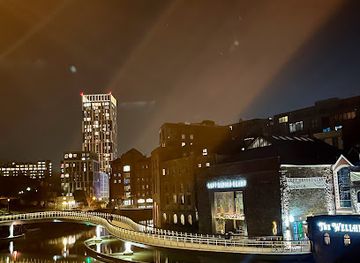
Explore Pero's Bridge on the Map
A handpicked selection of must-see spots near Pero's Bridge, mapped for you.
Unlock the Best of Pero's Bridge
Buy tickets
-
No tickets available
Book tours with entry


Getting There
-
Bus
Multiple bus routes serve Bristol's city center and Harbourside area. Services 1, 2, 3, 4, 5, and 9 stop at nearby Queen Street or Millennium Square, approximately 2–5 minutes' walk from Pero's Bridge. Journey times from the city center are typically 5–15 minutes depending on traffic. Single fares range from £1.80 to £2.50 GBP, with day passes available for £5.00 GBP.
-
Train
Bristol Temple Meads railway station is the nearest major rail hub, located approximately 1.2 kilometres south of Pero's Bridge. The walk takes approximately 15–20 minutes through the city center, or you can take a bus or taxi for 5–10 minutes. National rail services connect Bristol to London, Birmingham, and other UK cities, with typical journey times from London Paddington of 90 minutes. Local trains also serve regional destinations.
-
Walking
Pero's Bridge is centrally located within Bristol's Harbourside district and is easily accessible on foot from the city center. From Bristol's main shopping district (Broadmead), the walk takes approximately 10–15 minutes via pedestrian routes. The terrain is flat and paved throughout, making it accessible for most mobility levels. The bridge itself is a pedestrian-only crossing with no vehicle traffic.
-
Taxi or Ride-Share
Taxis and ride-share services (Uber, local firms) are readily available throughout Bristol. Journey times from the city center to Pero's Bridge are typically 5–10 minutes depending on traffic. Fares generally range from £6 to £12 GBP from central locations. The bridge has nearby drop-off points at Queen Square and Millennium Square.
For the on-the-go comforts that matter to you
-
 Restrooms
-
 Drink Options
-
 Food Options
-
 Seating Areas
-
 Information Boards
-
 Visitor Center
Discover more about Pero's Bridge
A Monument to Memory and Reconciliation
Pero's Bridge stands as one of Bristol's most architecturally distinctive and historically significant pedestrian crossings. Completed in 1999, the bridge was deliberately named after Pero Jones, an enslaved African who lived and died in Bristol during the 18th century. This naming decision represented a deliberate effort by Bristol's civic leadership to confront the city's uncomfortable past and honor those whose stories had been systematically overlooked. The bridge serves as a physical reminder of the millions of African men, women, and children who were forcibly taken from their homes through the transatlantic slave trade, in which Bristol played a prominent commercial role.Engineering Marvel and Artistic Vision
Designed by renowned Irish abstract sculptor Eilis O'Connell in collaboration with the prestigious engineering firm Ove Arup & Partners, Pero's Bridge represents a seamless fusion of functional engineering and artistic expression. The structure comprises three spans: two fixed outer sections and a central bascule section measuring 11 metres in length that can be raised to allow tall boats to navigate the harbour's 9-metre channel. The bridge's most iconic features are the pair of massive horn-shaped sculptures that function as counterweights for the lifting mechanism. These distinctive forms have earned the bridge affectionate nicknames among locals—the "Horned Bridge" and, more playfully, "Shrek's Bridge" due to their resemblance to the animated character's ears. The swirling, organic forms of the design create a striking visual presence that has made the bridge one of Bristol's most photographed landmarks.The Life and Legacy of Pero Jones
Pero Jones was born around 1753 on the Caribbean island of Nevis. At just twelve years old in 1765, he was purchased by John Pinney, a wealthy Bristol merchant who enslaved hundreds of people across multiple sugar and rum plantations. Pero was trained as a barber and worked on Pinney's Mountravers plantation until 1783, when the Pinney family relocated to Bristol. For the next 32 years, Pero served as John Pinney's personal servant, never receiving his freedom despite his long years of service. He died around 1798 at approximately 45 years of age, having spent more than three decades in bondage in England. The decision to name the bridge after Pero was championed by Paul Smith, then Bristol's Chair of Leisure, who sought to ensure that the stories of enslaved individuals were given permanent recognition within the city's public spaces.Controversy and Ongoing Debate
The naming of Pero's Bridge sparked considerable controversy upon its opening. Some critics, including then-Liberal Democrat councillor Stephen Williams, condemned the decision as "gesture politics," arguing that a simple name change was insufficient acknowledgment of Bristol's role in the slave trade. Williams advocated instead for a more prominent statue or dedicated memorial. Others questioned whether naming a bridge after a figure unknown to most of the general population would effectively communicate its historical significance. Despite these criticisms, the bridge remains one of only two physical memorials to slavery in Bristol, alongside a modest plaque on the side of M Shed museum. The lack of interpretive signage or explanatory markers on the bridge itself has meant that many visitors remain unaware of its profound historical meaning.Urban Regeneration and Public Space
Pero's Bridge was constructed as part of a broader urban regeneration initiative aimed at transforming Bristol's historic waterfront from industrial docks into a vibrant cultural and recreational destination. The bridge plays a crucial role in pedestrian connectivity, linking Queen Square with Millennium Square and facilitating access to the surrounding Harbourside attractions, including the Arnolfini gallery and numerous cafes and restaurants. The bridge's central location and striking design have made it a natural gathering point and a gateway to Bristol's cultural quarter, contributing significantly to the revitalization of the area.Modern Traditions and Structural Challenges
In recent years, Pero's Bridge has become a focal point for the contemporary tradition of attaching "love locks"—padlocks inscribed with couples' names or messages—to the bridge's railings. While this practice has become visually distinctive, it has also generated considerable debate. Many locals and historians view the accumulation of locks as disrespectful to the bridge's historical significance and the memory of those it commemorates. By 2025, the weight of accumulated locks had become a structural concern, with nearly 3 tonnes of locks requiring removal. Additionally, structural inspections conducted in July 2025 identified major structural issues with the bridge itself, leading to the imposition of a 1-tonne weight limit and a suspension of the bridge's lifting mechanism. Bristol City Council has allocated £200,000 toward repairs to address these concerns.












Your all‑in‑one travel companion app
Explore expert travel guides, compare and book tours, experiences, hotels, and more—all from the palm of your hand. Download now for seamless trip planning wherever your wanderlust takes you.


Explore More of Bristol
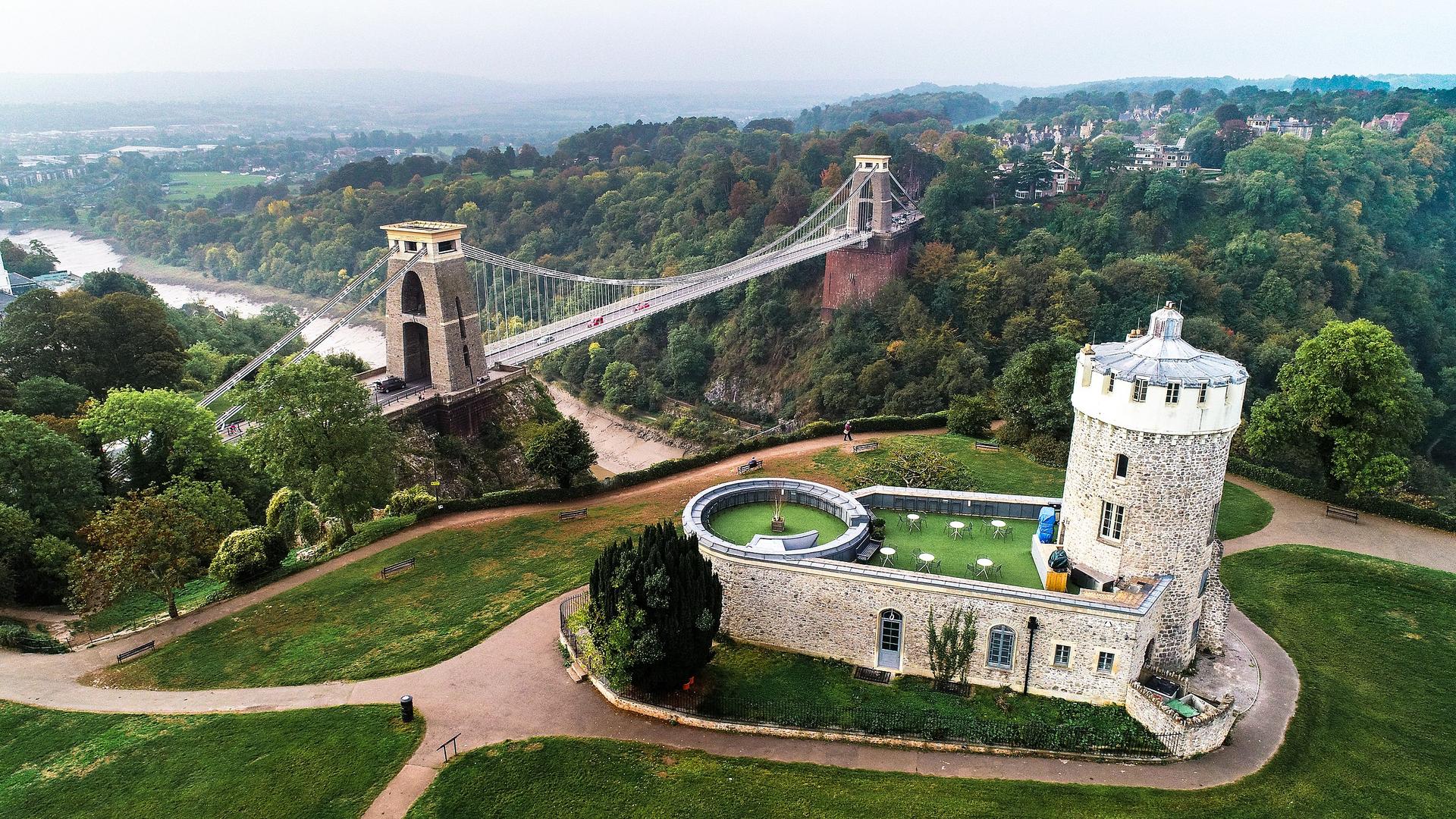
Looking beyond Pero's Bridge? Discover Bristol for broader travel guides, local hot-spots, and regional highlights.
Explore Bristol
Climb Bristol's iconic 68-metre tower for breathtaking city views and explore a masterpiece of Neo-Gothic architecture.

A working Victorian swing bridge over Bristol’s Floating Harbour, connecting the city centre with the Cumberland Road area and offering quiet views of boats and quays.
