

Burns Mausoleum Travel Guide
Free Guide: Final resting place of Robert Burns in a historic Dumfries churchyard, surrounded by centuries of Scottish stories and monuments.


A brief summary of Burns Mausoleum
Final resting place of Robert Burns in a historic Dumfries churchyard, surrounded by centuries of Scottish stories and monuments.
Resting place of Scotland’s national poet Robert Burns, this historic churchyard in Dumfries is a peaceful, atmospheric site of national significance. Surrounded by centuries-old monuments and mature trees, it offers a quiet space to reflect on Burns’s life and legacy. The adjacent St Michael’s Church, with its fine stained glass and deep local history, enhances the sense of place. A must-visit for literature lovers and those interested in Scottish heritage.
On-site amenities
 Seating areas
 Information boards
Opening hours
- Every dayOpen 24 hours
Opening hours as listed on the venue’s Google Business Profile. Hours can change for services and special events, so check with the venue before you go.
- Address
- Saint Michael's Cemetery, Dumfries DG1 2LA
Getting there
On foot from Dumfries town centre
By local bus
Discover more about Burns Mausoleum
Final Resting Place of Scotland’s Bard
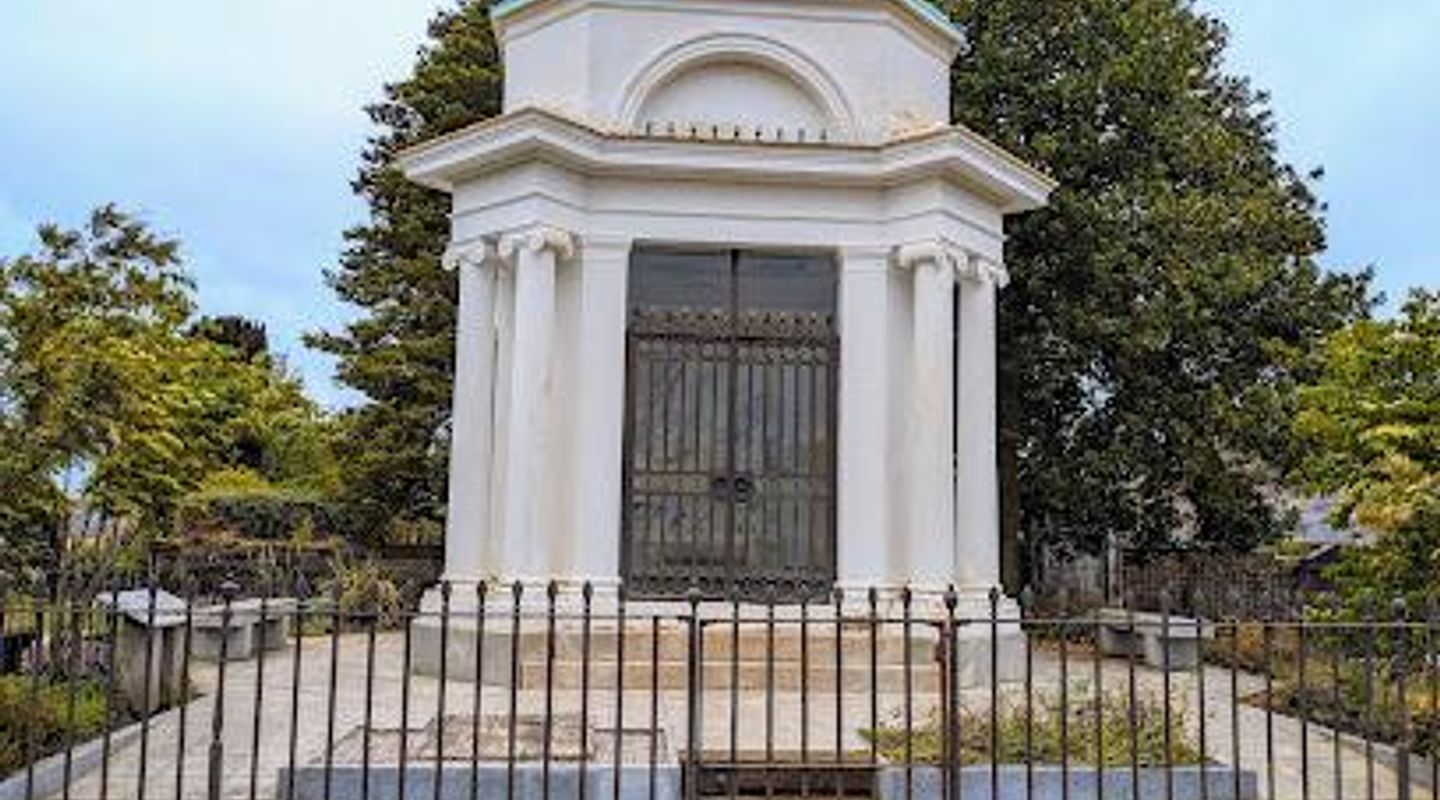
This churchyard is best known as the burial site of Robert Burns, Scotland’s national poet, whose Neo-Classical mausoleum stands prominently among the graves. The imposing stone tomb, completed in 1817, houses Burns and several members of his family. Visitors often pause here to read the inscriptions, reflect on his poetry, and pay their respects to the man whose words continue to define Scottish identity. The mausoleum’s classical design and prominent position make it a focal point of the kirkyard, drawing both literary pilgrims and casual visitors alike.
A Kirkyard Steeped in History
The churchyard has been a place of Christian worship and burial for well over a thousand years, with evidence of a church on this site dating back to the 12th century. Over the centuries, it has become a repository of local history, with a rich collection of 18th- and 19th-century monuments, including the Covenanters memorial and a mass grave for victims of a cholera epidemic. The irregular layout and mature trees give the space a timeless, slightly wild character, inviting quiet exploration among the headstones and mausoleums.
St Michael’s Church and Its Legacy
Adjacent to the kirkyard stands St Michael’s Church, a galleried Presbyterian church built of local red sandstone. The current building dates largely from the mid-18th century, though it incorporates elements from earlier structures, including 1500s pillars. Inside, the church is noted for its exceptional stained glass windows, among the finest in any Scottish Presbyterian church, and a historic Willis organ. The church also maintains a special connection with Norway, having served as a garrison church for Norwegian forces during the Second World War.
A Place of Quiet Reflection
Today, the churchyard and mausoleum form a tranquil green space just outside Dumfries town centre, offering a peaceful escape from the bustle of the streets. The atmosphere is one of quiet dignity, suitable for contemplation, photography, or simply sitting among the trees and monuments. The site is open to the public and well maintained, with clear paths and information about Burns and the history of the kirkyard. It is a place where history, literature, and local memory converge in a deeply evocative setting.
Evendo Review Centre
 Google
Guest reviews
Best time to go
Quietest: Jan, Feb & Nov · before 8am or from 8pm
Busy times are Evendo estimates for a typical year, to help you plan. Actual crowds vary with events, school holidays and the weather.
Explore Burns Mausoleum on the map
A handpicked selection of must-see spots near Burns Mausoleum, mapped for you.
Get your free copy of our complete guide to Burns Mausoleum, delivered straight to you.
Everything on this page, from opening hours and how to get there to Eve’s tips and the best time to go, in one PDF you can read offline, print or share.
Already have an account? Sign in
Your Burns Mausoleum guide is ready.
We'll send it to · Not you? Sign out

Getting your guide ready…
We are putting together a fresh copy of the Burns Mausoleum guide. This can take up to a minute.
This can take a few moments. If your browser asks, choose Allow so the download can start. You'll find the guide in your Downloads folder.
Nothing happened? Download it again
Sorry, the guide is taking longer than usual. Please try again in a minute, or get it by email instead.
Other nearby places you may find interesting
The closest places of the same kind, if this one is not quite what you had in mind.
-
-
-
-
-


Swipe for more places
More to explore near Burns Mausoleum

 Best experiences near Burns Mausoleum
 Best hotels near Burns Mausoleum
 Best landmarks near Burns Mausoleum
 Best attractions near Burns Mausoleum
 Best shops near Burns Mausoleum
 Best restaurants near Burns Mausoleum
 Best bars near Burns Mausoleum
Do you manage this location?
Take control to get all the benefits, like improved information, better appearance, and stronger visibility across AI-powered discovery.
Explore more
Explore more of Caithness
Discover Caithness, Scotland's northern gem, where rugged coastlines, ancient history, and vibrant wildlife come together in a breathtakingly beautiful landscape.
Explore Caithness
Explore more of United Kingdom
Discover the United Kingdom: A blend of rich history, stunning landscapes, and vibrant cities, offering a unique travel experience for every visitor.
Explore United Kingdom
