Duncansby Head Lighthouse Travel Guide
Free Guide: Scotland’s northeastern sentinel, Duncansby Head Lighthouse offers dramatic cliffs, iconic sea stacks, and rich maritime history at Britain’s edge.


A brief summary of Duncansby Head Lighthouse
Scotland’s northeastern sentinel, Duncansby Head Lighthouse offers dramatic cliffs, iconic sea stacks, and rich maritime history at Britain’s edge.
Duncansby Head Lighthouse, perched on the most north-easterly point of the British mainland near Wick, Scotland, is a striking square tower built in 1924. Standing 11 meters tall atop 67-meter cliffs, its light shines 21 nautical miles out to sea. The site offers dramatic coastal views, rich maritime history, and proximity to the iconic Duncansby Stacks sea formations, making it a captivating destination for nature lovers and history enthusiasts alike.
On-site amenities
 Restrooms
 Seating areas
 Trash bins
 Information boards
 Parking
Opening hours
- Every dayOpen 24 hours
Opening hours as listed on the venue’s Google Business Profile. Hours can change for services and special events, so check with the venue before you go.
- Address
- Wick KW1 4YS
- Website
Getting there
Car
Bus
Walking
Discover more about Duncansby Head Lighthouse
A Beacon on Scotland’s Edge
Duncansby Head Lighthouse stands proudly at the most north-easterly point of mainland Britain, near the village of John O'Groats in Caithness. Designed and built in 1924 by David Alan Stevenson, it is one of the few square lighthouse towers, a distinctive architectural feature. Although the tower itself is modest in height at 11 meters, it sits atop cliffs rising 67 meters above sea level, allowing its powerful light to be visible 21 nautical miles out to sea. The lighthouse’s light flashes white every 12 seconds, serving as a vital navigational aid in the treacherous waters of the Pentland Firth, known for its strong tidal streams and swirling currents.
Historical Echoes and Wartime Stories
The site’s maritime significance dates back to early 20th century developments, with a temporary fog signal established during World War I in 1914. The permanent lighthouse followed in 1924, marking a century of operation celebrated in 2024. During World War II, the lighthouse was machine-gunned by a German bomber, yet it survived without serious damage or injuries. The lighthouse was automated in 1997, ending the era of resident keepers. Nearby, poignant local history recalls the tragic 1959 shipwreck of the Aberdeen trawler George Robb, where 13 lives were lost on the rocky coast.
Stunning Coastal Landscapes and Wildlife
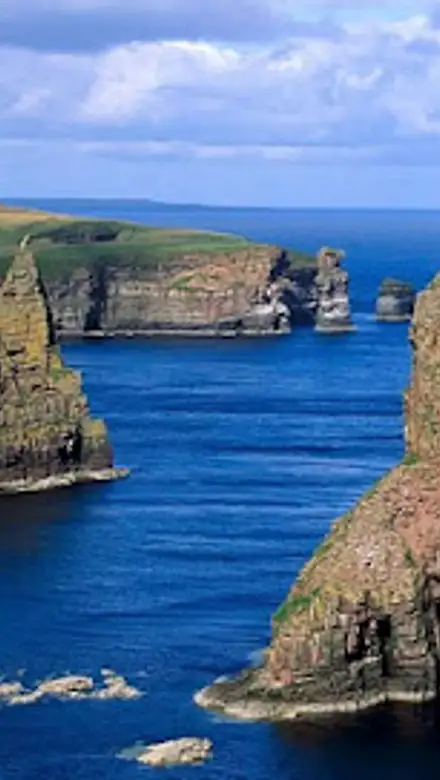
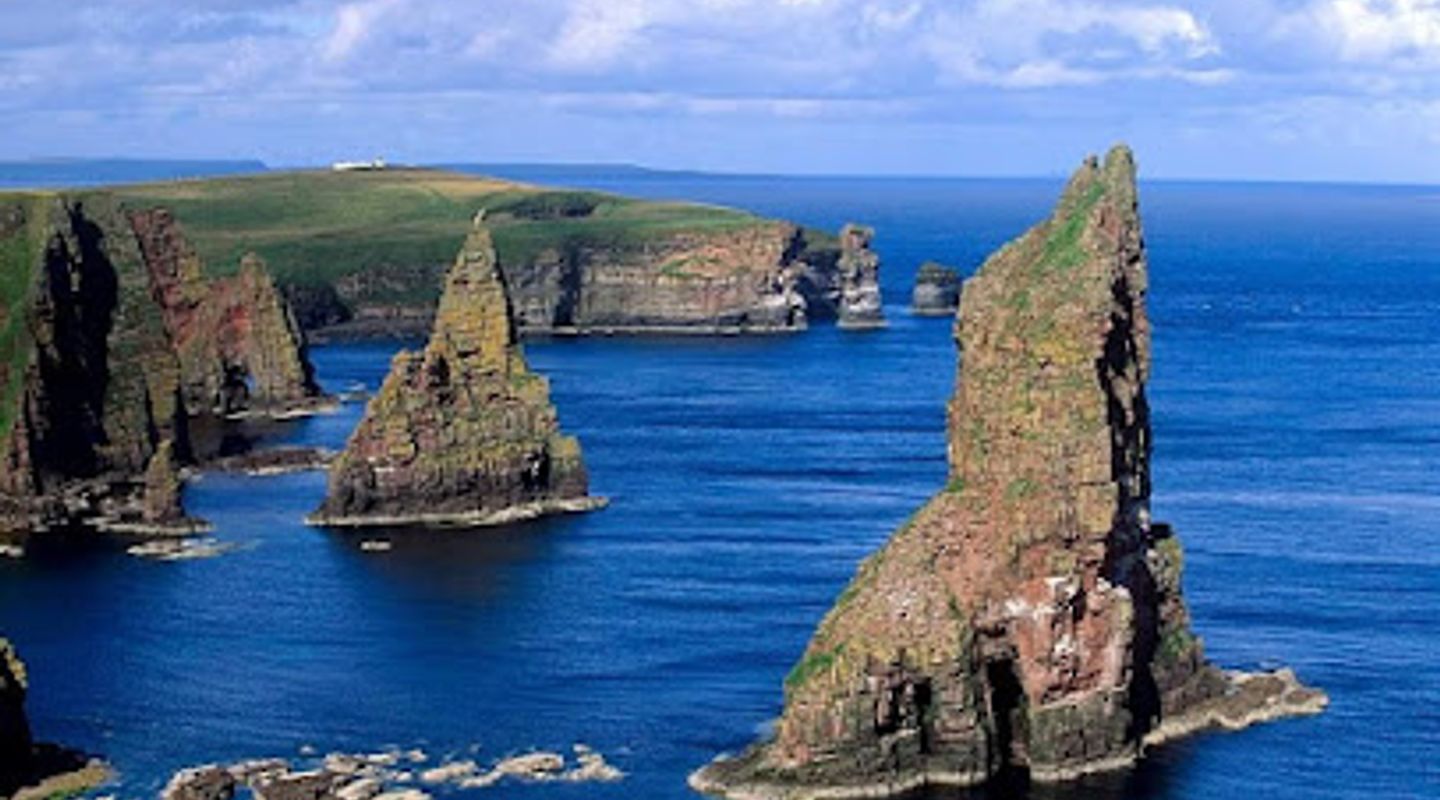
Visitors to Duncansby Head are treated to breathtaking panoramic views stretching north to the Orkney Islands and across the rugged Caithness and Sutherland coastlines. The dramatic cliffs provide a haven for seabirds such as Atlantic puffins, razorbills, and great skuas, while grey seals can often be spotted bobbing in the waters below. The site is also famed for the Duncansby Stacks—towering sea stacks that rise 60 meters from the sea, sculpted by millennia of wave erosion. One of these stacks is connected to the cliffs by a natural arch known as the Thirle Door, a striking geological feature.
Exploring the Headland and Surroundings
A small free car park near the lighthouse serves as the starting point for cliffside walks that lead visitors along wooden boardwalks and coastal paths. The walk to the Duncansby Stacks is approximately three-quarters of a mile and offers spectacular photo opportunities, especially at sunrise or sunset when the stacks glow in the changing light. The area is open 24 hours a day, allowing visitors to experience the wild beauty of the Scottish coast at their own pace. The nearby tidal race, known locally as the Duncansby Bore, adds to the dynamic seascape.
Conservation and Accessibility
Duncansby Head is part of a Site of Special Scientific Interest, protecting its unique coastal environment and wildlife habitat. While the lighthouse itself is not open to the public, the surrounding headland offers accessible paths suitable for most visitors, with seating areas and information boards enhancing the experience. The site is reachable by car or local bus services connecting from Wick, with travel times typically around 20–30 minutes. The rugged terrain and exposed location mean visitors should prepare for variable weather conditions.
Legacy and Local Significance
The lighthouse remains an operational beacon managed by the Northern Lighthouse Board, with regular maintenance visits ensuring its continued function. It symbolizes the rich maritime heritage of the region and stands as a sentinel over one of the most dramatic and historically important stretches of coastline in Scotland. The nearby memorial fog horn at John O’Groats commemorates the lighthouse’s role in safeguarding seafarers. Together with the spectacular natural formations and abundant wildlife, Duncansby Head offers a profound connection to both nature and history.
Evendo Review Centre
 Google
Guest reviews
Best time to go
Quietest: Jan, Feb & Dec · before 6am or at 10pm
Busy times are Evendo estimates for a typical year, to help you plan. Actual crowds vary with events, school holidays and the weather.
Explore Duncansby Head Lighthouse on the map
A handpicked selection of must-see spots near Duncansby Head Lighthouse, mapped for you.
Get your free copy of our complete guide to Duncansby Head Lighthouse, delivered straight to you.
Everything on this page, from opening hours and how to get there to Eve’s tips and the best time to go, in one PDF you can read offline, print or share.
Already have an account? Sign in
Your Duncansby Head Lighthouse guide is ready.
We'll send it to · Not you? Sign out

Getting your guide ready…
We are putting together a fresh copy of the Duncansby Head Lighthouse guide. This can take up to a minute.
This can take a few moments. If your browser asks, choose Allow so the download can start. You'll find the guide in your Downloads folder.
Nothing happened? Download it again
Sorry, the guide is taking longer than usual. Please try again in a minute, or get it by email instead.
Unlock the best of Duncansby Head Lighthouse
Skip-the-line tickets, guided tours with entry, and walking tours of the area, booked in a few clicks.


Other nearby places you may find interesting
The closest places of the same kind, if this one is not quite what you had in mind.
-
-
-
-
-


Swipe for more places
More to explore near Duncansby Head Lighthouse
-
 Best experiences near Duncansby Head Lighthouse
-
 Best hotels near Duncansby Head Lighthouse
-
 Best landmarks near Duncansby Head Lighthouse
-
 Best attractions near Duncansby Head Lighthouse
-
 Best shops near Duncansby Head Lighthouse
-
 Best restaurants near Duncansby Head Lighthouse
-
 Best bars near Duncansby Head Lighthouse


Do you manage this location?
Take control to get all the benefits, like improved information, better appearance, and stronger visibility across AI-powered discovery.
Explore more

Explore more of Caithness
Discover Caithness, Scotland's northern gem, where rugged coastlines, ancient history, and vibrant wildlife come together in a breathtakingly beautiful landscape.
Explore Caithness
Explore more of United Kingdom
Discover the United Kingdom: A blend of rich history, stunning landscapes, and vibrant cities, offering a unique travel experience for every visitor.
Explore United Kingdom