

Duncansby Stacks Travel Guide
Free Guide: Dramatic sandstone sea stacks rising 60m off Scotland’s northeastern coast, framed by wild cliffs and sweeping ocean vistas.


A brief summary of Duncansby Stacks
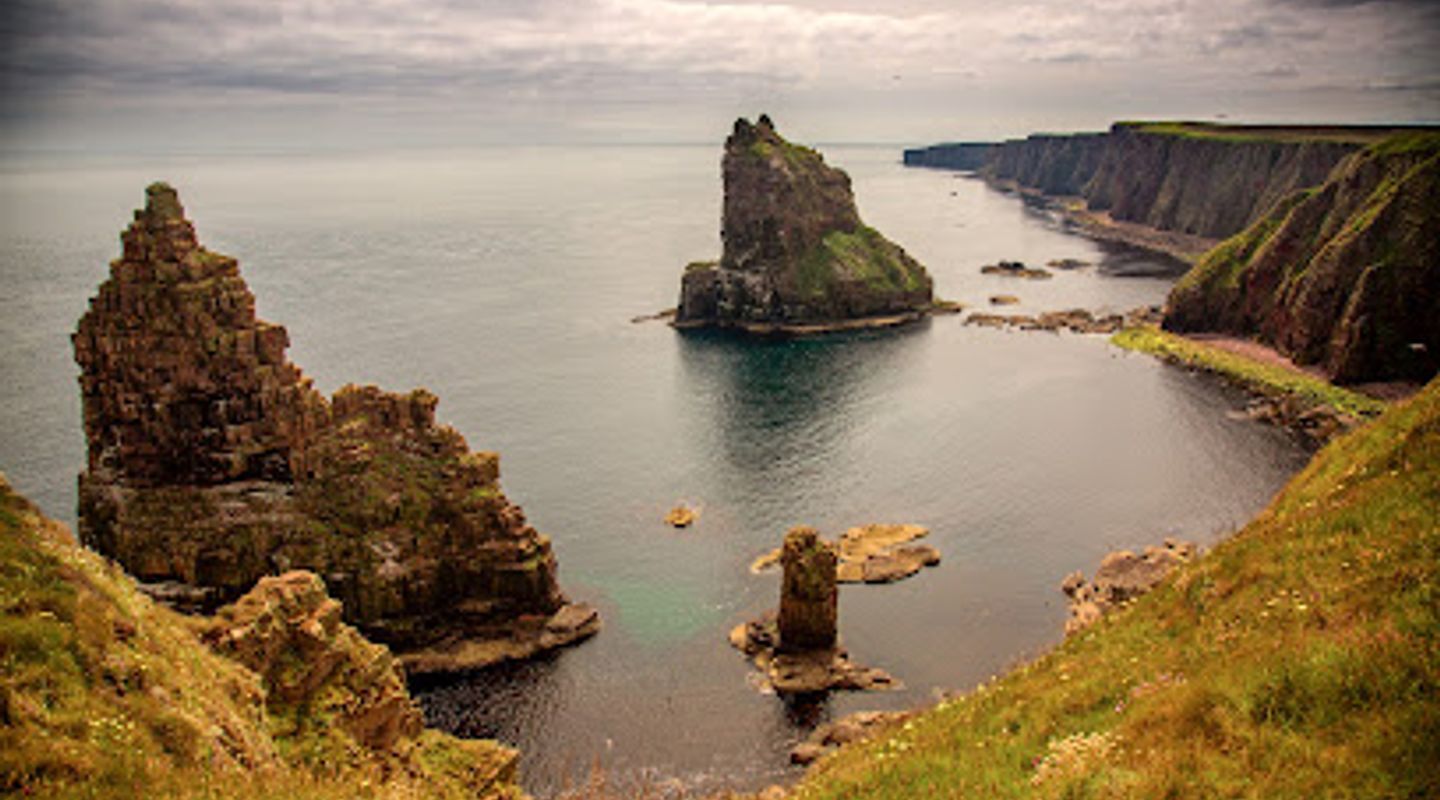
Dramatic sandstone sea stacks rising 60m off Scotland’s northeastern coast, framed by wild cliffs and sweeping ocean vistas.
The Duncansby Stacks are towering sea stacks rising 60 meters off the northeastern coast of mainland Scotland near John o’ Groats. These dramatic red sandstone pillars, carved by millennia of sea and storm erosion, stand beside the iconic Duncansby Head Lighthouse and offer sweeping views across the Pentland Firth towards the Orkney Islands. Accessible by a gentle clifftop walk, the stacks are a haven for seabirds and marine wildlife, making them a spectacular natural attraction in the Highlands.
On-site amenities
 Restrooms
 Drink options
 Food options
 Seating areas
 Trash bins
 Information boards
Opening hours
- Every dayOpen 24 hours
Opening hours as listed on the venue’s Google Business Profile. Hours can change for services and special events, so check with the venue before you go.
- Address
- John o' Groats, Wick KW1 4YS
- Website
Getting there
Car
Bus
Walking
Discover more about Duncansby Stacks
Geological Marvels Carved by Time
The Duncansby Stacks are two striking sea stacks reaching about 60 meters high, formed from coarse-grained Devonian sandstone dating back roughly 385 million years. These towering pillars stand just off the coast of Duncansby Head, the northeasternmost point of mainland Britain. Over at least 6,000 years, relentless wave action and storm weathering sculpted these stacks from the ancient coastline, leaving them as dramatic remnants of the past. Nearby, the Thirle Door arch is another geological feature in formation, still connected to the mainland but slowly evolving into a future stack.
A Wildlife Sanctuary on the Cliffs
The grassy clifftop paths around the stacks provide excellent vantage points to observe abundant seabirds such as puffins, guillemots, and fulmars that nest along the cliffs in spring and summer. Grey seals often rest at the base of the cliffs, while dolphins occasionally pass through the Pentland Firth’s waters. The area’s rich biodiversity and natural beauty make it a protected Site of Special Scientific Interest, offering visitors a chance to connect with Scotland’s rugged coastal ecosystem.
Scenic Walks and Panoramic Views
Visitors can reach the stacks via a gentle, well-trodden clifftop walk from the nearby car park at Duncansby Head Lighthouse. The route is grassy and open, with sweeping views across the sea towards the Orkney Islands and the surrounding Highland coastline. The walk to the stacks takes about 20-25 minutes, rewarding travelers with close-up views of the towering pillars and the expansive sea beyond. The lighthouse itself, built in 1924 and automated in 1997, marks the dramatic headland and offers a striking contrast to the natural formations.
Historical and Cultural Significance
Duncansby Head, including the stacks, represents the true northeastern tip of mainland Britain, surpassing the more commercialized John o’ Groats nearby. The lighthouse was designed by David Alan Stevenson and remains a key navigational landmark. The area’s remoteness and wild character have preserved its natural state, making it a treasured spot for those seeking dramatic landscapes and a sense of isolation at the edge of the British Isles.
Visitor Experience and Practical Information
While the stacks are easily accessible by car, the nearest facilities such as toilets and cafes are found in John o’ Groats village, about two miles away. The walk is suitable for families with supervision near cliff edges, and dogs are welcome on leads to protect nesting birds and livestock. Early morning or late afternoon visits provide softer light for photography and a quieter atmosphere. The site is ideal for short visits or longer explorations as part of the North Coast 500 route.
Enduring Appeal of Scotland’s Coastal Wilderness
Duncansby Stacks offer a powerful reminder of nature’s artistry and resilience, where ancient rock meets wild sea and sky. The combination of geological wonder, wildlife spectacle, and panoramic views creates a compelling destination for travelers drawn to Scotland’s rugged Highlands. The stacks stand as silent sentinels, inviting reflection on the passage of time and the enduring beauty of the natural world.
Evendo Review Centre
 Google
Guest reviews
Best time to go
Quietest: Jan, Feb & Dec · before 6am
Busy times are Evendo estimates for a typical year, to help you plan. Actual crowds vary with events, school holidays and the weather.
Explore Duncansby Stacks on the map
A handpicked selection of must-see spots near Duncansby Stacks, mapped for you.
Get your free copy of our complete guide to Duncansby Stacks, delivered straight to you.
Everything on this page, from opening hours and how to get there to Eve’s tips and the best time to go, in one PDF you can read offline, print or share.
Already have an account? Sign in
Your Duncansby Stacks guide is ready.
We'll send it to · Not you? Sign out

Getting your guide ready…
We are putting together a fresh copy of the Duncansby Stacks guide. This can take up to a minute.
This can take a few moments. If your browser asks, choose Allow so the download can start. You'll find the guide in your Downloads folder.
Nothing happened? Download it again
Sorry, the guide is taking longer than usual. Please try again in a minute, or get it by email instead.
Unlock the best of Duncansby Stacks
Skip-the-line tickets, guided tours with entry, and walking tours of the area, booked in a few clicks.

Other nearby places you may find interesting
The closest places of the same kind, if this one is not quite what you had in mind.
-
-
-
-
-


Swipe for more places
More to explore near Duncansby Stacks

 Best experiences near Duncansby Stacks
 Best hotels near Duncansby Stacks
 Best landmarks near Duncansby Stacks
 Best attractions near Duncansby Stacks
 Best shops near Duncansby Stacks
 Best restaurants near Duncansby Stacks
 Best bars near Duncansby Stacks
Do you manage this location?
Take control to get all the benefits, like improved information, better appearance, and stronger visibility across AI-powered discovery.
Explore more

Explore more of Caithness
Discover Caithness, Scotland's northern gem, where rugged coastlines, ancient history, and vibrant wildlife come together in a breathtakingly beautiful landscape.
Explore Caithness
Explore more of United Kingdom
Discover the United Kingdom: A blend of rich history, stunning landscapes, and vibrant cities, offering a unique travel experience for every visitor.
Explore United Kingdom
