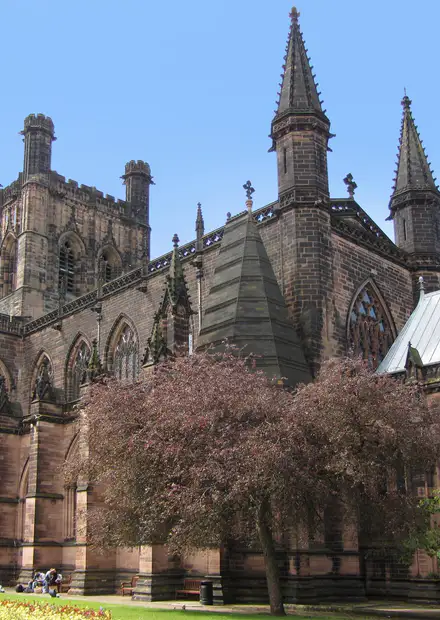
Best Landmarks in Cheshire
Planning a trip to Cheshire? Discover the best landmarks in Cheshire with history, expert tips, and routes. Free on web or the Evendo app.


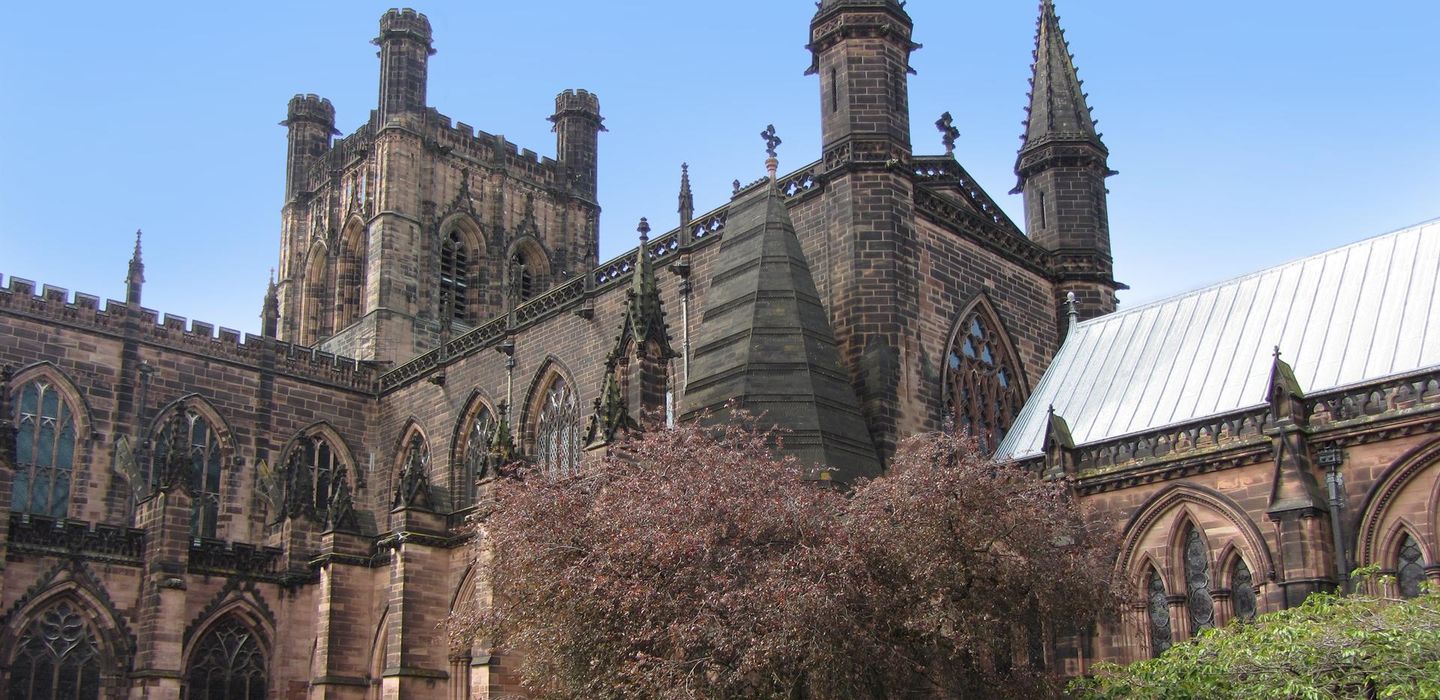
The best landmarks in Cheshire
- Top rated
- Closest to the centre
- Price level: low to high
- Time to spend: shortest first
- A–Z
25 landmarks
-
Historical landmark4.6★2,531 reviews
Eastgate Clock
Perched above the historic Eastgate in Chester, the Eastgate Clock is a celebrated Victorian landmark erected in 1899 to honor Queen Victoria's Diamond Jubilee. Set atop a Roman gateway dating back nearly 2,000 years, this ornate clock features intricate ironwork, gilded details, and four clock faces, making it the second most photographed clock in England after Big Ben. It stands as a symbol of Chester’s rich history and architectural pride, captivating visitors with its timeless charm and cultural significance.
Open 24 hoursTime to spend 0.5–1.5 hrs
-
Bridge4.6★935 reviews
Queens Park Bridge
The Queens Park Suspension Bridge is a historic pedestrian suspension bridge crossing the River Dee in Chester. Opened in 1923 and designed by City Engineer Charles Greenwood, it connects the scenic Groves area with the residential Queens Park suburb. Known for its elegant design and gentle springiness underfoot, the bridge offers picturesque views along the river and is a cherished local landmark.
Open 24 hoursTime to spend 0.5–2 hrs
-
Bridge4.6★307 reviews
Bridge Gate and Old Dee Bridge
The Bridge Gate and Old Dee Bridge stand as iconic historical landmarks on the River Dee in Chester, England. The Old Dee Bridge, originally built in Roman times and rebuilt in 1387, spans the tidal river, offering scenic views and a glimpse into Chester’s rich medieval past. Adjacent to the bridge is the Bridge Gate, part of Chester’s ancient city walls, providing a striking medieval gateway and vantage point over the river and city.
Open 24 hoursTime to spend 0.5–2 hrs
-
Historical landmark4.6★264 reviews
Lymm Cross
Standing proudly in the heart of Lymm village, Lymm Cross is a 17th-century sandstone market cross and Grade I listed landmark. This ornate stone structure, restored in 1897, features a pavilioned base, decorative gables, and bronze sundials bearing moral inscriptions. Once a symbol of Lymm’s market town status, it now serves as a cherished village focal point and meeting place, surrounded by charming streets, independent shops, and the nearby Bridgewater Canal.
Open 24 hoursTime to spend 0.2–1 hr
-
Historical landmark4.5★218 reviews
Sandbach Crosses
The Sandbach Crosses are two elaborately carved 9th-century Anglo-Saxon sandstone crosses located in Sandbach’s Market Square, Cheshire. Recognized as some of the finest surviving Saxon monuments in Britain, these crosses feature biblical scenes such as the Nativity and Crucifixion, intricate vine-scrolls, and symbolic carvings. Originally brightly painted and adorned with jewels, they reflect the religious and cultural significance of early medieval Mercia. The crosses were reassembled in 1816 after being broken up in the 17th century.
Time to spend 0.5–1.5 hrs
-
Historical landmark4.6★177 reviews
Eleanor Rigby Gravesite
The Eleanor Rigby Gravesite, located in the churchyard of St. Peter’s Church in Woolton, Liverpool, is a poignant historical landmark tied to The Beatles’ legacy. The gravestone bears the name of Eleanor Rigby, a real woman whose name inspired the famous Beatles song. The site marks where the real Eleanor Rigby was laid to rest alongside her family, near the place where John Lennon and Paul McCartney first met in 1957.
Time to spend 0.5–1.5 hrs
-
Canal4.2★219 reviews
Manchester Ship Canal
A 36-mile waterway opened in 1894 that transformed Manchester into Britain's third-busiest port despite being 40 miles inland. This engineering marvel connected the industrial heartland directly to the Irish Sea, bypassing Liverpool's expensive docks. Today, the canal remains a symbol of Victorian ambition and industrial innovation, with heritage walks, historic locks, and industrial heritage sites along its length.
Time to spend 1.5–8 hrs
-
Historical landmark4.6★173 reviews
Burma Star Island
Burma Star Island is a poignant historical landmark located in Queens Park, Crewe, commemorating the valiant service of the Burma Star Association during World War II. Established in 1968, this memorial honors those who served in the arduous Burma Campaign, set within a tranquil park environment that invites reflection and remembrance. It stands as a testament to courage and sacrifice amidst lush greenery, open daily from early morning to evening.
Daily 7:00–21:00Time to spend 0.5–1.5 hrs
-
Anglican church4.7★125 reviews
Parish Church of St John the Baptist, Chester
One of England's most significant medieval churches, St John the Baptist stands as a testament to over a thousand years of continuous worship. Originally founded in the 7th century and rebuilt as a Norman cathedral in 1075, this Grade I listed building showcases magnificent Norman architecture with soaring piers and intricate stonework. Though it fell into ruin twice—once in the 16th century and again in the 19th—the church survives as an active parish church in the heart of Chester's historic city centre, welcoming visitors to explore its captivating interior and rich ecclesiastical heritage.
Mon–Fri 11:00–15:00 · Sat 10:00–16:00Time to spend 0.8–2 hrs
-
Historical landmark4.6★113 reviews
White Nancy
White Nancy is a distinctive white-painted, cone-shaped folly perched atop Kerridge Hill near Bollington, Cheshire. Built in 1817 by John Gaskell junior to commemorate the Battle of Waterloo, this Grade II listed landmark offers panoramic views across the Cheshire Plain and beyond. Its unique silhouette is a symbol of Bollington, visible for miles and surrounded by scenic walking trails.
Open 24 hoursTime to spend 1–3 hrs


The Golden Gates
An ornate cast-iron masterpiece standing before Warrington Town Hall, the Golden Gates are a Victorian marvel with a remarkable history. Originally crafted by the renowned Coalbrookdale Company for the 1862 International Exhibition in London, these gilded gates were intended as a gift to Queen Victoria but were famously refused due to a statue of Oliver Cromwell visible through them. After decades in storage, they were purchased by local industrialist Frederick Monks in 1893 and installed at the Town Hall in 1895, where they have become a cherished symbol of civic pride and industrial craftsmanship.
Open 24 hoursTime to spend 0.5–1 hr

Warrington Transporter Bridge
The Warrington Transporter Bridge is the world’s only remaining transporter bridge originally designed to carry rail wagons, spanning the River Mersey in Warrington, England. Built in 1916, this Grade II* listed steel structure is a rare industrial relic with a 103-meter length and a 61-meter span, now a symbol of Warrington’s industrial past. Though no longer operational, it remains an evocative landmark accessible via riverside paths through an industrial setting.
Open 24 hoursTime to spend 0.5–1 hr

Manchester Cenotaph
The Manchester Cenotaph is a solemn war memorial in St Peter’s Square, Manchester, commemorating the city’s fallen soldiers from World War I and subsequent conflicts. Designed by Sir Edwin Lutyens and unveiled in 1924, it features a central cenotaph topped by a sculpture of an unknown soldier, flanked by symbolic stone sculptures. Relocated in 2014-15 near the Town Hall, it remains a poignant symbol of sacrifice and remembrance in Manchester.
Open 24 hoursTime to spend 0.5–1.5 hrs

Norton Water Tower
Norton Water Tower is a striking Victorian-era water tower located in Norton, Runcorn. Built between 1888 and 1892, this 40-meter-tall red sandstone structure was designed to regulate water pressure and supply clean water from Lake Vyrnwy to Liverpool and surrounding areas. Still in use today as part of the regional water system, it stands as an impressive example of functional yet ornate Victorian industrial architecture.
Open 24 hoursTime to spend 0.5–1.5 hrs

Chester Shot Tower
The Chester Shot Tower, built in 1799, stands as the oldest and tallest shot tower in the UK at 168 feet. A Grade II* listed building, it symbolizes Chester's rich industrial heritage as the last remaining leadworks tower, historically used to produce lead shot for muskets during the Napoleonic Wars. Though interior access is limited, the tower’s striking red-brick facade and canal-side setting make it a compelling historical landmark and a unique glimpse into 18th-century industrial innovation.
Time to spend 0.5–1.5 hrs

Pemberton's Parlour
Pemberton's Parlour, also known as the Goblin Tower, is a striking Grade I listed historic landmark located on Chester’s northern city walls. Crafted from red sandstone and featuring a crenelated parapet, this medieval structure offers visitors a glimpse into Chester’s rich architectural and defensive history. Open 24 hours and free to visit, it is a captivating stop for those exploring the city’s extensive Roman and medieval heritage.
Open 24 hoursTime to spend 0.5–1.5 hrs

Blitz Memorial
The Blitz Memorial in Liverpool is a solemn historical landmark dedicated to honoring the civilian victims of the devastating World War II air raids. Located on the A5036 near Liverpool's waterfront, it commemorates the resilience and sacrifice of the city’s people during the Blitz, particularly those buried in a communal grave at Anfield Cemetery. The memorial stands as a poignant reminder of Liverpool’s wartime endurance and community spirit.
Time to spend 0.5–1.5 hrs

Roman South East Corner Tower
The Roman South East Corner Tower in Chester is a significant remnant of the ancient fortress of Deva Victrix, marking the south-east corner of the Roman legionary fort. This Grade I listed historical landmark reveals the strategic military architecture of Roman Britain, with its stone walls and corner towers forming part of Chester’s original defensive circuit. Situated near Pepper Street and the Roman amphitheatre, it offers a glimpse into Chester’s Roman past within the city’s medieval walls.
Time to spend 0.5–1.5 hrs

The Beacon Of Hope
The Beacon of Hope is a poignant memorial located at 41 Sackville Street in Manchester, dedicated to people living with HIV/AIDS and those who have lost their lives to the disease. Situated within the peaceful Sackville Gardens, this inspiring monument symbolizes resilience, hope, and community strength. It offers visitors a reflective space amid the bustling city, with nearby tributes such as the Alan Turing statue enriching its cultural significance.
Open 24 hoursTime to spend 0.5–1.5 hrs

Wishing Steps
Nestled at the southeastern corner of Chester’s medieval city walls, the Wishing Steps are a historic set of stone steps built in 1785. Steeped in local folklore, the steps are famed for a charming tradition: if you run up and down them without pausing to breathe, your wish is said to come true. Once leading to a now-removed watchtower, these steps offer a unique glimpse into Chester’s rich heritage and the enduring allure of its ancient walls.
Time to spend 0.2–1 hr

The Nine Houses
A striking row of six Grade II listed almshouses dating from 1650, featuring distinctive black-and-white timber-framed architecture on Park Street in Chester's historic city centre. Originally nine dwellings, only six remain today—rescued from near-demolition in the late 1960s and meticulously restored. These charming medieval cottages, with their characteristically small doors and sandstone bases, offer a tangible glimpse into 17th-century life and stand as the only surviving pre-19th-century almshouses in Chester. Perfectly positioned adjacent to the Roman Gardens and within easy walking distance of the city walls.
Time to spend 0.2–1 hr

Knutsford Obelisk
The Knutsford Obelisk is a Grade II listed historic monument located on Chelford Road (A537) in Knutsford, England. Dating back to the mid-18th century, this rusticated stone obelisk is believed to be a memorial to the influential Legh family of Booths Hall. Its distinctive design features Egyptian capitals and is topped by a vase and a 20th-century lantern, symbolizing the town’s rich heritage and connection to local aristocracy.
Time to spend 0.5–1.5 hrs

Walmoor Hill (Douglas Castle)
Walmoor Hill, also known as Douglas Castle, is a grand Elizabethan-style house perched on an elevated site overlooking the River Dee in Chester. Built in the 1890s by the renowned architect John Douglas for his own residence, this striking red sandstone building features distinctive towers, mullioned windows, and a chapel room. Its rich history includes use as a private home, schools, and the Cheshire Fire Brigade headquarters, making it a fascinating heritage landmark.
Time to spend 0.5–2 hrs

Town Hall
Chester Town Hall, located on Northgate Street, is a striking Grade II* listed Gothic Revival building completed in 1869. Designed by William Henry Lynn, it features red and grey sandstone, a soaring tower, and richly decorated interiors including a grand council chamber, assembly rooms, and historic stained glass windows. The Town Hall remains a vibrant civic hub hosting official events, weddings, and community gatherings in the heart of Chester.
Time to spend 0.5–2 hrs

Crypt Chambers
Crypt Chambers, located at 26 Eastgate Street in Chester, is a Grade I listed historical landmark renowned for its stunning Gothic Revival architecture and preserved medieval undercroft. Built in 1858 on the site of a medieval merchant’s house, it forms part of Chester’s famous Rows and offers visitors a unique glimpse into the city’s rich architectural and commercial heritage.
Price level $Time to spend 0.5–1.5 hrs
Explore Cheshire on the map
A handpicked selection of must-see spots in Cheshire, mapped for you.
More about Cheshire
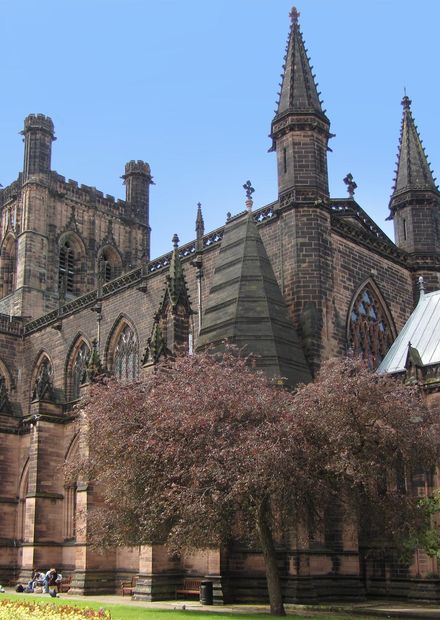
Cheshire travel guide
Explore Cheshire for Roman Chester, grand estates, canal walks, sandstone hills, Jodrell Bank and the food traditions of rural north-west England.
Tell me more about CheshireMore to explore in Cheshire

 Best attractions in Cheshire

 Best shops in Cheshire

 Best bars in Cheshire

 Best restaurants in Cheshire

 Best nightclubs in Cheshire

 Best experiences in Cheshire

 Best hotels in Cheshire
Explore more

Explore more of United Kingdom
Discover the United Kingdom: A blend of rich history, stunning landscapes, and vibrant cities, offering a unique travel experience for every visitor.
Explore United Kingdom
Getting your guide ready…
We are putting together a fresh copy of the Cheshire guide. This can take up to a minute.
This can take a few moments. If your browser asks, choose Allow so the download can start. You'll find the guide in your Downloads folder.
Nothing happened? Download it again
Sorry, the guide is taking longer than usual. Please try again in a minute, or get it by email instead.