

Queens Park Bridge, Chester Travel Guide
Free Guide: A historic Victorian-era suspension footbridge spanning the River Dee with elegant lattice ironwork and timeless charm.


A brief summary of Queens Park Bridge
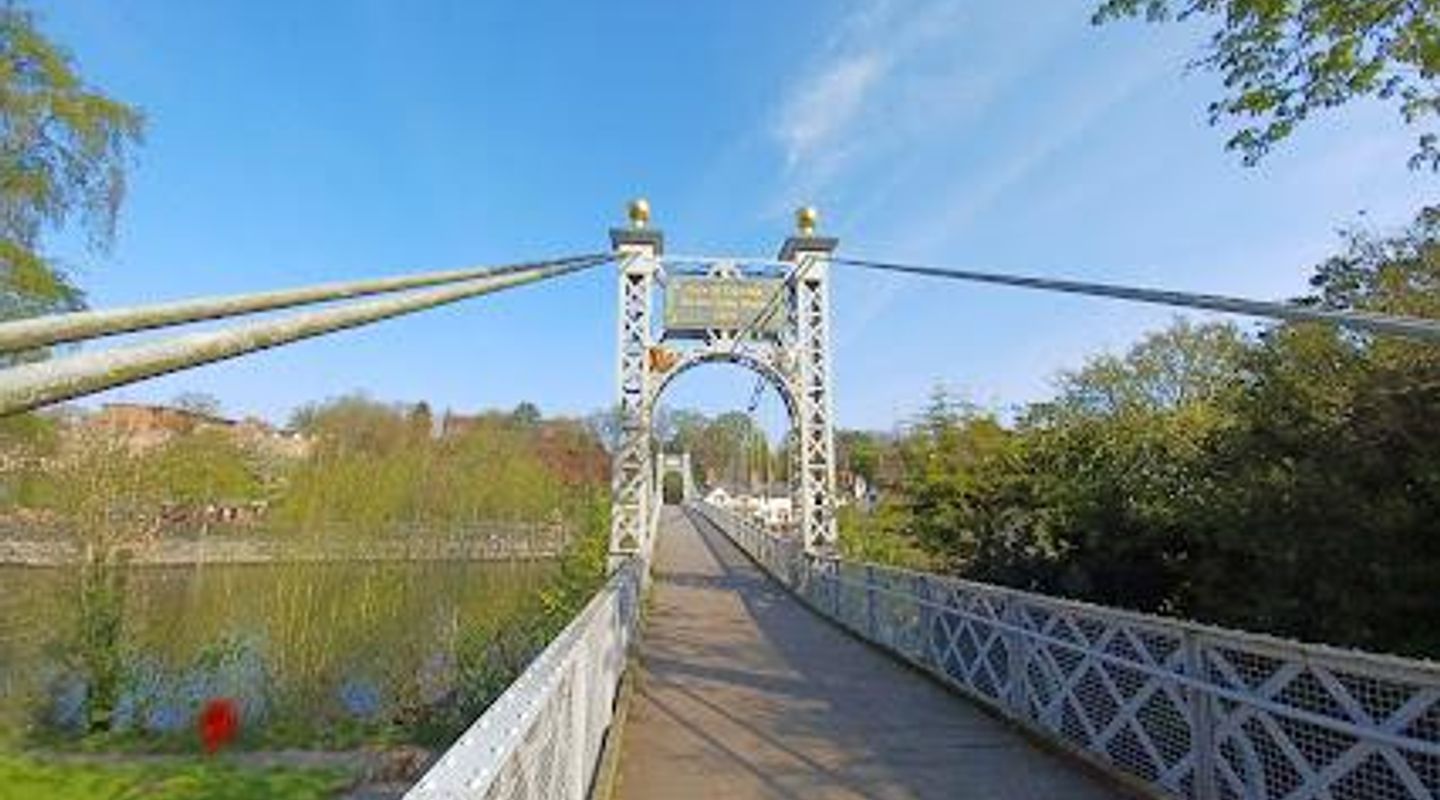
A historic Victorian-era suspension footbridge spanning the River Dee with elegant lattice ironwork and timeless charm.
A historic Victorian-era footbridge spanning the River Dee in Chester, connecting the Groves with the Queen's Park residential area. Originally constructed in 1852, the current structure was rebuilt in 1923 and features elegant lattice ironwork. This iconic suspension bridge offers scenic river views and serves as a vital pedestrian link between two distinct Chester neighborhoods, popular with walkers and photographers alike.
On-site amenities
 Information boards
 Seating areas
Opening hours
- Every dayOpen 24 hours
Opening hours as listed on the venue’s Google Business Profile. Hours can change for services and special events, so check with the venue before you go.
- Address
- River Dee
Getting there
Walking from Chester City Centre
Walking from Queen's Park Residential Area
Bus from Chester Bus Station
Parking and Walking from Nearby Car Parks
Discover more about Queens Park Bridge
A Bridge Born from Victorian Ambition
The Queen's Park Suspension Bridge stands as a testament to 19th-century enterprise and vision. It was originally built in 1852 at the instigation of Enoch Gerrard, the ambitious developer and proprietor of Queen's Park, a newly planned suburb emerging on the south bank of the River Dee. Gerrard envisioned this area as a prosperous middle-class residential enclave, and the suspension bridge was essential infrastructure to connect his developing estate with Chester's established commercial heart across the river. The original structure served this purpose for seven decades, becoming an integral part of Chester's urban fabric.
Structural Challenges and Reconstruction
By the early 1920s, the original bridge had deteriorated significantly. Chester Corporation, which had assumed responsibility for the structure in the early 1920s, recognized serious structural problems and decided demolition was necessary. This decision was informed by Chester's traumatic experience with the Dee Railway Bridge collapse of 1847, which had claimed lives and left the city wary of aging bridge infrastructure. The original suspension bridge was demolished in August 1922, leaving a temporary gap in the pedestrian connection between communities.
The Modern Bridge Emerges
The replacement bridge was designed by Charles Greenwood, Chester's City Engineer and Surveyor, and opened to the public on 18 April 1923 in a ceremony conducted by the Mayor of Chester, Councillor S.R. Wall. Greenwood's design drew inspiration from established suspension bridge principles, creating a structure that balanced Victorian aesthetic sensibilities with modern engineering requirements. The new bridge featured attractive lattice ironwork that became characteristic of its appearance and remains visually distinctive today.
Preservation and Modern Restoration
The bridge underwent a comprehensive restoration in 1998, followed by further conservation work in 2012, ensuring its longevity for future generations. These interventions preserved the structural integrity and visual character of this early 20th-century landmark while adapting it for contemporary pedestrian use. The bridge has become increasingly cherished by locals and visitors, who appreciate both its historical significance and its practical role in Chester's pedestrian network.
Crossing the Dee: A Living Connection
Today, the Queen's Park Suspension Bridge remains the only dedicated footbridge crossing the River Dee in Chester apart from the footbridge attached to the railway bridge. It provides a vital pedestrian link between Handbridge and the Groves, two distinct neighborhoods with their own character and appeal. The bridge's lattice design creates an open, airy structure that frames views of the river and surrounding landscape, making the crossing itself an experience rather than merely a functional necessity. The gentle sway and the sound of footsteps on the metal deck contribute to its distinctive character.
Evendo Review Centre
 Google
Guest reviews
Best time to go
Quietest: Jan, Feb & Dec · before 6am or at 10pm
Busy times are Evendo estimates for a typical year, to help you plan. Actual crowds vary with events, school holidays and the weather.
Explore Queens Park Bridge on the map
A handpicked selection of must-see spots near Queens Park Bridge, mapped for you.
Get your free copy of our complete guide to Queens Park Bridge, delivered straight to you.
Everything on this page, from opening hours and how to get there to Eve’s tips and the best time to go, in one PDF you can read offline, print or share.
Already have an account? Sign in
Your Queens Park Bridge guide is ready.
We'll send it to · Not you? Sign out

Getting your guide ready…
We are putting together a fresh copy of the Queens Park Bridge guide. This can take up to a minute.
This can take a few moments. If your browser asks, choose Allow so the download can start. You'll find the guide in your Downloads folder.
Nothing happened? Download it again
Sorry, the guide is taking longer than usual. Please try again in a minute, or get it by email instead.
Other nearby places you may find interesting
The closest places of the same kind, if this one is not quite what you had in mind.
-
-
-
-
-


Swipe for more places
More to explore near Queens Park Bridge

 Best experiences near Queens Park Bridge
 Best hotels near Queens Park Bridge
 Best landmarks near Queens Park Bridge
 Best attractions near Queens Park Bridge
 Best shops near Queens Park Bridge
 Best restaurants near Queens Park Bridge
 Best bars near Queens Park Bridge
Do you manage this location?
Take control to get all the benefits, like improved information, better appearance, and stronger visibility across AI-powered discovery.
Explore more
Explore more of Chester
Discover Chester: where ancient Roman walls embrace a lively city of culture, history, and stunning architecture in the heart of England.
Explore Chester
Explore more of United Kingdom
Discover the United Kingdom: A blend of rich history, stunning landscapes, and vibrant cities, offering a unique travel experience for every visitor.
Explore United Kingdom
