Eastgate Clock, Flintshire Travel Guide
A Victorian clock atop a Roman gateway, Eastgate Clock is Chester’s most iconic meeting point and one of England’s most photographed timepieces.
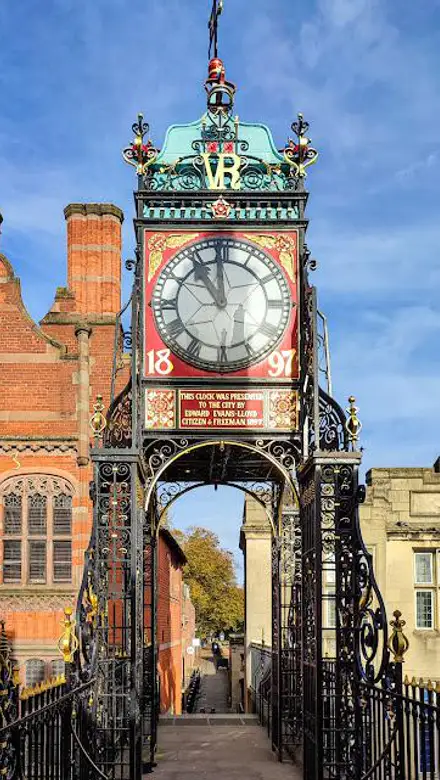
Perched atop Chester’s ancient Eastgate, the Eastgate Clock is one of England’s most photographed timepieces, second only to Big Ben. Erected in 1899 to mark Queen Victoria’s Diamond Jubilee, this ornate Victorian clock crowns a site that has been Chester’s main entrance for nearly 2,000 years, from Roman fortress to medieval city gate. Its gilded ironwork and panoramic views from the city walls make it a must-see symbol of civic pride and layered history.
A brief summary to Eastgate Clock
- 41-45 Eastgate St, Chester, CH1 1LE, GB
- Click to display
- Duration: 0.5 to 2 hours
- Free
-
 Outdoor
- Mobile reception: 5 out of 5

Know before you go
Hi, I'm Eve. Here are a few practical things to know before exploring Eastgate Clock.
- Visit early in the morning or late afternoon to avoid the busiest crowds and capture the best light for photos of the clock and the surrounding streets.
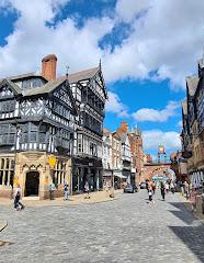
- Walk the city walls from Eastgate Clock westward for panoramic views of Chester’s historic centre, the Rows, and the cathedral.
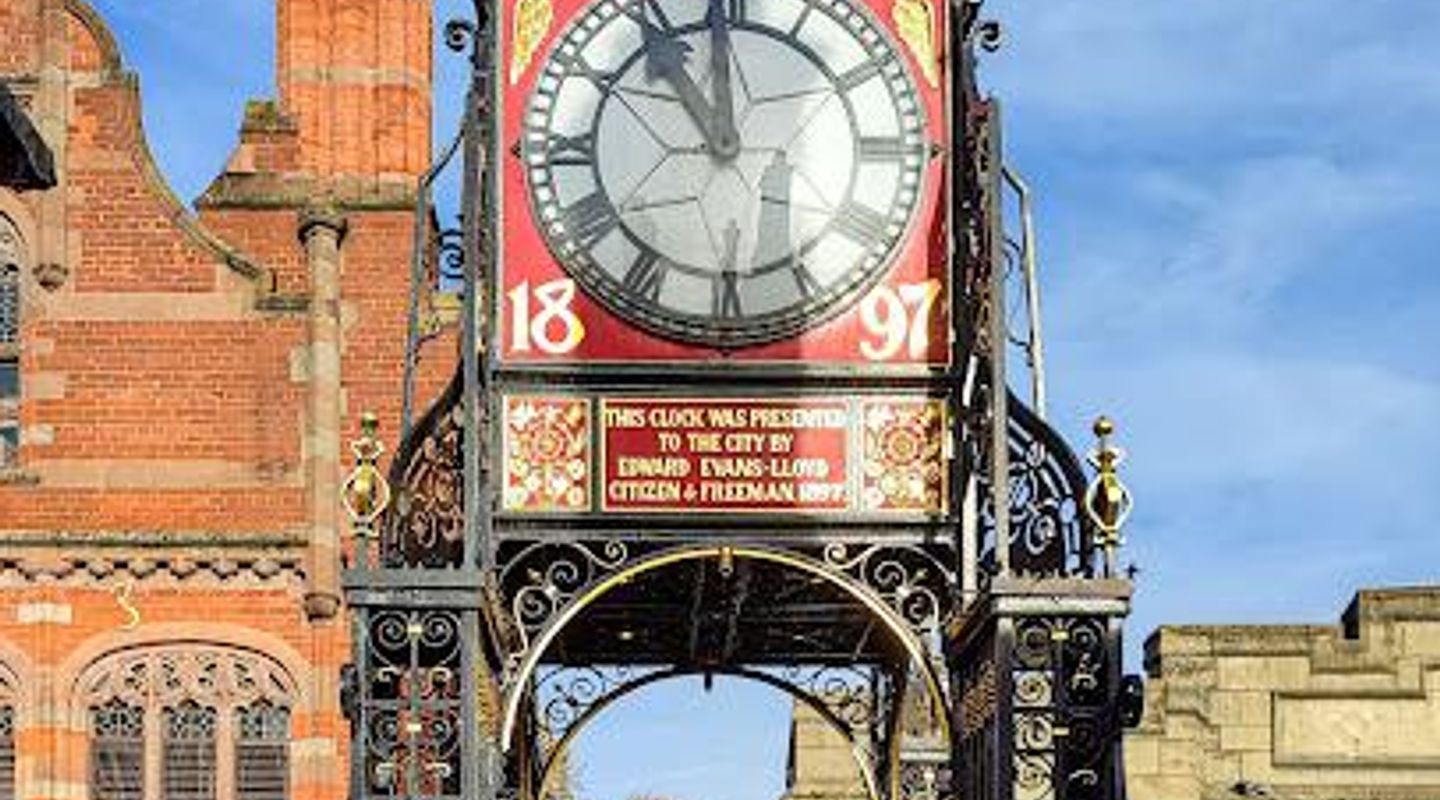
- Look closely at the clock faces: each carries a different inscription, including tributes to Queen Victoria, local officials, and the man who championed the clock’s creation.
- Combine your visit with a stroll along the River Dee and a look at the Rows – Chester’s unique two-level shopping galleries – to get a full sense of the city’s character.
Do you manage this location?
Take control to get all the benefits, like improved information, better appearance, and stronger visibility across AI-powered discovery. Learn more about listing your business on Evendo
Activate your presenceOther nearby places you may find interesting
The closest places of the same kind, if this one is not quite what you had in mind.
Explore Eastgate Clock on the Map
A handpicked selection of must-see spots near Eastgate Clock, mapped for you.
Unlock the Best of Eastgate Clock
Buy tickets
-
No tickets available
Book tours with entry


Getting There
-
On foot from Chester city centre
From Chester’s main shopping streets, follow Eastgate Street eastward; the clock is clearly visible at the end of the street, about a 5–10 minute walk from the central market area. The route is flat and fully accessible, suitable for all visitors.
-
By train
Chester Railway Station is about a 15–20 minute walk from the Eastgate Clock. Follow signs for the city centre and Eastgate Street; the walk is straightforward and well signposted, passing through the historic core.
-
By bus
Local buses serve stops near Chester’s bus interchange and city centre, roughly a 10–15 minute walk from the clock. From there, follow Eastgate Street eastward; the route is flat and pedestrian-friendly.
-
From nearby parking
Public car parks in the city centre are about a 10–15 minute walk from the Eastgate Clock. The walk is along well-maintained pavements and is suitable for families and those with limited mobility.
For the on-the-go comforts that matter to you
-
 Restrooms
-
 Drink Options
-
 Drinking Water
-
 Food Options
-
 Seating Areas
-
 Information Boards
Discover more about Eastgate Clock
Where Roman Roads Meet Victorian Time
Stand here, and you’re standing on a threshold that has shaped Chester for almost two millennia. Beneath your feet lies the footprint of the original Eastgate of the Roman fortress of Deva Victrix, one of four principal entrances to the legionary stronghold. Roman soldiers once marched through this very spot, and for centuries it remained the city’s main eastern entrance, evolving from a military gateway into a grand medieval arch. The current sandstone gateway dates from 1768, but it’s the 1899 addition that draws the eye: the Eastgate Clock, a glittering Victorian crown atop ancient stone.A Jubilee in Iron and Gilding
The clock was added to celebrate Queen Victoria’s Diamond Jubilee, a moment of civic pride and architectural ambition in late Victorian Chester. Designed by the city’s celebrated architect John Douglas, it’s a masterpiece of ornate ironwork: four clock faces set within an openwork iron pavilion, supported by decorated pylons and topped with a copper ogee dome and a gilded lion weather vane. Each face carries a different inscription – one marking Victoria’s 60th year on the throne, another honouring local officials, a third remembering Edward Evans-Lloyd, a key champion of the project, and a fourth noting that the clock was funded by public subscription, a testament to community spirit.Legends and Local Lore
With such prominence comes stories. Locals whisper that the clock has only three working dials because it deliberately “turns its back” on Wales, a cheeky nod to old Anglo-Welsh rivalries – though historians treat this as charming folklore rather than fact. Another tale speaks of Sarah, a young chambermaid hopelessly in love with a soldier stationed at the gate; her tragic end in a carriage accident near Eastgate has become part of Chester’s ghostly lore, adding a layer of melancholy romance to the site. Whether myth or memory, these stories deepen the clock’s role as more than just a timepiece – it’s a keeper of the city’s secrets.Heart of the City Walls
The Eastgate Clock sits at the eastern end of Chester’s remarkable circuit of medieval city walls, among the longest and most complete in Britain. From the walkway that runs beneath and beside the clock, visitors enjoy sweeping views over Eastgate Street and the city centre, with the clock itself framing the skyline. It’s a natural meeting point, a backdrop for countless photographs, and a gateway to exploring the walls, the Rows, and the historic core of Chester. The combination of Roman foundations, Georgian masonry, and Victorian engineering makes this one of the most visually and historically rich junctions in the city.A Living Symbol of Chester
Today, the Eastgate Clock is widely regarded as one of the most photographed clocks in England, second only to Big Ben. It’s more than a tourist attraction; it’s a symbol of Chester’s enduring heritage and civic identity. The clock still keeps accurate time, ticking away above the same spot where Roman sentries once stood, medieval merchants passed through, and Victorian crowds gathered for its unveiling. For visitors, it offers a powerful sense of continuity – a single, elegant structure that ties together layers of history, architecture, and local pride in one unforgettable landmark.












Your all‑in‑one travel companion app
Explore expert travel guides, compare and book tours, experiences, hotels, and more—all from the palm of your hand. Download now for seamless trip planning wherever your wanderlust takes you.


Explore More of Flintshire
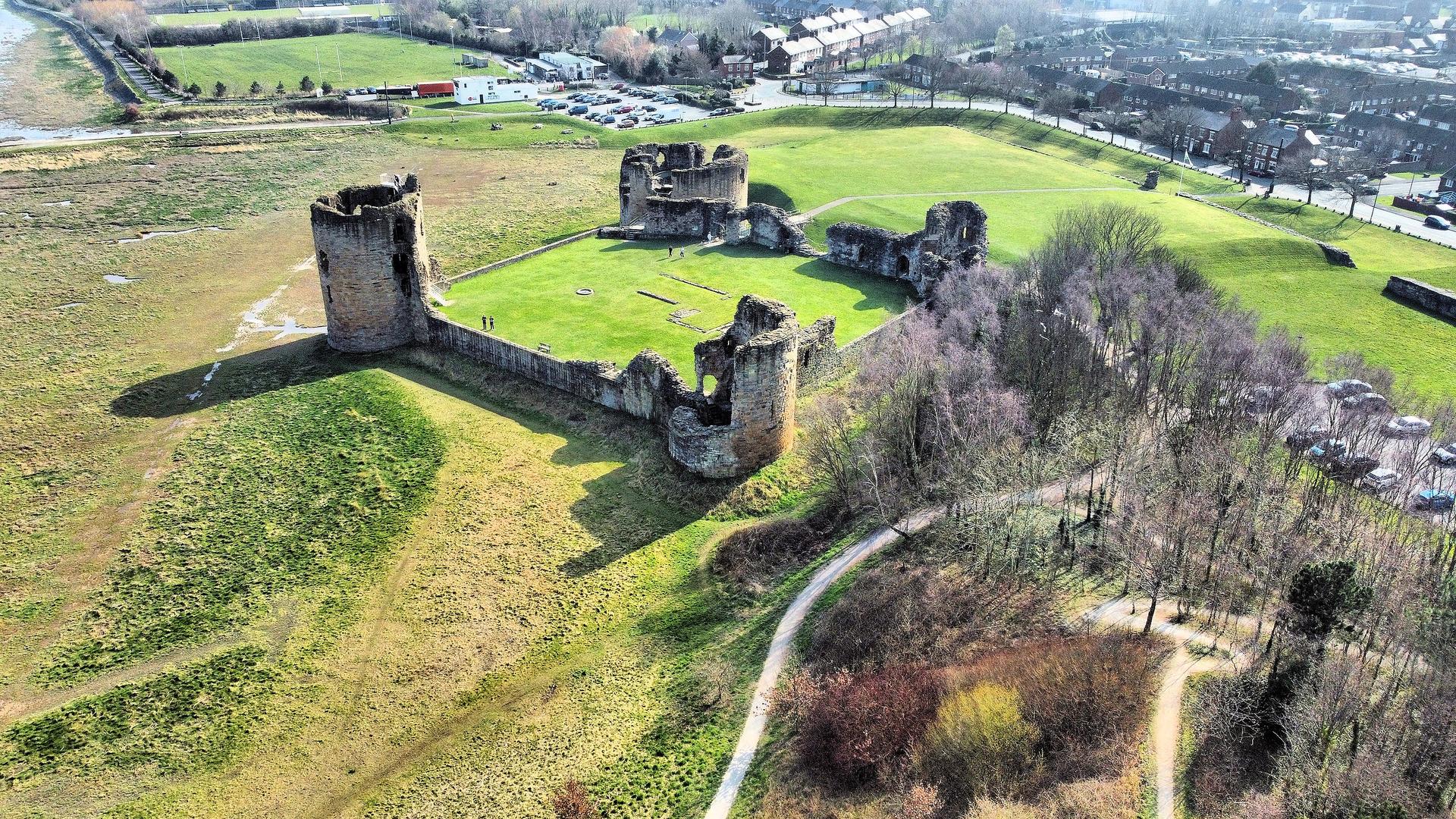
Looking beyond Eastgate Clock? Discover Flintshire for broader travel guides, local hot-spots, and regional highlights.
Explore Flintshire