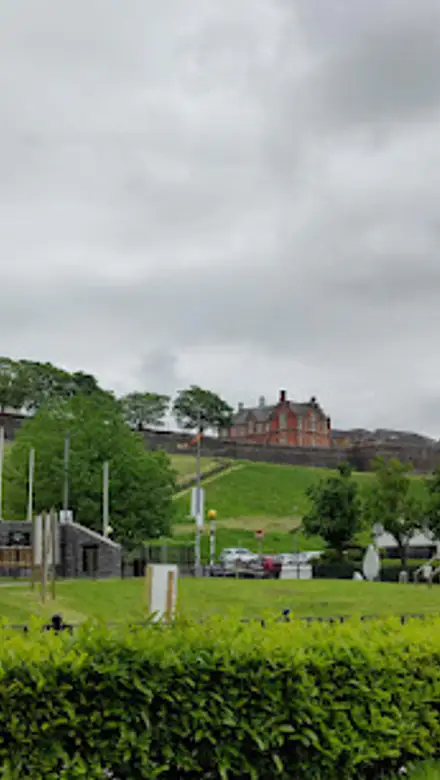
Free Derry Corner, Derry Travel Guide
Free Guide: A gable wall bearing an iconic slogan that became a global symbol of resistance and civil rights.


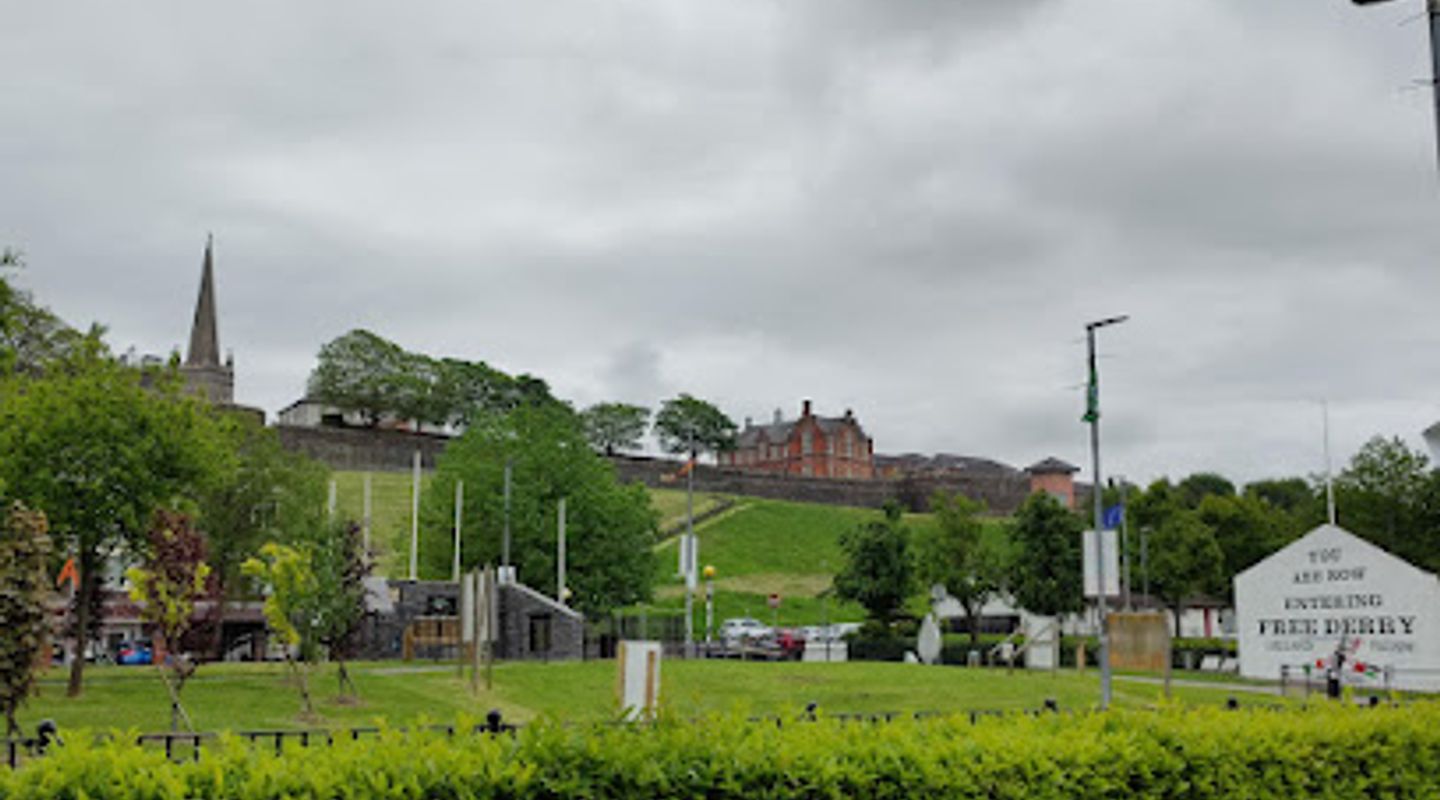
A brief summary of Free Derry Corner
A gable wall bearing an iconic slogan that became a global symbol of resistance and civil rights.
Free Derry Corner is a powerful historical landmark in the Bogside neighbourhood of Londonderry, Northern Ireland, centred on a free-standing gable wall bearing the iconic words 'You are now entering Free Derry'. Originally painted on 5 January 1969 as an act of defiance during the civil rights movement, the wall has evolved into an internationally recognised symbol of resistance and political liberty. Located at the intersection of Lecky Road, Rossville Street, and Fahan Street, the site stands as a testament to the struggles of the Troubles era and remains a focal point for remembrance and reflection.
On-site amenities
 Seating areas
 Information boards
 Visitor centre
Opening hours
- Every dayOpen 24 hours
Opening hours as listed on the venue’s Google Business Profile. Hours can change for services and special events, so check with the venue before you go.
- Address
- Lecky Rd, Glenfada Park, Londonderry BT48 9DR
Getting there
Walking from Derry City Centre
Local Bus Service
Taxi or Ride-Share
Private Vehicle with Parking
Discover more about Free Derry Corner
The Birth of a Symbol
On 5 January 1969, as police clashed with residents in the Bogside, local activist Liam Hillen painted the words 'You are now entering Free Derry' on a gable wall of a terraced house. What began as a spontaneous act of defiance would become one of the most enduring symbols of resistance in modern history. The phrase itself drew inspiration from the Free Speech Movement at the University of California, Berkeley, adapted by civil rights activist Eamonn McCann to reflect the aspirations of Derry's nationalist community. When British Home Secretary James Callaghan visited Derry in August 1969, the wall was painted white and the slogan was professionally re-painted in bold black lettering by John 'Caker' Casey, cementing its place in the city's collective memory.
A Neighbourhood Under Siege
Free Derry Corner stands at the heart of the Bogside, a neighbourhood that became the epicentre of Northern Ireland's conflict. Between 1969 and 1972, the area declared itself an autonomous nationalist zone, with barricades erected and Radio Free Derry broadcasting from the Rossville Street Flats. The corner witnessed pivotal moments in the Troubles, including the Battle of the Bogside in 1969 and the tragic events of Bloody Sunday in 1972. The original terraced houses that once lined Lecky Road and Fahan Street were subsequently demolished, yet the wall itself was preserved, now standing in the central reservation of the upgraded dual carriageway. This survival speaks to the wall's significance—it endures as a physical anchor to a turbulent past.
Memorials and Artistic Expression
The site has evolved into a complex of remembrance, with multiple memorials honouring those lost during the conflict. Nearby stands a memorial to the 1981 hunger strikers and to members of the Provisional IRA's Derry Brigade who died in paramilitary activity. The surrounding walls form part of The People's Gallery, a collection of murals created by the Bogside Artists that document the history and struggles of the community. The Free Derry wall itself is frequently repainted, transforming to reflect both local and international causes. These artistic interventions ensure that the corner remains a living monument rather than a static relic, continuously reinterpreted by successive generations.
A Global Icon of Resistance
What began as a neighbourhood's cry for autonomy has transcended its local context to become a globally recognised emblem of civil rights and political resistance. The wall's message resonates far beyond Derry, inspiring solidarity movements and serving as a reference point for communities worldwide facing oppression or seeking self-determination. The site attracts visitors from across the globe who come to witness the physical manifestation of resilience and to reflect on the cost of conflict. The enduring power of the simple phrase 'You are now entering Free Derry' lies in its universality—it speaks to the human desire for freedom, dignity, and self-determination.
Evendo Review Centre
 Google
Guest reviews
Best time to go
Quietest: Jan, Feb & Nov · before 6am or at 10pm
Busy times are Evendo estimates for a typical year, to help you plan. Actual crowds vary with events, school holidays and the weather.
Explore Free Derry Corner on the map
A handpicked selection of must-see spots near Free Derry Corner, mapped for you.
Get your free copy of our complete guide to Free Derry Corner, delivered straight to you.
Everything on this page, from opening hours and how to get there to Eve’s tips and the best time to go, in one PDF you can read offline, print or share.
Already have an account? Sign in
Your Free Derry Corner guide is ready.
We'll send it to · Not you? Sign out

Getting your guide ready…
We are putting together a fresh copy of the Free Derry Corner guide. This can take up to a minute.
This can take a few moments. If your browser asks, choose Allow so the download can start. You'll find the guide in your Downloads folder.
Nothing happened? Download it again
Sorry, the guide is taking longer than usual. Please try again in a minute, or get it by email instead.
Unlock the best of Free Derry Corner
Skip-the-line tickets, guided tours with entry, and walking tours of the area, booked in a few clicks.


Other nearby places you may find interesting
The closest places of the same kind, if this one is not quite what you had in mind.
-
-
-
-
-


Swipe for more places
More to explore near Free Derry Corner

 Best experiences near Free Derry Corner
 Best hotels near Free Derry Corner
 Best landmarks near Free Derry Corner
 Best attractions near Free Derry Corner
 Best shops near Free Derry Corner
 Best restaurants near Free Derry Corner
 Best bars near Free Derry Corner
Do you manage this location?
Take control to get all the benefits, like improved information, better appearance, and stronger visibility across AI-powered discovery.
Explore more
Explore more of Derry
Explore Derry: Where history meets vibrant culture in a city bridging Irish and British heritage, offering breathtaking views and captivating festivals.
Explore Derry
Explore more of United Kingdom
Discover the United Kingdom: A blend of rich history, stunning landscapes, and vibrant cities, offering a unique travel experience for every visitor.
Explore United Kingdom