

Nearby, Derry Travel Guide
Free Guide: Explore County Londonderry’s rich history, stunning landscapes, and vibrant culture in Northern Ireland’s scenic northwest.


A brief summary of Nearby
Explore County Londonderry’s rich history, stunning landscapes, and vibrant culture in Northern Ireland’s scenic northwest.
County Londonderry, located in Northern Ireland, is a region rich with history, natural beauty, and cultural heritage. Known for its iconic walled city of Londonderry (Derry), the county features dramatic landscapes from the Sperrin Mountains to the wild Atlantic coast. Visitors can explore historic sites, scenic rivers, and vibrant towns, making it a diverse destination for nature lovers, history enthusiasts, and cultural travelers alike.
On-site amenities
 Restrooms
 Drink options
 Food options
 Seating areas
 Trash bins
 Information boards
Opening hours
- Mon–Sat8 am–10 pm
- Sun1 pm–6 pm
Opening hours as listed on the venue’s Google Business Profile. Hours can change for services and special events, so check with the venue before you go.
- Address
- County, 166 Spencer Rd, Londonderry BT47 6AH
Getting there
Train
Bus
Car
Air
Discover more about Nearby
A Storied Landscape Shaped by History and Nature
County Londonderry, also known as County Derry, is one of Northern Ireland’s six historic counties, covering 818 square miles in the northwest of the island of Ireland. The county’s name reflects its origins from the City of Londonderry, a walled city with a rich 17th-century heritage that has never been breached in battle. The county was established in 1613 by King James I, combining the old County Coleraine with parts of Tyrone, Antrim, and Donegal to control the strategic rivers Foyle and Bann. This blend of history and geography defines the county’s unique character.
Geographical Diversity: Mountains, Rivers, and Coastlines
The landscape of County Londonderry is remarkably varied. The southern part is dominated by the Sperrin Mountains, including Sawel Mountain, the county’s highest peak at 678 meters (2,224 feet). To the east and west, fertile valleys descend towards the Bann and Foyle rivers, which have shaped the region’s agriculture and settlement patterns. The county’s northern edge meets the Atlantic Ocean, featuring steep cliffs, sand dunes, and pristine beaches that attract nature lovers and adventurers alike. Inland, ancient forests like Banagher and Ness Wood offer tranquil retreats, with the Burntollet River cascading over Northern Ireland’s highest waterfalls.
Londonderry City: A Historic Urban Jewel
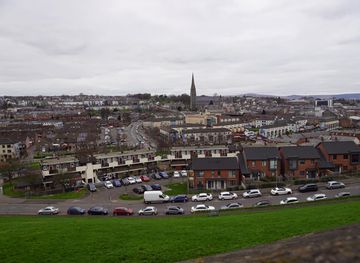
At the heart of the county lies Londonderry city, Northern Ireland’s second-largest city and the only one with intact 17th-century city walls. These walls, stretching about 2 kilometers in circumference, enclose a historic core featuring landmarks such as the Diamond, the city’s central square, and remnants of its plantation past. The city’s location on the River Foyle provides scenic waterfront views and a vibrant cultural scene, including museums, art galleries, and political murals that reflect its complex history. Londonderry also serves as a gateway to the Wild Atlantic Way and the Causeway Coastal Route.
Rural Charm and Cultural Heritage
Beyond the city, County Londonderry offers charming market towns like Coleraine and Limavady, each with its own local character and history. The county’s rural areas are dotted with historic estates such as Springhill House and coastal gems like Mussenden Temple, perched dramatically on cliffs above the Atlantic. The region is also known for its rich cultural heritage, including the Seamus Heaney HomePlace in Bellaghy, honoring the Nobel Prize-winning poet. Outdoor activities abound, from fishing in the River Foyle to cycling scenic routes and exploring nature reserves.
Community and Modern Life
While steeped in history, County Londonderry is a living, evolving region. It is administered through three districts—Derry and Strabane, Causeway Coast and Glens, and Mid-Ulster—reflecting a blend of urban and rural communities. The county balances tradition with modernity, offering visitors a chance to experience Northern Irish hospitality, local crafts, and vibrant festivals. The area’s infrastructure supports tourism with amenities, cultural venues, and transport connections, making it accessible and welcoming year-round.
Natural Wonders and Sustainable Exploration
County Londonderry encourages sustainable tourism, inviting visitors to engage with its natural environment responsibly. Protected areas and nature reserves preserve habitats for wildlife, while public transport and car-free options help reduce environmental impact. Whether paddling on the River Foyle, hiking mountain trails, or simply enjoying the peaceful countryside, travelers can immerse themselves in the county’s scenic beauty while respecting its ecological balance.
Evendo Review Centre
 Google
Guest reviews
Best time to go
Quietest: Jan, Feb & Dec · before 6am or at 10pm
Busy times are Evendo estimates for a typical year, to help you plan. Actual crowds vary with events, school holidays and the weather.
Explore Nearby on the map
A handpicked selection of must-see spots near Nearby, mapped for you.
Get your free copy of our complete guide to Nearby, delivered straight to you.
Everything on this page, from opening hours and how to get there to Eve’s tips and the best time to go, in one PDF you can read offline, print or share.
Already have an account? Sign in
Your Nearby guide is ready.
We'll send it to · Not you? Sign out

Getting your guide ready…
We are putting together a fresh copy of the Nearby guide. This can take up to a minute.
This can take a few moments. If your browser asks, choose Allow so the download can start. You'll find the guide in your Downloads folder.
Nothing happened? Download it again
Sorry, the guide is taking longer than usual. Please try again in a minute, or get it by email instead.
Other nearby places you may find interesting
The closest places of the same kind, if this one is not quite what you had in mind.
-
-
-
-
-


Swipe for more places
More to explore near Nearby

 Best experiences near Nearby
 Best hotels near Nearby
 Best restaurants near Nearby
 Best bars near Nearby
Do you manage this location?
Take control to get all the benefits, like improved information, better appearance, and stronger visibility across AI-powered discovery.
Explore more
Explore more of Derry
Explore Derry: Where history meets vibrant culture in a city bridging Irish and British heritage, offering breathtaking views and captivating festivals.
Explore Derry
Explore more of United Kingdom
Discover the United Kingdom: A blend of rich history, stunning landscapes, and vibrant cities, offering a unique travel experience for every visitor.
Explore United Kingdom
