Ruthven Barracks
Iconic Highland ruins where 12 soldiers held off 300 attackers and Bonnie Prince Charlie's cause ended.
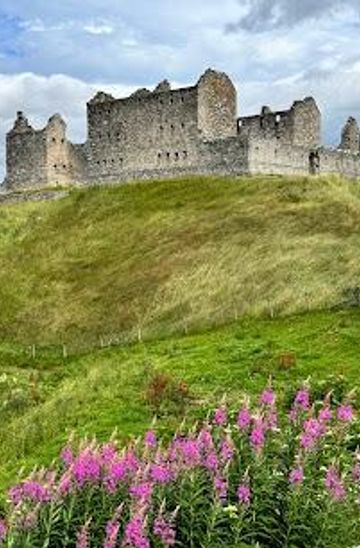
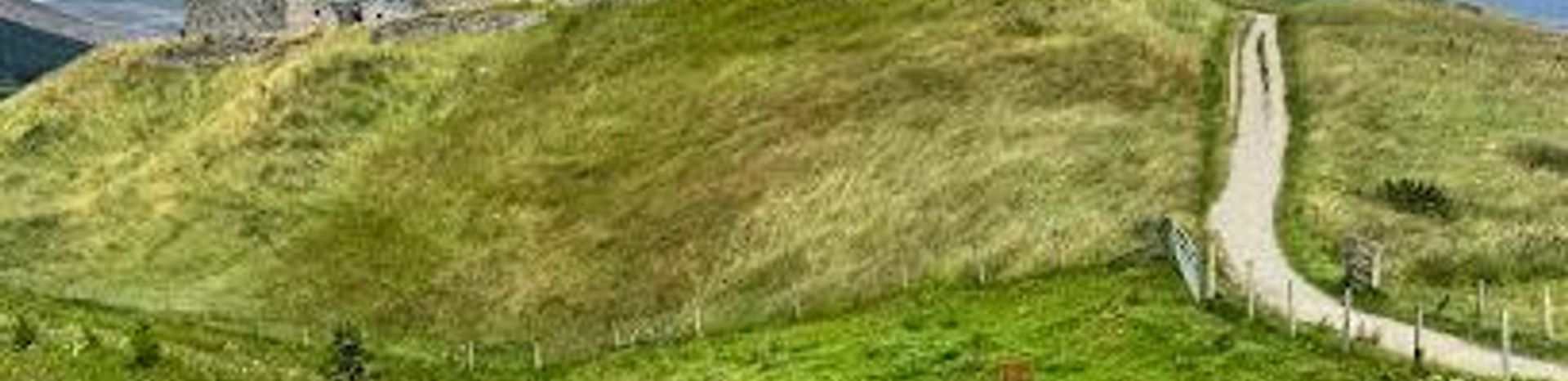
Ruthven Barracks stands as one of Scotland's most evocative historical ruins, perched dramatically on a glacial mound near Kingussie in the Highlands. Built between 1719 and 1721 by the British government to suppress Jacobite uprisings, this 18th-century military fortress witnessed pivotal moments in Scottish history, including a legendary defence by just 12 soldiers against 300 attackers. Today, the remarkably preserved stone ruins—with their distinctive three-storey blocks, corner towers, and parade ground—offer visitors free access year-round to explore the haunting remains and panoramic views across the Spey Valley and Cairngorm Mountains.
A brief summary to Ruthven Barracks
- Kingussie, GB
- Click to display
- Duration: 1 to 2.5 hours
- Free
-
 Outdoor
- Mobile reception: 3 out of 5

Know before you go
Hi, I'm Eve. Here are a few practical things to know before exploring Ruthven Barracks.
- Visit on a quiet weekday morning or late afternoon to experience the site in solitude and capture photographs without crowds, especially during shoulder seasons (April–May or September–October).
- Bring binoculars to observe the architectural details of the loopholes, bastion towers, and interior room divisions from a distance, and to scan the surrounding landscape for wildlife and distant mountain views.
- Read the information boards carefully before exploring to understand the layout and historical significance of each section, transforming a simple walk into a rich historical narrative.
- For distant photography, use the nearby A9 layby (Layby 114) to capture the barracks in its landscape context before driving through Kingussie to access the site up close.
- Allow at least 90 minutes to explore the ruins thoroughly, read the interpretive signage, and absorb the historical atmosphere without rushing through the site.
Do you manage this location?
Take control to get all the benefits, like improved information, better appearance, and stronger visibility across AI-powered discovery. Learn more
Activate your presence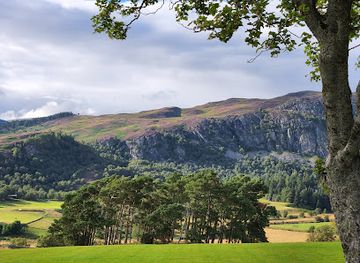
Getting There
-
Car from Kingussie
From Kingussie town centre, follow the National Cycle Route signage or local directions toward the barracks, a journey of approximately 3 kilometres taking 8–12 minutes by car through pastoral farmland and past Highland cattle. The route winds through quiet country roads before reaching the small car park at the base of the mound. Parking is free and accommodates approximately ten vehicles. The site is accessible year-round.
-
Car from A9 Highway
Exit the A9 at Kingussie (between Inverness and Pitlochry) and follow local signage toward Ruthven Barracks. The journey from the A9 exit to the site takes approximately 10–15 minutes by car. For distant photography without leaving the highway, use Layby 114 on the A9, which offers panoramic views of the barracks on its mound. Free parking is available at the site.
-
Cycling via National Cycle Route
The National Cycle Route passes near Ruthven Barracks. From Kingussie, cyclists can access the route and follow it for approximately 4–5 kilometres to reach the site, taking 20–30 minutes depending on fitness and terrain. The route passes through farmland and small villages. This option is suitable for moderate cyclists and offers a scenic approach to the site.
-
Walking from Kingussie
A walking route from Kingussie town centre to Ruthven Barracks covers approximately 4–5 kilometres and takes 60–90 minutes on relatively flat terrain through farmland and along country roads. The walk is accessible to most fitness levels but involves road walking with limited dedicated footpaths in places. Allow extra time for photography and rest stops. The return journey is the same distance.
For the on-the-go comforts that matter to you
-
 Parking
-
 Information Boards
-
 Trash Bins
Discover more about Ruthven Barracks
A Fortress Born from Conflict
Ruthven Barracks rises from a prominent mound on the south side of the River Spey, a location chosen with strategic precision by the British government following the failed Jacobite Rising of 1715. The site itself carries centuries of history: a medieval castle built by the Comyns in 1229 once stood here, later held by the Earls of Huntly and visited by Mary, Queen of Scots in 1564. After the 1689 Jacobite uprising damaged the castle beyond repair, the government acquired the ruins in 1719 and commissioned the construction of a new military barracks. Designed by architect James Smith and built under the supervision of Andrew Jelfe and military engineer John Lambertus Romer, Ruthven was one of four fortified barracks strategically positioned across the Highlands to police the region and enforce the Disarming Acts that sought to disarm the Highland clans.Engineering and Military Design
The barracks complex, completed in 1721, was engineered to house approximately 120 troops split between two substantial three-storey stone blocks arranged around a central parade ground. The design reflected 18th-century military architecture at its finest: each barrack block contained six rooms per floor, with soldiers sleeping ten to a room and two to a bed. Officers occupied separate quarters in towers projecting from opposite corners of the protective wall, which was constructed with loopholes for musket fire and bastion towers for defensive strength. Additional structures included a guardroom, prison, bakehouse, and brewhouse—all essential facilities for a remote garrison. In 1734, at the recommendation of General Wade, a stable block was added to house 30 dragoons whose mounted patrols protected military convoys along Wade's newly constructed road network, which converged at Ruthven and transformed the Highlands into more accessible territory for government forces.Moments of Heroic Defence
Ruthven Barracks earned its place in Scottish legend through two dramatic confrontations with Jacobite forces. In August 1745, during the second Jacobite Rising, approximately 300 Jacobites attacked the barracks held by just 12 redcoats under the command of Sergeant Terrence Molloy of the 6th Regiment of Foot. Against overwhelming odds, the small garrison held firm, losing only one man while inflicting casualties on the attackers. This remarkable defence demonstrated the strength of the fortification and the resolve of its defenders. However, when the Jacobites returned in February 1746, this time equipped with artillery, the outcome changed. Molloy, now promoted to Lieutenant, recognised that the barracks could not withstand bombardment and surrendered to Gordon of Glenbuchat's forces. The departing Jacobites set fire to the buildings before leaving.The Final Chapter and Culloden's Shadow
Following their devastating defeat at the Battle of Culloden on 16 April 1746, the remnants of the Jacobite army—numbering around 1,500 men—retreated to Ruthven Barracks to regroup and await orders from their leader, Charles Edward Stuart, known as Bonnie Prince Charlie. The message that arrived on 20 April proved heartbreaking: "Let every man seek his own safety in the best way he can." With those words, the Jacobite cause effectively ended. The departing Jacobites destroyed the barracks on 17 April 1746, burning the buildings and rendering them uninhabitable. Yet the stone walls and towers proved too substantial to demolish completely, and the ruins that remain today are essentially what the Jacobites left behind nearly 280 years ago.Landscape and Atmosphere
The barracks occupy a commanding position on a mound visible for miles across the surrounding countryside, offering panoramic views of the Spey Valley, the distant Cairngorm Mountains, and the small town of Kingussie below. The elevated setting creates a sense of isolation and historical weight; standing among the ruins on a quiet day, with only the distant sound of the A9 highway intruding, visitors can easily imagine the soldiers who once garrisoned this remote outpost and the dramatic events that unfolded here. The exterior walls remain largely intact, though the interior has lost its flooring and roofing, leaving open spaces that frame views of the surrounding landscape. Information boards positioned throughout the site provide historical context and architectural details, enhancing the visitor experience without overwhelming the austere beauty of the ruins.Preservation and Access
Ruthven Barracks is maintained as a scheduled monument by Historic Environment Scotland and is part of the National Trust for Scotland's portfolio. The site remains free to visit and is accessible year-round without restriction, making it an ideal destination for history enthusiasts, photographers, and casual travellers alike. A small car park accommodates approximately ten vehicles, and visitors are free to explore the ruins at their own pace, wandering through the barrack blocks, examining the towers, and absorbing the historical atmosphere. The lack of commercial development or visitor facilities preserves the site's authentic character, allowing the ruins to speak for themselves as a powerful testament to Scotland's turbulent 18th-century history.Explore the best of what Ruthven Barracks has to offer













More about Scotland
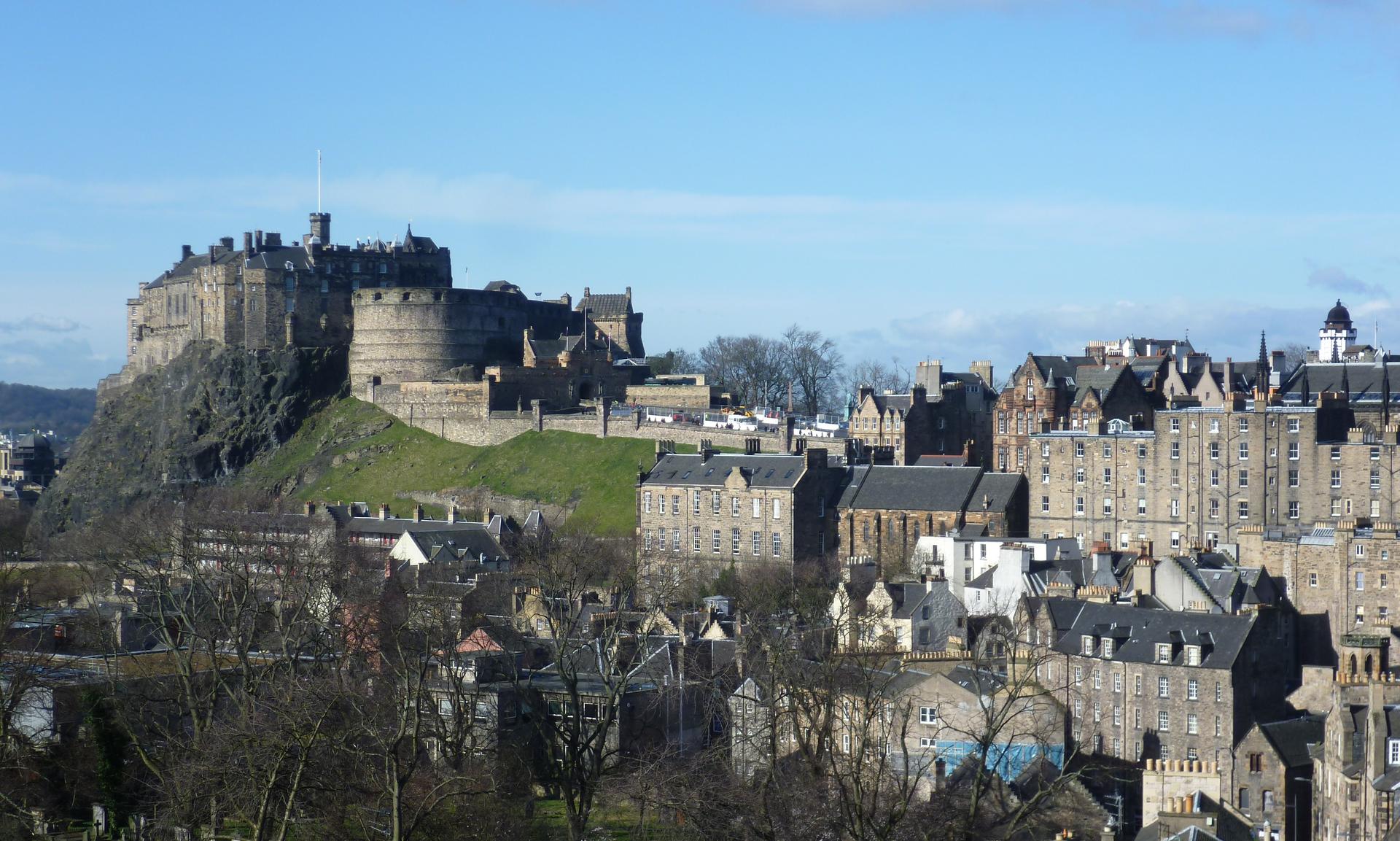
Discover the magic of Scotland: stunning landscapes, historic castles, vibrant cities, and world-famous whisky. An unforgettable journey awaits in this enchanting land.
Tell me more about Scotland
Historic 18th-century stone bridge spanning the River Tay in Perth, blending engineering brilliance with scenic charm and rich heritage.
Discover the symbolic heart of mainland Scotland marked by a majestic stone set amidst the tranquil Highlands near Newtonmore.