

Crawford Castle Travel Guide
Free Guide: Medieval fortress where William Wallace struck a legendary blow against English occupation during Scotland's fight for independence.


A brief summary of Crawford Castle
Medieval fortress where William Wallace struck a legendary blow against English occupation during Scotland's fight for independence.
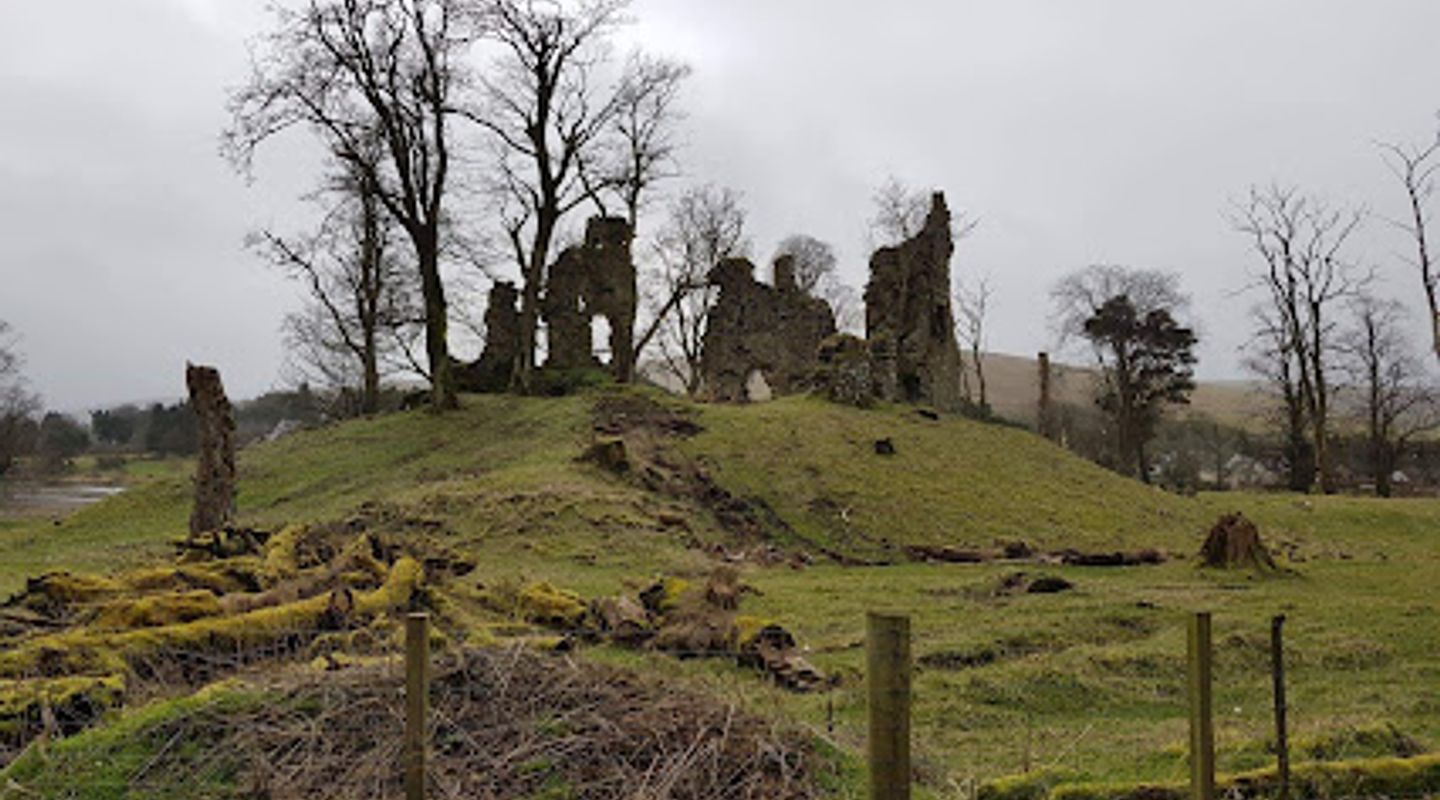
Crawford Castle, also known as Lindsay Tower, stands as a substantially ruined medieval fortress on the north bank of the River Clyde near Biggar in South Lanarkshire. Built in the 12th century, this strategic stronghold guarded the crucial Mennock Pass and served as the administrative centre for the Barony of Crawford, one of southern Scotland's most influential baronies. Today, visitors can explore the atmospheric remains of this historically significant site, which witnessed pivotal moments during the Wars of Scottish Independence.
On-site amenities
 Information boards
Opening hours
- Every dayOpen 24 hours
Opening hours as listed on the venue’s Google Business Profile. Hours can change for services and special events, so check with the venue before you go.
- Address
- Crawford, Biggar ML12 6TZ
Getting there
By Car from Biggar
By Bus from Biggar
Walking from Crawford Village
By Taxi or Ride-Share from Biggar
Discover more about Crawford Castle
Medieval Foundations and Strategic Significance
Crawford Castle emerged in the 12th century as a motte and bailey earthwork, likely constructed by the Crawford family before 1175, though some sources suggest construction by Thor, Lord of Crawford, or his son. The castle's strategic location on the north bank of the River Clyde, approximately half a mile north of Crawford village, made it an ideal defensive position guarding the Mennock Pass—a vital gateway from England into the upper Clyde Valley. This commanding position controlled one of the main travel routes through southern Scotland, a corridor of such importance that it had been fortified since Roman times. Archaeological excavations have revealed evidence of a Roman fort that occupied the same site between 80 and 170 AD, garrisoned by approximately 300 troops. The castle's prominence reflected its role as the administrative centre for the Barony of Crawford, at that time the largest and most influential barony in southern Scotland.
The Lindsay Dynasty and Changing Hands
The castle's ownership evolved significantly over the centuries. The Lindsay family inherited the barony through a marriage around 1154 when William Lindsay wed the younger daughter of Thor, Lord of Crawford. It was probably William Lindsay who constructed the stone castle by 1175, establishing the family's long association with the site—so enduring that the castle became known as Lindsay Tower. From its earliest days, the Clan Carmichael of Meadowflat served as hereditary constables of the castle, a position they retained under successive owners until 1595. Over the following centuries, the castle passed through the hands of various noble families, including the Earls of Dunbar and the Earls of Crawford. In 1488, following the accession of James IV, the barony transferred to Archibald Douglas, 5th Earl of Angus as a reward for supporting the young prince's rebellion against his father James III. The Earls of Angus held the castle until 1528, when their estates were forfeited by the young James V. After 1542, the barony returned to the Earls of Angus, and in 1633 the 11th earl was created Marquess of Douglas, with the castle probably rebuilt around this time.
William Wallace and the Wars of Independence
Crawford Castle gained legendary status during the Wars of Scottish Independence when William Wallace stormed the fortress between Christmas 1296 and spring 1297. At that time, the castle was occupied by English forces loyal to Edward I. Wallace's assault was deeply personal—his mother, Margaret Crawford, was the daughter of Hugh Crawford, Chief of Clan Crawford and Sheriff of Ayrshire. Leading only forty men alongside his trusted lieutenant John Graham, Wallace launched a surprise attack on the English garrison. Finding the soldiers revelling inside, Graham set fire to the rafters with a burning torch, engulfing the castle in flames. This audacious strike represented a significant blow against English authority in Scotland and demonstrated Wallace's tactical brilliance in targeting strategically vital positions that controlled supply routes and communication lines.
Architectural Evolution and Physical Remains
The visible ruins of Crawford Castle reflect centuries of modification and rebuilding. The earliest earthworks comprise a motte approximately 5 metres high, surrounded by a ditch, with a bailey measuring roughly 45 metres by 33 metres to the southwest. Upon the remains of the motte stand the ruins of a square stone enclosure surrounded by a curtain wall, with evidence suggesting round towers may have occupied each corner during the 16th or early 17th centuries. A three-storey range of buildings on the southwest, featuring an attic and vaulted basement, dates to the 16th or 17th century. A second range was added to the southeast in the 17th century, creating more spacious accommodation. Much of the currently visible stonework likely dates from the 17th-century rebuilding by the Marquess of Douglas. Notably, stone from the old castle was robbed to construct the nearby Castle Crawford Farm, and four stone tablets bearing coats of arms, one dated 1648, were built into the walls of Castle Crawford House.
Decline and Legacy
By the 17th century, Crawford Castle had begun its decline in importance. The Union of the Crowns in 1603, which united the Scottish and English crowns under James VI of Scotland (James I of England), fundamentally reduced the strategic need for border fortifications. The castle subsequently passed to the Duke of Hamilton before being sold to Sir George Colebrooke in the 18th century. After a period of use as a farmhouse, the building was abandoned at the end of the 18th century, and much of its stone was repurposed for local construction projects. Today, only fragments remain—parts of the tower, sections of the curtain wall, and earthworks—yet these ruins powerfully evoke the castle's medieval past and its turbulent role in Scotland's history. The site is protected as a Scheduled Ancient Monument by Historic Environment Scotland, ensuring its preservation for future generations of historians, archaeologists, and visitors.
Evendo Review Centre
 Google
Guest reviews
Best time to go
Quietest: Jan, Feb & Dec · before 7am or at 8pm
Busy times are Evendo estimates for a typical year, to help you plan. Actual crowds vary with events, school holidays and the weather.
Explore Crawford Castle on the map
A handpicked selection of must-see spots near Crawford Castle, mapped for you.
Get your free copy of our complete guide to Crawford Castle, delivered straight to you.
Everything on this page, from opening hours and how to get there to Eve’s tips and the best time to go, in one PDF you can read offline, print or share.
Already have an account? Sign in
Your Crawford Castle guide is ready.
We'll send it to · Not you? Sign out

Getting your guide ready…
We are putting together a fresh copy of the Crawford Castle guide. This can take up to a minute.
This can take a few moments. If your browser asks, choose Allow so the download can start. You'll find the guide in your Downloads folder.
Nothing happened? Download it again
Sorry, the guide is taking longer than usual. Please try again in a minute, or get it by email instead.
Other nearby places you may find interesting
The closest places of the same kind, if this one is not quite what you had in mind.
-
-
-
-
-


Swipe for more places
More to explore near Crawford Castle

 Best experiences near Crawford Castle
 Best hotels near Crawford Castle
 Best landmarks near Crawford Castle
 Best attractions near Crawford Castle
 Best shops near Crawford Castle
 Best restaurants near Crawford Castle
 Best bars near Crawford Castle
Do you manage this location?
Take control to get all the benefits, like improved information, better appearance, and stronger visibility across AI-powered discovery.
Explore more

Explore more of Lanarkshire
Discover Lanarkshire: Where Scotland's rich history, stunning landscapes, and vibrant local culture come together for an unforgettable travel experience.
Explore Lanarkshire
Explore more of United Kingdom
Discover the United Kingdom: A blend of rich history, stunning landscapes, and vibrant cities, offering a unique travel experience for every visitor.
Explore United Kingdom
