

Queen's Tower Travel Guide
Free Guide: A towering neo-Renaissance landmark in South Kensington, the Queen's Tower stands as the historic heart of Imperial College London and a symbol of Victorian ambition.


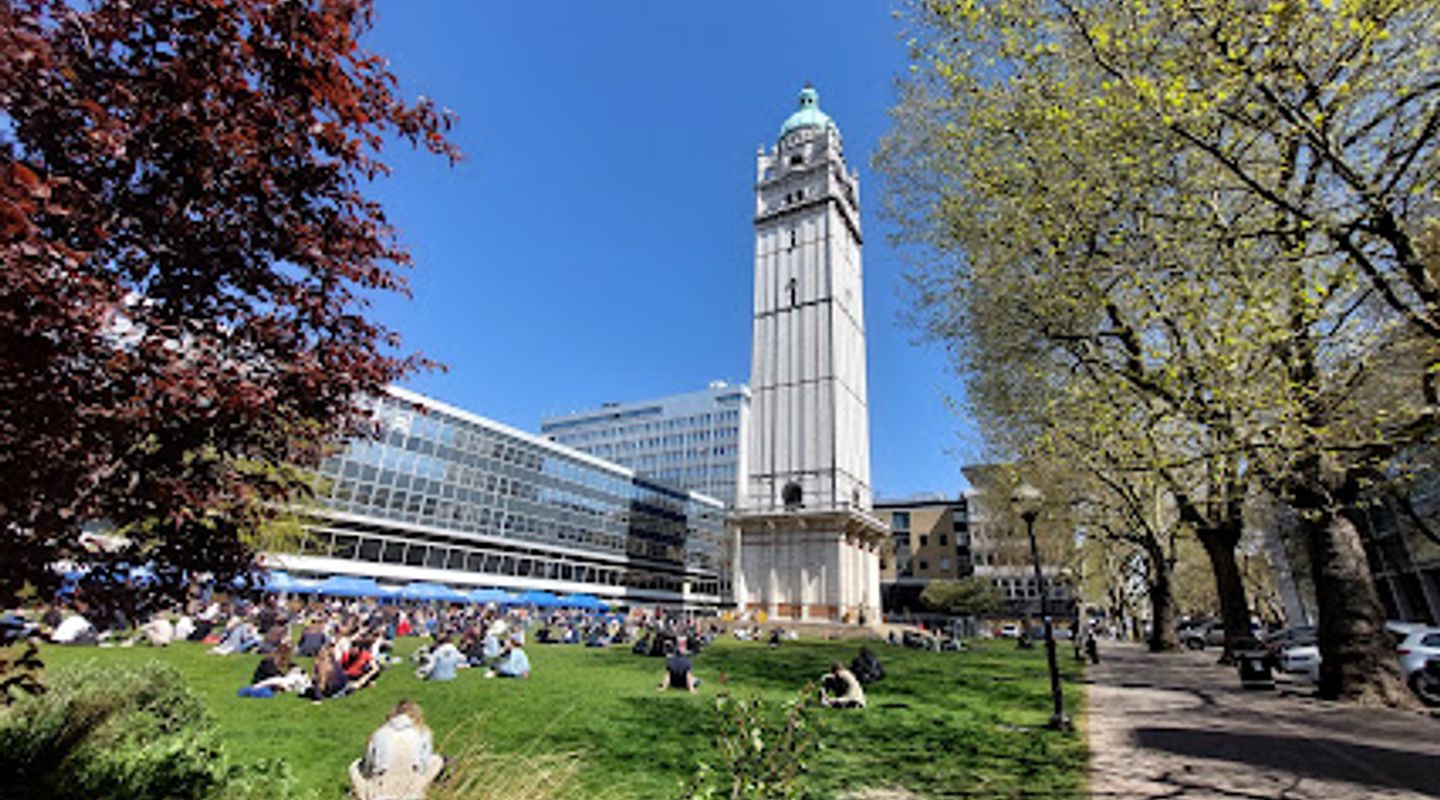
A brief summary of Queen's Tower
A towering neo-Renaissance landmark in South Kensington, the Queen's Tower stands as the historic heart of Imperial College London and a symbol of Victorian ambition.
The Queen's Tower, rising 287 feet in South Kensington, London, is the sole surviving remnant of the Imperial Institute, built to commemorate Queen Victoria's Golden Jubilee in 1887. Designed in neo-Renaissance style by T.E. Collcutt, the tower stands as a symbol of the British Empire's scientific ambitions and architectural grandeur. It features a copper-covered dome, a belfry with ten historic bells, and offers panoramic views of London from its upper gallery, open on special occasions.
On-site amenities
 Restrooms
 Drink options
 Food options
 Seating areas
 Information boards
- Address
- 7 Imperial College Rd, South Kensington, London SW7 2AZ
- Phone
- Website
Getting there
London Underground
Bus
Taxi or Rideshare
Walking
Discover more about Queen's Tower
Origins Rooted in Imperial Ambition
The Queen's Tower was originally the central tower of the Imperial Institute, constructed between 1887 and 1893 to mark Queen Victoria's Golden Jubilee. The Institute was conceived as a grand research and exhibition centre dedicated to the resources and raw materials of the British Empire, designed by architect Thomas Edward Collcutt in an elaborate neo-Renaissance style. The building stretched 700 feet and housed libraries, laboratories, conference rooms, and exhibition galleries, surrounded by gardens that once belonged to the Royal Horticultural Society.
Architectural Significance and Craftsmanship
The tower’s copper dome showcases Victorian craftsmanship with a wooden internal structure and a stone cornice inscribed with the names of those who built it. The belfry contains ten bells, known as the Alexandra Peal, donated by an Australian benefactor. The tower is a striking example of 19th-century design and engineering, reflecting the confidence and reach of the British Empire at its zenith.
Survival Amidst Demolition and Change
Despite the demolition of the Imperial Institute starting in 1957 to allow expansion of Imperial College London, the Queen's Tower was preserved following public campaigns led by cultural figures like poet laureate John Betjeman. Extensive engineering work in the 1960s, including underpinning and concrete reinforcement, stabilized the tower to stand independently. Today, it remains a prominent landmark visible from many points across London.
Symbolism and Community Role Today
Owned by Imperial College London, the Queen's Tower symbolizes the College’s heritage and ongoing commitment to research and education. The bells are rung on royal anniversaries and during college ceremonies, linking the tower to both national tradition and academic life. The tower also hosts events and celebrations at its base, fostering community engagement.
Visitor Experience and Views
Visitors who gain access can climb 324 steps to a viewing gallery beneath the dome, offering sweeping views of iconic London landmarks such as the Royal Albert Hall and the Albert Memorial. The gallery opens on special occasions like the Imperial Festival and alumni reunions, providing a rare opportunity to appreciate the tower’s height and historic significance.
Legacy of the Imperial Institute in Modern London
While the original Imperial Institute building no longer exists, the Queen's Tower stands as a testament to Victorian ambition and architectural heritage. It connects modern Londoners and visitors with the city’s imperial past, scientific advancements, and cultural evolution, maintaining its place as an enduring icon in South Kensington’s urban landscape.
Evendo Review Centre
 Google
Guest reviews
Best time to go
Quietest: Jan, Feb & Dec · before 6am or from 11pm
Busy times are Evendo estimates for a typical year, to help you plan. Actual crowds vary with events, school holidays and the weather.
Explore Queen's Tower on the map
A handpicked selection of must-see spots near Queen's Tower, mapped for you.
Get your free copy of our complete guide to Queen's Tower, delivered straight to you.
Everything on this page, from opening hours and how to get there to Eve’s tips and the best time to go, in one PDF you can read offline, print or share.
Already have an account? Sign in
Your Queen's Tower guide is ready.
We'll send it to · Not you? Sign out

Getting your guide ready…
We are putting together a fresh copy of the Queen's Tower guide. This can take up to a minute.
This can take a few moments. If your browser asks, choose Allow so the download can start. You'll find the guide in your Downloads folder.
Nothing happened? Download it again
Sorry, the guide is taking longer than usual. Please try again in a minute, or get it by email instead.
Other nearby places you may find interesting
The closest places of the same kind, if this one is not quite what you had in mind.
-
-
-
-
-


Swipe for more places
More to explore near Queen's Tower

 Best experiences near Queen's Tower
 Best hotels near Queen's Tower
 Best landmarks near Queen's Tower
 Best attractions near Queen's Tower
 Best shops near Queen's Tower
 Best restaurants near Queen's Tower
 Best bars near Queen's Tower
Do you manage this location?
Take control to get all the benefits, like improved information, better appearance, and stronger visibility across AI-powered discovery.
Explore more
Explore more of Middlesex
Discover Middlesex: A blend of historic charm and modern excitement, offering scenic beauty, cultural events, and easy access to London.
Explore Middlesex
Explore more of United Kingdom
Discover the United Kingdom: A blend of rich history, stunning landscapes, and vibrant cities, offering a unique travel experience for every visitor.
Explore United Kingdom
