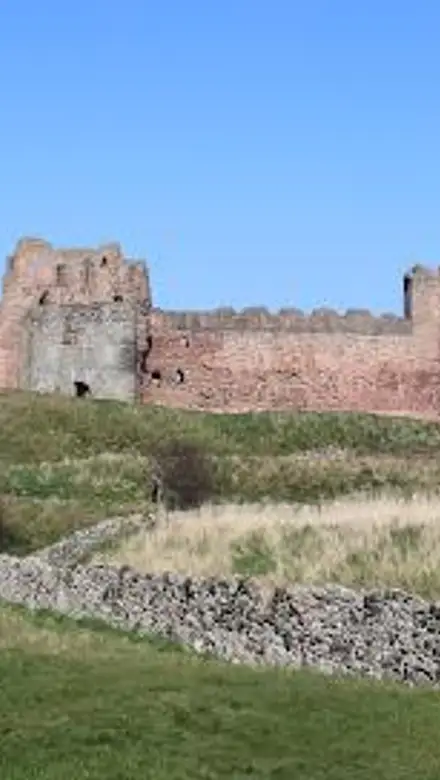
Tantallon Castle Travel Guide
Free Guide: Explore the dramatic cliff-top ruins of Tantallon Castle, a powerful medieval fortress overlooking the North Sea and Bass Rock near North Berwick.


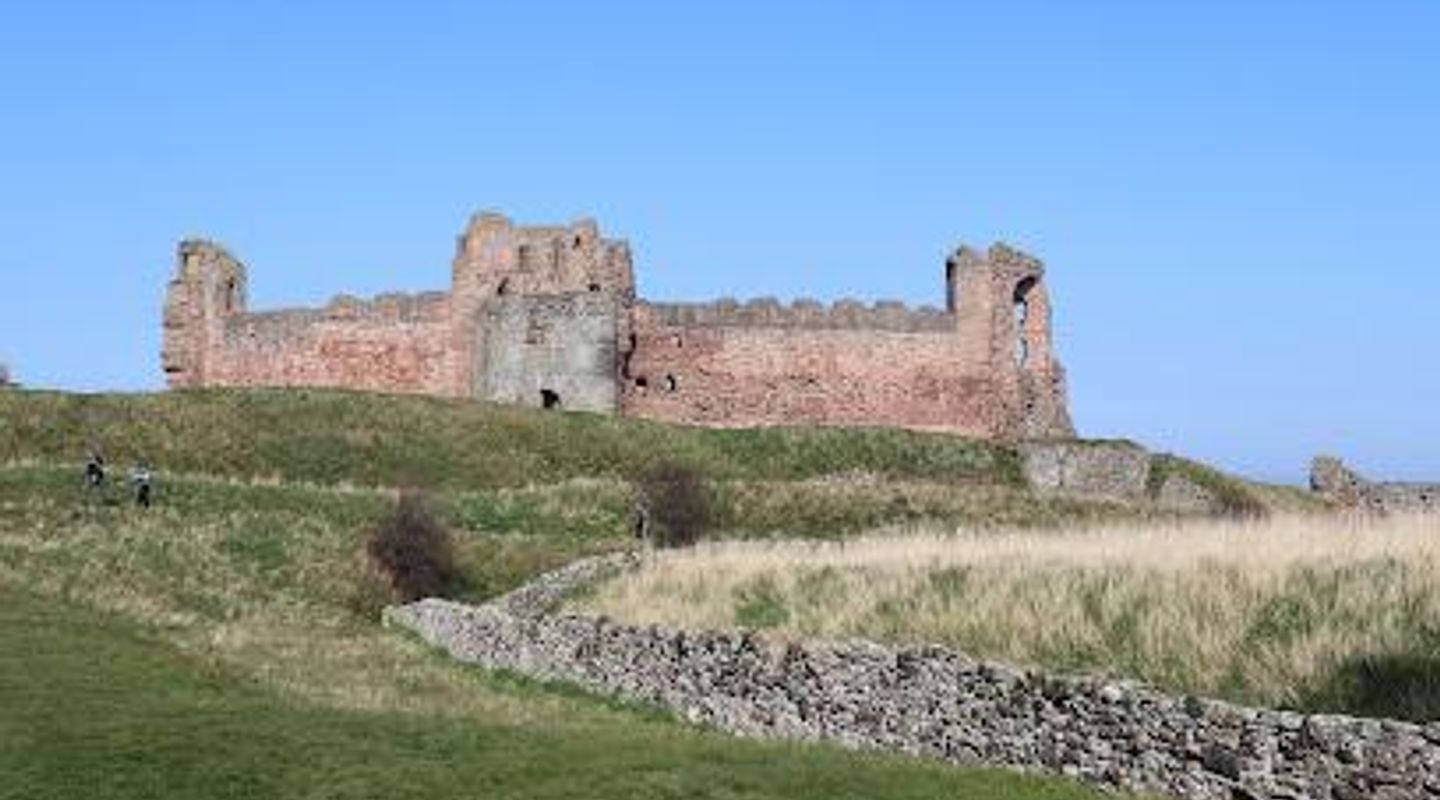
A brief summary of Tantallon Castle
Explore the dramatic cliff-top ruins of Tantallon Castle, a powerful medieval fortress overlooking the North Sea and Bass Rock near North Berwick.
Perched on a rugged headland overlooking the North Sea near North Berwick, Tantallon Castle is one of Scotland’s last great medieval fortresses. Built in the mid-14th century by William Douglas, it served as the stronghold of the powerful Red Douglas family for over 300 years. Its massive curtain wall, towering defensive towers, and cliff-edge position made it nearly impregnable until Oliver Cromwell’s forces bombarded it in 1651. Today, the atmospheric ruins offer spectacular views of Bass Rock and a glimpse into Scotland’s turbulent medieval past.
On-site amenities
 Restrooms
 Drink options
 Food options
 Seating areas
 Information boards
 Visitor centre
 Trash bins
Opening hours
- Every day10 am–4 pm
Opening hours as listed on the venue’s Google Business Profile. Hours can change for services and special events, so check with the venue before you go.
- Address
- North Berwick EH39 5PN
- Phone
- Website
Getting there
Car
Train and Bus
Walking
Discover more about Tantallon Castle
Origins and Strategic Importance of Tantallon Castle
Tantallon Castle was constructed in the mid-1300s by William Douglas, 1st Earl of Douglas, at the height of his power. It was built as a formidable stronghold on a rocky promontory with sheer cliffs dropping into the Firth of Forth, providing natural defense on three sides. The castle’s imposing 12-foot-thick curtain wall enclosed a large courtyard and was fortified further with tall towers, including the massive Douglas Tower which housed the noble family. Its strategic location allowed the Red Douglas line, also known as the Earls of Angus, to control the surrounding lands and sea approaches for centuries.
Medieval Power Struggles and Sieges
Tantallon was a focal point in Scotland’s turbulent medieval history. The Red Douglases often clashed with the Scottish Crown, switching allegiances between the English and Scottish kings. The castle withstood sieges by King James IV in 1491 and James V in 1528, the latter involving a 20-day siege that failed due to the castle’s formidable defenses and deep outer ditch. The castle also played roles in the Wars of the Rough Wooing and internal Scottish conflicts, reflecting its importance as a military and political bastion.
Architectural Features and Defensive Innovations
Unlike many castles, Tantallon’s seaward side relied on natural cliffs for protection, so its massive curtain wall and towers were concentrated on the landward side. To counter the threat of artillery, later owners reinforced the walls by filling chambers and adding gun holes for cannon defense. The castle also featured an outer gate with a gun tower and a ravelin, an earthwork gun emplacement, enhancing its defensive capabilities. Visitors today can explore the remains of the great hall, the grim pit prison, and climb battlements that offer breathtaking views of the Bass Rock and the North Sea.
The Cromwell Siege and Decline
In 1651, Oliver Cromwell’s Parliamentarian forces laid siege to Tantallon Castle during the Third English Civil War. After 12 days of heavy bombardment, including artillery fire that breached the Douglas Tower, the defenders surrendered. The damage was so extensive that the castle was never repaired or reoccupied, leaving it a dramatic ruin. Since then, Tantallon has stood as a testament to Scotland’s medieval past and the destructive power of 17th-century warfare.
Present-Day Experience and Visitor Highlights
Today, Tantallon Castle is managed by Historic Environment Scotland and is open to visitors year-round with seasonal hours. The castle’s dramatic cliff-top setting and well-preserved ruins create a captivating atmosphere. Visitors can walk along the curtain wall, explore the castle’s interior rooms, and descend into the pit prison. The site also offers spectacular panoramas of the Bass Rock, home to the world’s largest colony of northern gannets. The castle’s shop and visitor center provide guidebooks and information to enrich the experience.
Legacy and Cultural Significance
Tantallon Castle remains one of Scotland’s most iconic medieval ruins, symbolizing the power struggles of the Douglas family and the turbulent history of the Scottish Borders. Its unique coastal location and architectural grandeur have inspired legends and attracted historians, artists, and visitors alike. The castle’s story intertwines with Scotland’s royal history and military conflicts, making it a vital cultural heritage site that continues to captivate all who visit.
Evendo Review Centre
 Google
Guest reviews
Best time to go
Quietest: Jan, Feb & Dec · before 6am or at 8pm
Busy times are Evendo estimates for a typical year, to help you plan. Actual crowds vary with events, school holidays and the weather.
Explore Tantallon Castle on the map
A handpicked selection of must-see spots near Tantallon Castle, mapped for you.
Get your free copy of our complete guide to Tantallon Castle, delivered straight to you.
Everything on this page, from opening hours and how to get there to Eve’s tips and the best time to go, in one PDF you can read offline, print or share.
Already have an account? Sign in
Your Tantallon Castle guide is ready.
We'll send it to · Not you? Sign out

Getting your guide ready…
We are putting together a fresh copy of the Tantallon Castle guide. This can take up to a minute.
This can take a few moments. If your browser asks, choose Allow so the download can start. You'll find the guide in your Downloads folder.
Nothing happened? Download it again
Sorry, the guide is taking longer than usual. Please try again in a minute, or get it by email instead.
Unlock the best of Tantallon Castle
Skip-the-line tickets, guided tours with entry, and walking tours of the area, booked in a few clicks.
 Tour with entry
Puffin Boat Trip & Tantallon Castle Day Trip from Edinburgh
from $203.52 Tour with entry
Cows, Rosslyn Chapel, Tantallon Castle, Dunbar from Edinburgh
from $635.03 Tour with entry
Private East Lothian Gold Tour
from $808.11 Tour with entry
Edinburgh: Rosslyn Chapel, Berwick Private Day Tour in Luxury MPV
from $990.49
Other nearby places you may find interesting
The closest places of the same kind, if this one is not quite what you had in mind.
-
-
-
-
-


Swipe for more places
More to explore near Tantallon Castle

 Best experiences near Tantallon Castle
 Best hotels near Tantallon Castle
 Best landmarks near Tantallon Castle
 Best attractions near Tantallon Castle
 Best shops near Tantallon Castle
 Best restaurants near Tantallon Castle
 Best bars near Tantallon Castle
Do you manage this location?
Take control to get all the benefits, like improved information, better appearance, and stronger visibility across AI-powered discovery.
Explore more
Explore more of Midlothian
Discover Midlothian, Scotland's hidden gem, where history, nature, and culture blend seamlessly to offer a unique travel experience.
Explore Midlothian
Explore more of United Kingdom
Discover the United Kingdom: A blend of rich history, stunning landscapes, and vibrant cities, offering a unique travel experience for every visitor.
Explore United Kingdom