Wollaton Hall., Nottingham Travel Guide
Elizabethan prodigy house on a hill, now home to Nottingham Natural History Museum and free-roaming deer in a 500-acre park.
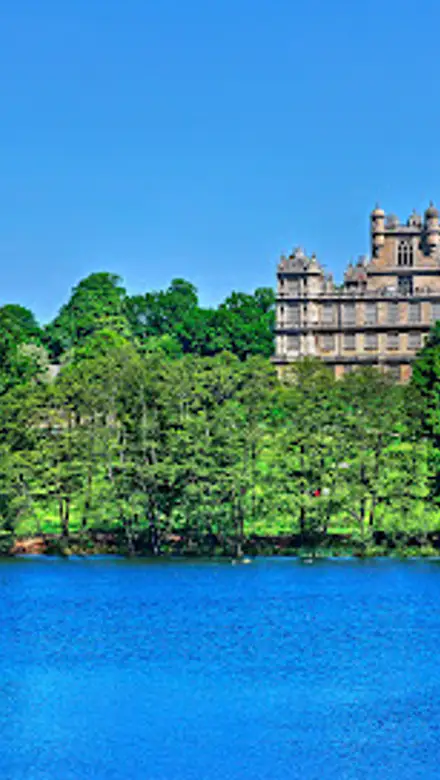
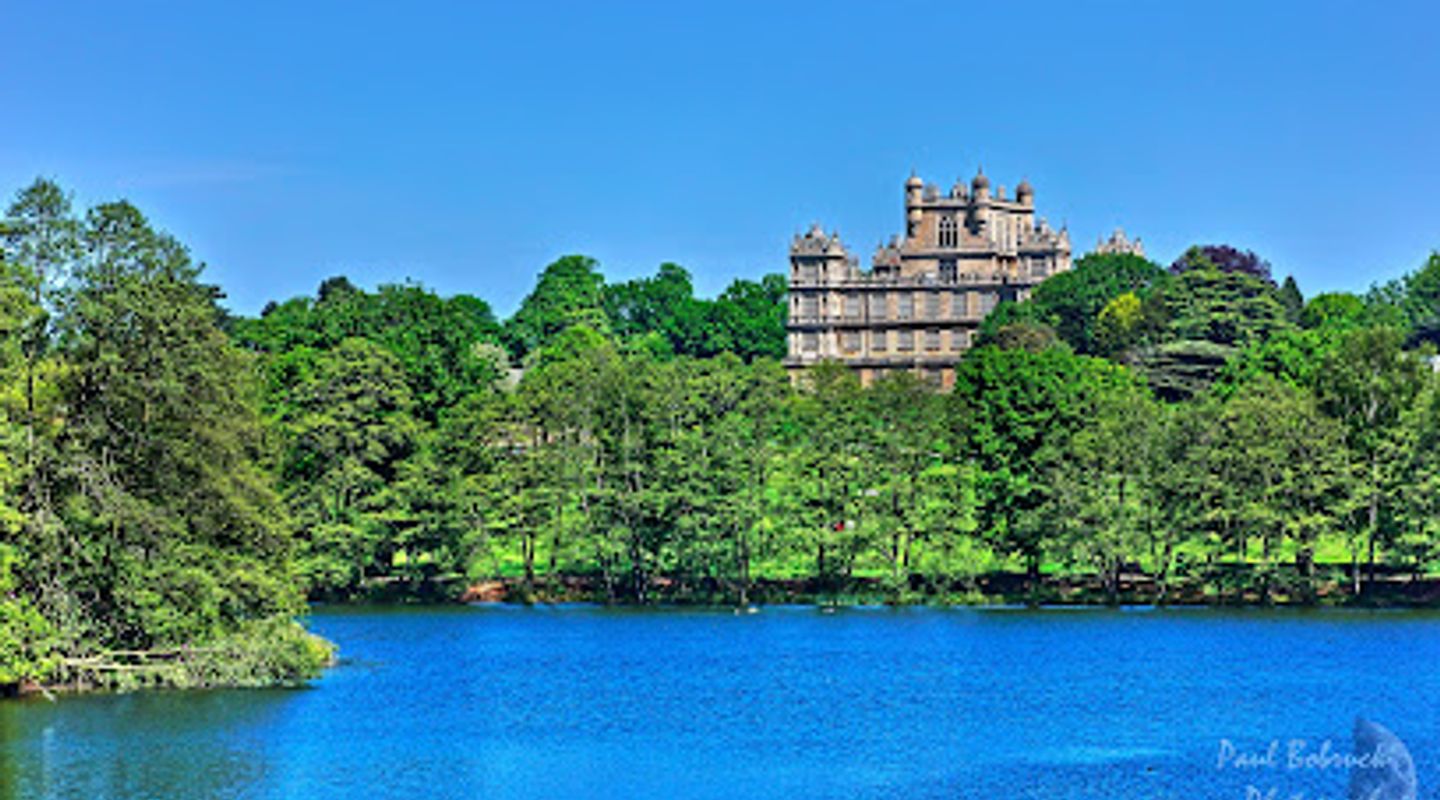
Wollaton Hall stands on a hill west of Nottingham as one of England’s finest Elizabethan prodigy houses. Built 1580–88 for Sir Francis Willoughby, the Ancaster-stone mansion now houses Nottingham Natural History Museum, with galleries of taxidermy, minerals, dinosaurs and an Africa collection. The surrounding 500-acre deer park remains free to enter, offering red and fallow deer, formal gardens, a lake and woodland walks. Its dramatic silhouette also served as Wayne Manor in The Dark Knight Rises. Visitors combine paid hall access with free park exploration, making the site both a cultural landmark and everyday local greenspace.
A brief summary to Wollaton Hall.
- 2 Wollaton Hall, Nottingham, NG8 2AE, GB
- Click to display
- Click to display
- Duration: 1.5 to 5 hours
- Mid ranged
-
 Mixed
Mixed
- Mobile reception: 4 out of 5
- Monday 11 am-4 pm
- Tuesday 11 am-4 pm
- Wednesday 11 am-4 pm
- Thursday 11 am-4 pm
- Friday 11 am-4 pm
- Saturday 11 am-4 pm
- Sunday 11 am-4 pm

Know before you go
Hi, I'm Eve. Here are a few practical things to know before exploring Wollaton Hall..
- Buy the annual parking-plus-museum pass if returning within a year; it covers two adults and up to three children and saves on repeated visits.
- Allow extra walking time from any park gate to the hilltop hall; the grounds are large and the final approach is uphill.
- Hidden History tours involve many steps and uneven surfaces; book an accessible variant in advance if mobility is limited.
- Keep at least 50 metres from deer, especially during rutting (September–November) and calving (May–July).
Do you manage this location?
Take control to get all the benefits, like improved information, better appearance, and stronger visibility across AI-powered discovery. Learn more about listing your business on Evendo
Activate your presenceOther nearby places you may find interesting
The closest places of the same kind, if this one is not quite what you had in mind.


Explore Wollaton Hall. on the Map
A handpicked selection of must-see spots near Wollaton Hall., mapped for you.
Getting There
-
Car
From M1 junction 25 follow brown signs; sat-nav NG8 2AE. On-site parking charged £5 weekdays, £6 weekends via RingGo or card.
-
Bus
NCT routes 30, 35 or 36 to Wollaton Road or Derby Road park gates, then 10–15 minute walk uphill across the park.
-
Tram
NET tram to University of Nottingham or University Boulevard, then 15–20 minute walk to a park entrance and onward to the hall.
-
Walk
From central Nottingham the hall is roughly three miles; allow 60–75 minutes on foot via Wollaton Road and park paths.
For the on-the-go comforts that matter to you
-
 Restrooms
-
 Drink Options
-
 Drinking Water
-
 Food Options
-
 Seating Areas
-
 Sheltered Areas
-
 Picnic Areas
-
 Trash Bins
-
 Information Boards
Discover more about Wollaton Hall.
The Elizabethan Prodigy House
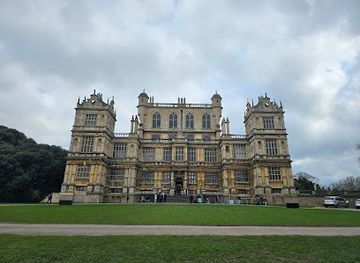
Wollaton Hall was constructed between 1580 and 1588 for Sir Francis Willoughby, whose wealth came from coal. Architect Robert Smythson created a square limestone house with symmetrical fronts, corner towers and a soaring central hall topped by a Prospect Room. The design mixes French, Dutch and Italianate influences, visible in strapwork, pilasters and decorative mooring rings. An inscription records the building dates. The great hall retains an elaborate 1580s hammerbeam-style ceiling. Much of the basement is cut into bedrock, and the hilltop position gives commanding views across park and city.Natural History Museum Galleries
Since 1926 the hall has functioned as Nottingham’s Natural History Museum. Displays draw from roughly three-quarters of a million specimens in zoology, geology and botany. Public galleries cover birds, insects, minerals and an Africa section featuring taxidermy such as George the gorilla. A recent Discovering Dinosaurs gallery presents a towering skeleton and fossil material aimed at mixed-age visitors. The ground and first floors are served by lifts, allowing most visitors to see the main collections without stairs.Deer Park and Gardens
The 500-acre park predates the present house. More than 90 red deer and 120 fallow deer roam freely. Grassland, woodland, wetland and a lake create a Local Nature Reserve setting used for walking, cycling, picnics and play. Formal gardens behind the hall include statues, a Doric temple and the listed Camellia House, an early cast-iron glasshouse. A volunteer botanical garden near the stables opens on Sunday afternoons from April to October. The park remains open daily and free; vehicle gates close at dusk.Hidden History Tours
Daily tours at 11am and 2pm (January–November) take visitors beyond the public galleries into the Prospect Room, Tudor kitchens, basement corridors, cave and Admiral’s Bath. The route involves up to 300 steps and a narrow spiral stair, making it unsuitable for under-3s and difficult for limited mobility. Advance booking for accessible variants is required. The rooftop views justify the effort on clear days.History and Ownership
The house suffered a fire in 1642 and stood empty for decades. Jeffry Wyatville remodelled interiors from 1801. By the late nineteenth century the family found the location too close to industrial Nottingham. Nottingham Corporation bought the hall and park in 1925 and opened the museum the following year. A major refurbishment around 2005–2007 made the Prospect Room and basement tour-only spaces. The site gained wider recognition as Wayne Manor in The Dark Knight Rises (2011).Practical Visit Patterns
A focused hall visit takes 45–60 minutes; combining galleries, courtyard cafés and a short park walk requires 1.5–2.5 hours. A half-day or full day allows time for deer watching, play areas and gardens. Parking is charged (£5 weekdays, £6 weekends) via RingGo or on-site payment. Public transport reaches the park gates; visitors then walk uphill across the grounds. The hall operates 11am–4pm daily except Christmas, Boxing Day and New Year’s Day.












Your all‑in‑one travel companion app
Explore expert travel guides, compare and book tours, experiences, hotels, and more—all from the palm of your hand. Download now for seamless trip planning wherever your wanderlust takes you.


Explore More of Nottingham
Looking beyond Wollaton Hall.? Discover Nottingham for broader travel guides, local hot-spots, and regional highlights.
Explore Nottingham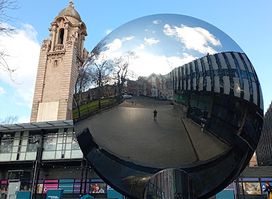
Experience Nottingham’s iconic Sky Mirror, a captivating stainless steel sculpture reflecting the sky and cityscape in ever-changing optical illusions.
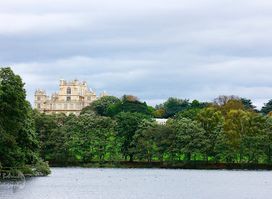
Explore Nottingham’s stunning Elizabethan mansion and deer park, where history, nature, and culture unite in 500 acres of heritage and beauty.