Leeds Town Hall, Yorkshire And The Humber Travel Guide
A grand Victorian civic landmark on The Headrow, Leeds Town Hall combines classical architecture, historic courtrooms, and a legendary concert hall in the heart of the city.
Leeds Town Hall is a magnificent Grade I listed Victorian civic building on The Headrow, designed by Cuthbert Brodrick and opened in 1858 by Queen Victoria. Once the tallest building in Leeds, it combines grand classical architecture with a rich civic history, housing former courtrooms, council chambers, and the impressive Victoria Hall concert space. Though currently closed for major refurbishment, its imposing colonnaded facade, clock tower, and historic underground prison cells remain a powerful symbol of the city’s industrial pride and architectural ambition.
A brief summary to Leeds Town Hall
- The Headrow, Leeds, LS1 3AD, GB
- Click to display
- Click to display
- Duration: 0.5 to 3 hours
- Mid ranged
-
 Mixed
Mixed
- Mobile reception: 5 out of 5

Know before you go
Hi, I'm Eve. Here are a few practical things to know before exploring Leeds Town Hall.
- Check the official Leeds Town Hall website before visiting, as the building is currently closed for major refurbishment and interior access is limited.
- Book guided tours in advance, especially for the underground prison cell tours and clock tower climb, as these popular experiences often sell out.
- If visiting for a concert or event, arrive early to explore the grand public areas and enjoy refreshments in the bar or café before the performance.
- Combine your visit with nearby Victorian landmarks like Leeds City Art Gallery and Leeds Central Library, which are just steps away on The Headrow.
Do you manage this location?
Take control to get all the benefits, like improved information, better appearance, and stronger visibility across AI-powered discovery. Learn more about listing your business on Evendo
Activate your presenceOther nearby places you may find interesting
The closest places of the same kind, if this one is not quite what you had in mind.




Explore Leeds Town Hall on the Map
A handpicked selection of must-see spots near Leeds Town Hall, mapped for you.
Unlock the Best of Leeds Town Hall
Buy tickets
-
No tickets available
Book tours with entry


Getting There
-
Walking
From Leeds Railway Station, follow signs through the city centre towards The Headrow; the Town Hall is about a 10–15 minute walk along this main thoroughfare, clearly visible as a large classical building with a clock tower.
-
Bus
Numerous local bus routes serve stops on The Headrow and nearby streets; from there, the Town Hall is a short, level walk across the civic quarter, well signposted and accessible for most visitors.
-
Car
Driving visitors can use nearby city centre car parks; the Town Hall itself has no dedicated visitor parking, so expect to park a short walk away and pay standard city centre rates for several hours.
-
Taxi / Ride‑share
Taxis and ride‑share services can drop off directly on The Headrow; the main entrance is clearly marked and a short walk from the kerb, suitable for most mobility levels.
For the on-the-go comforts that matter to you
-
 Restrooms
-
 Drink Options
-
 Drinking Water
-
 Food Options
-
 Seating Areas
-
 Sheltered Areas
-
 Trash Bins
-
 Information Boards
Discover more about Leeds Town Hall
A Civic Statement in Stone
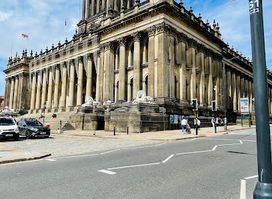
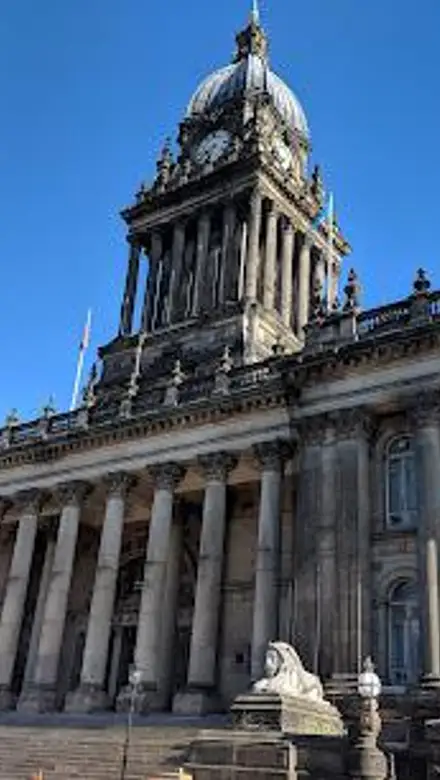
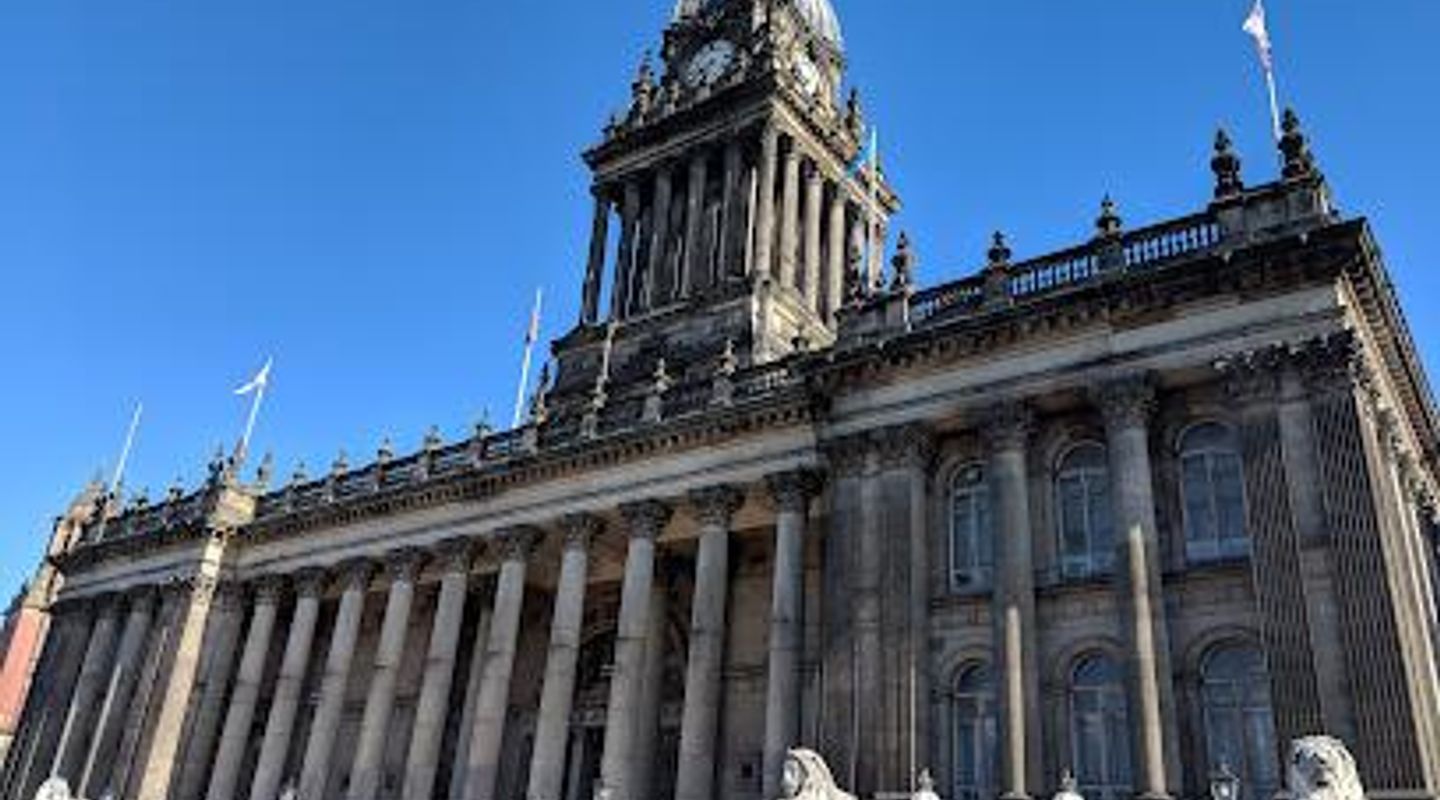
Rising from the heart of Leeds city centre, Leeds Town Hall is a monumental expression of Victorian civic pride and industrial confidence. Built between 1853 and 1858 to designs by Hull-born architect Cuthbert Brodrick, it was conceived as a symbol of Leeds’ growing importance during the Industrial Revolution, deliberately intended to rival Bradford’s St George’s Hall. The building’s classical style, with its ten Corinthian columns, deep portico, and a 69-metre clock tower, was a bold architectural statement, making it one of the largest and most imposing town halls in the UK. Its prominent position on The Headrow, raised on a specially constructed mound and approached by grand steps, ensures it dominates the civic quarter and remains one of the city’s most photographed landmarks.Architecture and Engineering Ambition
Brodrick’s design blends classical grandeur with innovative engineering for its time. The south facade, facing The Headrow, is dominated by a deeply recessed portico supported by ten Corinthian columns, above which rises the distinctive clock tower with its concave dome. The building’s footprint is vast, comparable to some of Leeds’ major industrial mills, and its construction used local Yorkshire stone to give it a solid, enduring presence. Inside, the Victoria Hall concert hall features a pioneering laminated timber roof structure, one of the first of its kind in wood, inspired by Paxton’s Crystal Palace and King’s Cross station. This combination of ornate stonework, dramatic proportions, and technical innovation made Leeds Town Hall a model for civic architecture across Britain and the Empire.Heart of Civic and Cultural Life
Originally conceived as a multi-functional civic hub, the Town Hall housed law courts, a council chamber, municipal offices, a public hall, and ceremonial rooms. Over time, as the Civic Hall took over many administrative functions, the Town Hall evolved into a premier concert and events venue, with Victoria Hall becoming a key space for orchestral concerts, organ recitals, and major performances. It has hosted legendary acts from The Beatles and Elton John to classical giants like Yehudi Menuhin and Zubin Mehta, cementing its role as a cultural anchor in the city. Even when not hosting events, the building’s grand interiors and historic spaces have long drawn visitors interested in Leeds’ civic history and architectural heritage.Exploring the Hidden Depths
Beneath the grandeur of the main halls lie the building’s more sombre historical layers. The basement once held the Leeds Bridewell, a Victorian prison with small, windowless cells where prisoners, including the notorious Charlie Peace, were held before trial. These underground cells are a highlight of guided tours, offering a chilling glimpse into 19th-century justice and incarceration. Visitors can also climb the 200-plus steps of the clock tower to see the heritage clock mechanism and enjoy panoramic views across Leeds’ historic centre. These experiences, combined with the chance to see former courtrooms and ceremonial rooms, provide a rich, multi-layered understanding of the building’s past as both a seat of power and a place of punishment.Present and Future of a Landmark
Currently, Leeds Town Hall is closed to the public for a major £17–20 million conservation and refurbishment project, scheduled to reopen in late 2025 or early 2026. This extensive work includes a new roof, restoration of stonework, plasterwork, and original doors, as well as upgrades to the concert hall and organ, and the creation of new event spaces, a box office, and visitor facilities. While interior access is limited during this period, the exterior remains a powerful presence on The Headrow, and the building’s status as a Grade I listed structure ensures its long-term preservation. Once reopened, it is expected to continue serving as a vibrant venue for music, events, and civic functions, maintaining its role as a living monument at the heart of Leeds.












Your all‑in‑one travel companion app
Explore expert travel guides, compare and book tours, experiences, hotels, and more—all from the palm of your hand. Download now for seamless trip planning wherever your wanderlust takes you.


Explore More of Yorkshire And The Humber
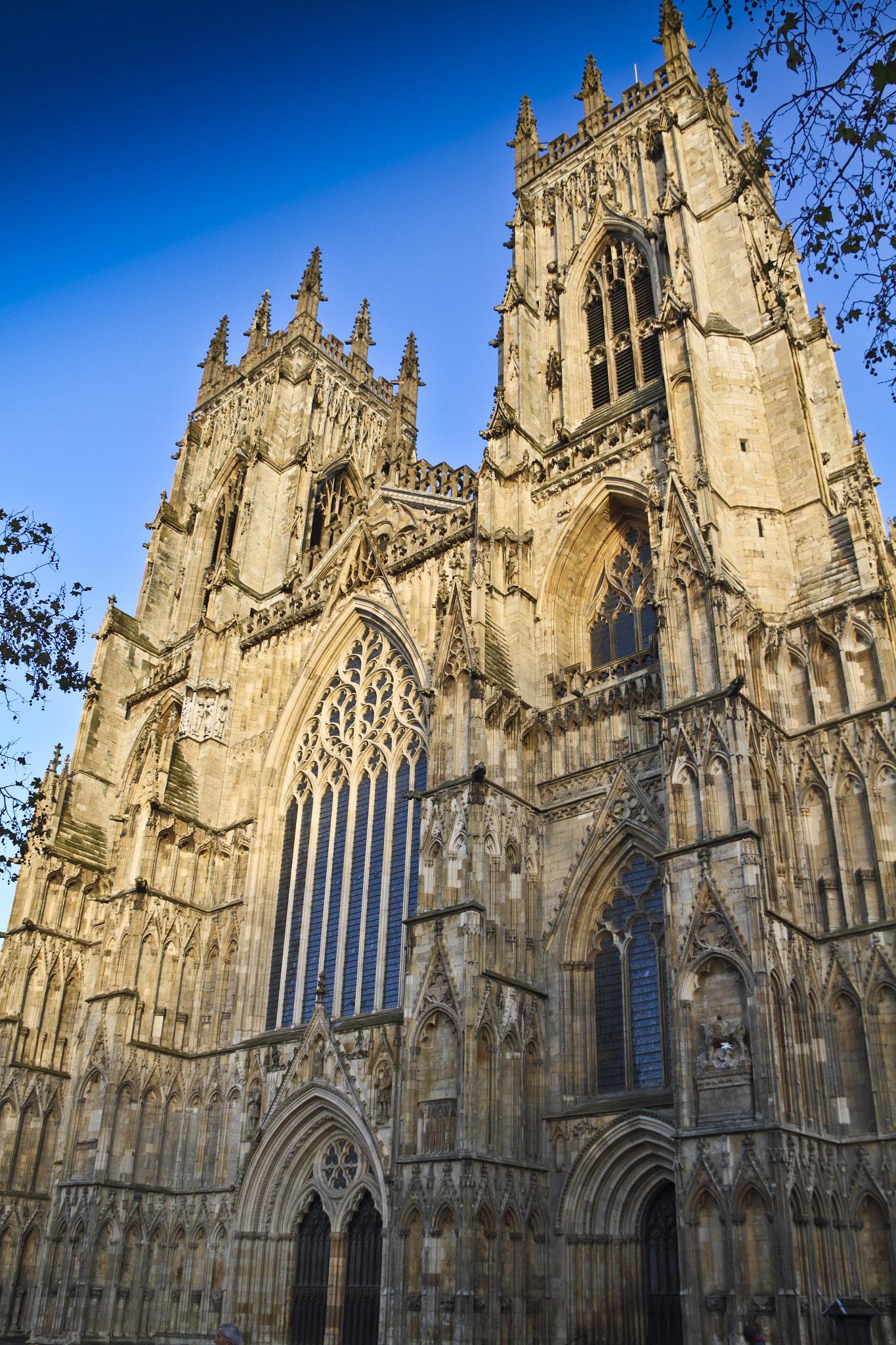
Looking beyond Leeds Town Hall? Discover Yorkshire And The Humber for broader travel guides, local hot-spots, and regional highlights.
Explore Yorkshire And The Humber