Beheading Stone. Travel Guide
Free Guide: Discover Stirling’s Beheading Stone, a haunting medieval execution site perched on Mote Hill with panoramic views and deep Scottish history.


A brief summary of Beheading Stone.
Discover Stirling’s Beheading Stone, a haunting medieval execution site perched on Mote Hill with panoramic views and deep Scottish history.
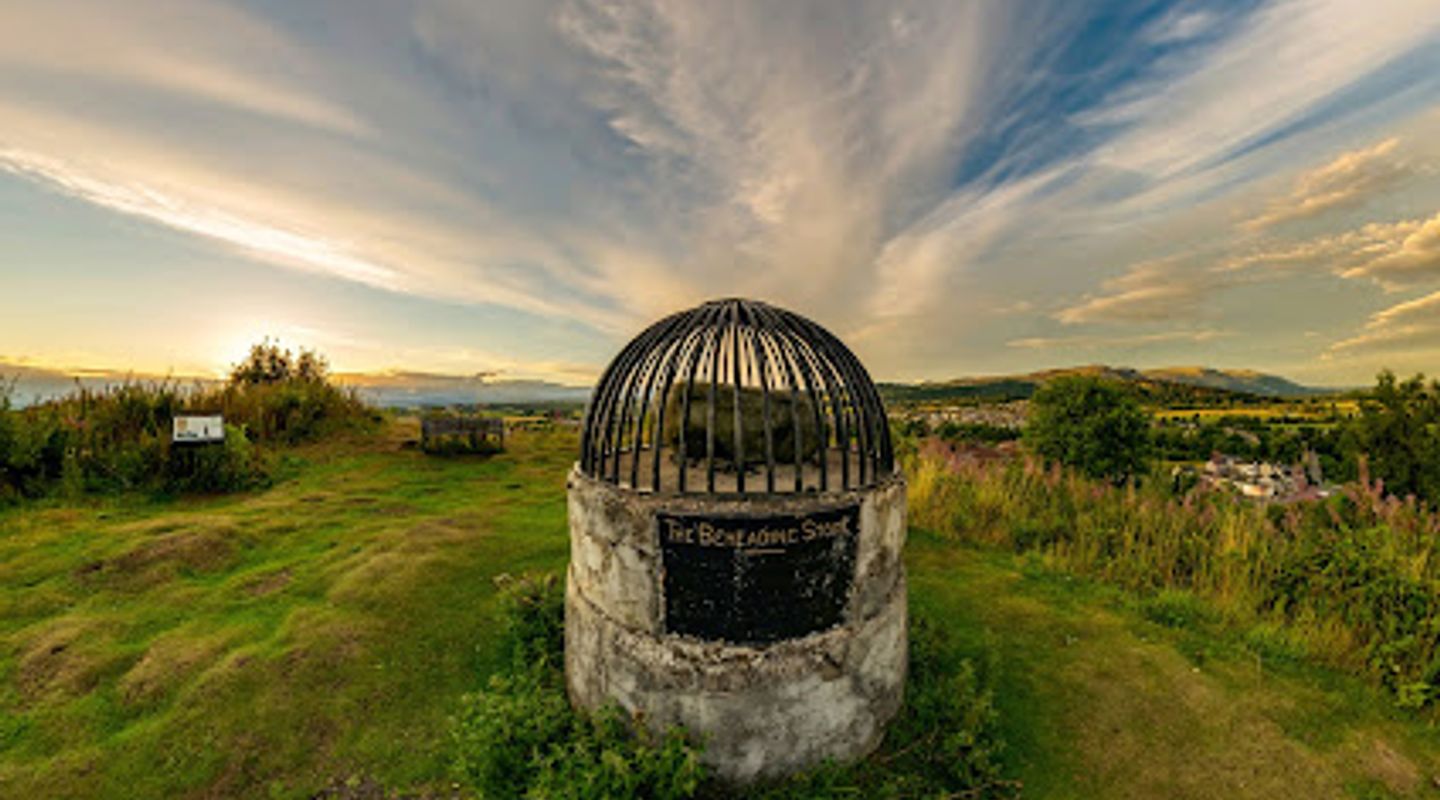
Perched atop Mote Hill in Stirling, the Beheading Stone is a historic execution block dating back to the 15th century. Known for its dark past as the site where Murdoch, Duke of Albany, and other nobles were beheaded for treason, the stone is now protected under an iron cage. Visitors can view the axe marks on the stone and enjoy panoramic views of Stirling Castle and the surrounding landscape, connecting with a pivotal chapter of Scotland’s medieval history.
On-site amenities
 Information boards
 Seating areas
 Trash bins
Opening hours
- Every dayOpen 24 hours
Opening hours as listed on the venue’s Google Business Profile. Hours can change for services and special events, so check with the venue before you go.
- Address
- Stirling FK8 1AA
Getting there
Bus
Walking
Taxi
Discover more about Beheading Stone.
A Storied Site of Medieval Justice
The Beheading Stone sits on Mote Hill, also historically known as Heiding Hill or Heading Hill, overlooking the city of Stirling and the River Forth. This lump of stone served as the traditional execution block during the 15th century, most famously for the beheading of Murdoch Stewart, Duke of Albany, in 1425. Albany, once Regent of Scotland during King James I’s captivity in England, was condemned for treason alongside his sons and the Earl of Lennox. The stone’s grim role in retributive justice marks it as a significant symbol of medieval Scottish law and royal power.
Physical Features and Preservation
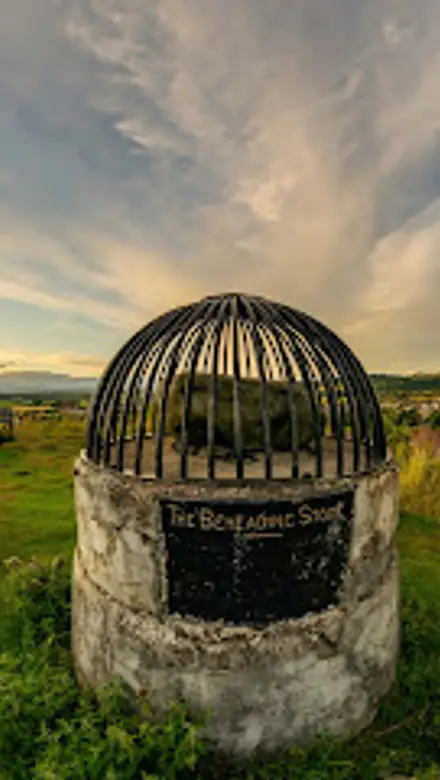
The stone itself rests on a concrete mount and is enclosed within a protective iron cage installed in 1887 to preserve this historic relic. Visible axe marks on its surface attest to its use as a chopping block. A wooden block, once secured atop the stone to steady heads during executions, left holes that remain discernible today. Nearby, informational plaques and historic cannons offer context, while the stone’s elevated position provides commanding views of Stirling Castle and the Wallace Monument, linking the site visually and historically to Scotland’s heritage.
Historical Context and Notable Executions
Beyond Albany’s execution, the Beheading Stone was the site where other notable figures met their fate, including Sir Robert Graham and associates involved in the murder of King James I. The stone’s location on Mote Hill, an area with ancient fortifications and historic significance, adds layers to its story. The hill itself was once home to a vitrified fort, destroyed by fire in the early first millennium AD, underscoring the long-standing strategic importance of the site.
Modern-Day Significance and Visitor Experience
Today, the Beheading Stone is accessible to the public year-round and forms part of walking routes around Stirling’s historic old town, including the scenic Back Walk path. While the stone no longer serves its original purpose, it remains a powerful reminder of Scotland’s turbulent past. Visitors can reflect on the harsh realities of medieval justice while enjoying sweeping vistas and the peaceful atmosphere of Mote Hill’s grassy summit.
Local Legends and Cultural Resonance
Local lore connects the site to various traditions, including the name Hurly-Haaky, referring to a historic amusement involving sliding down the hill on sledges or skulls. The stone and its surroundings evoke stories of power, betrayal, and justice that resonate deeply within Scottish cultural heritage. The protective measures taken in the late 19th century reflect the community’s commitment to preserving this unique landmark for future generations.
Integration with Stirling’s Historic Landscape
The Beheading Stone’s proximity to Stirling Castle and the surrounding historic sites creates a rich tapestry of medieval history. From its vantage point, visitors can see the castle where King James I once ruled and the Braes of Doune, linking the stone to the broader narrative of Scotland’s royal and political history. This integration enhances the stone’s significance as both a physical and symbolic monument within Stirling’s historic environment.
Evendo Review Centre
 Google
Guest reviews
Best time to go
Quietest: Jan, Feb & Dec · before 6am
Busy times are Evendo estimates for a typical year, to help you plan. Actual crowds vary with events, school holidays and the weather.
Explore Beheading Stone. on the map
A handpicked selection of must-see spots near Beheading Stone., mapped for you.
Get your free copy of our complete guide to Beheading Stone., delivered straight to you.
Everything on this page, from opening hours and how to get there to Eve’s tips and the best time to go, in one PDF you can read offline, print or share.
Already have an account? Sign in
Your Beheading Stone. guide is ready.
We'll send it to · Not you? Sign out

Getting your guide ready…
We are putting together a fresh copy of the Beheading Stone. guide. This can take up to a minute.
This can take a few moments. If your browser asks, choose Allow so the download can start. You'll find the guide in your Downloads folder.
Nothing happened? Download it again
Sorry, the guide is taking longer than usual. Please try again in a minute, or get it by email instead.
Other nearby places you may find interesting
The closest places of the same kind, if this one is not quite what you had in mind.
-
-
-
-
-


Swipe for more places
More to explore near Beheading Stone.

 Best experiences near Beheading Stone.
 Best hotels near Beheading Stone.
 Best landmarks near Beheading Stone.
 Best attractions near Beheading Stone.
 Best shops near Beheading Stone.
 Best restaurants near Beheading Stone.
 Best bars near Beheading Stone.
Do you manage this location?
Take control to get all the benefits, like improved information, better appearance, and stronger visibility across AI-powered discovery.
Explore more

Explore more of Stirlingshire
Discover Stirlingshire: A historic gem in central Scotland, where ancient castles, scenic landscapes, and vibrant culture unite to create an unforgettable travel experience.
Explore Stirlingshire
Explore more of United Kingdom
Discover the United Kingdom: A blend of rich history, stunning landscapes, and vibrant cities, offering a unique travel experience for every visitor.
Explore United Kingdom