Duffus Castle Travel Guide
Free Guide: Explore the evocative ruins of Duffus Castle, a majestic 12th-century motte-and-bailey fortress steeped in Scottish medieval history and scenic beauty.


A brief summary of Duffus Castle
Explore the evocative ruins of Duffus Castle, a majestic 12th-century motte-and-bailey fortress steeped in Scottish medieval history and scenic beauty.
Duffus Castle near Elgin, Moray, is a striking medieval motte-and-bailey castle ruin dating back to the 1100s. Once one of Scotland’s strongest fortresses, its stone keep and curtain walls from the 1300s still stand atop a massive earthwork mound. Surrounded by a moat and scenic countryside, the castle offers a peaceful, atmospheric site rich in history and architectural intrigue, free to explore year-round.
On-site amenities
 Restrooms
 Drink options
 Food options
 Seating areas
 Trash bins
 Information boards
Opening hours
- Every dayOpen 24 hours
Opening hours as listed on the venue’s Google Business Profile. Hours can change for services and special events, so check with the venue before you go.
- Address
- Elgin IV30 5RH
- Phone
- Website
Getting there
Car
Bus
Walking
Discover more about Duffus Castle
Origins and Early Construction
Duffus Castle was originally constructed around 1140 by Freskin, a Flemish noble appointed by King David I of Scotland after quelling a local rebellion. Freskin built the first fortress as a wooden motte-and-bailey structure on a large, man-made mound with steep sides and a protective ditch. This early castle served as a royal stronghold in the Laich of Moray, a flat, boggy area near Elgin. King David I himself visited the site in 1151, underscoring its strategic importance.
Transformation into Stone Fortress
By the late 13th and early 14th centuries, the original timber castle was replaced by a stone keep and curtain wall, likely commissioned by Sir Reginald le Chen after receiving royal grants of timber for construction. This stone castle, built atop the motte, included a square shell-keep with two storeys and an enclosed bailey, surrounded by a wet moat. The stone structure marked Duffus as one of the most secure and formidable castles in Scotland during its prime.
Medieval Turmoil and Ownership
Throughout its history, Duffus Castle witnessed multiple conflicts, including destruction during the Wars of Scottish Independence and attacks by rival clans. Ownership passed through prominent families descended from Freskin, including the Cheynes and the Sutherlands, who held the castle until the early 18th century. Notably, in 1689, Viscount Dundee dined here before leading Jacobite forces to victory at Killiecrankie. The castle was eventually abandoned in 1705 as it became unsuitable for residence.
Architectural Features and Ruins Today
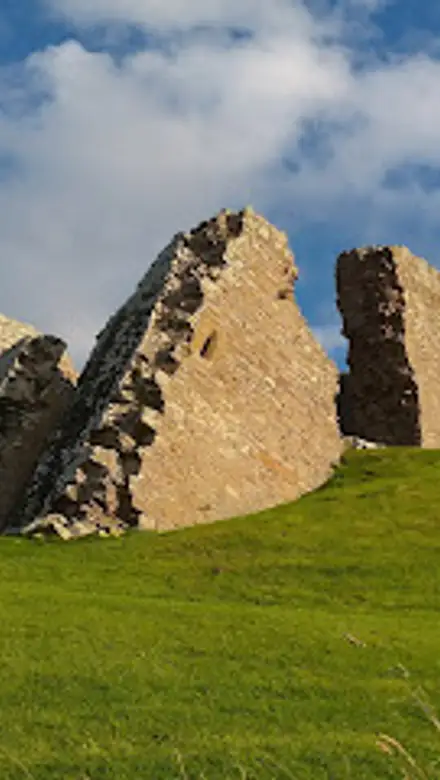
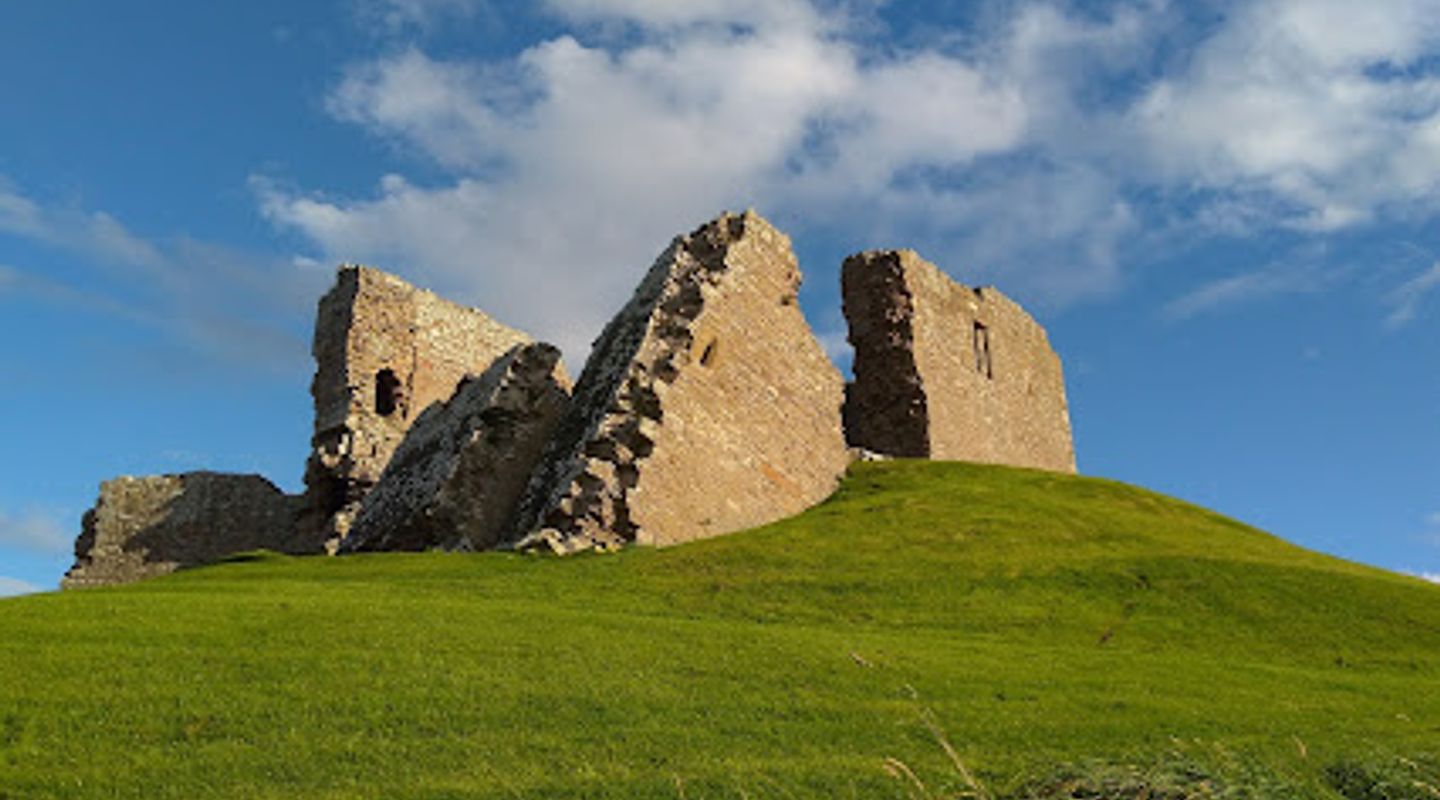
Today, visitors can explore the evocative ruins of Duffus Castle, including the leaning stone tower, remnants of the curtain walls, and the medieval stone bridge crossing the moat. The motte remains an impressive earthwork, though part of the keep has slipped down its slope. Informational boards throughout the site provide historical context without overwhelming the serene atmosphere. The castle’s location offers panoramic views of the surrounding Moray countryside, especially captivating at sunset.
Visitor Experience and Accessibility
Duffus Castle is free to visit year-round during daylight hours, with no entrance fee or booking required. A small car park nearby accommodates visitors, and a coffee trailer operates on select days. The site is dog-friendly, often offering treats for canine visitors. Facilities include restrooms near the car park. The castle’s tranquil setting makes it ideal for reflective walks, family picnics, photography, and history exploration.
Legacy and Cultural Significance
As one of Scotland’s best-preserved examples of a 12th-century motte-and-bailey castle, Duffus Castle embodies the medieval heritage of the Moray region. Its layered history—from royal stronghold to Jacobite refuge—reflects Scotland’s turbulent past. The castle’s ruins stand as a testament to medieval architecture, noble lineage, and the enduring allure of Scotland’s historic landscapes.
Evendo Review Centre
 Google
Guest reviews
Best time to go
Quietest: Jan, Feb & Dec · before 7am or at 10pm
Busy times are Evendo estimates for a typical year, to help you plan. Actual crowds vary with events, school holidays and the weather.
Explore Duffus Castle on the map
A handpicked selection of must-see spots near Duffus Castle, mapped for you.
Get your free copy of our complete guide to Duffus Castle, delivered straight to you.
Everything on this page, from opening hours and how to get there to Eve’s tips and the best time to go, in one PDF you can read offline, print or share.
Already have an account? Sign in
Your Duffus Castle guide is ready.
We'll send it to · Not you? Sign out

Getting your guide ready…
We are putting together a fresh copy of the Duffus Castle guide. This can take up to a minute.
This can take a few moments. If your browser asks, choose Allow so the download can start. You'll find the guide in your Downloads folder.
Nothing happened? Download it again
Sorry, the guide is taking longer than usual. Please try again in a minute, or get it by email instead.
Unlock the best of Duffus Castle
Skip-the-line tickets, guided tours with entry, and walking tours of the area, booked in a few clicks.

Other nearby places you may find interesting
The closest places of the same kind, if this one is not quite what you had in mind.
-
-
-
-
-


Swipe for more places
More to explore near Duffus Castle

 Best experiences near Duffus Castle
 Best hotels near Duffus Castle
 Best landmarks near Duffus Castle
 Best attractions near Duffus Castle
 Best shops near Duffus Castle
 Best restaurants near Duffus Castle
 Best bars near Duffus Castle
Do you manage this location?
Take control to get all the benefits, like improved information, better appearance, and stronger visibility across AI-powered discovery.
Explore more

Explore more of Sutherland
Discover Sutherland, the untamed beauty of the Scottish Highlands, where rugged landscapes, serene lochs, and dramatic coastlines await the adventurous traveler.
Explore Sutherland
Explore more of United Kingdom
Discover the United Kingdom: A blend of rich history, stunning landscapes, and vibrant cities, offering a unique travel experience for every visitor.
Explore United Kingdom