

Sueno's Stone Travel Guide
Free Guide: Scotland's tallest Pictish monument—a 6.5-metre enigma carved with battle scenes and royal ceremony.


A brief summary of Sueno's Stone
Scotland's tallest Pictish monument—a 6.5-metre enigma carved with battle scenes and royal ceremony.
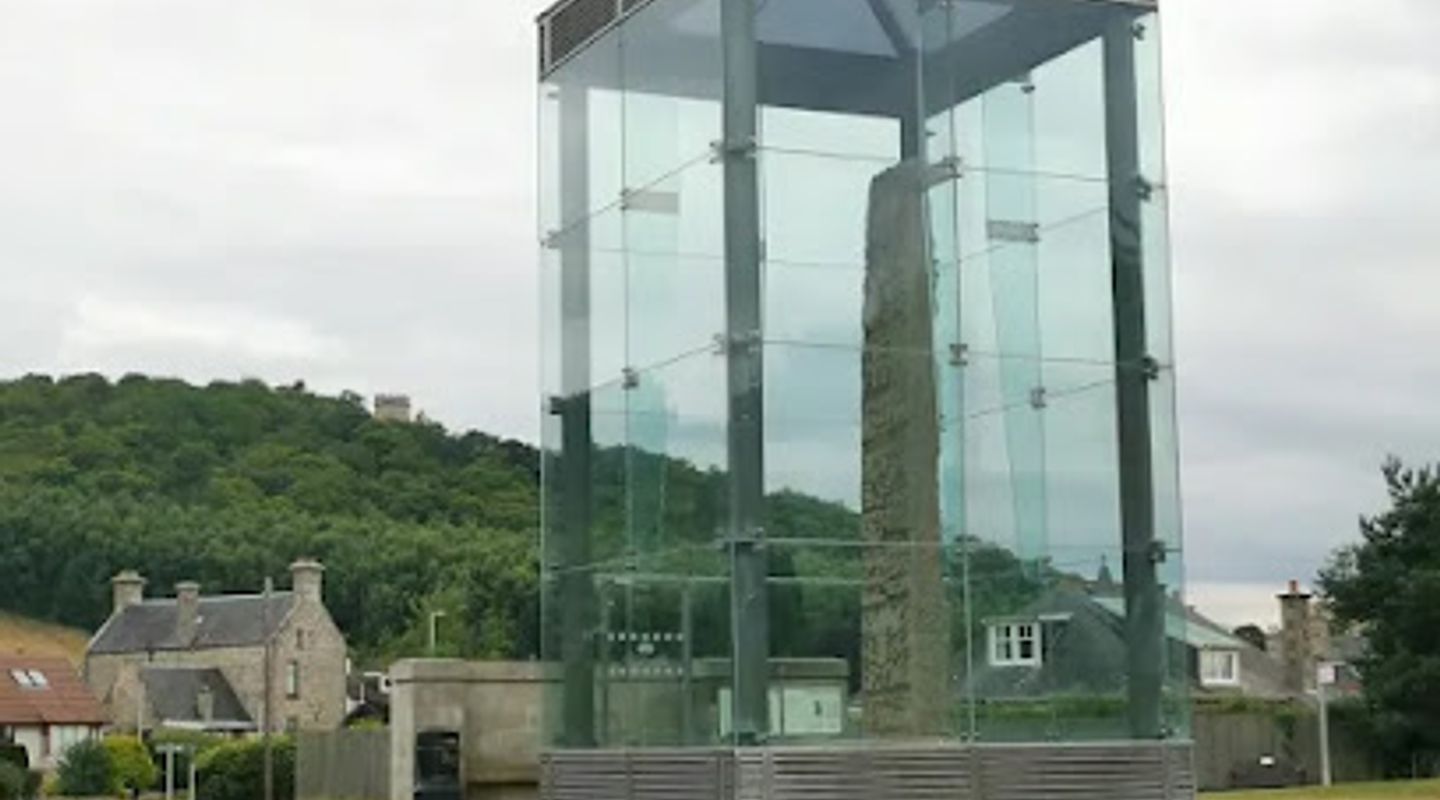
Standing 6.5 metres tall on the edge of Forres, Sueno's Stone is Scotland's tallest surviving Pictish cross-slab, carved between the 9th and 10th centuries. This remarkable monument features intricate carvings on both faces: a magnificent Christian cross with a unique royal inauguration scene on one side, and an elaborate battle narrative with horsemen, combat, and beheadings on the other. Now protected within a glass chamber, this enigmatic stone continues to captivate historians and visitors with its mysterious origins and symbolic power.
On-site amenities
 Information boards
 Seating areas
 Trash bins
Opening hours
- Every dayOpen 24 hours
Opening hours as listed on the venue’s Google Business Profile. Hours can change for services and special events, so check with the venue before you go.
- Address
- Findhorn Rd, Forres IV36 3WX
- Website
Getting there
Car from Forres Town Centre
Walking from Forres Town Centre
Bus from Forres
Taxi from Forres Station or Town Centre
Discover more about Sueno's Stone
A Monument of Unresolved Mystery
Standing 6.5 metres high on the north-eastern edge of Forres, Sueno's Stone is the tallest surviving Pictish cross-slab in Scotland and one of the most complex pieces of early medieval sculpture in the British Isles. Carved from local yellow sandstone between the mid-9th and early 10th centuries, this monumental stone was likely designed to be a landmark visible from considerable distances across the once-marshy floodplains of the rivers Mosset and Findhorn. Unusually among Pictish monuments, it probably still stands where it was first erected, making it a rare survivor in its original location. The stone's true purpose and the events it commemorates remain subjects of scholarly debate, with theories ranging from royal victories to religious significance to dynastic succession.
The Artistic Vision: Two Contrasting Narratives
The stone presents two strikingly different faces, each telling its own story. The western face is dominated by an enormous wheel-headed Christian cross surrounded by intricate interlace and knotwork designs of breathtaking complexity. The vine patterns and decorative elements echo the artistic style of the Book of Kells, suggesting a date within the 9th century. Beneath this magnificent cross lies an entirely unique scene in Pictish and early medieval Scottish art: a royal inauguration or enthronement ceremony. Two bearded figures, interpreted as priests, stoop toward a central seated figure believed to represent a king, creating a composition without parallel in surviving Pictish sculpture.The eastern face tells a radically different tale through a series of carved panels depicting a complex battle narrative. From top to bottom, the panels show horsemen arriving for battle, foot soldiers engaged in combat, an object interpreted as a broch or church bell surrounded by headless corpses, mounted warriors fleeing from infantry, and piles of severed heads and decapitated bodies. The graphic violence and detailed composition suggest this was not merely decorative but served to commemorate an event of tremendous significance.
Competing Theories of Origin
The stone's naming derives from a popular but contested interpretation linking it to King Sweyn Forkbeard (Sueno), a Norse ruler. According to this theory, the monument commemorates a great victory won by Malcolm II around 1010 CE against Scandinavian invaders. However, modern scholarship has advanced alternative explanations. Some historians suggest the stone records the triumph of Kenneth MacAlpin (Cinaed mac Ailpín) in the mid-9th century, when Gaelic-speaking kings consolidated control over the Pictish peoples during a period of upheaval and Norse pressure. Others propose it commemorates the victory of his successor Donald I (Domnall), who further secured Scottish dominion in the region. A more recent theory suggests the stone was erected by Kenneth II to honour his brother King Dubh mac Ailpin following the latter's death or defeat in 966 CE.Alternative interpretations suggest the stone may depict the final triumph of Christian Gaels over their Pictish neighbours, or possibly commemorate a victory by the rulers of Moray over external threats. Some scholars even propose the scenes may not depict real historical events at all, but rather serve as Christian religious messages or foundation legends. The true meaning remains elusive, deliberately preserved in stone by creators whose intentions are now lost to time.
Conservation and Cultural Legacy
The stone has endured centuries of weathering and, more recently, vandalism. In the early 18th century, Lady Ann Campbell, Countess of Moray, undertook stabilisation efforts by constructing stepped plinths around the base—structures still visible today. Archaeological excavations in 1990 and 1991 revealed that the stone may originally have been one of two monumental monuments, suggesting an even grander original context. Today, Sueno's Stone is protected within a glass chamber, allowing visitors to examine its intricate carvings while shielding this irreplaceable artwork from further deterioration.Beyond its historical significance, Sueno's Stone has woven itself into local folklore and legend. Local tradition holds that this is the very crossroads where Shakespeare's Macbeth encountered three witches, with their souls supposedly trapped within the stone. The monument stands as a testament to Pictish artistic achievement and the turbulent medieval period that shaped Scotland's identity, remaining one of the most enigmatic and visually stunning relics of early medieval Britain.
Evendo Review Centre
 Google
Guest reviews
Best time to go
Quietest: Jan, Feb & Dec · before 7am or from 8pm
Busy times are Evendo estimates for a typical year, to help you plan. Actual crowds vary with events, school holidays and the weather.
Explore Sueno's Stone on the map
A handpicked selection of must-see spots near Sueno's Stone, mapped for you.
Get your free copy of our complete guide to Sueno's Stone, delivered straight to you.
Everything on this page, from opening hours and how to get there to Eve’s tips and the best time to go, in one PDF you can read offline, print or share.
Already have an account? Sign in
Your Sueno's Stone guide is ready.
We'll send it to · Not you? Sign out

Getting your guide ready…
We are putting together a fresh copy of the Sueno's Stone guide. This can take up to a minute.
This can take a few moments. If your browser asks, choose Allow so the download can start. You'll find the guide in your Downloads folder.
Nothing happened? Download it again
Sorry, the guide is taking longer than usual. Please try again in a minute, or get it by email instead.
Unlock the best of Sueno's Stone
Skip-the-line tickets, guided tours with entry, and walking tours of the area, booked in a few clicks.

Other nearby places you may find interesting
The closest places of the same kind, if this one is not quite what you had in mind.
-
-
-
-
-


Swipe for more places
More to explore near Sueno's Stone

 Best experiences near Sueno's Stone
 Best hotels near Sueno's Stone
 Best landmarks near Sueno's Stone
 Best attractions near Sueno's Stone
 Best shops near Sueno's Stone
 Best restaurants near Sueno's Stone
 Best bars near Sueno's Stone
Do you manage this location?
Take control to get all the benefits, like improved information, better appearance, and stronger visibility across AI-powered discovery.
Explore more

Explore more of Morayshire
Discover Morayshire: A blend of scenic landscapes, historic sites, and outdoor adventures in Scotland's picturesque northeast.
Explore Morayshire
Explore more of United Kingdom
Discover the United Kingdom: A blend of rich history, stunning landscapes, and vibrant cities, offering a unique travel experience for every visitor.
Explore United Kingdom
