

Free Warwickshire Travel Guide & Mobile App
Explore Warwickshire with free travel guides. Discover regional history, expert tips, proposed trips, and audio guides on web or mobile app.


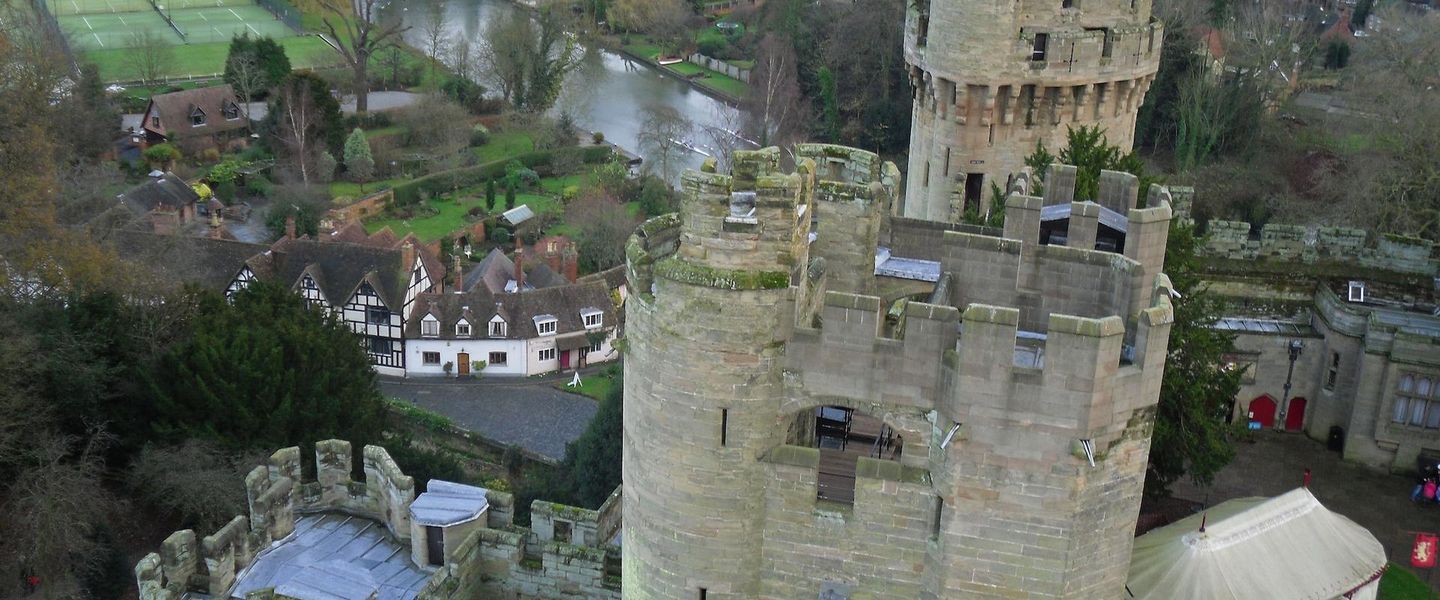


Explore Warwickshire for Shakespearean heritage, medieval castles, Regency towns, country estates, canal walks and the green landscapes of central England.
Read more about Warwickshire
When is the best time to visit Warwickshire?
Best: June–August · 21–23°C| Month | High (°C) | Rainfall (mm) |
|---|---|---|
| January | 6 | 50 |
| February | 6 | 43 |
| March | 10 | 40 |
| April | 14 | 46 |
| May | 17 | 48 |
| June (best) | 21 | 51 |
| July (best) | 23 | 56 |
| August (best) | 22 | 56 |
| September | 19 | 52 |
| October | 15 | 56 |
| November | 10 | 58 |
| December | 7 | 61 |
Getting to and around Warwickshire
How to get there
Transportation
Top city travel guides in Warwickshire
The cities of Warwickshire, and the easiest places to base yourself.
-

-


Swipe for more cities
Best attractions in Warwickshire
Warwickshire’s attractions range from nationally recognised literary and medieval sites to quiet countryside experiences. Stratford-upon-Avon brings together Shakespeare’s Birthplace, Nash’s House, Hall’s Croft, Anne Hathaway’s Cottage in nearby Shottery and the Royal Shakespeare Theatre, while river walks and canal-side routes broaden the visit beyond the town’s literary heritage. Warwick Castle and Kenilworth Castle provide two contrasting encounters with medieval power: one heavily restored and visitor-focused, the other a dramatic ruin with extensive grounds. Historic houses and gardens include Charlecote Park, Compton Verney and Ragley Hall, each offering a different combination of architecture, collections and parkland. The British Motor Museum at Gaydon traces Britain’s automotive story, and Roman remains at Alcester add an archaeological dimension. Walkers and cyclists can follow sections of the Heart of England Way and the county’s canal network, while Burton Dassett Hills provide open countryside and wide views. Family-oriented attractions are concentrated around the larger towns, but the county’s strongest appeal lies in combining heritage visits with villages, estates and rural landscapes.
-
Castle
Warwick Castle
Discover over 1,100 years of history, thrilling live shows, and breathtaking views at Warwick Castle, one of Britain’s finest medieval fortresses.
-
Historical place museum
Shakespeare's Birthplace
Step into the Tudor world where Shakespeare was born and discover the roots of the world’s greatest playwright in Stratford-upon-Avon.
-
Museum
British Motor Museum
Explore the world’s largest collection of historic British cars and discover the rich heritage of Britain’s motor industry in the heart of Warwickshire.
-
Tourist attraction
Stratford Butterfly Farm
Discover the UK's largest tropical butterfly paradise in Stratford-upon-Avon, where vibrant butterflies and rainforest wonders await all ages.


Best landmarks in Warwickshire
Warwick Castle is Warwickshire’s most immediately recognisable historic structure, occupying a strategic bend above the River Avon and embodying the power of the medieval earls. Kenilworth Castle is more ruinous but equally significant, with vast walls and surviving buildings that reveal its transformation from a Norman fortress into an Elizabethan courtly residence. In Stratford-upon-Avon, the timber-framed house associated with Shakespeare’s birth and the church of the Holy Trinity, where he is buried, anchor the town’s literary identity; the Royal Shakespeare Theatre provides a prominent modern counterpoint on the river. Warwick’s Collegiate Church of St Mary, including its remarkable Beauchamp Chapel, reflects the town’s medieval importance, while Leamington Spa’s Pump Room and Regency terraces express the influence of nineteenth-century spa culture. Outside the principal towns, Edgehill is a landscape landmark connected with the first major battle of the English Civil War, and Burton Dassett Hills form a visible chain of high ground across the southern countryside.
-
Historical landmark
The Shakespeare Memorial Fountain
A Victorian Gothic tribute in Stratford’s marketplace celebrating Shakespeare, Queen Victoria, and Anglo-American friendship.
-
Historical landmark
RAF Bicester
Explore RAF Bicester, the UK’s most complete interwar RAF bomber station, where history and heritage soar across a preserved grass airfield and iconic wartime structures.
-
Town Hall
Stratford-upon-Avon Town Hall
Elegant Palladian landmark in Stratford-upon-Avon, blending rich history, Shakespearean heritage, and civic tradition since 1767.
-
Sculpture
Sir Frank Whittle
Coventry's tribute to the jet engine pioneer who revolutionized aviation and transformed modern flight.


Explore Warwickshire on the map
Plan your trip on one map. See where the top cities, national parks and sights are, and book hotels and experiences in a few clicks.
Best hotels in Warwickshire
Best restaurants in Warwickshire
Dining in Warwickshire reflects the county’s market-town and farming traditions rather than a single signature cuisine. Stratford-upon-Avon, Warwick and Royal Leamington Spa offer the broadest choice, from cafés and bakeries to contemporary restaurants, international cooking and traditional pubs serving familiar British dishes. Village inns and country pubs are useful for meals built around seasonal vegetables, meat, fish, pies and local cheeses, while farm shops and food halls provide opportunities to assemble picnics for canal walks or estate visits. The county’s orchards, market gardens and surrounding farms contribute to menus and shelves, although particular products vary by locality and season. Afternoon tea is widely available in the major visitor towns, and independent bakeries are good places to find regional interpretations of classic English baking. Reservations are sensible for theatre evenings, weekends and popular restaurants, especially in Stratford-upon-Avon and Leamington Spa.
-
Gastropub
Saxon Mill Warwick
Historic riverside gastropub in Warwick blending traditional mill charm with modern British cuisine and scenic views.
-
Pub
The Moorings at Myton
A charming canal-side gastropub in Royal Leamington Spa, serving locally sourced English classics in a family- and dog-friendly setting.
-
 Restaurant
The Globe
Historic Warwick pub and hotel offering Mediterranean-inspired dining, cozy rooms, and a lively yet welcoming atmosphere in the town center.
-
Thai
Giggling Squid - Warwick
Vibrant Thai tapas and bold flavours in Warwick’s historic High Street, with a welcoming atmosphere and dedicated vegan options.


Best bars in Warwickshire
Warwickshire’s evening scene is concentrated in Stratford-upon-Avon, Warwick, Royal Leamington Spa and Rugby, with a quieter rhythm in smaller towns and villages. Traditional pubs, historic inns and modern bars provide the main social settings, often complemented by local breweries, wine bars and restaurants rather than a large club culture. Stratford’s theatres create a strong pre- and post-performance dining scene, while Leamington Spa has the county’s broadest selection of late-evening bars and younger nightlife. Warwick combines pubs and cocktail-led venues with a historic town-centre setting, and Rugby offers a mixture of pubs, bars and occasional live music. In rural districts, evenings generally centre on village pubs and restaurants, so check transport arrangements before staying outside the main towns. Opening hours, performances and venue status change, particularly seasonally, and should be checked directly.
-
Gastropub
Saxon Mill Warwick
Historic mill gastropub on the River Avon offering modern British cuisine and scenic waterside dining in Warwick.
-
Pub
Fizzy Moon Brewhouse & Grill
Eclectic brewhouse and grill in Leamington Spa offering craft beers, hearty pub fare, and a uniquely stylish atmosphere.
-
Bar
The Hatton Arms
A charming canal-side gastropub in Warwick blending traditional British fare with a cozy, scenic atmosphere and friendly service.
-
Pub
Royal Horse
A vibrant, family-friendly pub in Royal Leamington Spa offering hearty British fare, lively events, and warm hospitality since 2013.


Best nightclubs in Warwickshire
Warwickshire’s evening scene is concentrated in Stratford-upon-Avon, Warwick, Royal Leamington Spa and Rugby, with a quieter rhythm in smaller towns and villages. Traditional pubs, historic inns and modern bars provide the main social settings, often complemented by local breweries, wine bars and restaurants rather than a large club culture. Stratford’s theatres create a strong pre- and post-performance dining scene, while Leamington Spa has the county’s broadest selection of late-evening bars and younger nightlife. Warwick combines pubs and cocktail-led venues with a historic town-centre setting, and Rugby offers a mixture of pubs, bars and occasional live music. In rural districts, evenings generally centre on village pubs and restaurants, so check transport arrangements before staying outside the main towns. Opening hours, performances and venue status change, particularly seasonally, and should be checked directly.
-
Nightclub
Smack
Leamington Spa’s energetic and affordable two-floor nightclub with a storied past and a lively, if sometimes challenging, atmosphere.
-
Nightclub
Altoria Nightclub
Experience Leamington Spa’s vibrant nightlife at Altoria Nightclub with diverse music floors, VIP service, and a unique rooftop terrace open till 3 am.
-
Night Club
The Cavern
A vibrant night club in Warwick offering energetic music, lively dancing, and a social atmosphere for unforgettable nights out.
-
Nightclub
Neon
Leamington Spa’s largest nightclub, Neon delivers vibrant music, themed nights, and a dynamic party atmosphere every Friday until dawn.


Best shops in Warwickshire
Shopping in Warwickshire is strongest in its historic and market towns. Stratford-upon-Avon has a large visitor-oriented quarter alongside independent bookshops, craft retailers, food shops and galleries, making Shakespeare-related books and theatre merchandise easy to find without limiting the town’s retail offer to souvenirs. Warwick combines national retailers with independent shops and antiques in and around its historic centre, while Royal Leamington Spa is known for Regency streets, boutiques, cafés, galleries and a more contemporary high-street atmosphere. Rugby, Nuneaton and other larger towns provide practical everyday shopping and regular market activity. Farm shops, food halls and village stores are useful for local cheeses, preserves, baked goods, drinks and seasonal produce. Crafts, artwork, ceramics and books make more durable alternatives to generic gifts, and opening days for smaller markets and rural retailers should be checked before travelling.
-
Shopping Centre
Royal Priors Shopping Centre
Leamington Spa’s premier indoor shopping centre with spacious malls, diverse stores, and convenient access in the town’s historic heart.
-
Shopping Centre
Leamington Shopping Park
Discover a vibrant shopping destination with free parking, top brands, and a welcoming open-air environment in the heart of Royal Leamington Spa.
-
Shopping Centre
Warwickshire Shopping Park
Coventry's diverse shopping destination with major retailers, dining, and modern amenities.
-
Shopping Centre
Ropewalk Shopping Centre
A vibrant, accessible shopping hub in Nuneaton offering diverse stores, eateries, and community events in a modern indoor setting.


Get your free copy of our complete guide to Warwickshire, delivered straight to you.
Everything on this page, from attractions and restaurants to essentials and local phrases, in one PDF you can read offline, print or share.
Already have an account? Sign in
Your Warwickshire guide is ready.
We'll send it to · Not you? Sign out

Getting your guide ready…
We are putting together a fresh copy of the Warwickshire guide. This can take up to a minute.
This can take a few moments. If your browser asks, choose Allow so the download can start. You'll find the guide in your Downloads folder.
Nothing happened? Download it again
Sorry, the guide is taking longer than usual. Please try again in a minute, or get it by email instead.
Warwickshire essentials
Currency and Payment
Safety
Emergency Situations
Do's and Don'ts
Local Tips
From Eve
Local phrases worth knowing
You don't need to get them perfect. A few words go a long way, and locals appreciate the effort.
Basics
| English | Local | Say it |
|---|---|---|
| Hello | Alright | [aw-reet] |
| Goodbye | Ta-ra | [ta-rah] |
| Yes | Aye | [eye] |
| No | Nah | [nah] |
| Please/You're welcome | Cheers | [cheers] |
| Thank you | Thanks | [thanks] |
| Excuse me/Sorry | Sorry | [sorry] |
| How are you? | How’s it going? | [howz it goin] |
| Fine. And you? | Good, you? | [good, you?] |
| Do you speak English? | Do ya speak English? | [doo yah speek English] |
| I don't understand | I don’t get it | [I dont get it] |
Eating & Drinking
| English | Local | Say it |
|---|---|---|
| I'd like to see the menu, please | Can I have the menu, please? | [can I have the men-yoo, pleez?] |
| I don't eat meat | I’m vegetarian | [I’m vege-tair-ee-an] |
| Cheers! | Cheers! | [cheers] |
| I would like to pay, please | Can I settle up, please? | [can I setl up, pleez?] |
Emergencies
| English | Local | Say it |
|---|---|---|
| Help! | Help! | [help] |
| Go away! | Clear off! | [clear off] |
| Call the Police! | Ring the coppers! | [ring the cop-ers] |
| Call a doctor! | Get a doctor! | [get a doc-tor] |
| I'm lost | I’m a bit lost | [I’m a bit lost] |
| I'm ill | I’m feeling poorly | [I’m feelin poor-lee] |
Shopping
| English | Local | Say it |
|---|---|---|
| I'd like to buy... | I want to buy... | [I want to buy...] |
| I'm just looking | Just browsing | [just browsin] |
| How much is it? | How much’s this? | [how much's this?] |
| That's too expensive | That's well pricey | [that's well pry-see] |
| Can you lower the price? | Can ya do a deal? | [can ya do a deeel?] |
Time & Numbers
| English | Local | Say it |
|---|---|---|
| What time is it? | What’s the time? | [what's the time?] |
| It's one o'clock | It's one o'clock | [it's one o'clock] |
| Half past (10) | Half ten | [half ten] |
| Morning | Morning | [morning] |
| Afternoon | Afternoon | [afternoon] |
| Evening | Evening | [evening] |
| Yesterday | Yesterday | [yesterday] |
| Today | Today | [today] |
| Tomorrow | Tomorrow | [tomorrow] |
| 1 | One | [one] |
| 2 | Two | [two] |
| 3 | Three | [three] |
| 4 | Four | [four] |
| 5 | Five | [five] |
| 6 | Six | [six] |
| 7 | Seven | [seven] |
| 8 | Eight | [eight] |
| 9 | Nine | [nine] |
| 10 | Ten | [ten] |
Transport & Directions
| English | Local | Say it |
|---|---|---|
| Where's a/the...? | Where’s the...? | [where's the...?] |
| What's the address? | What’s the address? | [what's the ad-dress?] |
| Can you show me (on the map)? | Can ya point it out? | [can ya point it out?] |
| When's the next (bus)? | When's the next bus? | [when's the next bus?] |
| A ticket (to ....) | A ticket to ... | [a tick-et to ...] |
History of Warwickshire
Prehistoric Landscapes and Roman Settlement
Warwickshire’s earliest history survives in earthworks, burial sites and settlement traces scattered across its river valleys and hills. The Romans established roads, farms and administrative centres in the region, with the settlement at Alcester becoming an important local centre at the junction of routes. Excavated evidence from Alcester and other parts of the county illustrates how Roman commerce, agriculture and military infrastructure reshaped an already inhabited landscape. Although much of the Roman road network is no longer visible at ground level, its routes influenced later towns, fields and transport corridors.
Anglo-Saxon Warwickshire
Following the end of Roman rule, the area became part of the Anglo-Saxon kingdoms of Mercia and later developed into a network of estates, churches and settlements. Warwick grew around a fortified position beside the River Avon and became the county’s principal seat. Place names, church foundations and the pattern of villages and farmland reflect this gradual consolidation of political and religious authority. By the late Anglo-Saxon period, Warwickshire was already recognisable as a territory whose strategic position in the Midlands made it important to successive rulers.
Medieval Earls, Warwick Castle and Kenilworth
Medieval Warwickshire was shaped by powerful local lords, most notably the Earls of Warwick, whose castle and estates gave the town considerable political influence. Kenilworth also became a major royal and aristocratic centre, especially after Henry II granted the castle and surrounding lands to the Crown. Monasteries, parish churches, market towns and improved agriculture supported population growth, while the wool trade connected the county to wider English commerce. The surviving castle ruins, town churches and historic street plans are lasting evidence of this period of territorial power and economic expansion.
The English Civil War and the Edgehill Campaign
Warwickshire played a significant role in the English Civil War, which pitted supporters of Parliament against King Charles I. The first major pitched battle of the conflict took place at Edgehill in October 1642, on the southern edge of the county. Though neither side achieved a decisive victory there, the battle demonstrated the scale of the national crisis and brought military disruption to local communities. Warwick Castle, Kenilworth and the surrounding estates were drawn into the wider political struggle, and the conflict left a lasting mark on the county’s historic interpretation.
Shakespeare and the Cultural Life of Stratford
William Shakespeare was born in Stratford-upon-Avon in 1564 and spent his early years in the town before establishing his theatrical career in London. His family connections with Stratford remained important, and his death and burial there in 1616 helped preserve the town’s literary association. From the nineteenth century onwards, Shakespeare’s reputation encouraged heritage conservation, scholarly interest and organised tourism. The Royal Shakespeare Theatre, opened in the twentieth century, made Stratford a continuing centre for performance as well as a place of biographical pilgrimage.
Canals, Railways and Industrial Change
From the eighteenth century, canals and later railways connected Warwickshire’s market towns, coalfields and manufacturing districts with the wider Midlands. The Warwick and Napton Canal, the Stratford-upon-Avon Canal and the Oxford Canal supported the movement of coal, building materials and agricultural goods. In the north, coal mining and associated industries influenced communities around Nuneaton, Bedworth and Atherstone, while engineering and manufacturing expanded elsewhere. Railways accelerated urban growth in Warwick, Leamington Spa, Rugby and Stratford-upon-Avon, helping transform the county from a predominantly rural society into a more connected regional economy.
Motoring, Engineering and the Modern County
Twentieth-century Warwickshire became closely associated with engineering, vehicle production and technical innovation, building on the wider industrial strengths of the English Midlands. The county’s roads, rail connections and expanding towns supported new factories and motor-related businesses, while the British Motor Museum at Gaydon preserves the history of British vehicle design and production. At the same time, Stratford-upon-Avon, Warwick and the historic spa town of Leamington developed increasingly important cultural and visitor economies. Modern Warwickshire therefore combines an agricultural landscape and deep heritage with manufacturing, research and service industries.
Warwickshire in Photos
Browse through our photo collection highlighting the charm and character of the destination.
Neighbouring regions of Warwickshire
The closest regions to Warwickshire, if you have time for more than one.
-

-

-

-

-


Swipe for more regions
Explore more

Explore more of United Kingdom
Discover the United Kingdom: A blend of rich history, stunning landscapes, and vibrant cities, offering a unique travel experience for every visitor.
Explore United Kingdom