

Free Northamptonshire Travel Guide & Mobile App
Explore Northamptonshire with free travel guides. Discover regional history, expert tips, proposed trips, and audio guides on web or mobile app.


Explore Northamptonshire for historic houses, medieval villages, canal walks, shoemaking heritage, countryside and world-famous motorsport.
Read more about Northamptonshire
When is the best time to visit Northamptonshire?
Best: June–August · 21–23°C| Month | High (°C) | Rainfall (mm) |
|---|---|---|
| January | 6 | 50 |
| February | 7 | 40 |
| March | 11 | 45 |
| April | 14 | 40 |
| May | 18 | 50 |
| June (best) | 21 | 60 |
| July (best) | 23 | 70 |
| August (best) | 23 | 70 |
| September | 19 | 60 |
| October | 15 | 50 |
| November | 9 | 60 |
| December | 7 | 60 |
Getting to and around Northamptonshire
How to get there
Transportation
Destinations in Northamptonshire
Resorts, valleys and scenic spots worth a trip of their own.

Swipe for more destinations
Best attractions in Northamptonshire
Northamptonshire's attractions are distributed across a rural landscape rather than concentrated in one historic centre. Country houses form a major part of the offer: Althorp, Boughton House, Kelmarsh Hall and Kirby Hall provide contrasting examples of aristocratic architecture, collections, gardens and parkland, although opening arrangements vary. Medieval and early modern history is represented by Rockingham Castle, Sulgrave Manor, Brixworth's remarkable Anglo-Saxon church and the remains associated with Fotheringhay. The county also offers a strong archaeological dimension at places such as the Roman site at Irchester and the open battlefield landscape around Naseby. Outdoor visitors can follow canal towpaths, explore Sywell Country Park and Stanwick Lakes, or walk beside the River Nene. Northampton's museums interpret local life, industry and the international history of footwear, while Corby's modern development reflects steelmaking and post-war migration. Silverstone supplies a very different attraction, linking Northamptonshire with motor racing and automotive engineering. Family outings, wildlife watching, cycling and village visits work particularly well when combined with one of the county's larger heritage sites, but the dispersed geography makes advance route planning worthwhile.
-
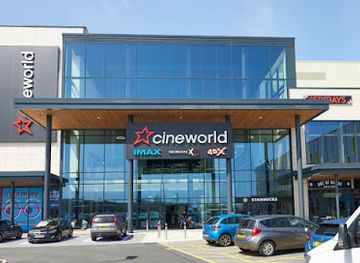
Shopping Centre
Rushden Lakes Shopping Centre
A vibrant lakeside shopping and leisure destination blending popular brands, dining, and nature in the heart of the Nene Valley.
-
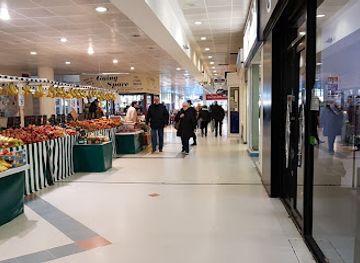
Shopping Centre
Weston Favell Shopping Centre
A bustling Northampton shopping centre offering diverse stores, essential services, and a welcoming community atmosphere with free parking.
-
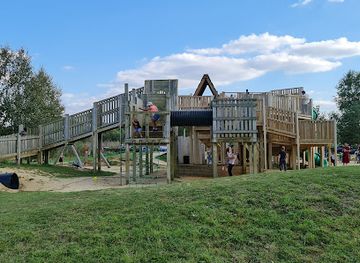
Nature reserve
Stanwick Lakes Country Park
Explore 750 acres of lakes, wildlife, and adventure playgrounds at Stanwick Lakes Country Park near Wellingborough.
-
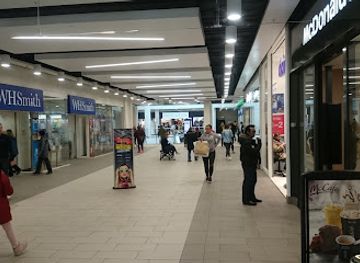
Shopping Centre
Grosvenor Shopping Northampton
A vibrant retail and social hub at Northampton’s heart, blending contemporary shopping with community spirit and dynamic regeneration.
Best landmarks in Northamptonshire
Northamptonshire's landmarks express its combination of royal history, country estates, religious architecture and modern engineering. Fotheringhay Church is the most visible surviving reminder of the Yorkist connection with the village and the imprisonment of Mary, Queen of Scots at the former castle. Brixworth's church, one of England's most important surviving Anglo-Saxon buildings, is a landmark of early medieval architecture. Rockingham Castle occupies a prominent position above the Welland Valley and preserves the strategic character of a royal Norman foundation, while Kirby Hall presents the formal ambition of an Elizabethan and early Stuart great house. Althorp's parkland and house are inseparable from the Spencer family's long association with the county and the public memory of Diana, Princess of Wales. In Northampton, the Guildhall and the town's churches reflect civic and religious history, while the surviving industrial landscape is represented more broadly by former footwear and engineering districts. Silverstone Circuit is the county's best-known contemporary landmark, linking a former airfield with Britain's motor-racing culture. The Grand Union Canal and the Nene Valley provide geographical landmarks whose importance lies in the way transport, industry and countryside meet.
-
Historical landmark
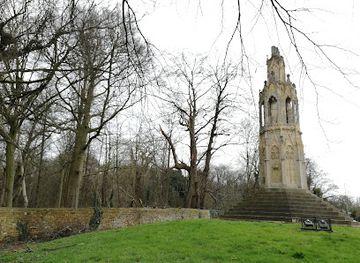
Queen Eleanor Cross
A medieval monument of royal love and legacy marking Queen Eleanor’s resting place in Northampton.
-
Historical landmark
RAF Bicester
Explore RAF Bicester, the UK’s most complete interwar bomber airfield, where history and heritage soar together.
-
Historical landmark
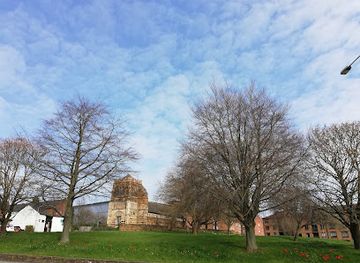
Northampton Castle Postern Gate
Discover the solitary Postern Gate, the last surviving gateway of Northampton Castle, echoing centuries of royal history and medieval intrigue.
Explore Northamptonshire on the map
Plan your trip on one map. See where the top cities, national parks and sights are, and book hotels and experiences in a few clicks.
Best hotels in Northamptonshire
Best restaurants in Northamptonshire
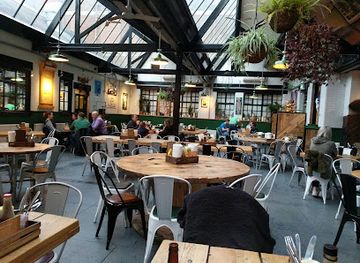
Northamptonshire's dining scene reflects its position in the English Midlands: traditional pubs and village inns sit alongside independent cafés, modern restaurants and food-led venues in the larger towns. Local markets, farm shops and estate-based producers provide opportunities to buy seasonal vegetables, meat, preserves, cakes and other regional produce. The county is not defined by one internationally famous dish, but its food culture is closely connected with farming, market-town trade and the practical cooking of the English countryside. Northampton's former industrial identity has encouraged a broad range of casual and international dining, while Kettering, Wellingborough, Corby and Daventry offer varied high-street choices. Around the canal and river landscapes, visitors will find relaxed waterside meals rather than a distinctive seafood tradition. Traditional ales, ciders and contemporary English cooking are common in pubs, while afternoon tea and garden cafés feature at some historic properties. Farmers' markets and independent food shops are useful for discovering locally made products without confusing Northamptonshire produce with dishes associated with neighbouring counties.
-
Caribbean
Turtle Bay Northampton
Experience vibrant Caribbean flavours and lively island vibes in the heart of Northampton with great food, cocktails, and reggae beats.
-
Steak
Miller & Carter Northampton
Experience expertly cooked premium steaks and warm hospitality at Miller & Carter Northampton, a top steakhouse destination in the heart of the city.
-
Restaurant
The Smoke Pit
Savor authentic American barbecue with generous portions and a lively atmosphere in the heart of Northampton.
-
Gastropub
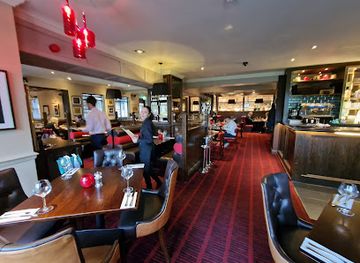
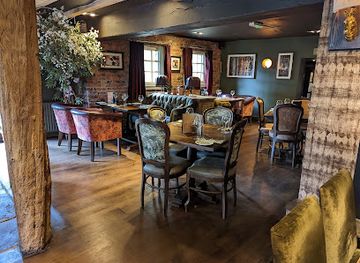
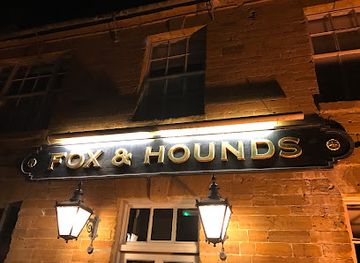
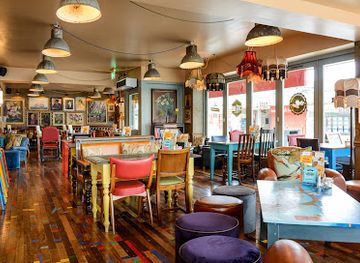
Fox & Hounds Lower Harleston
A charming gastropub in Lower Harlestone blending classic British fare with modern style and cozy country warmth.
Best bars in Northamptonshire
Evening life in Northamptonshire is centred mainly on pubs, restaurants, live music and town-centre venues rather than a county-wide club scene. Northampton has the broadest choice, including traditional pubs, contemporary bars, performance spaces and late-night venues, while Kettering, Wellingborough, Corby and Daventry provide smaller local scenes. Historic inns and village pubs are important in rural districts, where evenings tend to be sociable but relatively quiet and venues may be widely spaced. Some breweries and taprooms contribute to the county's growing interest in locally produced beer, though opening arrangements vary. University activity and major events can give Northampton busier nights at particular times, while Silverstone attracts a temporary evening economy during large motorsport gatherings. Visitors should check current arrangements rather than assume that a rural village or heritage town has late-night transport. Dining, theatre, live music and pub conversation are often more characteristic of the county after dark than large-scale clubbing.
-
Pub
The Windhover
A cozy and charming pub in Chapel Brampton offering hearty meals, warm hospitality, and a relaxed village atmosphere.
-
Gastropub
Fox & Hounds Lower Harleston
A stylish gastropub in Lower Harlestone blending classic British charm with modern dining and a warm, welcoming atmosphere.
-
Bar
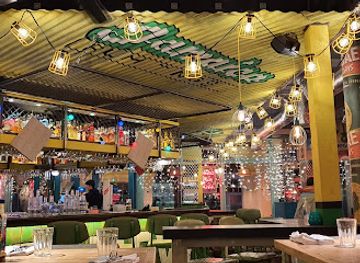
Zapato Lounge
A vibrant, inclusive lounge in Northampton offering diverse British and vegan cuisine in a welcoming, family- and dog-friendly setting.
-
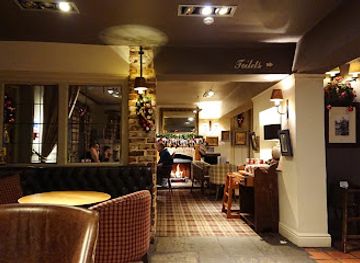
Pub
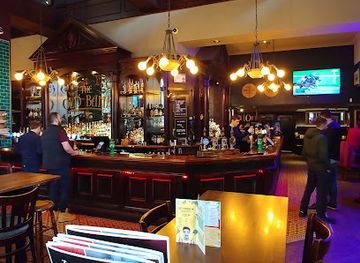
Old Bank
A vibrant, spacious pub in Northampton’s St Giles' Square, offering traditional ales, hearty food, and a lively social atmosphere.
Best nightclubs in Northamptonshire
Evening life in Northamptonshire is centred mainly on pubs, restaurants, live music and town-centre venues rather than a county-wide club scene. Northampton has the broadest choice, including traditional pubs, contemporary bars, performance spaces and late-night venues, while Kettering, Wellingborough, Corby and Daventry provide smaller local scenes. Historic inns and village pubs are important in rural districts, where evenings tend to be sociable but relatively quiet and venues may be widely spaced. Some breweries and taprooms contribute to the county's growing interest in locally produced beer, though opening arrangements vary. University activity and major events can give Northampton busier nights at particular times, while Silverstone attracts a temporary evening economy during large motorsport gatherings. Visitors should check current arrangements rather than assume that a rural village or heritage town has late-night transport. Dining, theatre, live music and pub conversation are often more characteristic of the county after dark than large-scale clubbing.
-
Nightclub
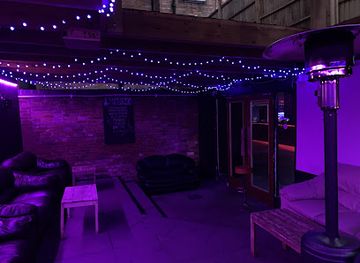
NB's
Experience Northampton’s vibrant nightlife with NB's lively clubbing atmosphere, multiple rooms, and sociable outdoor bar area.
-
Nightclub
The Boston
Northampton’s welcoming LGBTQ+ nightclub and pub, The Boston offers lively music, themed nights, and a vibrant inclusive atmosphere.
-
Nightclub
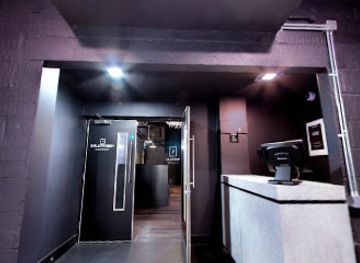
The Platform
Northampton’s vibrant nightclub and bar blending historic charm with lively music, drinks, and student-friendly events.
-
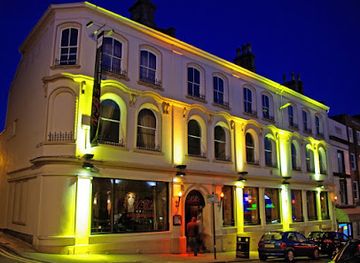
Nightclub
Stereo Bar and Club
Experience Northampton’s vibrant nightlife with eclectic music, lively dancing, and a welcoming atmosphere at Stereo Bar and Club.

Best shops in Northamptonshire
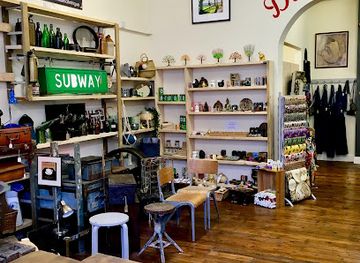
Shopping in Northamptonshire is strongest in its market towns and larger urban centres, each with a somewhat different character. Northampton provides the broadest retail choice, together with independent shops, galleries, cafés and the county's long association with footwear and leatherworking. Kettering, Wellingborough and Daventry have traditional high streets and town-centre markets, while Corby's retail landscape reflects its later industrial development. Farm shops, village stores and periodic farmers' markets are useful for local produce such as preserves, baked goods, seasonal fruit and vegetables. Independent antiques, books, crafts and gifts are more likely to be found in older market towns and villages than in large purpose-built shopping areas. Visitors to country houses may find estate-related books, art and garden products, but these should be treated as supplementary rather than guaranteed shopping opportunities. Northamptonshire-made shoes and leather goods remain the most recognisable local purchase, although availability varies considerably between businesses. For a more distinctly regional souvenir, combine a market visit with produce from a farm shop or an independent maker rather than relying on generic tourist merchandise.
-
Shopping Centre
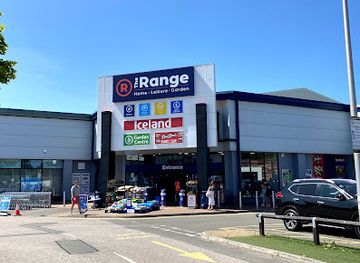
St James Retail Park
Convenient shopping with free parking and a variety of stores in Northampton’s St James Retail Park.
-
Shop
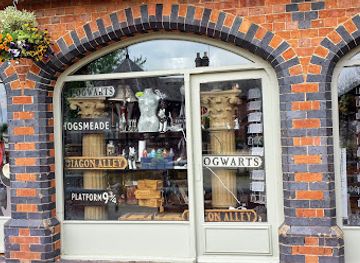
Heart of The Shires
Discover a charming Victorian courtyard shopping village with unique independent retailers and a relaxed countryside atmosphere.
-
Gift shop
Vintage Guru Ltd
Discover unique vintage treasures and handmade gifts in the heart of Northampton’s St Giles at Vintage Guru Ltd.
-
Shopping Centre
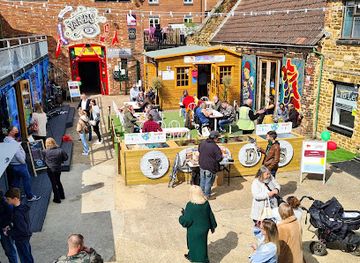
The Yards Kettering
Discover The Yards Kettering, a vibrant independent shopping centre blending vintage charm with modern boutiques in the heart of town.
Get your free copy of our complete guide to Northamptonshire, delivered straight to you.
Everything on this page, from attractions and restaurants to essentials and local phrases, in one PDF you can read offline, print or share.
Already have an account? Sign in
Your Northamptonshire guide is ready.
We'll send it to · Not you? Sign out

Getting your guide ready…
We are putting together a fresh copy of the Northamptonshire guide. This can take up to a minute.
This can take a few moments. If your browser asks, choose Allow so the download can start. You'll find the guide in your Downloads folder.
Nothing happened? Download it again
Sorry, the guide is taking longer than usual. Please try again in a minute, or get it by email instead.
Northamptonshire essentials
Currency and Payment
Safety
Emergency Situations
Do's and Don'ts
Local Tips
From Eve
Local phrases worth knowing
You don't need to get them perfect. A few words go a long way, and locals appreciate the effort.
Basics
| English | Local | Say it |
|---|---|---|
| Hello | Hello | [Heh-loh] |
| Goodbye | Cheers | [Cheerz] |
| Yes | Aye | [Eye] |
| No | Naa | [Nah] |
| Please/You're welcome | Please / No problem | [Pleez / Noh prob-luhm] |
| Thank you | Cheers | [Cheerz] |
| Excuse me/Sorry | Sorry | [Sor-ree] |
| How are you? | How's it going? | [Howz it go-in?] |
| Fine. And you? | All good, you? | [Ahl gud, yoo?] |
| Do you speak English? | Do ya speak English? | [Doo yah speek Ing-lish?] |
| I don't understand | I don't get it | [I don't get it] |
Eating & Drinking
| English | Local | Say it |
|---|---|---|
| I'd like to see the menu, please | Can I see the menu, please? | [Kan I see the men-yoo, pleez?] |
| I don't eat meat | I don't eat meat | [I don't eet meet] |
| Cheers! | Cheers! | [Cheerz!] |
| I would like to pay, please | Can I pay, please? | [Kan I pay, pleez?] |
Emergencies
| English | Local | Say it |
|---|---|---|
| Help! | Help! | [Help!] |
| Go away! | Leave me alone! | [Leev me a-lone!] |
| Call the Police! | Call the cops! | [Call the cops!] |
| Call a doctor! | Get a doctor! | [Get a doc-tor!] |
| I'm lost | I'm lost | [I'm lost] |
| I'm ill | I'm not well | [I'm not well] |
Shopping
| English | Local | Say it |
|---|---|---|
| I'd like to buy... | I'd like to buy... | [I'd like to buy...] |
| I'm just looking | Just having a look | [Just hav-ing a luk] |
| How much is it? | How much's this? | [How much's this?] |
| That's too expensive | That's a bit pricey | [That's a bit pry-see] |
| Can you lower the price? | Can ya drop the price? | [Kan yah drop the pryce?] |
Time & Numbers
| English | Local | Say it |
|---|---|---|
| What time is it? | What time is it? | [What time is it?] |
| It's one o'clock | It's one o'clock | [It's won o-clock] |
| Half past (10) | Half past ten | [Half past ten] |
| Morning | Morning | [Morn-ing] |
| Afternoon | Afternoon | [Af-ter-noon] |
| Evening | Evening | [Eve-ning] |
| Yesterday | Yesterday | [Yes-ter-day] |
| Today | Today | [To-day] |
| Tomorrow | Tomorrow | [To-mor-row] |
| 1 | One | [Won] |
| 2 | Two | [Too] |
| 3 | Three | [Three] |
| 4 | Four | [For] |
| 5 | Five | [Fiv] |
| 6 | Six | [Six] |
| 7 | Seven | [Sev-en] |
| 8 | Eight | [Ayt] |
| 9 | Nine | [Nin] |
| 10 | Ten | [Ten] |
Transport & Directions
| English | Local | Say it |
|---|---|---|
| Where's a/the...? | Where's the...? | [Where's the...?] |
| What's the address? | What's the address? | [What's the add-ress?] |
| Can you show me (on the map)? | Can you show me on the map? | [Can you show me on the map?] |
| When's the next (bus)? | When's the next bus? | [When's the next bus?] |
| A ticket (to ....) | A ticket to... | [A tick-it to...] |
History of Northamptonshire
Prehistoric and Roman Northamptonshire
Northamptonshire contains evidence of settlement from prehistoric periods, including important Iron Age sites and earthworks. The county's position between major English regions made it significant during the Roman period, when roads, villas and settlements connected local communities with wider networks. The Roman town at Irchester, near Wellingborough, is among the most important archaeological sites in the county, while traces of Roman activity have also been found around the Nene Valley and other farming settlements. These remains demonstrate that the landscape was already economically organised and closely linked to long-distance trade before the medieval towns developed.
Anglo-Saxon Kingdoms and Medieval Counties
After the end of Roman rule, the area became part of the Anglo-Saxon kingdom of Mercia and later developed within the political structures of medieval England. Northampton grew around its castle, markets and river crossing, while settlements such as Kettering, Daventry and Towcester became local centres. Churches, monastic foundations and surviving village plans reflect the prosperity generated by agriculture and wool. The county's central position also gave it strategic importance, placing its towns and estates within the political and military affairs of the English Crown.
Royal and Dynastic Northamptonshire
Northamptonshire played a notable role in medieval dynastic history. Fotheringhay was an important Yorkist centre and the birthplace of Richard III; its church became the burial place of several members of the Yorkist royal family. The castle later became associated with the imprisonment and execution of Mary, Queen of Scots, in 1587. Although much of the castle was subsequently dismantled, the church and village retain the memory of these events. The county's castles, manor houses and churches similarly record the influence of noble families whose estates shaped the rural landscape.
The English Civil War and the Battle of Naseby
The county was central to the English Civil War because of its location between London and the Midlands. The Battle of Naseby, fought in 1645, was a decisive Parliamentarian victory over the Royalist army of Charles I. It severely weakened the King's military position and helped determine the eventual outcome of the conflict. The battlefield lies in the open countryside near the village of Naseby, where interpretation and surviving landscape features help visitors understand the movement of troops and the wider strategic importance of central England.
Country Houses and Agricultural Estates
From the seventeenth to the nineteenth centuries, Northamptonshire's landscape was reshaped by wealthy landowners who rebuilt houses, established parks and reorganised farms. Properties such as Boughton House, Althorp, Kelmarsh Hall and Kirby Hall represent different periods and architectural ambitions, from Tudor and Elizabethan building to later classical design. Enclosure and estate management altered village fields and roads, while agricultural production supported market towns and local crafts. Many of the county's most recognisable landscapes today are the result of this long relationship between aristocratic ownership, farming and designed parkland.
Shoemaking, Railways and Industrial Growth
Northampton and surrounding towns became major centres of footwear production, building on a craft tradition that expanded through mechanisation and factory manufacture during the nineteenth and twentieth centuries. The industry generated employment, specialist skills and distinctive local institutions, although global competition later reduced its scale. Railways transformed the county at the same time, linking Northamptonshire's towns with London, Birmingham and the wider Midlands. In Corby, large-scale steel production drove rapid twentieth-century expansion and attracted workers from many parts of Britain and Europe, creating a town markedly different from the county's older settlements.
Modern Motorsport and Changing Landscapes
The opening of Silverstone's racing circuit after the Second World War added an internationally recognised modern industry to Northamptonshire. Built on a former airfield near the county's western boundary, it became a major venue for motor racing and helped establish the wider area as a centre for automotive engineering and technology. Elsewhere, former quarries and industrial sites have been adapted for recreation and nature conservation, while Northamptonshire's historic communities continue to balance agriculture, manufacturing, logistics, education and commuter connections with larger English cities.
Northamptonshire in Photos
Browse through our photo collection highlighting the charm and character of the destination.
Neighbouring regions of Northamptonshire
The closest regions to Northamptonshire, if you have time for more than one.
-

-

-

-

-


Swipe for more regions
Explore more

Explore more of United Kingdom
Discover the United Kingdom: A blend of rich history, stunning landscapes, and vibrant cities, offering a unique travel experience for every visitor.
Explore United Kingdom