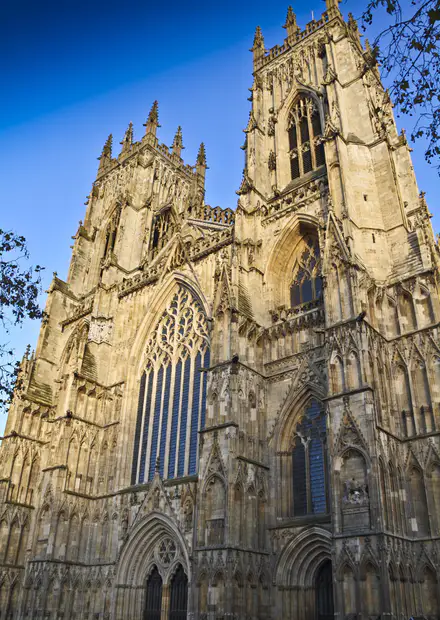
Best Landmarks in Yorkshire
Planning a trip to Yorkshire? Discover the best landmarks in Yorkshire with history, expert tips, and routes. Free on web or the Evendo app.


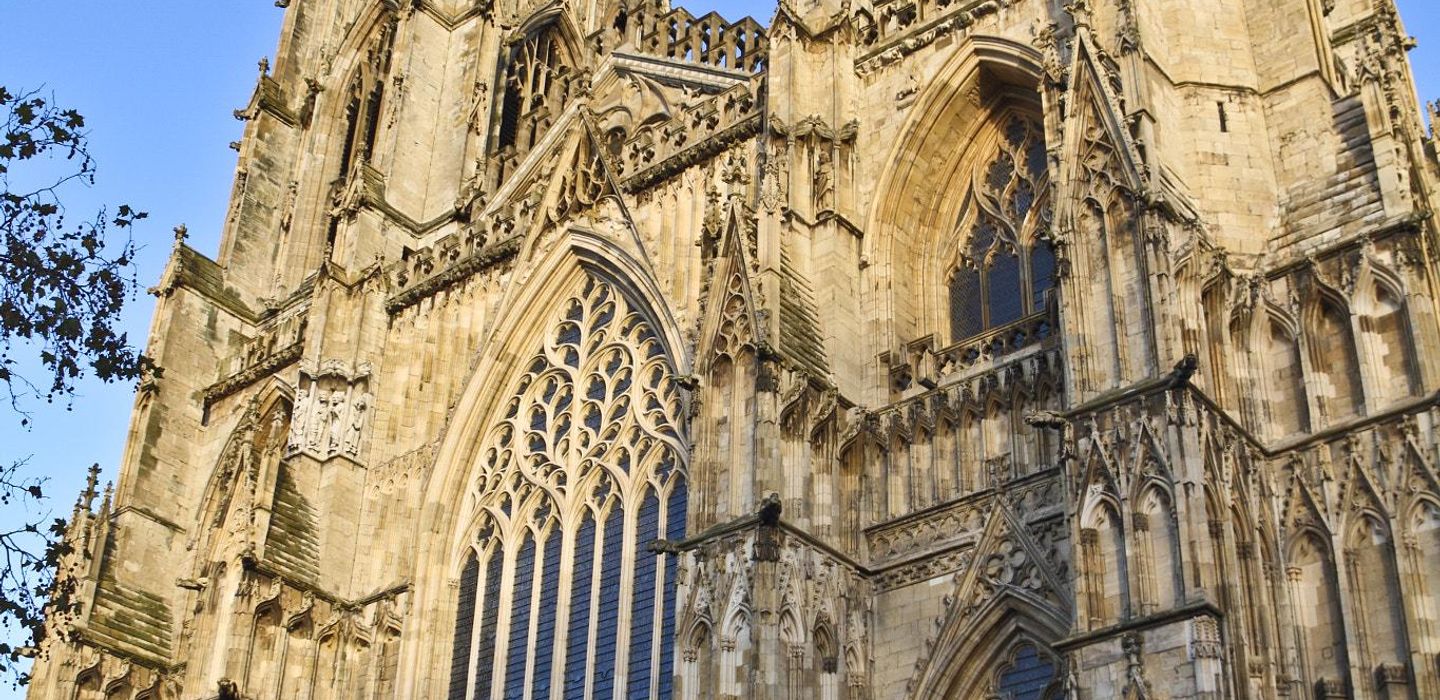
The best landmarks in Yorkshire
- Top rated
- Closest to the centre
- Price level: low to high
- Time to spend: shortest first
- A–Z
20 landmarks
-
Cathedral4.7★2,406 reviews
Ripon Cathedral
Ripon Cathedral, located in the heart of Ripon, North Yorkshire, is a stunning medieval Gothic cathedral with over 1,350 years of history. It features England’s oldest cathedral structure—the Anglo-Saxon crypt dating from 672 AD—alongside magnificent stained glass, intricately carved choir stalls, and a peaceful churchyard. Free to visit, it remains a vibrant place of worship, pilgrimage, and cultural heritage, offering visitors a unique blend of spiritual reflection, architectural grandeur, and literary connections to Lewis Carroll.
Mon–Sat 8:00–18:00 · Sun 8:00–17:00Time to spend 1–3 hrs
-
Historical landmark4.8★1,827 reviews
Ribblehead Viaduct
The Ribblehead Viaduct is a striking 19th-century railway structure featuring 24 massive stone arches spanning the Ribble Valley in the Yorkshire Dales. Completed in 1874, it carries the Settle-Carlisle railway line and stands 32 metres high, offering breathtaking views of the surrounding moorland. Visitors can explore the viaduct up close, walk beneath its arches, and learn about its dramatic construction history at the nearby Ribblehead Station Visitor Centre.
Open 24 hoursTime to spend 0.5–3 hrs
-
Historical landmark4.4★845 reviews
Kilburn White Horse
The Kilburn White Horse, carved into the limestone hillside of Roulston Scar near Thirsk, North Yorkshire, is England's largest and most northerly turf-cut white horse hill figure. Created in 1857 by local volunteers led by schoolmaster John Hodgson and inspired by southern England’s chalk horses, it measures 318 feet long by 220 feet high. Unlike traditional chalk figures, it rests on grey limestone and requires regular maintenance with chalk chippings and paint to preserve its brilliant whiteness. Visible for miles, it offers spectacular views and a unique blend of history and landscape.
Open 24 hoursTime to spend 0.5–2 hrs
-
Landmark4.8★665 reviews
Almscliffe Crag
Almscliffe Crag is a striking Millstone Grit rock outcrop perched atop a small hill near North Rigton, between Leeds and Harrogate in North Yorkshire, England. Renowned for its dramatic silhouette visible for miles, it offers spectacular panoramic views across the Wharfe Valley and surrounding countryside. The crag is a celebrated site for rock climbing, with routes ranging from beginner to expert, and is steeped in folklore and natural history as a designated Site of Special Scientific Interest.
Open 24 hoursTime to spend 1–4 hrs
-
Tour operator4.6★535 reviews
The Original Ghost Walk of York
Experience the eerie charm of York on The Original Ghost Walk of York, a captivating 75-90 minute evening tour that explores the city's haunted history. Meeting nightly at the historic King's Arms pub, this authentic ghost walk blends spine-tingling tales with fascinating local lore, all delivered by engaging storytellers. No booking is required, making it a spontaneous and atmospheric way to discover York’s spooky past.
Daily 20:00–21:30Price level $$Time to spend 1.2–1.5 hrs
-
Historical landmark4.5★154 reviews
Roman Column
Standing in Minster Yard, this 7.6-metre grey gritstone column is one of York's most tangible links to its Roman past. Originally erected around 100 AD by the Ninth Legion and later reused by the Sixth Legion in the 4th century, the column was discovered buried beneath York Minster in 1969 and reassembled in its present location in 1971 to commemorate the 1900th anniversary of York's founding. It is believed to have stood in the headquarters building where Constantine was declared Emperor in 306 AD, making it an essential stop for anyone interested in Roman Britain.
Open 24 hoursTime to spend 0.2–1 hr
-
Historical landmark4.5★47 reviews
Fishergate Postern Tower
Fishergate Postern Tower, built between 1504 and 1507, stands at the eastern end of York’s medieval city walls near the historic Red Tower. This four-storey fortified tower, originally part of the city’s defensive network, replaced an earlier 14th-century structure known as Talkan Tower. Surrounded historically by water, it features a pointed arch postern with a portcullis slot and retains much of its original form, including a distinctive re-roofing from the 17th century. Today, it offers visitors a glimpse into York’s rich medieval heritage and architectural resilience.
Price level $Time to spend 0.5–1.5 hrs
-
University4.5★41 reviews
King's Manor - University of York
King's Manor is a Grade I listed Tudor and Stuart style building located in York city centre on Exhibition Square. Originally built between 1483 and 1502 as the abbot’s house of St Mary's Abbey, it later served as the seat of the Council of the North and a royal residence. Now part of the University of York, it houses departments such as Archaeology and Medieval Studies, blending rich historical legacy with academic life.
Mon–Fri 8:00–17:00 · Sat 11:00–17:00Time to spend 1–3 hrs
-
Historical landmark4.4★40 reviews
Culloden Tower
Culloden Tower, located in Richmond, North Yorkshire, is a striking four-storey historic tower restored by the Landmark Trust. With its steep spiral stairs, elegant fireplaces, and a blend of Gothic and Classical architectural details, it offers a unique self-catering holiday experience. Overlooking the River Swale and close to Richmond’s market town charm, it combines history, stunning views, and a romantic atmosphere in a compact, atmospheric setting.
Price level $$Time to spend 1–3 hrs
-
Historical landmark4.0★33 reviews
Pikeing Well
Pikeing Well is an 18th-century historic well located on New Walk Terrace in York, England. Originally designed by John Carr in 1752 as a decorative grotto over a natural spring, it features medieval stonework and a Viking-style ship carving. The well sits along the scenic riverside path of the River Ouse, part of the elegant New Walk promenade created in the 1730s. Today, it remains a charming landmark reflecting York’s Georgian heritage and riverside leisure culture.
Open 24 hoursTime to spend 0.2–1 hr


Skelton Tower
Skelton Tower is a captivating historical landmark perched on a hill above Levisham in the North York Moors National Park, near Pickering. Once a moorland retreat and shooting lodge, this romantic ruin offers extraordinary panoramic views over Newtondale and the North Yorkshire Moors Railway. Surrounded by wild moorland and tranquil nature, it invites visitors to explore its atmospheric remains and enjoy the scenic beauty of one of England’s most cherished national parks.
Open 24 hoursTime to spend 1–3 hrs

The Tyburn
The Tyburn in York marks the site of the city’s medieval gallows, where public executions took place from 1379 until 1801. Located on the Knavesmire, this small monument commemorates the grim history of justice and punishment, including the hanging of infamous figures like highwayman Dick Turpin. Today, a solitary stone stands as a silent reminder of the hundreds who met their fate here, offering visitors a poignant glimpse into York’s darker past.
Open 24 hoursTime to spend 0.2–1 hr

Exhibition Square
Exhibition Square is a historic pedestrian plaza in the heart of York's city centre, surrounded by Georgian and Victorian architecture. Created in 1879 following the success of York's first Art and Industrial Exhibition, the square serves as a cultural hub and gathering point. It features the York Art Gallery, King's Manor, and a statue of local artist William Etty, with fountains and mature trees creating a pleasant urban environment. The square is car-free and positioned adjacent to Bootham Bar, one of York's medieval city gates.
Time to spend 0.5–2 hrs

Anglian Tower
The Anglian Tower in York is a rare surviving example of non-ecclesiastical Anglo-Saxon stone architecture in Britain. Built into the Roman city walls, this small, roughly 4.5-meter-high tower likely served as a watchtower or defensive post with arched doorways for sentries. Its exact age is debated, with construction estimates ranging from the late Roman period to the 9th century Viking era. Rediscovered in the 19th century and excavated in the 20th, it stands as a unique historical monument reflecting York’s layered past.
Time to spend 0.2–1 hr

Petergate House
Petergate House, located at 11 High Petergate in York, is a Grade II* listed early 18th-century townhouse with significant historical associations. Originally built shortly after 1723 on the site of earlier structures, it features a stuccoed façade, mansard roof, and period architectural details. Now serving as the presbytery for the York Oratory, it blends centuries of York’s ecclesiastical and residential heritage in the city centre.
Time to spend 0.5–1.5 hrs

Cawood Castle Gatehouse
The Cawood Castle Gatehouse is the surviving medieval gateway and domestic wing of the once grand Cawood Castle, a principal residence of the Archbishops of York from the 13th century until its partial destruction in the 17th century. Built between 1425 and 1451 by Archbishop John Kemp, this Grade I listed structure features heraldic carvings including Cardinal Wolsey’s hat and offers panoramic views of the Yorkshire countryside from its roof. It stands in the historic village of Cawood, near Selby, embodying centuries of ecclesiastical and royal history.
Price level $$Time to spend 1–3 hrs

The Norman House
The Norman House, located behind Stonegate in York, is the city’s oldest surviving medieval house, dating back to the late 12th century. This Grade I listed ruin features two remaining stone walls and a Norman-style double-arched window, revealing a rare glimpse into Norman domestic architecture. Once a prestigious stone residence likely owned by clergy, the house was rediscovered in 1939 beneath later buildings and now forms a quiet courtyard accessible from Church Passage.
Price level $Time to spend 0.5–1.5 hrs

Skeldergate Bridge & Bishopgate St
Skeldergate Bridge is a historic Gothic Revival iron bridge in York, completed in 1881. It spans the River Ouse, linking the York Castle area to Bishophill and offers scenic views of the river and nearby heritage buildings. Originally a toll bridge, it has been toll-free since 1914 and features a distinctive tower building now repurposed as a café. The bridge is a Grade II listed structure, blending Victorian engineering with architectural charm.
Time to spend 0.5–2 hrs

Bradford City Hall
Bradford City Hall is a majestic 19th-century Venetian Gothic town hall located in Norfolk Gardens, Bradford. Renowned for its striking clock tower and intricately carved façade featuring statues of monarchs, this Grade I listed building is a symbol of Bradford’s rich civic heritage. Opened in 1873 and extended in the early 20th century, it remains a vibrant cultural hub hosting civic events and exhibitions in its grand Victorian interiors.
Time to spend 0.5–2 hrs

REMAINS OF FORMER KIRBY HALL
The remains of Kirby Hall in Little Ouseburn, near York, mark the site of a once grand 18th-century mansion renowned for its architectural splendor and historical significance. Though largely demolished in the early 20th century, the estate’s legacy endures through the impressive Thompson Mausoleum and surviving gatehouse, reflecting the wealth and influence of the Thompson family in North Yorkshire’s history.
Time to spend 0.5–2 hrs
Explore Yorkshire on the map
A handpicked selection of must-see spots in Yorkshire, mapped for you.
More about Yorkshire
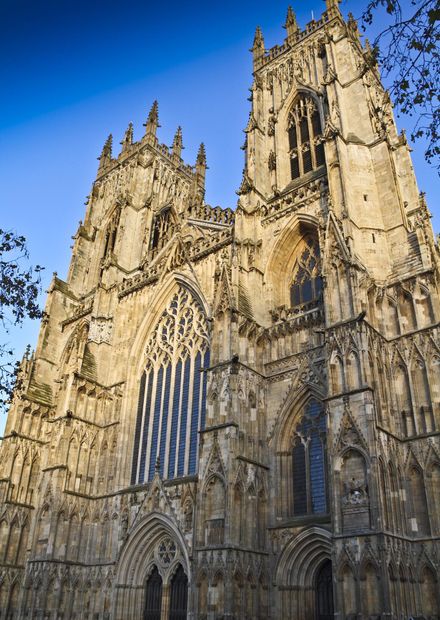
Yorkshire travel guide
Explore Yorkshire for medieval York, Pennine walking, North Sea coastlines, industrial heritage, country houses and distinctive northern food traditions.
Tell me more about YorkshireMore to explore in Yorkshire

 Best attractions in Yorkshire
 Best shops in Yorkshire
 Best bars in Yorkshire
 Best restaurants in Yorkshire
 Best nightclubs in Yorkshire
 Best experiences in Yorkshire
 Best hotels in Yorkshire
Explore more

Explore more of United Kingdom
Discover the United Kingdom: A blend of rich history, stunning landscapes, and vibrant cities, offering a unique travel experience for every visitor.
Explore United Kingdom
Getting your guide ready…
We are putting together a fresh copy of the Yorkshire guide. This can take up to a minute.
This can take a few moments. If your browser asks, choose Allow so the download can start. You'll find the guide in your Downloads folder.
Nothing happened? Download it again
Sorry, the guide is taking longer than usual. Please try again in a minute, or get it by email instead.